Crate Size for Potty Training a Labrador
One of the biggest hurdles new Labrador puppy parents face is the seemingly endless struggle with potty training. You bring home this adorable, fluffy bundle of energy, full of good intentions, only to find yourself scrubbing up accidents daily. Often, the overlooked culprit isn't the puppy's intelligence or your training skills, but the simple fact that their crate isn't the right size. This guide will help you understand precisely how to choose the perfect crate size for your Labrador, ensuring a smoother, less stressful potty training journey for both of you.
Why Crate Size Matters So Much for Potty Training
It might seem counterintuitive to focus so much on the dimensions of a metal box, but for a Labrador puppy, their crate size is directly tied to their natural instincts and, therefore, their success with house training. Get it wrong, and you’re setting yourself up for a lot more cleaning and frustration.
The Den Instinct and Cleanliness
Think about a dog's wild ancestors. They sought out small, enclosed spaces – dens – for safety and security. These dens were where they slept, raised their young, and felt protected. Crucially, they kept their dens clean. They would always leave the den to relieve themselves, avoiding soiling their sleeping quarters unless absolutely necessary.
Your Labrador puppy inherits this powerful den instinct. When provided with a crate that is appropriately sized – meaning just enough room to stand up, turn around, and lie down comfortably – this instinct kicks in. The puppy instinctively avoids eliminating in this snug space because it's their "den." If the crate is too large, however, it defeats the purpose. A big crate allows your puppy to designate one corner as a bathroom and another as their sleeping area, effectively creating a mini-apartment within the crate. This completely bypasses their natural inclination to keep their den clean, turning the crate from a potty training aid into just another space where accidents can happen.
Preventing Accidents, Not Just Containing Them
Many people mistakenly believe a crate is simply a glorified playpen to contain messes. While it does contain them, its primary role in potty training is much more proactive: it prevents accidents. A correctly sized crate gently encourages your puppy to hold their bladder and bowels because they don't want to soil their bed. This teaches them bladder control and helps them learn to associate relieving themselves with being outside the crate.
Imagine your puppy waking up after a nap in their perfectly sized crate. They feel the urge to go, but there's no space to do it without lying in it. This discomfort prompts them to whine or signal that they need to go out. You then immediately take them to their designated potty spot outside, and when they relieve themselves, you reward them heavily. This repeated cycle builds a strong association: holding it in the crate, going outside, and getting a reward. If the crate is too big, this critical learning opportunity is lost. The puppy might simply walk to the back corner of their oversized crate, relieve themselves, and then return to their clean sleeping area, never really learning to hold it or signal you. This prolongs the potty training process and can be incredibly frustrating. For more on this, check out Potty Training Schedule for a Labrador Puppy.
Determining the Ideal Crate Size for Your Labrador Puppy
Choosing the right crate isn't a "one size fits all" endeavor, especially with a growing Labrador. Their size changes dramatically in their first year, and the crate needs to adapt along with them.
The "Stand, Turn, Lie Down" Rule
This is the golden rule for determining the perfect crate size, whether for a tiny puppy or an adult dog. Your Labrador should have just enough space to:
- Stand up comfortably without their head touching the top.
- Turn around easily without bumping into the sides.
- Lie down fully stretched out on their side without being cramped.
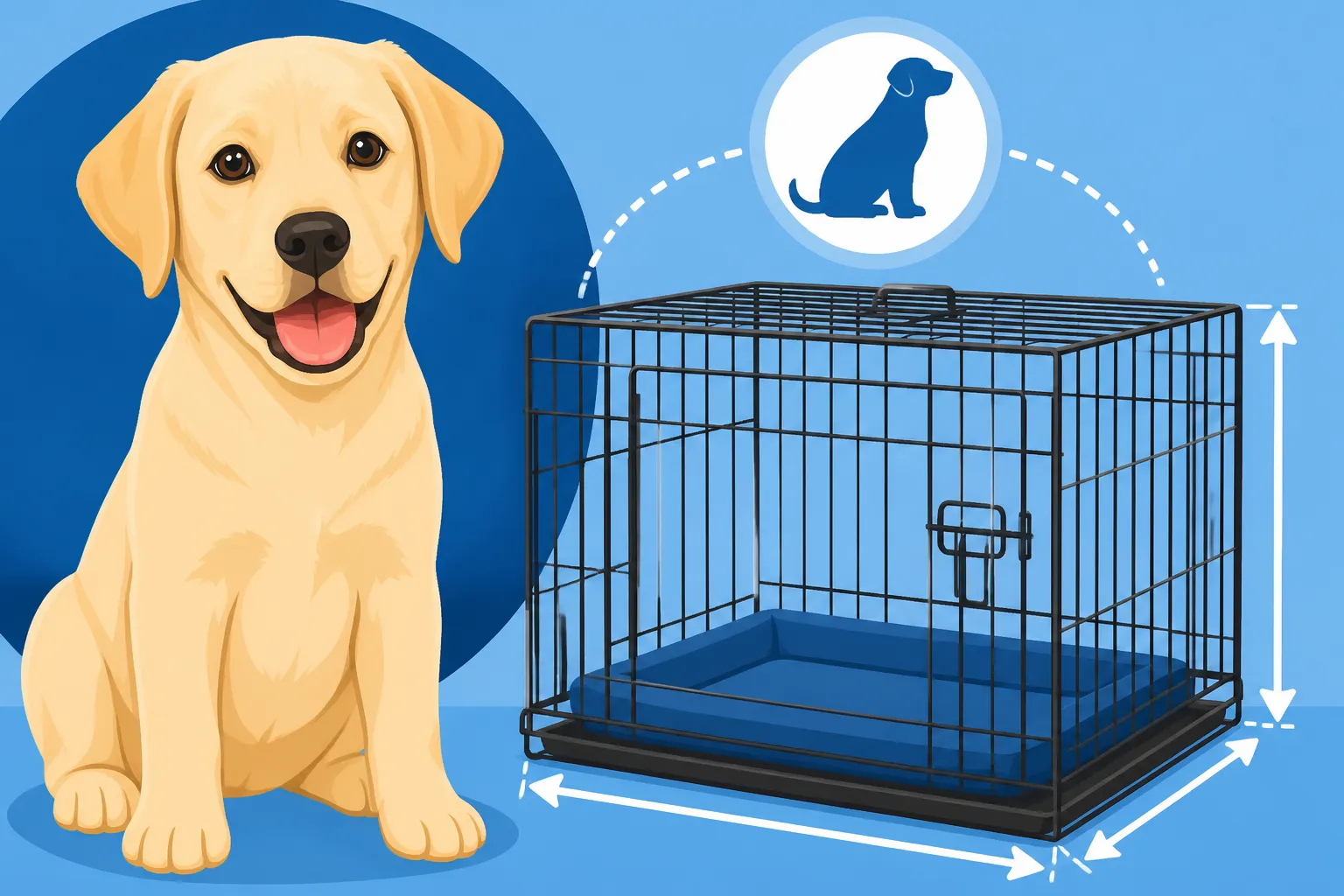
What this doesn't mean is enough space for a toy, a food bowl, and a water bowl alongside their bed. For potty training, the crate should be snug. If you're currently measuring a puppy, remember they're going to grow, and fast! So, you need to either anticipate their adult size and use a divider (which we'll discuss next) or plan to buy multiple crates. When your puppy is standing, measure their height from the top of their head to the floor. Then measure their length from the tip of their nose to the base of their tail. Add a few inches to these measurements to get a good estimate of the minimum interior dimensions you'll need.
Adjustable Dividers: Your Potty Training Secret Weapon
For Labradors, buying a crate with an adjustable divider is almost non-negotiable for effective potty training. This genius invention saves you money and hassle in the long run. Instead of buying a small puppy crate, then a medium adolescent crate, and finally a large adult crate, you buy one adult-sized crate and use the divider to make it smaller for your puppy.
Here's how it works: you install the divider to create a space that perfectly adheres to the "stand, turn, lie down" rule for your current puppy size. As your Labrador grows, you simply move the divider back, gradually increasing the usable space in the crate. This ensures that the crate is always appropriately snug for potty training throughout their rapid growth phases. Many popular crate brands sold on online retailers like Amazon or in pet stores will offer models that include dividers or sell them separately. This adaptability is key to maintaining consistent potty training principles from puppyhood right through adolescence, preventing setbacks and reinforcing good habits.
Common Crate Sizes and What They Mean for Labradors
Let's get down to the practical numbers. While every Labrador is an individual, there are general size guidelines that can help you select the right crate.
Puppy Stage (8-16 Weeks): Getting the First Fit Right
When your Labrador puppy first comes home, they are tiny but mighty! At this stage, they have very limited bladder control, meaning frequent potty breaks are crucial. The crate needs to be small enough to leverage that den instinct effectively. For an 8-week-old Labrador, you're generally looking at a crate that's around 24 to 30 inches in length. This is where a divider in a larger crate truly shines.
If you don't have a divider, you might be tempted to put a large bed in a small crate to take up space. While this can help absorb some space, it's not as effective as a solid divider because the puppy can still move the bed around or soil it. The ideal setup is a snug space that's just big enough for them to stretch out, turn, and stand, with minimal bedding that's easy to clean. Remember, your goal is to teach them to hold it until you let them out, not to provide ample space for them to relieve themselves within the crate. You can learn more about managing overnight potty breaks in Overnight Potty Breaks for a Labrador Puppy.
Adolescent Growth Spurts (4-12 Months): Adjusting as They Grow
Labradors grow incredibly quickly during their first year. You'll blink, and your tiny puppy will seem to have doubled in size. This adolescent period, roughly from 4 to 12 months, is where the adjustable divider becomes your best friend.
As your puppy gains height and length, you'll need to periodically slide that divider back. Check every few weeks: can they still stand comfortably without hunching? Can they turn around without hitting the sides? Can they lie fully stretched? If not, it's time to move the divider. This stage is also when Labradors develop stronger bladders, so the crate continues to be a crucial tool for reinforcing good habits and extending the time they can comfortably hold it. Without a divider, you'd likely be buying a 36-inch crate around 4-6 months, and then upgrading again to the adult size as they approach a year. This is why investing in one good crate with a divider from the start, perhaps from a brand you trust found on Amazon, truly makes financial and practical sense. For tips on managing this energetic stage, consider reading Handling a Labrador Between Six and Eighteen Months.
Adult Labrador Needs: The Forever Home Crate
By the time your Labrador reaches full maturity, generally between 12-18 months, they'll need their "forever" crate size. This crate should comfortably accommodate their full adult stature. For most Labradors, this means a crate that is approximately 42 inches long, 28 inches wide, and 30 inches high. However, there can be slight variations.
- Males vs. Females: Male Labradors are typically larger and heavier than females, so they might need the upper end of these dimensions, or even slightly larger depending on their specific build.
- Field vs. Show Lines: Field Line Labrador Traits often describe a leaner, more athletic build, while Show Line Labrador Traits tend to be heavier-boned and more substantial. A field line Labrador might be comfortable in a 42-inch crate, whereas a very large show line male could benefit from a 48-inch option to truly stretch out.
- Purpose: While the crate is essential for potty training, an adult Labrador's crate often serves as their safe haven, a quiet retreat, or a place to stay contained when you can't supervise them directly. At this point, you might remove the divider entirely, allowing them full access to the space, as their potty training should be well-established.
Here’s a general guideline for crate sizes for your Labrador:
| Life Stage | Approximate Weight (lbs) | Approximate Crate Length (inches) | Recommended Crate Type | Potty Training Purpose |
|---|---|---|---|---|
| Puppy (8-16 weeks) | 15-30 | 24-30 (with divider) | Wire or plastic with divider | Snug fit to leverage den instinct; prevent "accident corner" |
| Adolescent (4-12 months) | 30-70 | 36-42 (adjusting divider) | Wire or plastic with divider | Expands as they grow, maintaining appropriate snugness |
| Adult (12+ months) | 55-80+ | 42-48 (no divider needed) | Wire, plastic, or furniture style | Comfortable den, safe space, containment as needed |
Note: These are general guidelines. Always measure your individual dog using the "stand, turn, lie down" rule.
Avoiding Common Crate Sizing Mistakes
It's easy to make mistakes when choosing a crate, especially if you're a first-time Labrador owner. But understanding these pitfalls can save you a lot of grief.
Too Big: The "Accident Corner" Problem
This is perhaps the most common mistake and the biggest derailer for potty training. As discussed earlier, an oversized crate allows your clever Labrador puppy to bypass their natural den instinct. They quickly learn that they can relieve themselves in one part of the crate and still have a clean, dry area to sleep in.
Think about it from their perspective: why would they bother holding it or whining to go outside if they have a convenient internal bathroom? This teaches them nothing about bladder control or the expectation to go outside. It reinforces the idea that it's okay to potty indoors, which is the exact opposite of what you're trying to achieve. If you find your puppy consistently having accidents in their crate, especially when it's relatively clean, the crate is almost certainly too big. It's time to get a divider or size down. This situation can also exacerbate crying at night if they are not truly uncomfortable, but merely taking advantage of the space. You can find more advice on this in Crate Training a Labrador Puppy.
Too Small: Discomfort and Refusal
While the dangers of a crate that's too big are primarily related to potty training, a crate that's too small presents a different set of problems. If your Labrador puppy cannot comfortably stand, turn around, or lie down fully, the crate becomes a source of stress and discomfort, not a safe haven.
A cramped crate can lead to:
- Physical discomfort: Hunching, cramped positions, or not being able to stretch out can cause muscle stiffness or simply be unpleasant.
- Anxiety and fear: A puppy forced into an uncomfortably small space might become anxious or develop a negative association with the crate, making future crate training or even just relaxation difficult.
- Refusal to enter: They might actively resist going into the crate, making the entire process a battle.
- Soiling out of necessity: In extreme cases, a puppy might soil the crate if they literally cannot hold it any longer and have no choice, which is unfair and counterproductive.
The goal is always comfort within the "snug" parameters. A good quality crate from a brand like BAXTER & Bella offers good ventilation and sturdy construction, making even a snug space feel secure rather than confining.
Ignoring Growth: The One-Size-Fits-All Fallacy
Many new owners, trying to be economical, will buy one large adult-sized crate for their tiny puppy, hoping it will "grow into it." While the sentiment is understandable, this approach almost always backfires on potty training. As we've discussed, a large crate for a small puppy is effectively an open invitation for accidents.
You might save money on buying multiple crates, but you'll pay for it in ruined carpets, cleaning supplies, and increased training time. The initial investment in an adult-sized crate with a proper divider, or even a smaller temporary crate for the first few months, is far more effective. The cost of a good crate is a small fraction of the total First Year Vet Spending on a Labrador Puppy or even Labrador Puppy Costs in the First Month, so it's worth getting right from the start. Remember, consistent, successful potty training builds a strong foundation for a well-behaved dog in the long run.
Integrating the Correct Crate Size into a Potty Training Schedule
Having the right-sized crate is only one piece of the potty training puzzle. It needs to be integrated effectively into a comprehensive schedule and positive training approach.
Consistency is King: Crate Time and Potty Breaks
The snugly fitted crate works hand-in-hand with a consistent potty schedule. Your puppy should be taken out immediately after:
- Waking up (from naps and in the morning)
- Eating
- Drinking
- Playing
- After any time spent in the crate
The crate teaches them to hold it, and the immediate trip outside teaches them where to release it. Because the crate is the right size, they won't want to soil it. This creates a strong incentive for them to signal you when they need to go out. Over time, they develop better bladder and bowel control. As your puppy matures, the duration they can comfortably stay in the crate will increase. For an idea of what to expect, refer to How Long a Labrador Puppy Can Hold It. Consistency is key, whether you're working on basic obedience or advanced commands, something BAXTER & Bella emphasizes in their training programs.
Positive Associations: Making the Crate a Happy Place
Even though the crate is snug for potty training purposes, it should never be a place of punishment or fear. The correct size contributes to this positive association because it feels like a secure, comfortable den, not a cramped cage. To make the crate a happy place:
- Feed meals in the crate: This creates a positive association with food.
- Offer high-value treats: Give a special treat (like a long-lasting chew or a stuffed Kong) when they go into the crate.
- Comfortable bedding: Even a snug crate needs a soft, easy-to-clean mat or blanket.
- Never force them in: Lure them in with treats and praise.
- Start with short durations: Gradually increase the time they spend in the crate.
- Play crate games: Make it fun. For example, toss a treat in and say "crate," letting them go in, eat it, and come right back out.
A well-sized crate, combined with positive reinforcement and a structured schedule, becomes a powerful tool for building a confident, house-trained Labrador. It’s not just about stopping accidents; it’s about fostering a sense of security and teaching an invaluable life skill. If your puppy is struggling to settle, tips from Settling a Labrador Puppy Who Cries in the Crate might be helpful.
Disclaimer
This article is for general informational purposes only and does not constitute professional advice. Laws, prices and regulations vary by location and change over time. Consult a qualified professional for guidance on your specific situation.