Stopping a Labrador From Pulling on Leash
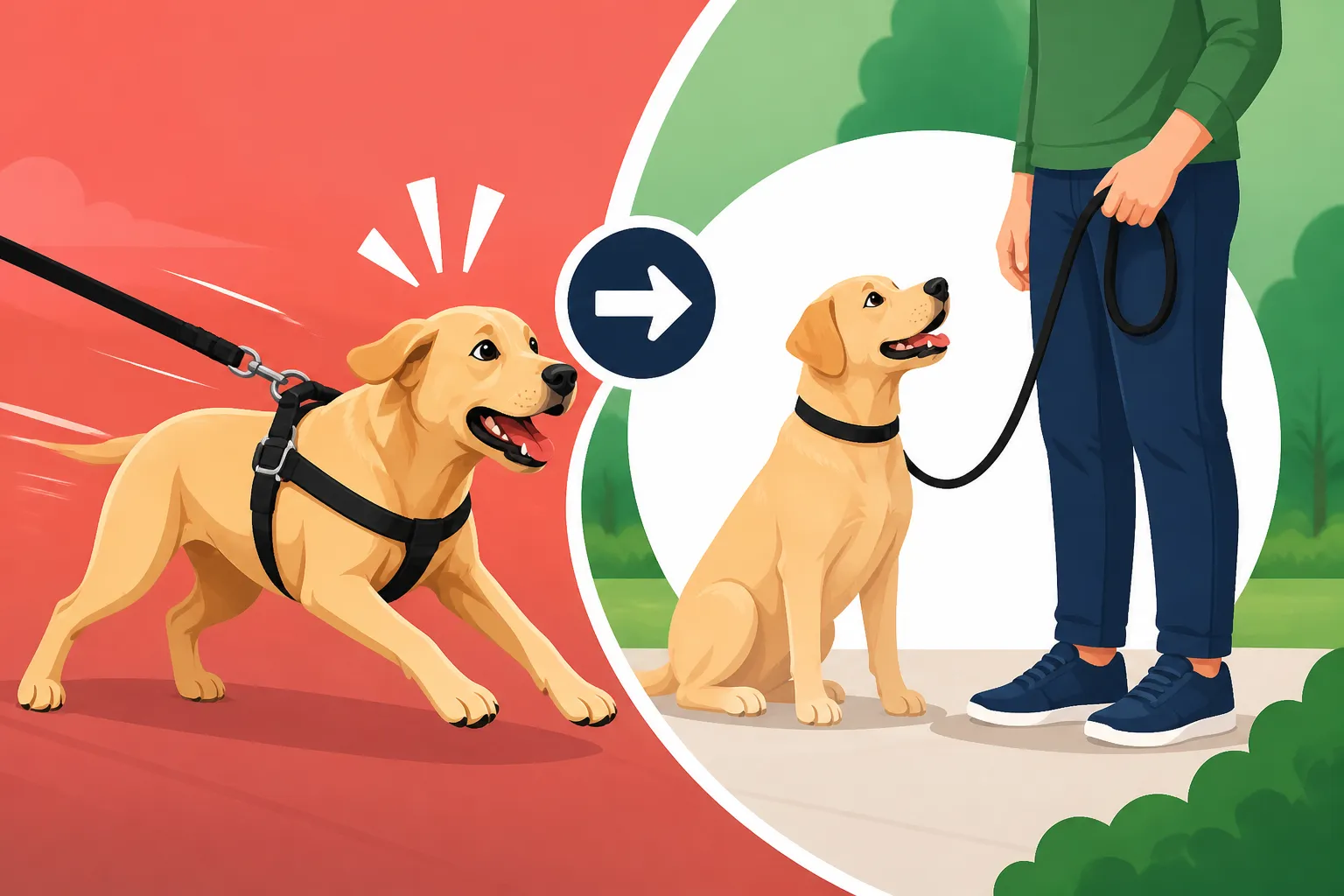
Few things are as universally frustrating for a Labrador owner as that moment your otherwise sweet, gentle companion suddenly transforms into a freight train on the end of their leash. You're just trying to enjoy a peaceful walk around the neighborhood or a stroll in the park, and instead, you find yourself being dragged down the street, shoulder aching, struggling to maintain control. It feels less like a pleasant outing and more like an intense tug-of-war where you're always losing. This guide is here to help you understand why your Labrador pulls and, more importantly, equip you with the practical strategies and tools you need to achieve those coveted loose-leash walks.
Understanding Why Your Labrador Pulls So Hard
It’s easy to get frustrated when your Labrador is pulling, thinking they’re just being stubborn or disobedient. But truly, most Labradors aren't pulling out of malice; they're simply being Labradors! Understanding the natural instincts and motivations behind their pulling can help you approach training with more patience and empathy.
Natural Labrador Instincts and Drive
Labradors were originally bred to be working dogs, retrieving game for hunters. This means they possess an incredible amount of drive, stamina, and enthusiasm. When you step outside, the world is a symphony of exciting smells, sounds, and sights. For a Labrador, a walk isn't just a casual stroll; it's an adventure, a hunt, a mission! Their strong retrieving drive means they are often pulling towards something they want to investigate, whether it's a discarded crumb, a fascinating scent trail, or another dog across the street. Their powerful bodies, built for endurance and swimming, mean they can easily outweigh and outmuscle many humans, especially if they haven't learned proper leash manners from a young age. Their sheer joy and excitement about exploring often manifest as an uncontrollable urge to get to the next interesting thing right now.
Imagine you're an excited Labrador: you smell a squirrel that ran up that oak tree a minute ago, and your instincts scream "FOLLOW!" You see a friendly person walking their Beagle on the other side of the park, and your social nature demands "GREET!" You hear the distant splash of water from the stream, and your webbed feet are practically twitching with desire to "SWIM!" All of these powerful urges translate into pulling, as your dog uses all their strength to get where they want to go. It’s not personal; it’s just dog logic.
Lack of Early Leash Training
Many of us bring home a cute, fluffy Labrador puppy, and for the first few weeks, they're so small and adorable that we barely notice if they're pulling. A little tug from a 15-pound puppy feels manageable, even endearing. We might let them lead the way because it's cute, or we're just focused on getting them outside to potty. However, every time your puppy pulls and gets to go where they want, even a few feet, they are being inadvertently rewarded. They quickly learn, "Oh, if I pull, I get to move forward and get to the good stuff!"
This pattern then becomes deeply ingrained. By the time your Labrador is six months old and weighs 50 pounds, that "cute little tug" has become a serious strain on your arm. At a year old, when they're 70+ pounds of solid muscle, it's a full-blown struggle. This isn't your Labrador suddenly deciding to be naughty; it's the culmination of hundreds of tiny training sessions where pulling was accidentally reinforced. Early and consistent training, even with a tiny puppy, is crucial to setting the right foundation. It’s much easier to teach a small puppy not to pull than to re-train a powerful adult. When to Start Training a Labrador Puppy is a great resource if you're just starting out.
Essential Tools for Loose Leash Walking
While training techniques are paramount, having the right equipment can make a world of difference, especially when you're starting out with a strong puller. The goal of these tools is not to be a permanent fix, but rather to give you more control and make the training process safer and more effective for both you and your Labrador.
Front-Clip Harnesses
Traditional harnesses, which clip on the dog's back, often exacerbate pulling because they allow the dog to lean into the harness and use their full body weight like a sled dog. They're great for activities like canicross or pulling a cart, but not for loose-leash walking. This is where a front-clip harness comes in. Instead of clipping on the back, the leash attaches to a ring on your Labrador's chest.
Here’s how it works: when your Labrador pulls, the leash attachment point on their chest redirects their forward momentum. Instead of pulling you straight ahead, the pressure turns them gently to the side, off-balance. This makes it much harder for them to pull effectively and encourages them to orient back towards you. It’s not painful or punitive; it simply makes pulling less rewarding and more awkward. Many brands offer effective front-clip harnesses, and you can easily find a wide selection of Front-Clip Harnesses on a Strong Labrador by checking online retailers like Amazon. Look for harnesses with a sturdy construction and good adjustability to ensure a comfortable and secure fit for your Labrador.
Head Halters
A head halter, sometimes called a head collar, is another excellent tool for managing strong pullers. It fits over your Labrador's muzzle and behind their ears, similar to a halter used on a horse. The leash then attaches under their chin. The principle is simple: where the head goes, the body follows. If your Labrador tries to lunge or pull, the head halter gently guides their head downwards or to the side, making it impossible for them to apply their full body strength to pulling.
For some Labradors, the initial sensation of a head halter can be a bit strange, and they might try to paw it off. It’s important to introduce it gradually and positively, using lots of treats and praise. Start by letting them wear it for short periods around the house, paired with high-value rewards. Gradually increase the time and introduce walks. A head halter offers a remarkable amount of control without needing to apply a lot of physical strength yourself, making walks much more enjoyable. You can learn more about specific models and fitting tips by searching for Head Halters for a Labrador Who Lunges.
Other Tools to Consider
- Martingale Collars: While not a no-pull solution in themselves, martingale collars are useful for Labradors who might slip out of a traditional buckle collar. They tighten slightly when the dog pulls, preventing escape, but don't exert continuous pressure like a choke chain.
- A Good Quality Leash: A comfortable, durable leash is essential. For everyday walks, a standard 4-6 foot leash made of strong nylon or leather is ideal. Avoid retractable leashes for training loose-leash walking, as they teach your dog that pulling extends their range, which is the opposite of what you want.
When selecting tools, always prioritize comfort and safety for your Labrador. The right tool should aid your training, not cause discomfort or pain.
Training Techniques for a Loose Leash Walk
Tools are great, but they're just that – tools. The real magic happens with consistent, positive training. You're teaching your Labrador a new skill, and like any skill, it takes practice, patience, and repetition.
The "Stop and Go" Method
This is one of the most fundamental and effective techniques for teaching loose-leash walking. It's incredibly simple but requires consistency.
- Start walking: Begin your walk with your Labrador.
- Dog pulls: The instant your Labrador's leash tightens, immediately stop walking. Don't say anything, don't yank the leash back – just become a tree.
- Leash slackens: Wait. Your Labrador will likely feel the pressure, turn to look at you, or otherwise pause. The moment the leash goes slack, even for a second, praise them ("Yes!" or "Good!") and immediately start walking again.
- Repeat, repeat, repeat: Continue this pattern. Every pull equals a stop; every slack leash equals forward motion and praise.
The key here is that your Labrador quickly learns that pulling stops the walk, and a loose leash starts it again. They want to move forward, so they'll adjust their behavior to achieve that goal. This method requires consistency from you. If you let them get away with pulling even once, you've rewarded the undesired behavior and set back your training. Start this in a low-distraction environment, like your backyard, before tackling busy streets.
Changing Direction
This technique is a variation of the "stop and go" but adds another layer of engagement.
- Walk forward: Start walking with your Labrador.
- Dog pulls: The moment the leash tightens, pivot and change direction entirely. Walk the other way, or turn sharply to the side. Again, don't say anything or yank.
- Follows on loose leash: As soon as your Labrador follows you and the leash becomes slack, mark that moment with a verbal cue ("Yes!" or a clicker) and reward them with a small, high-value treat.
- Keep them guessing: Don't stick to a predictable path. Randomly change directions even when they're walking nicely. This teaches them to pay attention to you, rather than just forging ahead.
This method works because it keeps your Labrador guessing and focused on where you are going, not just where they want to go. It breaks their focus on distractions and encourages them to check in with you regularly. Short Training Sessions That Suit a Labrador can be incredibly effective for this type of focused, repetitive training.
Reward-Based Training and Engagement
Labradors are highly food-motivated, and you can absolutely use this to your advantage! Positive reinforcement is incredibly powerful.
- High-value treats: Use treats that your Labrador absolutely loves – small pieces of cooked chicken, cheese, or specialized training treats. Treats That Motivate a Food-Driven Labrador are essential here.
- Rewarding position: When your Labrador walks nicely by your side with a loose leash, regularly reward them with treats dropped near your leg. The goal is to make the area next to your leg the "most rewarding" place to be.
- Verbal praise: Combine treats with enthusiastic verbal praise ("Good walk!" "Nice!") and gentle petting if they appreciate it.
- Engagement exercises: Practice short bursts of engagement during your walks. Call your Labrador's name; when they look at you, reward them. Do a quick "sit" or "watch me" and reward. This builds a strong bond and teaches them that interacting with you is worthwhile, even amidst distractions.
- Focus on your dog: Before you even leave the house, make sure you have your Labrador's attention. A quick game of "find it" in the yard or a few obedience commands can help get them focused on you.
This approach transforms walks from a struggle to a partnership. Your Labrador learns that staying by your side with a loose leash leads to good things – treats, praise, and continued forward motion – while pulling leads to frustration and stops.
Addressing Distractions
The real test of loose-leash walking comes when distractions appear. A barking dog, a person jogging, a fascinating patch of grass – these are all huge temptations for a Labrador.
- Practice in varying environments: Start training in a quiet area, like your living room or backyard. Once your Labrador is consistently walking nicely there, gradually introduce more distractions. Move to a quiet street, then a park during off-peak hours, and eventually busier areas.
- Increase distance from distractions: If your Labrador lunges or pulls towards another dog, for example, increase the distance between you and the distraction. Find a distance where your Labrador can still acknowledge the distraction but choose to stay focused on you. Reward heavily for choosing to stay focused.
- "Watch Me" command: Teach your Labrador a "watch me" or "look at me" command. Practice this often in quiet areas. When a distraction appears, use the command to get their attention, reward them for looking at you, and continue walking.
- Be patient: Distractions are hard for Labradors to ignore, and they will likely have setbacks. Don't get discouraged. Just calmly implement your training methods (stop and go, change direction) and keep reinforcing good behavior. Remember that Building a Labrador's Recall From Scratch can also help in emergency situations if the leash somehow comes undone.
| Leash Training Tool | How It Works | Pros | Cons |
|---|---|---|---|
| Flat Collar & Leash | Attaches around the neck. | Standard, simple, widely available. | Offers little to no control for strong pullers; can cause choking if dog pulls too hard. |
| Martingale Collar | Loop collar that tightens slightly under tension. | Prevents escape for dogs with narrow heads; gentle correction. | Not a true "no-pull" solution; still relies on neck pressure. |
| Front-Clip Harness | Leash attaches to a ring on the dog's chest. | Redirects forward momentum, makes pulling inefficient; gentler than neck tools. | Some dogs may still pull, just less effectively; can tangle legs if poorly fitted. |
| Head Halter (Head Collar) | Fits over muzzle and behind ears; leash attaches under chin. | Offers excellent control with minimal force; guides head and body. | Some dogs dislike the feel initially; requires careful, positive introduction. |
Consistency is the absolute bedrock of successful leash training. This isn't a one-time fix; it's an ongoing conversation with your dog. Every walk is a training opportunity.
The Journey to Enjoyable Walks
Training a Labrador not to pull on the leash isn't always a quick fix, and there will be days when you feel like you've taken ten steps backward. But with patience, consistency, and the right tools and techniques, you absolutely can transform those frustrating pulls into pleasant strolls.
Patience is a Virtue
Remember that your Labrador isn't trying to be difficult. They are a powerful, enthusiastic breed with a strong desire to explore and retrieve. It takes time for them to understand what you're asking of them, especially when their natural instincts are telling them to charge forward. Celebrate small victories: a few steps of loose-leash walking, them looking back at you instead of pulling, or choosing to ignore a squirrel instead of lunging. Every little improvement builds towards the bigger goal. Don't compare your Labrador's progress to other dogs; focus on their individual journey.
Consider seeking guidance from professional trainers if you're struggling. Sometimes an objective eye can spot subtle cues or offer personalized advice that makes all the difference. Many online resources, such as those provided by BAXTER & Bella, also offer structured programs and support that can be invaluable for owners navigating training challenges.
Consistency is Key
This cannot be stressed enough: consistency is the most important ingredient in leash training. If you use a front-clip harness one day but a regular collar the next, or if you apply the "stop and go" method sometimes but give in and let them pull other times, your Labrador will get confused. They learn best from predictable consequences. Everyone in the household who walks the dog needs to be on the same page, using the same tools and techniques. If your Labrador knows that pulling won't get them anywhere with you, but Aunt Carol lets them pull wherever they want, progress will be slow or non-existent.
Make every walk a training opportunity. Even if it's just a short potty break, reinforce good leash manners. The more consistent you are, the faster your Labrador will understand what's expected of them. This consistent effort will not only improve your walks but also strengthen your bond with your amazing Labrador, building trust and mutual understanding. Labrador Puppy Socialization Windows and continuous positive reinforcement training throughout their life will ensure you have a well-adjusted companion.
Enjoying the Bond
Ultimately, leash training is about more than just a loose leash; it's about building a better relationship with your Labrador. It allows you both to enjoy the world together, safely and harmoniously. Imagine walking confidently down a busy street, your Labrador trotting happily beside you, checking in with you regularly, and calmly observing their surroundings. That's the dream, and it's an achievable one.
Your Labrador wants to please you, and they thrive on structure and clear communication. By investing the time and effort into teaching them proper leash manners, you're not just correcting a behavior; you're teaching them how to navigate the human world politely, building their confidence, and setting them up for a lifetime of enjoyable adventures by your side. Remember, every Labrador is an individual, and their Labrador Lifespan and What Changes It means you have many years to enjoy these walks together.
Disclaimer
This article is for general informational purposes only and does not constitute professional advice. Laws, prices and regulations vary by location and change over time. Consult a qualified professional for guidance on your specific situation.