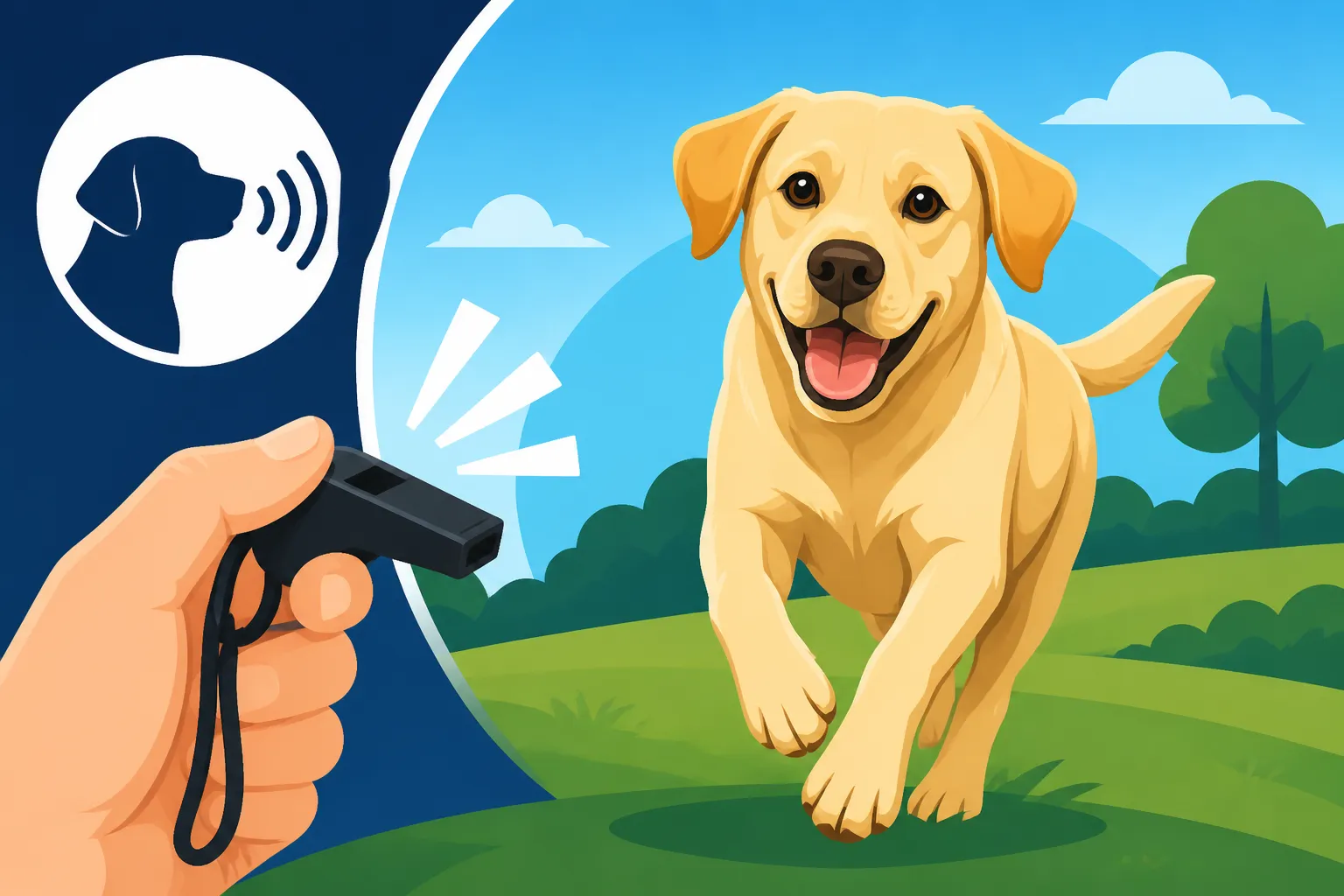
Whistle Recall for a Labrador Retriever
It's incredibly frustrating when you call your Labrador, and they look at you, perhaps even wag their tail, and then promptly decide that the fascinating scent of that bush or the intriguing squirrel in the distance is far more important. We've all been there, standing in the park, feeling our heart rate rise as our beloved companion seems to go deaf the moment something more exciting appears. This guide is all about harnessing the power of whistle recall to give you a reliable way to get your Labrador's attention, cutting through distractions and bringing them back to your side, every time.
Why Traditional Recall Often Falls Short (and How a Whistle Can Help)
You love your Labrador, and they love you, but when it comes to recall, sometimes it feels like they're just not listening. It’s not that they don’t care; it’s that the world is full of fascinating things, and their natural instincts often outweigh their learned politeness. This is where the simple, yet powerful, tool of a dog whistle can make a world of difference.
The Distraction Dilemma: When the World is More Interesting
Labradors, bless their eager hearts, are easily distracted. Their incredible sense of smell means a discarded food wrapper from yesterday can be a tantalizing mystery, or the distant rustle of leaves could signal a potential playmate. Add to that their natural retrieving drive and love for water, and suddenly your voice command for "come" sounds like background noise against the symphony of irresistible temptations. Think about it: a flock of geese landing on the pond, another dog bolting by, or even just the intoxicating scent of a rabbit trail – these are powerful motivators that often override even the most enthusiastic human shout. Your voice, while familiar and comforting, often gets lost in this cacophony of exciting stimuli, or simply doesn't carry far enough to cut through the din.
This isn't a sign of a stubborn dog; it's a testament to their Labrador nature and the rich sensory world they inhabit. Relying solely on your voice means you're competing with every smell, sound, and sight. When your Labrador's nose is glued to the ground, following an invisible trail, your voice might not even register as a distinct command. It becomes just another part of the environment, easily ignored. This is a common frustration for many Labrador Recall and Working Off Leash training journeys.
Inconsistent Voice Commands and Their Impact
Another sneaky reason traditional voice recall struggles is our own human inconsistency. We might say "come" in a cheerful, encouraging tone when practicing in the living room, but when Fido is halfway across the park chasing a squirrel, our voice changes. It becomes strained, maybe a little panicked, perhaps even angry. Dogs are masters at picking up on tone and body language, and these shifts can make the command less clear, or even worse, associate "come" with an agitated owner. They might hesitate, wondering why your tone is different, or they might even perceive it as a threat, making them less likely to return willingly.
A whistle, on the other hand, offers an unvarying sound. It doesn't carry your emotional baggage, your frustration, or your impatience. The tone, pitch, and volume (within reason) remain consistent every single time, no matter how stressed or calm you are. This unwavering consistency is invaluable for a dog, who thrives on clear and predictable signals. It removes any ambiguity from the command, allowing your Labrador to focus solely on the action required rather than trying to interpret your emotional state.
The Advantage of a Unique, Uncontaminated Sound
Consider how many times you say your Labrador's name or the word "come" throughout the day in non-training contexts. You might call them for dinner, to go outside, or just to snuggle on the couch. Over time, these words can lose their specific "recall" meaning because they're used so often for other things. This desensitization can subtly weaken the urgency and importance your dog attaches to the command, especially when high distractions are present.
A whistle, however, is a special sound. It's usually reserved only for recall, meaning it doesn't get muddled with everyday chatter or casual requests. This distinctness makes it incredibly powerful. When your Labrador hears that specific whistle blast, they learn it means one thing and one thing only: "Drop everything and come back to me for something amazing!" It cuts through the noise of the world, a clear, unambiguous signal that stands out because it's not contaminated by other uses. This makes it a much more effective tool for getting their undivided attention, even from a distance or in a busy environment.
Getting Started with Whistle Recall Training
The idea of whistle recall might seem a bit advanced, but it's surprisingly simple to implement, especially with a food-motivated breed like a Labrador. The key is to build a strong, positive association from the very first blow.
Choosing the Right Whistle for Your Labrador
Before you start, you'll need a whistle. There are several types, and the best one for you is often a matter of personal preference and what your dog responds to. A classic pea whistle produces a trilling sound, while a pealess whistle creates a clear, consistent tone without the rattling pea. Many gundog trainers use pealess whistles for their consistent pitch, which can carry well over long distances. Then there are "silent" whistles, which produce a very high-frequency sound that is often barely audible to humans but quite clear to dogs.
You might want to experiment with a few different types to see what works for you and your Labrador. A simple, sturdy whistle can be found easily on platforms like Amazon, offering a range of styles and prices. The most important factor isn't the price or the fanciness, but the consistency of the sound you can produce. Make sure it's comfortable to hold and that you can reliably blow it with the same pattern and intensity each time. You'll likely want to carry it with you whenever your dog is off-leash, so choose something durable and easy to access.
| Whistle Type | Sound Characteristic | Pros | Cons | Best For |
|---|---|---|---|---|
| Pea Whistle | Trilling, varied sound | Easy to produce sound, distinct | Sound can vary, may be less consistent | Casual use, closer distances |
| Pealess Whistle | Clear, consistent tone | Highly consistent, carries well | Can be louder for human ears | Hunting, long-distance recall, consistency |
| "Silent" Whistle | High-frequency, barely audible to humans | Less annoying for humans, distinct to dogs | Hard to know if you're blowing it correctly, less range | Sensitive environments, specific training |
Introducing the Whistle: Building a Positive Association
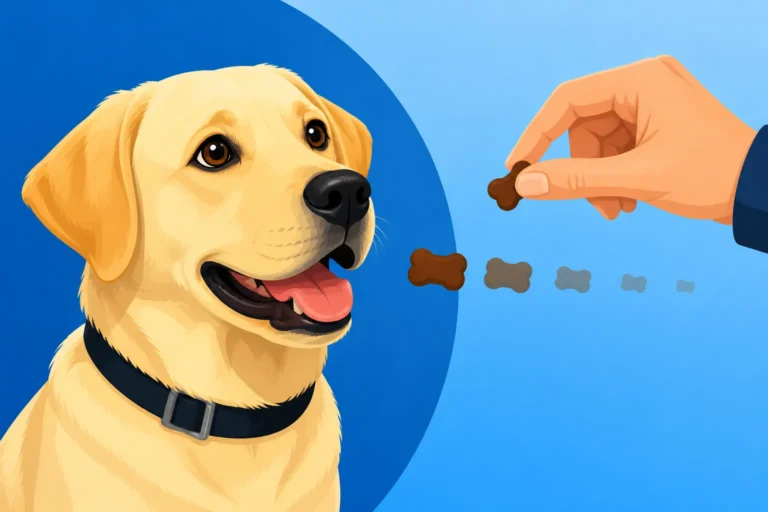
The very first step is crucial: associate the whistle with something incredibly wonderful. You want your Labrador to hear that whistle and think, "Oh boy, something amazing is coming!" Start this process in a quiet environment, like your living room or backyard, with no distractions. Have a handful of truly high-value treats ready – think cooked chicken, cheese, or hot dogs, not just their regular kibble. Treats That Motivate a Food-Driven Labrador can give you more ideas.
Blow the whistle once (a short, sharp blast or two quick toots – choose a consistent pattern and stick with it). The instant you blow it, immediately pop a treat into your Labrador's mouth. Don't wait for them to do anything; the whistle itself predicts the reward. Repeat this about 10-15 times in a session, then take a break. Do a few short sessions throughout the day. The goal is to build an immediate, Pavlovian response where the whistle equals "treat!" You're essentially telling their brain, "This sound means instant jackpot!"
After a few sessions, you'll likely notice your Labrador's ears perk up, or they might even look at you expectantly the moment they hear the whistle. This is exactly what you want! It means the positive association is forming. Keep these initial sessions fun, short, and positive, ending on a high note before your dog gets bored or full. This foundation is paramount for future success and ensures that the whistle is always seen as a positive, rewarding signal.
The "Come to Me" Game: Making Recall Fun
Once your Labrador shows a clear positive reaction to the whistle, you can start adding movement. This is where the "Come to Me" game comes in. Again, start in a low-distraction area. Have your high-value treats ready. Walk a few steps away from your Labrador, then blow the whistle. The instant they turn towards you or take a step, enthusiastically praise them ("Yes! Good dog!") and reward them generously when they reach you.
Don't just hand them the treat and send them off; make it a mini celebration! Give them several treats, lots of petting, and happy vocal praise. You want them to feel like they've just won the lottery for coming to you. You can even run backward a few steps as you blow the whistle, making yourself even more exciting and inviting. This teaches them that coming to you isn't just about a treat, but about joy and connection.
As they get the hang of it, gradually increase the distance between you and your dog. Practice in different spots within your home or yard. The key is to keep it upbeat, unpredictable, and highly rewarding. Never use the whistle to call your dog for something they dislike, like a bath or going into their crate, especially in these early stages. The whistle must always mean something fantastic is about to happen, reinforcing its positive meaning.
Building Reliability and Proofing Recall
Once your Labrador understands that the whistle means "come for an awesome reward," it’s time to make that recall reliable in real-world scenarios. This is where many owners get stuck, but with a systematic approach, you can proof your recall against all sorts of tempting distractions.
Gradually Increasing Distance and Distractions
This is the phase where you slowly introduce challenges. Start by practicing in a slightly more distracting environment than your living room – perhaps a quiet corner of a park during an off-peak hour, or a friend's fenced yard where there might be new scents but no other dogs. Use a long line for safety during these sessions, even if your dog has good recall indoors. A long line, like a 20- or 30-foot leash, allows your Labrador some freedom to roam while still giving you control if they choose to ignore the whistle. Long Line Work to Build Labrador Recall offers more insights here.
Begin by having your Labrador just a short distance away, maybe sniffing a patch of grass. Blow the whistle, and the moment they turn, reel them in gently with the long line if needed, showering them with praise and treats when they arrive. As they consistently succeed, gradually increase the distance and the level of distraction. If they fail, it means you've moved too fast. Go back to a less distracting environment or a shorter distance where they can succeed, and build up again. Never punish your dog for not coming; that only teaches them to avoid you. The goal is always to make coming back the most rewarding option.
The Importance of High-Value Rewards (and Fading Them)
In the beginning, and whenever you introduce new distractions, you must use high-value rewards. These are the treats your Labrador goes absolutely crazy for – boiled chicken, slices of hot dog, cheese, or their favorite squeaky toy. Regular kibble often won't cut it when they're faced with the irresistible scent of a rabbit or the excitement of another dog. The reward needs to be powerful enough to compete with whatever temptation is pulling them away. Think of it as putting a huge prize behind the "come" button.
Once your Labrador consistently comes back to the whistle even with distractions, you can gradually start to vary the rewards. This is called "fading food rewards." Instead of always giving five pieces of chicken, sometimes give one, sometimes a piece of cheese, sometimes a quick game of fetch, and sometimes just enthusiastic praise and pets. The idea is to make the reward unpredictable and keep them guessing, which actually increases their motivation because they never know when the jackpot might hit. However, always ensure the reward is still worthwhile. Never stop rewarding entirely, especially in challenging environments. The whistle should always predict a positive outcome, even if it's not always the absolute highest-value treat. For more on this, check out Fading Food Rewards With a Labrador.
Practice, Practice, Practice (and When to Use a Long Line)
Consistency is the bedrock of reliable recall. Practice your whistle recall in different locations, at different times of day, and with varying levels of distraction. Think about scenarios like:
- In your backyard while a neighbor is mowing their lawn.
- At a local park when other people are walking by (but no other dogs initially).
- Near a pond or stream, as Labradors have a strong Why a Labrador Ignores You Around Water.
- When your dog is engrossed in a scent trail.
Always use a long line when practicing in unfenced areas or with significant distractions until you are absolutely certain your Labrador's recall is bomb-proof. The long line prevents them from practicing ignoring your whistle, which can inadvertently teach them that the command is optional. It also gives you a safety net, allowing you to gently guide them back if they hesitate. The goal is to set your dog up for success every single time they hear the whistle, so they always associate the sound with coming back and getting rewarded. Over time, with consistent, positive practice, you'll find that your Labrador will be much more likely to return to you, making off-leash adventures safer and more enjoyable. Knowing When a Labrador Can Be Trusted Off Leash is a long journey of consistent training.
Common Pitfalls and Troubleshooting Your Whistle Recall
Even with the best intentions, training can hit a snag. Understanding common mistakes and knowing how to address them can save you a lot of frustration and keep your Labrador's recall sharp.
Over-Whistling and Desensitization
One of the most common errors is "over-whistling." This happens when owners blow the whistle too frequently without consistently following through with an adequately high-value reward, or when they use it in situations where the dog is simply too distracted to respond. If the whistle is blown, and the dog doesn't come, but nothing happens (no correction, no reward, no consequence), the whistle quickly loses its meaning. It becomes just background noise, and your Labrador learns to tune it out. Imagine if an alarm kept going off but never actually signaled anything urgent; you'd stop paying attention to it too.
To avoid this, be strategic with your whistle use. Only blow it when you are confident your Labrador has a reasonable chance of succeeding, and always be ready with a stellar reward. If you blow the whistle and they hesitate, use your long line to gently guide them in before they completely ignore it, then reward as if they came on their own. This prevents them from practicing the undesirable behavior of ignoring the whistle. Think of the whistle as a powerful tool that should be used judiciously to maintain its potency and special meaning. If you've been over-whistling, you may need to go back to basics in a low-distraction environment and re-establish the positive association.
Not Following Through with the Reward
This is a huge one. You blow the whistle, your Labrador comes running, and then… you don't have a treat. Or you give a tiny piece of dry kibble when they just abandoned a thrilling chase. Or, perhaps worse, you scold them for taking too long to come. This quickly erodes the positive association you worked so hard to build. If coming back means a disappointment, an argument, or nothing at all, why would your Labrador choose it over the exciting world around them? Every single time your Labrador responds to the whistle, they must receive a reward that is worth their effort.
The reward isn't just a treat; it's the entire experience of coming back to you. It should be a moment of joy, praise, and positive interaction. Make sure you have your high-value treats or a favorite toy readily accessible, perhaps in a treat pouch, so you can deliver it the second your Labrador reaches you. Consistency in rewarding is what cements the behavior in your dog's mind. Even if they take a moment to respond, reward them enthusiastically. The speed will improve with practice, but the core message must always be: "Coming to me is the best decision you can make right now!"
What to Do When Your Labrador Ignores the Whistle
Despite your best efforts, there will be times when your Labrador seems to completely blow off the whistle. First, don't panic or get angry. That's counterproductive. Instead, calmly assess the situation. Were they too distracted? Did you ask too much too soon?
If your Labrador ignores the whistle while on a long line, gently reel them in without jerking or scolding. As they come closer, shift your tone to upbeat praise and reward them when they reach you. This teaches them that coming to you is inevitable and always rewarding, even if they initially resisted. If they're off-leash and truly ignoring you, do not chase them. Chasing often turns into a fun game for Labs. Instead, try running in the opposite direction, making exciting noises, or even dropping to the ground. Sometimes, their curiosity will kick in, and they'll come to investigate. Once they do, celebrate and reward them lavishly.
If you consistently find your whistle recall isn't working, it might be time to revisit your training plan, or even seek professional guidance. Online resources, like those offered by BAXTER & Bella, can provide structured training programs and support that might help you identify specific weak points or introduce new techniques. Sometimes, an outside perspective or a tailored approach is exactly what's needed to get back on track. Remember, building a reliable recall is a journey, not a destination, and it requires patience, consistency, and a deep understanding of your amazing Labrador. Choosing a Trainer for a Labrador can provide options for seeking help.
Disclaimer
This article is for general informational purposes only and does not constitute professional advice. Laws, prices and regulations vary by location and change over time. Consult a qualified professional for guidance on your specific situation.