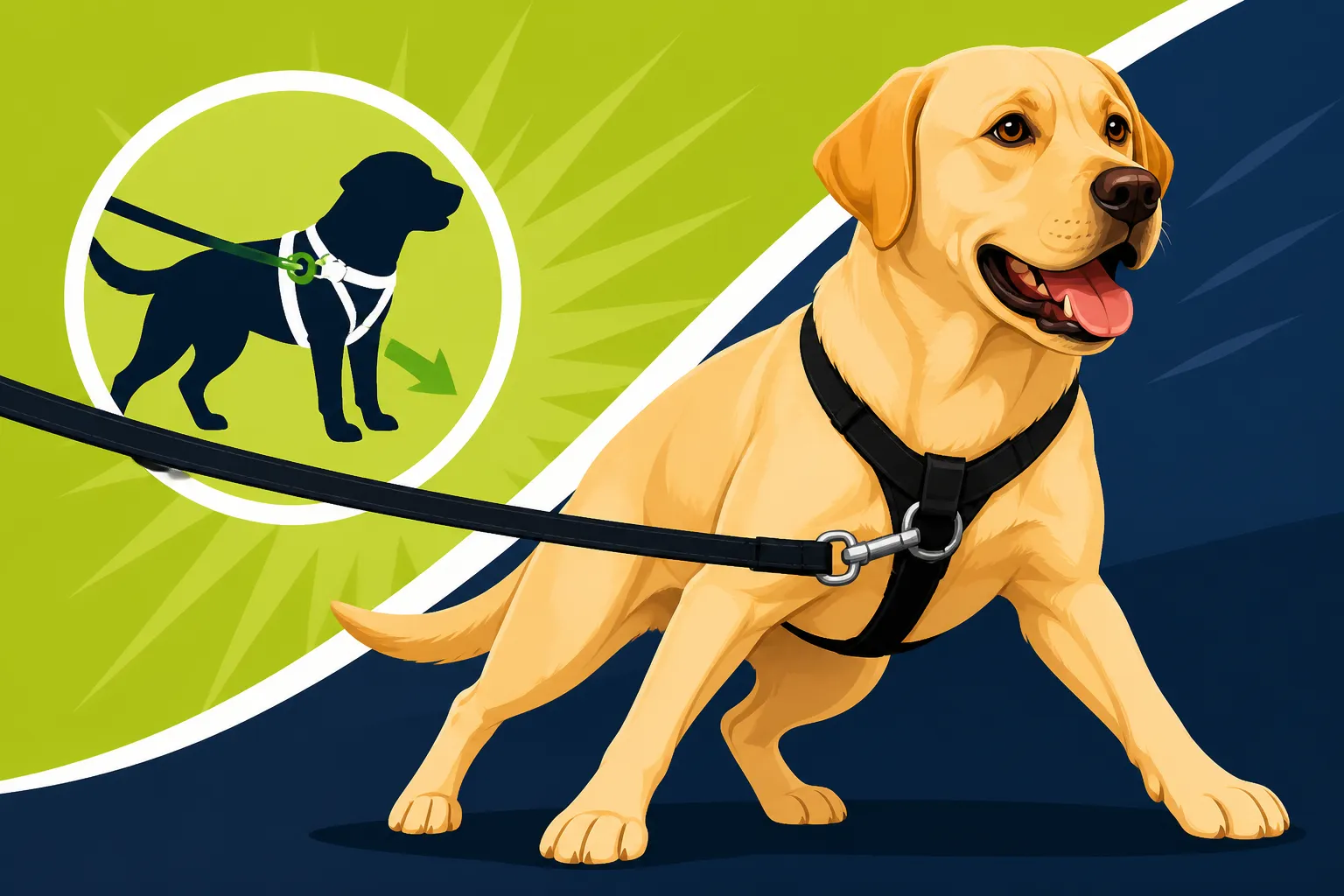
Front-Clip Harnesses on a Strong Labrador
Let's be honest, walking a strong, enthusiastic Labrador can sometimes feel less like a leisurely stroll and more like a competitive tug-of-war. Many Labrador owners find themselves with aching shoulders and tired arms, feeling utterly defeated by their dog's boundless energy and incredible pulling power. You love your pup, but the daily walk shouldn't be a test of brute strength! This guide is here to walk you through understanding why your Labrador pulls and how a front-clip harness can be a game-changer in helping you both enjoy your walks together, making loose leash walking a reality instead of just a dream.
Why Labradors Pull So Hard
It’s easy to get frustrated when your Labrador charges ahead, seemingly oblivious to your strained "heel" commands or the burning in your bicep. But it’s important to remember that this isn't usually an act of defiance; it's often a combination of natural instincts, sheer physical power, and learned behavior. Understanding the root causes can help you approach the problem with more patience and effective solutions.
The Labrador's Natural Drive
Labradors were originally bred for demanding work, often alongside fishermen, retrieving game from icy waters and bringing nets ashore. This heritage ingrained in them an incredible drive to move forward, to explore, and to pull. They are powerful, athletic dogs with a strong desire to get where they're going, which is often anywhere but directly beside you. Their enthusiasm for the world around them is one of their most endearing qualities, but it can make leash manners a challenge.
Think about it: for your Labrador, every walk is an adventure. New smells, new sights, new sounds—it’s an overwhelming sensory experience they want to dive into headfirst. That natural curiosity, combined with their history of needing to push through snow or water to retrieve, means they are inherently built to forge ahead. It’s not about being "bad"; it's about being a Labrador, pure and simple.
The Physics of a Pulling Dog
A Labrador is a powerhouse, often weighing between 55 and 80 pounds, sometimes even more. When they lean into a standard collar or a back-clip harness, they're essentially using their entire body weight and musculature to propel themselves forward. This creates a leverage situation where you, at the other end of the leash, are at a distinct disadvantage. It's like trying to stop a small car with a rope tied to its bumper—you just don't have the mechanical advantage.
The wider a Labrador's chest, the more surface area they have to push against a harness or collar, making them feel like an unstoppable force. A standard flat collar, while seemingly offering some control, can actually encourage pulling by creating a pressure-release cycle. When they pull, there's pressure on their neck. When they stop pulling for a second, the pressure eases. But for many determined Labradors, the reward of moving forward outweighs the temporary discomfort. Plus, constant pressure on the neck can be uncomfortable and potentially harmful in the long run.
Traditional Collars vs. Harnesses
For years, many of us just threw a flat collar on our dogs and hoped for the best. And for some calm, less driven dogs, that works out okay. But for a high-energy Labrador, a flat collar on its own offers very little control against their natural inclination to pull. The only pressure point is their neck, which, as mentioned, they can easily overcome, or worse, injure themselves in the process. They learn that pulling simply means they get to move faster, creating a self-reinforcing cycle that's tough to break.
Back-clip harnesses, while a step up from a collar in terms of comfort and safety (no neck pressure!), can also inadvertently encourage pulling. The leash attachment point is on the dog's back, often between the shoulder blades. This design allows the dog to engage their full body strength, distributing the pressure across their chest and back. In fact, many sled dogs wear harnesses designed in a similar way specifically to maximize their pulling power. So, while a back-clip harness might be great for a dog that already walks nicely on a leash, it rarely solves the problem for a strong, pulling Labrador. You're still giving them all the leverage.
How Front-Clip Harnesses Work
Now that we understand why Labradors pull and why traditional gear often falls short, let's talk about the innovation that truly makes a difference: the front-clip harness. This isn't just another harness; it's a strategically designed piece of equipment that changes the physics of the walk, giving you back some control.
The Steering Effect
The genius of a front-clip harness lies in its leash attachment point, which is located on your dog's chest, typically right over their sternum. When your Labrador begins to pull forward with a back-clip harness, they can brace their entire body against the resistance and pull straight ahead. With a front-clip harness, however, when they try to pull, the leash immediately applies pressure to their chest from the side, gently redirecting their momentum. Instead of pulling straight ahead, they get subtly turned to the side, facing you, or at least off their direct forward path.
Imagine trying to drive a car by holding a rope tied to the front bumper. If you pull straight back, the car stops. If you pull to the side, the car turns. A front-clip harness uses this same principle. The instant your Labrador tries to surge forward, they're not met with a direct head-on resistance, but rather a slight, uncomfortable shift in direction that breaks their forward momentum. This "steering" action is not painful; it simply makes it physically awkward and less rewarding to pull. It's a mild interruption, rather than a harsh correction.
Instant Feedback, Less Force
One of the greatest benefits of a front-clip harness is the immediate, non-aversive feedback it provides. With a flat collar, you often have to tug quite hard to get your Labrador's attention, which can be damaging to their neck and trachea, especially for an excitable pup. With a back-clip harness, your dog can effectively drag you along until you apply a significant amount of force. But the front-clip harness offers a more elegant solution.
The moment your dog applies tension to the leash by pulling, the harness swivels them slightly. This gentle redirection is enough to interrupt their focus on whatever exciting thing is ahead and bring their attention back to you. It's an immediate, subtle consequence that doesn't rely on you yanking or shouting. This means you need to use far less force to manage your dog, making walks more comfortable for both of you. It's a tool that helps teach your Labrador that pulling simply doesn't get them where they want to go, at least not efficiently. Loose Leash Walking With a Labrador really benefits from this kind of immediate, clear communication.
Comparison to Back-Clip Harnesses
While both front-clip and back-clip harnesses are generally safer and more comfortable than neck collars for most dogs, they serve very different purposes.
| Feature | Back-Clip Harness | Front-Clip Harness |
|---|---|---|
| Leash Attachment | On the dog's back, between shoulder blades | On the dog's chest, over the sternum |
| Control Against Pulling | Minimal; can encourage pulling by distributing force | Excellent; redirects dog's momentum sideways |
| Steering Effect | None | Yes, turns the dog toward the handler |
| Comfort | High, distributes pressure evenly across body | High, once fitted correctly; no neck pressure |
| Ideal Use | For dogs that already walk well on leash, or for safety in the car. | For dogs that pull, to teach loose leash walking. |
| Potential Drawbacks | Can still allow strong dogs to pull easily. | Can sometimes tangle legs if poorly fitted or very active dog. |
As you can see, for the specific problem of a strong Labrador that pulls, the front-clip harness is clearly the superior choice because of its unique mechanical advantage.
Choosing the Right Front-Clip Harness
Finding the perfect front-clip harness for your Labrador isn't just about grabbing the first one you see. A proper fit and understanding the features will make all the difference in your success. Investing a little time in research and fitting can save you a lot of frustration on future walks.
Key Features to Look For
When you're sifting through options, whether on a popular online marketplace like Amazon or checking out specialized training equipment from BAXTER & Bella, keep these features in mind:
- Adjustability: Labradors come in a range of sizes, even within the breed. Look for a harness with multiple adjustment points – ideally around the neck, chest, and girth. This allows for a snug, secure fit that won't chafe or allow your dog to slip out. A well-adjusted harness will sit comfortably without restricting shoulder movement.
- Durable Material: Labradors are strong, active dogs. You need a harness that can withstand their power and enthusiasm. Look for sturdy nylon webbing, strong buckles, and reinforced stitching. If your Labrador loves water, consider materials that dry quickly and resist mildew.
- Comfort Padding: While the front clip prevents pulling, the harness still sits on your dog's body. Padding on the chest strap and around the armpits can prevent chafing, especially important for Labs with sensitive skin or those who are very active.
- Visibility: For early morning or evening walks, reflective stitching or material can be a real bonus, increasing your Labrador's visibility to cars and cyclists.
- Hardware Quality: Check the D-rings and buckles. They should be robust and secure. Plastic buckles should be thick and durable, and metal rings should be welded for extra strength. Remember, your Labrador can put a surprising amount of pressure on these components!
Proper Fitting is Crucial
Even the best front-clip harness won't work if it doesn't fit correctly. A harness that's too loose can allow your Labrador to pull just as effectively, or even worse, wiggle out of it entirely. One that's too tight can restrict movement, cause chafing, or even interfere with breathing.
Here’s a general guide to fitting:
- Neck Strap: The harness should fit snugly around your Labrador's neck, but you should still be able to slide two fingers comfortably under the strap. It shouldn't be so tight that it chokes them or so loose that it rides up into their throat.
- Chest Strap: This is the critical one for front-clip harnesses. The horizontal strap across your dog's chest, where the leash attaches, should sit just above their breastbone (sternum). If it's too low, it can interfere with their front leg movement. If it's too high, it won't have the proper steering effect.
- Girth Strap: This strap goes behind your Labrador's front legs and around their rib cage. Again, the two-finger rule applies. Ensure it's far enough back from the armpits to prevent chafing, but not so far back that it could put pressure on their abdomen.
- Overall Impression: Once all straps are adjusted, the harness should look symmetrical and stable on your dog. Ask your Labrador to walk, sit, and lie down. Does it shift excessively? Does it rub anywhere? Their movement should be unhindered. Many brands, including those you might find on Amazon, offer sizing charts, but always measure your dog carefully and consider trying it on if possible.
Popular Options
There are many excellent front-clip harnesses on the market today. While I can't recommend specific models or price points, I can tell you that successful Labrador owners often find solutions from a few key design types. For example, some harnesses feature a single strap across the chest that the leash attaches to, while others have a more Y-shaped design that cradles the chest.
Brands like the Easy Walk Harness have long been popular for their simple yet effective design. Others, such as Freedom No-Pull Harness, offer a unique double-connection point (one front, one back) for even more control, which can be particularly useful for very strong pullers or during advanced training. Many of these are readily available through large retailers like Amazon, offering a wide selection and customer reviews to help guide your choice. Additionally, specialized online dog training platforms or communities, perhaps like BAXTER & Bella, often review and recommend specific harness styles that have proven effective for challenging breeds like Labradors, sometimes even offering video guides for proper fitting. It’s worth checking out reviews from other Labrador owners to see what has worked well for dogs with similar builds and pulling tendencies.
Training with a Front-Clip Harness
While a front-clip harness is an amazing tool, it's not a magical fix on its own. It's designed to make your training efforts more effective, not replace them entirely. Combining the right gear with consistent, positive reinforcement training is the key to truly teaching your Labrador Loose Leash Walking With a Labrador.
Initial Acclimation
Don't just snap the harness on your Labrador and head out the door for a mile-long walk. They might find the sensation of the chest clip unusual at first. Introduce the harness gradually and make it a positive experience.
- Positive Association: Let your Labrador sniff the harness. Offer treats when they approach it calmly. Place it on the ground and drop treats near it.
- Wearing it Briefly: Once they're comfortable with its presence, put the harness on for short periods indoors. Distract them with treats, praise, or a favorite toy. Allow them to wear it for a few minutes, then take it off. Gradually increase the duration.
- First Walks: Start with very short walks in a low-distraction environment. The moment your Labrador puts tension on the leash, stop walking. Wait for the tension to release, praise them, and then continue. This teaches them that pulling makes the walk stop, while a slack leash makes it continue. Consistency is vital here. Remember, Short Training Sessions That Suit a Labrador are often more effective than long, frustrating ones.
Reinforcing Loose Leash Walking
The front-clip harness provides the mechanical advantage, but you still need to teach your Labrador what to do instead of pulling. This is where positive reinforcement shines.
- Reward the Slack: The instant your Labrador has a loose leash, mark that behavior (with a clicker or a verbal "yes!") and reward them generously with a high-value treat. Repeat this frequently, especially when they are naturally walking beside you. They need to understand that the loose leash earns them good things.
- Change Direction: If your Labrador starts to forge ahead, don't just stop. Change direction abruptly. If they're pulling right, turn left. If they're pulling forward, turn around. This keeps them guessing and forces them to pay attention to where you're going, rather than just plowing forward. The front-clip harness makes these turns much easier and more effective.
- Practice in Different Environments: Start training in your quiet neighborhood, then gradually move to slightly more distracting areas like a park during off-peak hours. Eventually, you'll be able to practice in busier places, but always set your Labrador up for success.
Combining With Other Training Methods
A front-clip harness is a fantastic tool, but it's part of a larger training toolkit. It works best when combined with other positive reinforcement techniques and a good understanding of canine behavior.
- Basic Obedience: A strong "watch me" or "look" command can be invaluable for gaining your Labrador's attention in distracting environments. Commands like "sit" or "stay" can also be used as checkpoints during walks to regain focus. Consider enrolling in a local obedience class or checking out online resources. BAXTER & Bella offers online puppy training programs that cover leash manners and other vital obedience skills, providing structured guidance.
- Mental Stimulation: Sometimes, excessive pulling stems from an abundance of unspent energy or boredom. Ensure your Labrador is getting enough physical exercise, but also plenty of mental stimulation. Puzzle toys, scent work, or even short training sessions at home can help tire them out mentally. A tired Labrador is often a well-behaved Labrador. Exercise a Labrador Needs Each Day is crucial for their overall well-being and trainability.
- Consistency is Key: Everyone in the household needs to be on the same page regarding leash manners and harness use. If one person allows pulling, it will undermine the training progress. Make sure everyone uses the harness correctly and reinforces the loose-leash rules. Labradors are smart and learn quickly, but they thrive on consistency.
Using a front-clip harness can transform your walks from a dreaded chore into an enjoyable bonding experience. It gives you the control you need without resorting to harsh methods, allowing you to effectively teach your strong, enthusiastic Labrador the joys of walking politely by your side.
Disclaimer
This article is for general informational purposes only and does not constitute professional advice. Laws, prices and regulations vary by location and change over time. Consult a qualified professional for guidance on your specific situation.