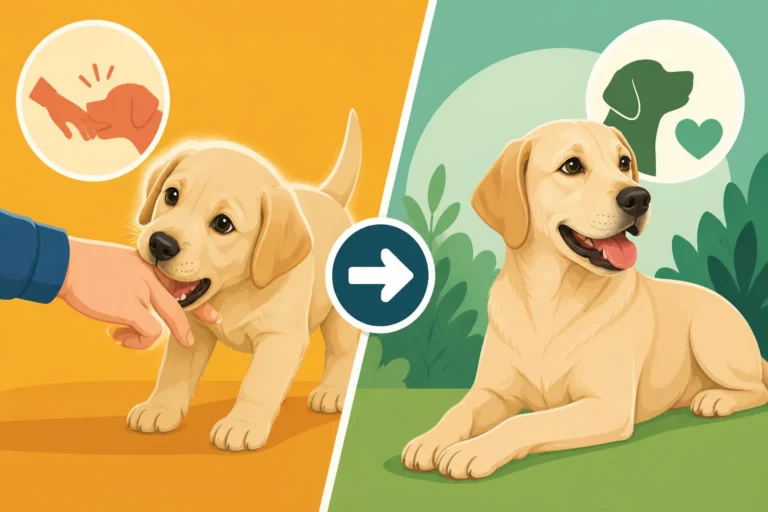
Why a Labrador Jumps on Every Visitor
It’s a scene most Labrador owners know all too well: the doorbell rings, and before you can even reach the door, your sweet, excitable Labrador is a furry torpedo, launching themselves at your unsuspecting visitor. This isn't just an embarrassing moment; it can be genuinely uncomfortable, even frightening, for guests, and it's certainly not the polite greeting we want our beloved Labs to offer. This guide is here to help you understand why your Labrador jumps on everyone and, more importantly, equip you with practical, empathetic strategies to teach them better manners.
The Root Causes: Why Your Labrador Jumps
When your Labrador jumps up, it's rarely out of malice. Instead, it's usually a cocktail of deep-seated instincts, learned behaviors, and a profound misunderstanding of human social cues. It's frustrating because you know your dog loves people, but this over-enthusiastic greeting often pushes people away.
Overwhelming Excitement and Attention-Seeking
Labradors are inherently friendly, social dogs. When someone new or even a familiar face arrives, their world lights up. This intense joy often translates into an inability to control their impulses. They want to be close, they want to greet, and they want to express all that bubbling excitement. For many Labradors, jumping is their way of saying, "Hello! I love you! Pay attention to me right now!" They don't mean to knock anyone over or make them uncomfortable; they just want to be involved.
Think about it from your Labrador's perspective: a new person equals new smells, new pats, and potential playtime. They associate the arrival of people with positive attention, and if jumping has ever resulted in a pat, a verbal greeting (even a scolding one!), or any form of interaction, they've learned that it's a successful strategy for getting what they want. It’s a classic case of inadvertent reinforcement; even pushing them off can sometimes be interpreted as a game or a form of attention. This is why consistency is so crucial when trying to modify this behavior. Labrador Temperament and Personality goes into more detail about their friendly nature.
Lack of Impulse Control and Training Gaps
Jumping is often a symptom of a broader lack of impulse control. Labradors, especially as puppies and adolescents, can be bundles of energy with very little self-restraint. They haven't yet learned to pause, think, and choose a more appropriate behavior. This isn't a reflection of their intelligence—Labradors are famously smart and trainable—but rather a stage in their development and a gap in their training.
If a Labrador hasn't been explicitly taught an alternative way to greet people, they’ll default to what feels natural and rewarding to them. It's not enough to tell them "no"; you have to show them what "yes" looks like. Many owners focus on basic obedience like "sit" and "stay," which are vital, but sometimes the specific scenario of greeting visitors gets overlooked until it becomes a problem. An effective training program, perhaps even an online puppy school like those from BAXTER & Bella, can really help address these impulse control issues systematically.
Breed-Specific Traits and Physicality
Labradors were originally bred to retrieve game, often from water, and to work closely with humans. This history has instilled in them a strong desire for interaction and a physical enthusiasm that can sometimes be overwhelming. Their sturdy build and powerful legs mean that even a "friendly" jump can be quite forceful. A full-grown Labrador can weigh upwards of 70-80 pounds, and that kind of weight launching towards someone can easily unbalance them.
Their "otter tails" are also powerful instruments of enthusiasm! While not directly causing jumping, the vigorous wagging can contribute to the overall impression of uncontrolled energy. Understanding these breed traits, as discussed in The Labrador Retriever Breed Explained, helps us realize that managing their physical greetings requires a bit more effort than with a smaller, less robust breed.
The Impact of Jumping: More Than Just Annoying
While your Labrador's jumping might come from a place of love, its impact on your guests, on your dog's safety, and on your reputation as a dog owner can be significant and far from endearing. It's a behavior that truly needs to be addressed for everyone's well-being.
Safety Concerns for Guests and Your Dog
The most immediate and critical concern with a jumping Labrador is safety. An excited Labrador can easily knock over an elderly relative, a small child, or even an able-bodied adult, leading to bumps, bruises, or more serious injuries like fractures. Imagine your elderly aunt visiting, perhaps a bit unsteady on her feet already, and suddenly being bowled over by 75 pounds of enthusiastic fur. The guilt alone would be crushing, not to mention the potential medical bills.
Beyond physical injury, some people have a genuine fear of dogs, especially larger, boisterous ones. Even if your Labrador is the sweetest dog on the planet, a sudden jump can trigger anxiety or panic in someone who is already wary. Moreover, jumping can also put your dog at risk. If they jump on the wrong person – someone who reacts defensively or aggressively – it could lead to an unfortunate incident for your Labrador. This highlights why it's so important to teach Teaching a Labrador to Greet Politely.
Uncomfortable and Unpleasant Greetings
Let's be honest, no one enjoys being jumped on. It can soil clothes, leave muddy paw prints, and generally make a guest feel less than welcome, despite your dog's best intentions. Think about the delivery person who just wants to drop off a package without wrestling a furry greeter, or a friend arriving in nice clothes for an evening out. The thought of being assaulted by a dog, no matter how friendly, can deter people from visiting your home.
This discomfort can also extend to your dog's general behavior outside the home. If they jump on people in public, like at the dog park or on a walk, it not only reflects poorly on your training but can also create awkward social situations. People might avoid you and your dog, which limits your Labrador's opportunities for positive socialization, which is vital as outlined in Socializing a Labrador Puppy.
Reinforcing Bad Habits
Every time your Labrador jumps and gets any form of attention – even negative attention like a push or a stern "no" – they are learning that jumping is a way to interact. You might think you're correcting them, but they might just be interpreting it as, "Aha! I jumped, and now I'm getting attention!" This makes the behavior incredibly hard to break, as your dog is literally being rewarded for doing the exact thing you don't want.
Breaking this cycle requires a conscious effort to stop inadvertently reinforcing the jumping. It means changing your reaction and teaching an alternative, incompatible behavior. The longer the jumping has been allowed to continue, the more ingrained the habit becomes, and the more consistent you'll need to be to un-train it.
Practical Strategies to Stop Jumping
Stopping your Labrador from jumping requires a multi-pronged approach combining management, training, and unwavering consistency. It's not a quick fix, but with patience, you can teach your enthusiastic greeter better manners.
Managing the Environment
Before you can even begin to train, you need to manage the environment to prevent the jumping from happening in the first place. This is crucial because every time your dog jumps, they are practicing and reinforcing the unwanted behavior.
- Leash and Barrier Control: When you know a visitor is coming, put your Labrador on a leash before they arrive. This gives you immediate control. You can use a sturdy baby gate or even a portable ex-pen to create a physical barrier between your dog and the front door or the arriving guest. This prevents direct contact until your dog is calm. You can find many options for durable leashes, treat pouches, and gates on Amazon. This strategy is also useful if your Labrador struggles with Loose Leash Walking With a Labrador in general.
- Designated "Greeting Spot": Create a designated "spot" for your dog to go to when guests arrive. This could be their bed, a mat, or a specific area where they can calmly observe. Reward them heavily for going to and staying in this spot. This helps redirect their excitement to a predictable, calm behavior.
- De-escalate the Entrance: Ask visitors to ignore your dog completely until they are calm. No eye contact, no talking, no touching. This can be tough for dog lovers, but it's vital. Once your dog has four paws on the floor for a few seconds, then your guest can offer a calm, gentle greeting.
Training Alternative Behaviors
The core of stopping jumping is teaching your Labrador what you want them to do instead. Simply saying "no" isn't enough; they need a clear, rewarding alternative.
-
"Sit to Greet": This is often the golden standard. Teach your Labrador that the only way to get attention from a human is to sit.
- Practice in low-distraction environments: Start with just yourself. Walk towards your dog. If they start to jump, turn your back. As soon as all four paws are on the floor, ask for a "sit" and immediately reward with a high-value treat and calm praise.
- Introduce mild distractions: Once they're consistent with you, introduce a family member. Have them approach, and if your dog sits, they get the treat and praise from both of you. If they jump, the person turns their back.
- Gradually add real visitors: With a leash on, have a visitor approach. If your dog jumps, the visitor turns their back and steps away. As soon as your dog sits, the visitor can offer a treat and calm praise.
- Increase duration: Gradually increase the amount of time your dog must remain sitting before receiving the reward. Stopping a Labrador From Jumping Up offers more detailed steps.
-
"Go to Your Place": This builds on the designated greeting spot. Teach your dog to go to their bed or mat on command and stay there until released.
- Lure and Reward: Lure your dog to their bed with a treat. As they step onto it, say "Place!" and reward. Repeat many times.
- Add Duration: Once they go to their place reliably, start asking for short stays, gradually increasing the time before they get the treat.
- Introduce Distractions: Practice with mild distractions, like someone walking past, then gradually build up to the sound of the doorbell or actual visitors. For comprehensive training methods like this, online programs from BAXTER & Bella can be incredibly helpful with their structured lessons.
-
Keep Your Own Greetings Calm: It's not just visitors; we often inadvertently excite our dogs ourselves. When you come home, practice calm greetings. Don't immediately shower your dog with exuberant attention. Wait until they are calm, then offer a gentle hello. This reinforces that calm behavior gets rewarded.
Consistency, Patience, and Positive Reinforcement
This is perhaps the most critical component. All family members and frequent visitors need to be on the same page. If one person allows jumping, it undermines all the hard work you're doing.
| Training Tactic | Key Action | Benefit | Common Pitfall |
|---|---|---|---|
| Environmental Management | Use leashes, gates, crates for arrivals. | Prevents rehearsal of unwanted behavior. | Inconsistent use, relying on it instead of training. |
| "Sit to Greet" | Reward calm sits for attention. | Teaches an alternative, polite behavior. | Giving attention too soon, not turning away consistently. |
| "Go to Place" | Train dog to go to a designated spot. | Creates distance and promotes calmness. | Not practicing enough in varied scenarios. |
| Ignore Jumping | Turn back, walk away, make no eye contact. | Removes reinforcement for jumping. | Inconsistent ignoring, accidental positive feedback. |
| High-Value Rewards | Use exciting treats (e.g., bits of cheese). | Motivates dog to perform desired behavior. | Using low-value treats for high-distraction scenarios. |
Consistency means that every single time your Labrador tries to jump, the unwanted behavior is met with a lack of attention (you turn away), and the desired behavior (four paws on the floor, sitting) is rewarded. This might feel tedious, especially at first, but it's the only way your Labrador will understand the new rules.
Patience is also key. Your Labrador has likely been practicing jumping for a while, and it takes time to break ingrained habits. Don't get discouraged if there are setbacks. Just calmly and consistently redirect. Remember to use high-value treats (think small pieces of cooked chicken, cheese, or specialized training treats available from Amazon) to make the desired behaviors extra rewarding. This is especially true as you navigate Labrador Chewing Through Adolescence, when their minds can be a whirlwind of new impulses.
It's also important to remember that training is an ongoing process. Even once your Labrador is greeting calmly, occasional reminders and practice sessions will keep those good manners sharp. Training a Labrador From Puppy to Adult emphasizes this lifelong commitment to positive reinforcement.
Disclaimer
This article is for general informational purposes only and does not constitute professional advice. Laws, prices and regulations vary by location and change over time. Consult a qualified professional for guidance on your specific situation.