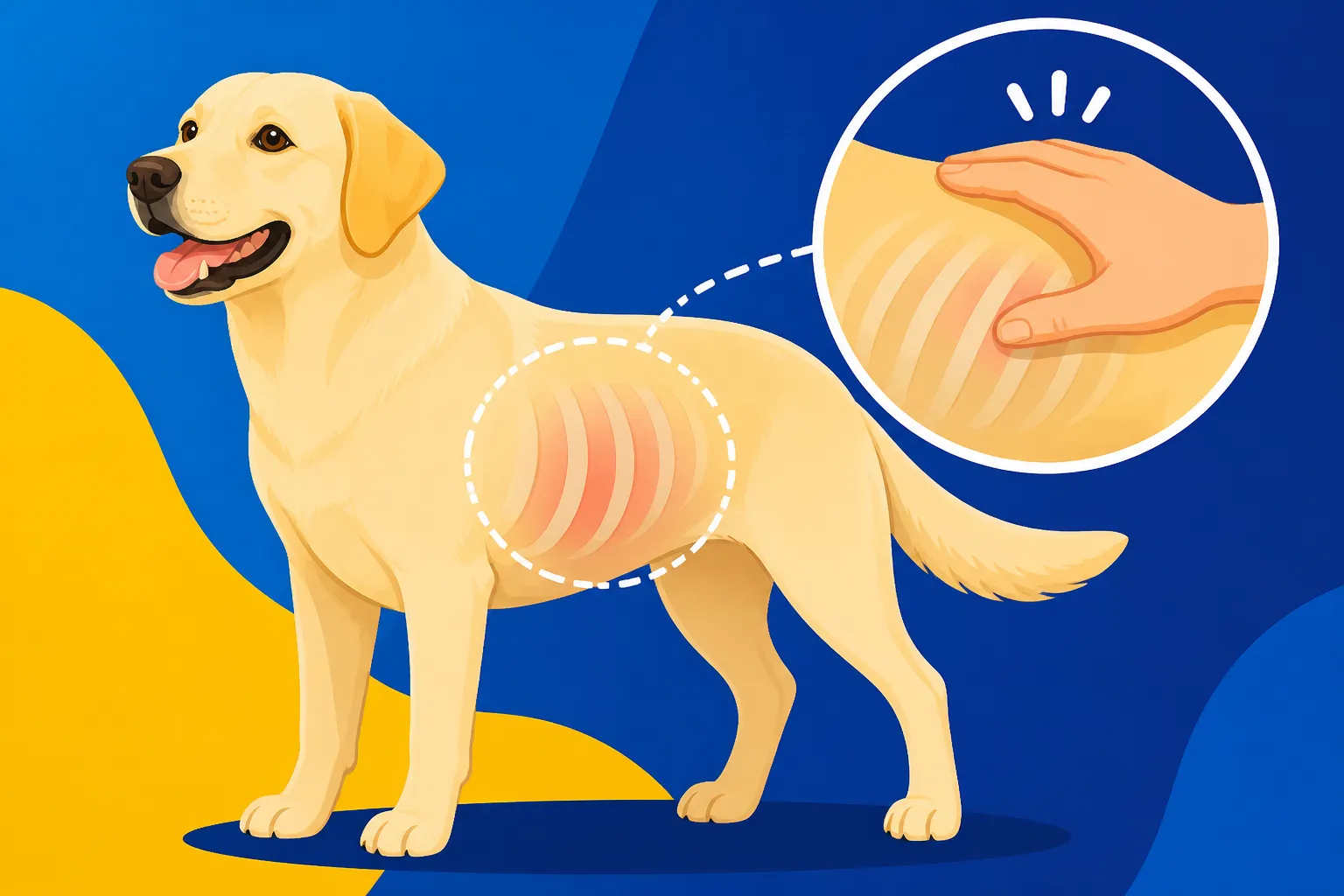
Feeling a Labrador’s Ribs the Right Way
As Labrador owners, we all want the best for our energetic, food-loving companions, but knowing if they're truly at a healthy weight can feel like a guessing game. Many of us look at our Labs and think their sturdy build is just part of the breed, often overlooking those subtle signs that they might be carrying a few too many pounds. However, learning to correctly feel your Labrador's ribs is one of the most practical and reliable ways to monitor their body condition, offering invaluable insight into their health that visual inspection alone often misses. This guide will teach you the exact technique to assess your Lab's ribs, helping you maintain their ideal weight and prevent potential health issues down the line.
Why Feeling Your Labrador's Ribs is the Gold Standard for Weight Assessment
It’s easy to get caught up in how our Labradors look. We see their smiling faces, their wagging tails, and that perpetual hopeful gaze whenever food is nearby, and we might not always notice the slow, creeping weight gain. But visual assessments can be incredibly deceiving, especially with a breed as prone to gaining weight as the Labrador. Their dense double coat and often blocky build can mask a lot, making it hard to tell the difference between a well-muscled, healthy dog and one carrying excess fat. This is where getting your hands on them becomes absolutely essential.
Visual Cues Can Be Deceiving
Think about it: have you ever looked at a friend's dog and thought, "Wow, they're looking a bit chunky," only for them to insist their vet says the dog is fine? Or perhaps you've been on the other side, convinced your Lab is perfectly proportioned, only for the vet to gently suggest a diet. Our perception is subjective, and it's easy for our eyes to adjust to a gradual change, making us believe a heavier Labrador is the "normal" look. The thick fur that keeps them warm in the water also does a fantastic job of hiding the truth about what’s underneath. You might even hear people say, "Oh, that's just a big-boned Lab," when in reality, those "big bones" are often cushioned by a significant layer of fat. This misjudgment can lead to serious health consequences, from joint problems to a shortened lifespan.
The Importance of Proactive Monitoring
Regularly feeling your Labrador's ribs allows you to cut through those visual biases. It gives you a direct, tactile assessment of their body fat levels. This isn't just about vanity; it's about preventative healthcare. Labradors are notorious for their love of food, which is why Why Labradors Gain Weight So Easily is such a common topic among owners. Being proactive with weight management can prevent a whole host of problems later on, including exacerbating conditions like Labrador Hip and Elbow Dysplasia or increasing the risk of Cancer in Labrador Retrievers. By making this simple check a routine, you empower yourself to make timely adjustments to their diet and exercise before a small weight gain turns into obesity. It's truly a cornerstone of responsible Labrador ownership, helping to ensure your companion lives a long, happy, and healthy life.
The Step-by-Step Guide to Feeling Your Labrador's Ribs
Alright, let's get down to business. Feeling your Labrador's ribs isn't complicated, but there's a specific technique that will give you the most accurate results. It's about consistency and understanding what you're looking for. Don't worry if it feels a bit awkward at first; like anything new, practice makes perfect. Your Lab might even enjoy the extra attention and gentle massage!
Positioning and Initial Touch
First things first, make sure your Labrador is standing comfortably. If they're lying down or curled up, it can alter how their ribs feel, making an accurate assessment difficult. A calm, relaxed dog is also easier to examine, so choose a time when they're not overly excited or distracted.
Now, place both of your hands flat on either side of your Labrador's chest, just behind their shoulder blades. You're looking for the area where their ribs begin. Use your fingertips and palms to gently feel along their side. You're not pressing hard; think of it like gently running your hands over a fence post. The goal is to feel the contours of their body, not to dig in deeply. Take a moment to just feel the overall shape and structure of their rib cage.
The Rib Test: What You Should Feel
This is the crucial part. With your hands still on their sides, use the pads of your fingers to gently sweep back and forth over their ribs. You should be able to feel each individual rib bone as distinct structures, much like running your fingers over a washboard.
Here's the key:
- Ideal Weight: You should feel the ribs easily under a thin layer of skin and muscle, but without seeing them visibly sticking out. There should be just enough padding that they don't feel sharp or prominent. You can feel them without having to press firmly. It's like feeling the knuckles on your hand – you know they're there, but they aren't painfully poking out. This usually corresponds to a Body Condition Score (BCS) of 4-5 on a 9-point scale. This is the sweet spot we're aiming for.
- Overweight: If you have to press down firmly to feel the ribs, or if you can't feel them at all because there's a significant layer of fat over them, your Labrador is likely overweight. It feels more like touching a soft, well-padded cushion where the bones are completely obscured.
- Underweight: If you can see the ribs clearly, or if they feel very prominent and sharp with little to no padding, your Labrador is underweight. This is also a concern and requires attention.
It's a subtle difference, but once you get the hang of it, you'll know what the "just right" feel is. Some owners find it helpful to compare what they feel on their dog to their own hand: when you make a fist, you can feel your knuckles. If you then relax your hand and gently run your fingers over the back, you feel the bones but they aren't sharp. That's closer to the ideal.
Beyond the Ribs: Spine and Waistline
While the ribs are a primary indicator, don't stop there. Once you've assessed the ribs, continue your tactile examination. Run your hands along your Labrador's spine. In an ideal weight Labrador, you should be able to feel the bumps of the vertebrae, but again, without them feeling sharp or sticking out. If you can't feel the spine at all, it's another sign of excess fat. If the individual vertebrae are very prominent and easily visible, your dog is likely too thin.
Finally, step back and look at your Labrador from above and from the side. When looking from above, an ideal weight Labrador should have a distinct "waist" (an indentation) between their rib cage and their hips. It shouldn't be dramatic, but it should be noticeable. If they look like a straight line or are wider at the waist than at the hips, they're likely overweight. From the side, their abdomen should tuck up slightly after the rib cage, not hang down. These visual cues, when combined with your tactile rib assessment, provide a comprehensive picture of your Lab's body condition.
Here's a simple comparison of what to feel:
| Body Condition | Ribs | Spine | Waistline (from above) | Abdomen (from side) | General Appearance |
|---|---|---|---|---|---|
| Too Thin | Easily visible and palpable, sharp feel. | Easily visible, bony, prominent. | Exaggerated tuck. | Severe tuck. | Gaunt, bony, often lethargic. |
| Ideal | Easily palpable, slight fat covering. | Palpable with slight fat covering. | Clearly discernible tuck. | Slight tuck. | Well-proportioned, athletic. |
| Overweight | Difficult to feel, requires pressure. | Difficult to feel, covered in fat. | No waist, broad back. | No tuck, possibly sagging. | Rounded, heavy, lack of definition. |
| Obese | Cannot feel, heavy fat covering. | Cannot feel, deep fat covering. | Distended, much wider than chest. | Hanging belly. | Very heavy, rolls of fat visible. |
This table helps you put your tactile and visual observations into context, guiding you toward a more accurate assessment. Remember, consistency in checking is key.
Interpreting Your Findings: Underweight, Ideal, or Overweight
Once you've done the "rib test" and checked the spine and waistline, you'll have a much clearer idea of where your Labrador stands on the body condition spectrum. It’s not just about being fat; being too thin also presents health risks. Understanding what each finding means is crucial for taking appropriate action.
Too Thin: When Every Rib is Prominent
If you can easily see your Labrador's ribs, or if they feel sharp and distinct with absolutely no padding, they are likely underweight. This means they're not getting enough calories to maintain a healthy body mass, or they might be burning more than they consume. While less common for Labs due to their enthusiastic appetites, it can happen, especially in very active field lines or if there's an underlying health issue at play.
Causes for a Labrador being underweight could range from insufficient food intake – perhaps they’re a Field Line Labrador Traits and burn through calories incredibly fast, or their food portions haven't been adjusted for their energy output. It could also signal medical issues like parasites, dental problems making eating painful, or a metabolic disorder that prevents nutrient absorption. If your Lab is looking too lean, especially if it's accompanied by low energy or changes in their stool, a trip to the vet is definitely in order to rule out any health concerns. You might need to adjust their diet, potentially with a higher-calorie food, but always under veterinary guidance.
The Ideal: Just Right, Like a Washboard
This is the sweet spot, the gold standard we talked about earlier. When you run your hands over your Labrador's sides, you should easily feel each individual rib, but they shouldn't feel sharp or look visible. There's just a thin, smooth layer of muscle and fat over them. It's like feeling a well-toned athlete's stomach – defined but not bony.
An ideal body condition means your Labrador has enough energy reserves, but not so much that it's putting a strain on their joints, heart, or other organs. Dogs at an ideal weight typically have more energy, better joint health, and a stronger immune system. This optimal condition is directly linked to a longer, healthier lifespan, and is often what is discussed in articles like How Much Longer a Lean Labrador Lives. Maintaining this ideal is a balancing act of proper nutrition and adequate exercise. For instance, knowing Cups Per Day for an Adult Labrador based on their activity level is vital, and using tools like a kitchen scale to accurately measure food, available on Amazon or Chewy, can make a huge difference in portion control.
Overweight: When the Ribs Hide
This is the most common issue we see with Labradors, and it's where regular rib checks are truly indispensable. If you have to press down hard to feel your Lab's ribs, or if you can't feel them at all beneath a soft, padded layer, then your Labrador is carrying too much weight. This excess fat can feel like a thick blanket over their ribs, making it impossible to distinguish the individual bones.
Being overweight or obese puts immense strain on a Labrador's body. It exacerbates joint problems like arthritis, makes them more prone to conditions such as Cruciate Ligament Tears in Labradors, and significantly increases their risk for diabetes, heart disease, and certain cancers. An overweight Labrador will often have less stamina, struggle with exercise, and might even seem less enthusiastic about playtime. The good news is that weight gain is usually reversible with consistent effort. This might involve reducing their portion sizes, switching to a weight-management food (many excellent options are available from reputable brands on Chewy), or exploring fresh, portion-controlled meals like those offered by Ollie. Increasing their daily exercise, perhaps by adding more structured walks or swimming sessions, will also be key. Remember, small, consistent changes make a big impact over time.
Integrating Rib Checks into Your Labrador's Routine Health Care
Understanding your Labrador's weight isn't a one-time thing; it's an ongoing commitment to their well-being. By making rib checks a regular part of your routine, you'll develop a keen sense for their body condition and be able to spot subtle changes quickly, allowing for proactive adjustments rather than reactive measures.
Regular Checks and When to Consult Your Vet
I recommend checking your Labrador's ribs at least once a month, ideally more frequently, especially if you're actively working on weight management or if they are still growing puppies (though remember, How Fast Growth Damages a Labrador's Joints is a concern if puppies grow too quickly from overfeeding). It only takes a minute or two and can be done during a petting session or after a walk. Consistency helps you understand what's "normal" for your specific dog. Keep a little note on your calendar or phone, or simply incorporate it into their regular grooming routine.
While you'll become quite adept at this assessment, your veterinarian is still your best partner in managing your Labrador's health. Always consult your vet if:
- You're unsure about your assessment or can't tell if your Lab is at an ideal weight.
- Your Labrador's weight is fluctuating rapidly without obvious changes in diet or exercise.
- Your Lab is underweight, as this can be a sign of an underlying medical condition.
- You've tried diet and exercise adjustments for an overweight Lab, but you're not seeing results. They can offer tailored advice, specific dietary recommendations, and rule out medical issues that might be contributing to weight problems.
Don't hesitate to ask your vet for a demonstration of how they perform a body condition score during your next routine check-up, such as when your Labrador is due for their Labrador Vaccination and Parasite Schedule. Their expert eye and hands can confirm your findings and provide peace of mind.
Dietary Adjustments and Exercise Considerations
Once you have an accurate assessment of your Labrador's weight, you can make informed decisions about their care. If they're at an ideal weight, fantastic! Continue with your current routine but remain vigilant. For those needing to lose a few pounds, dietary adjustments are often the first step. This isn't just about feeding less, but feeding smarter.
Consider switching to a high-quality weight management formula, which typically has fewer calories and more fiber to help your Lab feel full. Brands carried by Chewy often have a good selection, and you can compare ingredients and calorie counts. Another helpful strategy is using a slow feeder bowl to make mealtime last longer, or portioning out their daily kibble into puzzle toys for mental stimulation, which can also be found on Amazon. This makes them work for their food, burning a few extra calories and reducing boredom. For very food-driven Labs, you might even consider healthy, low-calorie treat alternatives like carrots, green beans, or blueberries instead of commercial treats. Using Kibble From the Daily Ration as Treats is another excellent trick to keep calorie intake in check.
On the exercise front, remember that Labradors are energetic dogs, and increasing their physical activity can greatly aid in weight loss and maintenance. If your Lab is currently a couch potato, start slowly and gradually increase the duration and intensity of their walks. Swimming is a fantastic, low-impact exercise for Labradors, especially those with joint concerns. Even simple games of fetch in the yard, or learning new tricks, can contribute to their daily calorie burn. For more detailed guidance, explore articles like Exercise a Labrador Needs Each Day or Getting Weight Off an Overweight Labrador. The key is consistency and finding activities that both you and your Labrador enjoy, turning weight management into a positive bonding experience rather than a chore.
Disclaimer
This article is for general informational purposes only and does not constitute professional advice. Laws, prices and regulations vary by location and change over time. Consult a qualified professional for guidance on your specific situation.