Freezing and Ignoring a Mouthy Labrador
One of the most common, and frankly, most frustrating challenges new Labrador owners face is the relentless nipping, mouthing, and biting that often comes with an adorable puppy. It can feel like your sweet little fluffball has razor blades for teeth and seems determined to use them on every piece of skin it can find. This guide is all about tackling that particular puppy behavior head-on using the "freeze and ignore" method, giving you practical steps to teach your Labrador that human skin is not a chew toy.
Understanding Why Labradors Mouth
Before we dive into how to stop it, let's talk about why your Labrador puppy is doing this in the first place. It’s not out of malice, I promise! It’s a completely natural, developmentally appropriate behavior, especially for a breed known for using its mouth.
Puppy Biting Is Normal Behavior
Think about how puppies interact with their littermates. They play rough! They wrestle, tumble, and use their mouths constantly. This is how they learn bite inhibition – understanding how much pressure they can exert before another puppy yelps and stops playing. When a puppy bites too hard, the bitten littermate often yelps and disengages, which teaches the biter that painful bites end the fun. This natural feedback loop is crucial for puppies to learn appropriate bite pressure.
When your Labrador puppy comes home to you, it brings those same instincts. Your hands, feet, and even your clothes become stand-ins for its littermates, and it's trying to figure out the rules of engagement in this new social environment. It's essentially saying, "How hard can I bite you before you stop playing?" They don't inherently know that human skin is more delicate than another puppy's fur, and it's our job to gently, but firmly, teach them that lesson.
Labradors and Their "Soft Mouth"
Labradors are famous for their "soft mouth," a trait prized in their retrieving work. This means they can carry game, like a pheasant or a duck, without damaging it. It’s a wonderful quality, but it also means their mouths are central to their world. They explore with their mouths, they carry things, and they often want to have something in their mouth at all times. This strong oral fixation means that mouthing and carrying things is deeply ingrained in their breed DNA.
Because of this innate drive, a Labrador puppy will naturally gravitate towards using its mouth to interact with its environment and with you. While we want them to develop that "soft mouth" for carrying toys or retrieved items, we absolutely need to channel that oral drive away from our bodies. Understanding this genetic predisposition helps us approach the training with patience and the right strategies, rather than getting frustrated that our pup is "misbehaving" when it's just being a Labrador. You can learn more about Why Labrador Puppies Mouth Everything in our dedicated guide.
Teething and Exploring the World
Beyond play and breed instinct, teething is another huge factor in puppy mouthing. Just like human babies, Labrador puppies go through an uncomfortable teething phase where their adult teeth are pushing through their gums. This usually starts around 3-4 months and can last until 6-7 months of age. During this time, the urge to chew and mouth things is incredibly strong because it helps alleviate the discomfort.
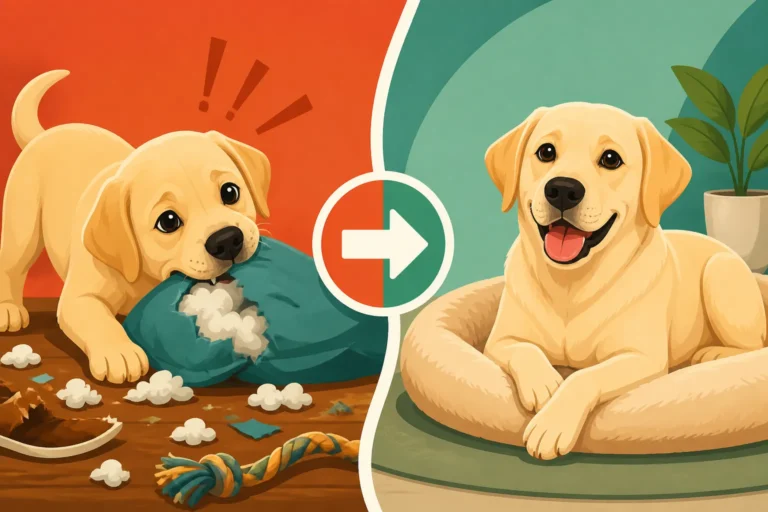
Everything becomes a potential chew toy – your fingers, your shoelaces, furniture legs, anything they can get their jaws on. They're not just teething; they're also exploring their new world with their mouths, learning about textures, shapes, and what's edible versus not. Providing plenty of appropriate chew toys is essential during this phase, but so is teaching them what's not okay to chew on, which is where methods like freeze and ignore come in.
The "Freeze and Ignore" Technique Explained
"Freeze and ignore" is a classic and highly effective method for teaching bite inhibition and stopping unwanted mouthing in puppies. It leverages the natural way puppies learn within their litter and translates it to human-dog interaction. The core idea is simple: if your puppy uses its teeth on your skin, the fun stops immediately.
What "Freezing" Means
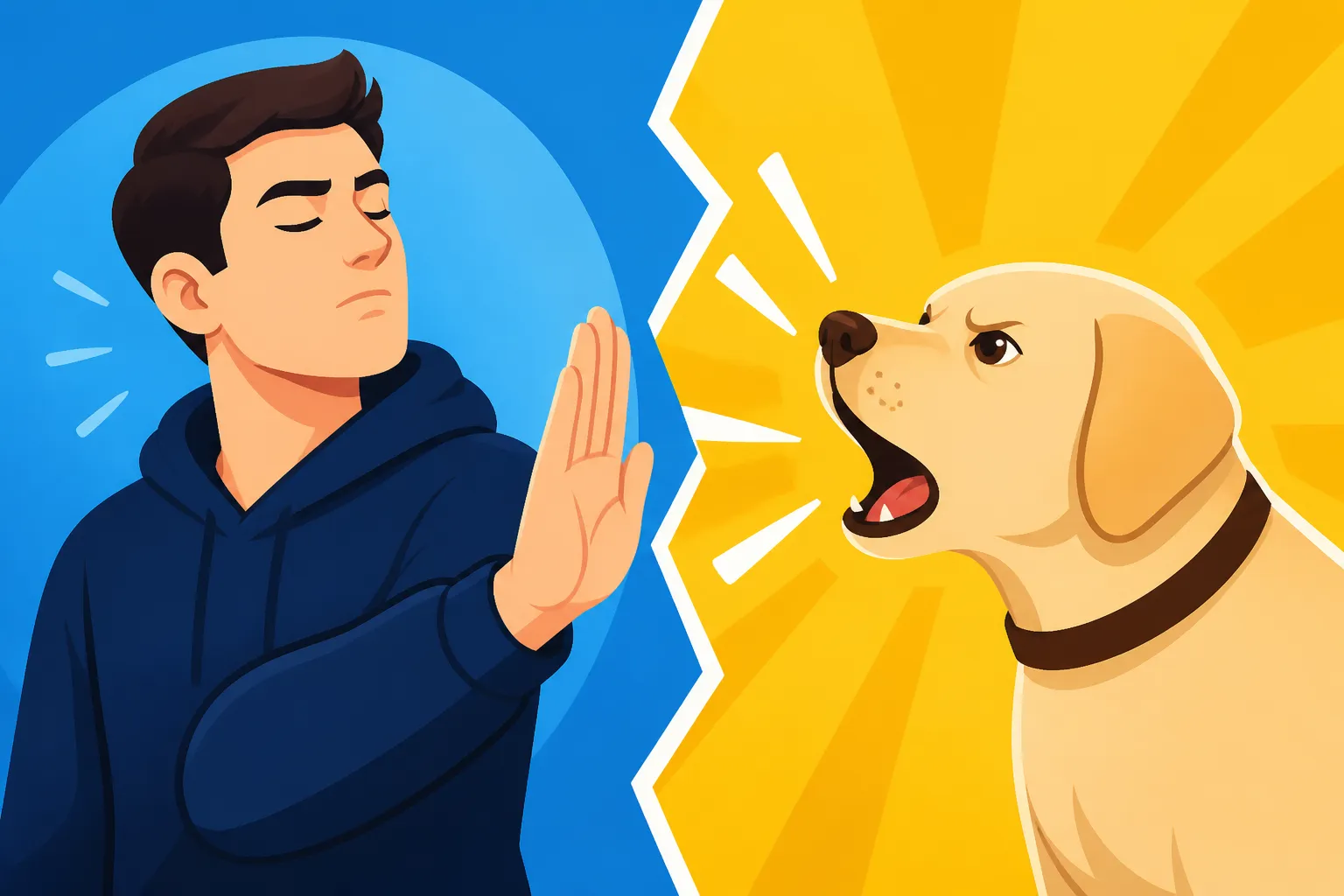
When your Labrador puppy's teeth, even playfully, make contact with your skin, the first step is to "freeze." This means you immediately stop all movement. No more petting, no more wiggling your fingers, no more walking away. Just stand or sit completely still, like a statue. The key here is to remove the "reward" of interaction that the puppy was seeking. Many puppies see movement and playful reactions as an invitation to continue playing, even if it's painful for you.
By freezing, you’re communicating very clearly that the game has ended. There's no more fun to be had from biting. Your body language becomes very neutral, removing any feedback the puppy might misinterpret as encouragement. It's not a punishment, but rather a clear signal that this particular interaction is now over. This pause gives the puppy a moment to register that its action had a direct consequence: the human suddenly became boring.
The Power of "Ignoring"
After you've frozen, the "ignore" part comes into play. If the puppy continues to mouth or nip, or if it disengages for a moment and then comes back for more, you need to physically remove yourself from the situation. This could mean standing up and turning your back, or even stepping out of the room for a few seconds. This is where the profound impact of the technique truly shines.
Puppies crave attention and interaction. When you remove yourself, you are taking away the most valuable resource for a social creature: your presence and engagement. This isn't about being mean; it's about being consistent and clear. The puppy quickly learns, "When I bite, my human disappears." This is a powerful lesson, much more effective than yelling or swatting, which can actually escalate the behavior or make the puppy fearful. The goal is to make biting entirely unprofitable and unrewarding.
Why This Method Works with Labradors
This method is particularly effective for Labradors because they are highly social, eager to please, and generally motivated by attention and interaction. They want to be with you, play with you, and get your affection. When you consistently remove these things the moment their teeth touch your skin, they quickly make the connection. They understand that their behavior directly leads to the loss of something they desire (your company and interaction).
Moreover, Labradors are intelligent dogs. They are capable of understanding cause and effect. While it might take a few repetitions, they will start to generalize the rule: "Human skin = no biting." Because it mimics how puppies learn bite inhibition from their littermates (who yelp and stop playing), it taps into a natural learning pathway for them. It's gentle, clear, and avoids any confrontation that could damage your bond or create fear.
Implementing Freeze and Ignore Effectively
Like any training technique, consistency and correct application are paramount for "freeze and ignore" to work its magic. It's not a one-and-done solution; it requires patience and a unified approach from everyone in the household.
Consistency Is Key
This is perhaps the most important rule for any puppy training, and it's especially true for nipping. Every single person who interacts with your Labrador puppy must use the "freeze and ignore" method consistently. If one family member allows playful nipping, even occasionally, the puppy gets mixed signals. It learns that sometimes biting is okay, which severely undermines the training.
Imagine you're trying to teach a child that "no" means "no" when they touch a hot stove. If sometimes touching the stove results in "no" and sometimes it results in a pat on the head, the child will be confused and keep trying. It's the same for your pup. Make sure everyone – adults, older children (who can follow instructions), and even visitors – understands the rule: teeth on skin means the fun stops. This unwavering consistency helps the puppy quickly understand the boundaries.
Timing Your Response
The timing of your response is critical. You must "freeze" and begin to "ignore" the very second your puppy's teeth touch your skin. If you wait even a few seconds, the puppy might not associate its biting with your reaction. They live in the moment, and immediate feedback is the most powerful. Don't let them mouth for a few seconds before reacting; the moment you feel teeth, stop.
This immediate reaction creates a clear cause-and-effect relationship in the puppy's mind. It's not about punishing them, but rather about providing clear, immediate information about what's acceptable and what's not. This quick response also helps prevent the nipping from escalating into harder bites, as you're cutting off the behavior at its earliest stage.
Handling Intense Nipping
Sometimes, especially with high-energy Labradors, freezing and ignoring in place isn't quite enough. If your puppy is particularly persistent and continues to jump, nip, or bark at you even after you've frozen and turned away, you need to physically remove yourself from the situation. This often means calmly standing up and stepping behind a baby gate, or walking into another room and closing the door behind you. Stay out for a very short period – usually 10-30 seconds. The moment the puppy settles, you can re-enter.
The goal is not to punish, but to teach that all attention, positive or negative, disappears when biting occurs. If the puppy learns that nipping gets a reaction (even a "no!" or pushing them away), they might continue the behavior for the attention. By removing yourself entirely, you take away all possibility of interaction. This is a very powerful lesson for a social breed like the Labrador. Remember, if your Labrador puppy is having trouble settling at night, our guide on Labrador Puppy Nights and Crying might offer additional support.
When Freeze and Ignore Might Not Be Enough
While "freeze and ignore" is incredibly effective for most puppies, there are times when it might not be quite enough, or when it needs to be part of a larger strategy. Understanding these situations can help you know when to adjust your approach or seek further help.
When to Seek Professional Help
If you've been diligently applying the "freeze and ignore" method with consistency from everyone in the household for several weeks, and you're seeing little to no improvement, or if the biting seems to be escalating in intensity or aggression, it's time to reach out to a professional. A certified professional dog trainer or a veterinary behaviorist can assess the situation, rule out any underlying medical issues (though rare for mouthing), and provide tailored guidance.
Sometimes, what appears to be normal puppy nipping might have an underlying component of fear, anxiety, or frustration that requires a different approach. A professional can help you differentiate between typical puppy behavior and something more concerning. They can also observe your interactions and pinpoint subtle inconsistencies you might not even realize you're making. For owners using BAXTER & Bella's online puppy training program, their resources often include guidance on when to seek one-on-one help.
Addressing Underlying Issues
Beyond professional intervention, consider if there are other factors contributing to your Labrador's intense mouthing. Is your puppy getting enough physical exercise for its age and breed? A bored or under-exercised Labrador puppy has a lot of pent-up energy that can manifest as excessive nipping. Are they getting enough mental stimulation? Puzzle toys, short training sessions, and scent games can tire their brains, reducing the need to find an outlet through biting. Our guide on Short Training Sessions That Suit a Labrador offers great ideas for mental engagement.
Also, think about their environment. Is it too stimulating or not stimulating enough? Are they getting enough quality sleep? Overtired puppies can be just as nippy and obnoxious as undertired ones! Addressing these foundational needs can significantly reduce the intensity and frequency of unwanted mouthing, making "freeze and ignore" more effective. A well-rested, appropriately exercised, and mentally stimulated puppy is generally a calmer, less mouthy puppy.
The Limits of Aversion Training
It's important to remember that "freeze and ignore" is a form of negative punishment (removing something desirable to decrease a behavior), but it's not truly "aversion" training in the harsh sense. We're not creating a negative experience for the puppy, but rather removing the positive experience they were seeking. However, some puppies might be so driven or so over-aroused that simply removing yourself isn't enough to break their focus.
In such cases, simply freezing and ignoring might not fully interrupt the behavior cycle. The puppy might become more frustrated, leading to escalated nipping or barking, rather than disengaging. This is where combining "freeze and ignore" with other strategies, like redirection or time-outs, becomes crucial. It's about having a toolkit of responses to match the puppy's individual personality and the intensity of the behavior.
Combining Freeze and Ignore with Other Strategies
"Freeze and ignore" is a powerful tool, but it works best when paired with other positive reinforcement and redirection techniques. Think of it as a comprehensive approach to teaching your Labrador appropriate mouth manners.
Offering Appropriate Chew Toys
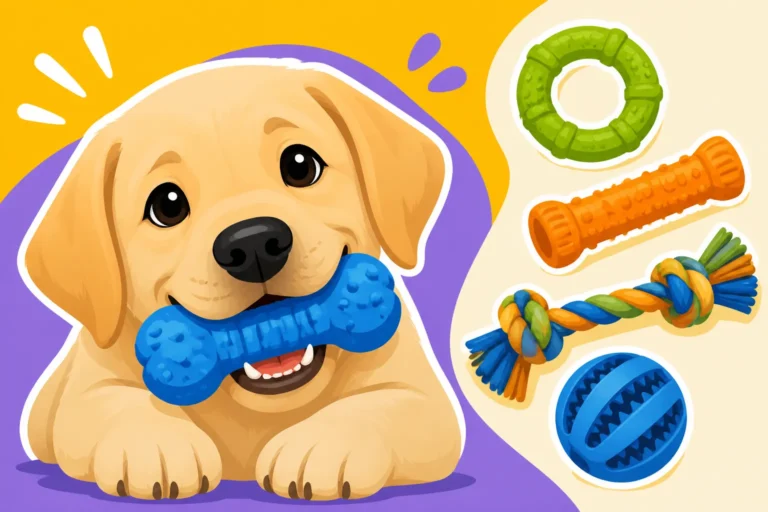
One of the most essential strategies is to provide your Labrador puppy with a wide variety of appropriate chew toys. Since Labradors have a strong instinct to mouth and chew, we need to give them acceptable outlets for this natural behavior. When you know your puppy is prone to nipping, always have a suitable toy within arm's reach. As soon as you anticipate a nip or feel one, redirect their mouth to a toy.
When they chew on the toy, praise them enthusiastically! Make it clear that chewing on the toy earns positive attention, while biting you results in no attention. Look for durable, puppy-safe toys on Amazon that can withstand a Labrador's powerful jaws. Rotate toys frequently to keep things interesting. Our guide Toys That Satisfy a Teething Labrador has some excellent suggestions for long-lasting options that can really help during this phase. This teaches them what to do instead of just what not to do.
Redirecting with Training Games
Beyond just offering toys, engage your Labrador in training games that use their mouth in a positive way. Fetch is a classic Labrador favorite and is a fantastic way to channel their retrieving drive. Teach them to "take it" and "drop it" with toys, rewarding them heavily for releasing the item into your hand without nipping. These games reinforce the idea of a "soft mouth" and teach control.
You can also use stuffed Kongs or other puzzle feeders. These require your puppy to work their mouth and brain to get a reward, which is both mentally stimulating and physically satisfying for their chewing needs. Redirecting their energy into structured play and training not only burns off energy but also strengthens your bond and teaches them valuable skills, making them less likely to resort to unwanted nipping.
Using Time-Outs for Over-Arousal
Sometimes, a puppy gets so excited and over-aroused during play that they just can't calm down, and their nipping intensifies. In these moments, "freeze and ignore" might not be sufficient because they're beyond the point of reasoning. This is when a brief, calm time-out can be very effective. It's not a punishment, but rather an opportunity for the puppy to de-escalate and regain self-control.
A time-out should be short (1-3 minutes), boring, and in a safe, puppy-proofed area like their crate or a small pen. You don't want to make it scary or a place they associate with negativity. The key is to remove them from the stimulating environment before they get too out of control, not as a punishment for being bad. Once they've calmed down, you can release them and resume play, but at a lower intensity. If they start getting mouthy again, repeat the time-out. This teaches them that calm play continues, but over-arousal leads to a break.
Troubleshooting Common Challenges
Even with the best intentions, you might run into some bumps in the road when teaching your Labrador not to mouth. Don't get discouraged! These challenges are normal, and with a bit of troubleshooting, you can get back on track.
"My Labrador Just Doesn't Get It"
It can feel incredibly frustrating when you're doing everything right, but your Labrador puppy seems oblivious to your efforts. If you find yourself thinking, "My Labrador just doesn't get it," it's usually a sign that one of a few things might be happening:
- Inconsistency: Are all family members and guests 100% consistent with the "freeze and ignore" rule? Even one person letting it slide occasionally can confuse your puppy.
- Timing Issues: Are you reacting the instant teeth touch skin? Any delay reduces the effectiveness of the lesson.
- Lack of Alternatives: Are you providing enough appropriate chew toys and redirection opportunities? If they don't have something else to chew, they'll keep trying to chew you.
- Overtired or Overstimulated: An exhausted or over-excited puppy often can't control its impulses. Ensure they're getting enough quality rest and not too much over-the-top play.
- Breed Tendencies: Labradors are persistent! It might simply take more repetitions and patience for them to fully grasp the concept, especially with their strong oral drive. Keep at it.
A good exercise is to review your routine and responses critically. Maybe even have someone else observe you interact with your pup. Often, a tiny tweak in consistency or timing can make a huge difference.
Dealing with Escalated Biting
Sometimes, instead of stopping, a puppy's biting might seem to escalate when you freeze and ignore them. They might get more frantic, jump up, or even bark out of frustration. This usually happens when the puppy is trying to elicit a response from you, any response, because they've learned that some reaction is better than no reaction at all. In these cases, simply freezing in place might not be enough.
This is when you need to immediately remove yourself from the puppy's vicinity. Don't make eye contact, don't say a word, just stand up and step behind a baby gate or walk into an adjacent room, closing the door. Stay out for a short 10-20 seconds. This is the most potent form of "ignoring" because it completely removes you from the equation. When you return, if the puppy is calm, you can resume interaction. If they immediately start nipping again, repeat the process. This teaches them that escalated biting always results in the complete loss of your presence.
Ensuring Family Consistency
Getting everyone on the same page is often the biggest hurdle in puppy training, and it's vital for curbing mouthing. Children, in particular, can find it difficult to remember to freeze and ignore, especially when a puppy is being cute or they're genuinely hurt. Educate everyone in the household about why this method works and how to do it properly. You might even want to create a simple chart or checklist to remind everyone of the steps.
Consider supervised interactions, especially between children and the puppy. If a child cannot consistently apply the method, it might be better for them to interact with the puppy only when an adult can intervene immediately. Tools like the BAXTER & Bella program often provide excellent resources and guides for families to ensure consistency across all members. Remember that a united front is the most effective way to teach your Labrador appropriate behavior and ensure that When Labrador Puppy Mouthing Fades it's replaced with calm interaction.
Here's a quick comparison of common responses to Labrador puppy mouthing:
| Method | Description | Pros | Cons | Effectiveness (for Lab puppies) |
|---|---|---|---|---|
| Freeze & Ignore | Stop all movement; if biting continues, calmly leave the room for brief period. | Mimics natural puppy learning; gentle; builds bite inhibition. | Requires high consistency; can be frustrating initially; puppy might escalate before learning. | High |
| Yelping | Emitting a high-pitched "ouch!" or "yipe!" sound. | Mimics littermate communication; can sometimes surprise puppy into stopping. | Some puppies get more excited; can be ignored by persistent biters; hard for humans to do consistently. | Moderate |
| Redirection (Toy) | Immediately putting an appropriate chew toy in the puppy's mouth. | Teaches what to do instead; provides an outlet for chewing. | Doesn't directly address human-biting; can become a habit if not paired with "ignore." | High (especially with F&I) |
| Bitter Sprays | Applying a non-toxic bitter-tasting spray to hands or clothes. | Can deter some puppies with taste aversion. | Puppy might learn to avoid only sprayed areas; can be messy; not always effective for all puppies. | Low to Moderate |
| Physical Punishment | Tapping nose, alpha rolls, scruff shakes, harsh verbal corrections. | None | Damages bond; causes fear/anxiety; can increase aggression; ineffective long-term. | Very Low (and harmful) |
Remember, the goal is to gently guide your Labrador puppy towards appropriate behavior, building a strong, loving bond based on trust and clear communication. With patience and consistency, that mouthy stage will pass, leaving you with a well-mannered companion.
Disclaimer
This article is for general informational purposes only and does not constitute professional advice. Laws, prices and regulations vary by location and change over time. Consult a qualified professional for guidance on your specific situation.