Why Labrador Puppies Mouth Everything
Bring home a new Labrador retriever puppy, and within forty-eight hours, you will likely realize your arms, ankles, sleeves, and furniture are under constant assault by a set of needle-sharp teeth. This relentless need to grab, chew, bite, and taste everything in sight is one of the most exhausting hurdles new dog owners face. This guide breaks down the underlying developmental, genetic, and environmental reasons behind your puppy’s mouthy behavior and provides practical, positive strategies to navigate this challenging phase smoothly.
The Developmental and Biological Drives Behind Labrador Mouthing
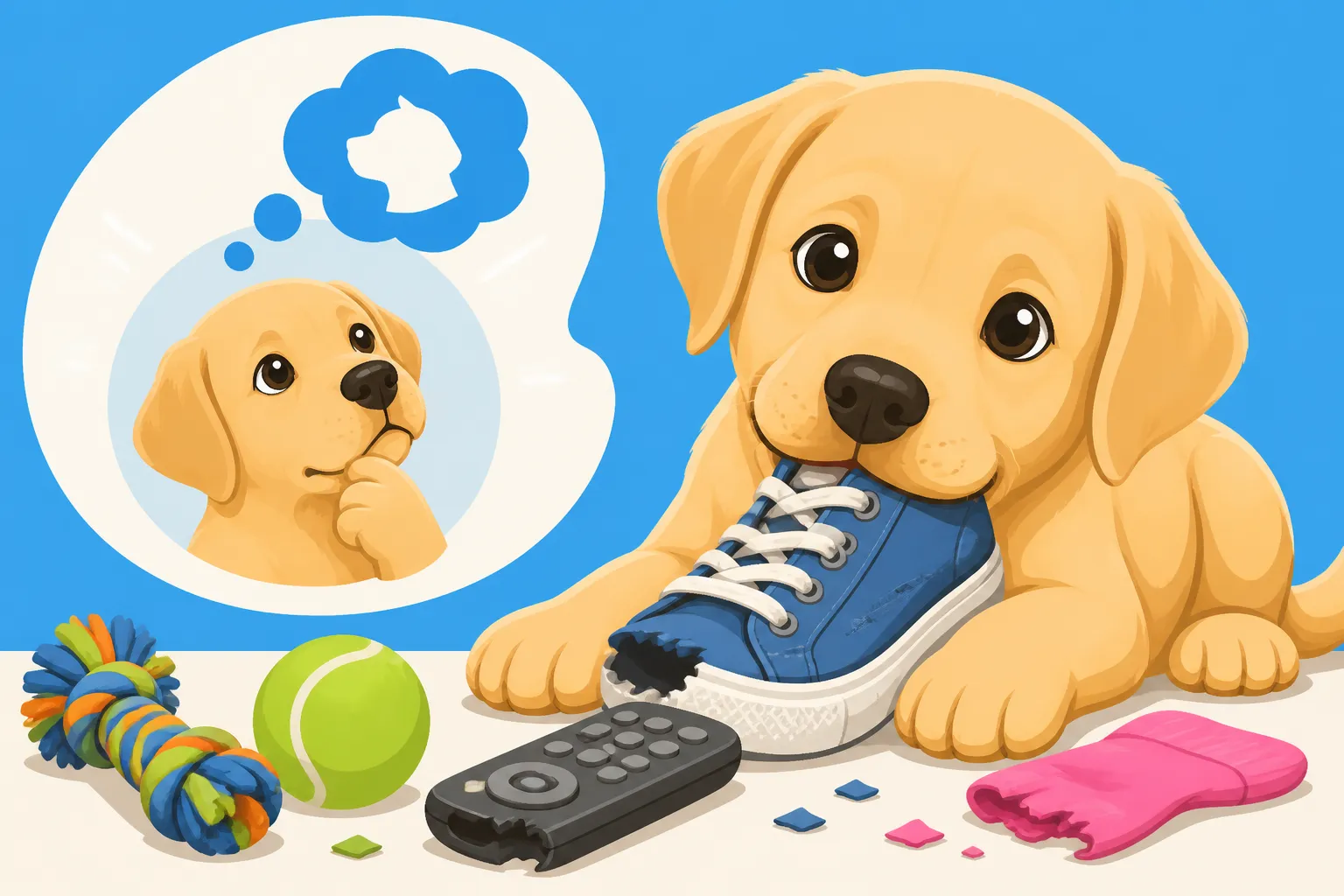
Understanding why a young retriever seems determined to put every object in the household into its jaws begins with canine biology. Puppies are not born with hands; their mouth serves as their primary tool for touching, holding, manipulating, and understanding the physical world around them. When a puppy encounters a new texture, whether it is soft carpet, hard wood, or human skin, its immediate biological reaction is to test that object orally.
Teething Timelines and Oral Exploration
Between eight and twenty-four weeks of age, a puppy undergoes massive anatomical changes in its mouth. They lose twenty-eight razor-sharp deciduous milk teeth while twenty-four adult teeth emerge through inflamed, sore gums. This process creates significant physical discomfort, driving the puppy to seek out cold, hard, or yielding textures to massage its aching mouth and alleviate the pressure beneath the gumline. You can track this physical progression through The Labrador Teething Timeline to anticipate when jaw soreness will peak.
During this developmental window, puppies use oral contact to evaluate their surroundings. Skin is warm, yields under pressure, and reacts when nipped, making human hands an extraordinarily interesting sensory target. When owners naturally pull away or speak aloud during a bite, the puppy often interprets that reaction as interactive feedback, inadvertently encouraging further exploration. Addressing these moments requires patience and a clear understanding of Why a Labrador Puppy Bites Hands and Sleeves so you can distinguish between true painful teething and play-seeking behaviors.
The Role of the POMC Gene and Food Obsession
Labradors are world-famous for their insatiable appetites, and science has identified a clear genetic component behind this behavior. A significant percentage of Labradors carry a mutation in the pro-opiomelanocortin (POMC) gene, which directly affects how the brain regulates hunger and energy expenditure. To learn more about how this genetic deletion impacts your puppy’s daily craving for food, review The POMC Gene and Labrador Appetite.
This genetic drive means a young Labrador’s oral fixation is frequently fueled by an ongoing search for edible rewards. Every rug corner, shoe, electrical cord, or stray sock is orally inspected to determine if it is food. If an object smells remotely like food, human sweat, or outdoor detritus, the puppy’s brain prompts them to chew and swallow it, turning basic oral exploration into a perpetual foraging expedition.
Sensory Processing and Environmental Mapping
Canine neurological development relies heavily on feedback gathered from tactile receptors located in the lips, tongue, and palate. As a young dog explores a new room, its brain builds a sensory map of its environment through oral sampling. They learn which items collapse under pressure, which items taste metallic, and which items offer resistance.
This sensory mapping phase is intense and constant. While adult dogs rely primarily on sight and scent to assess their surroundings, puppies need the secondary confirmation that comes from physical oral contact. If a puppy cannot touch an item with its mouth, its brain treats that item as an unsolved puzzle, which explains why simply placing items on lower coffee tables often invites a jump-and-grab response.
REMOVED ASCII GRAPHIC / BOX DRAWINGS PER STRICT SYSTEM RULES
Working Heritage and the Instinct to Grab
Beyond basic puppy biology, the Labrador retriever was selectively bred over centuries to perform specific working tasks. These historical working roles required a profound desire to interact with objects using their mouth, an evolutionary trait that remains fully intact in companion puppies today.
The Historical Gundog and Soft Mouth Genetics
Labradors descended from Canadian water dogs and were refined in Great Britain as premier waterfowl and upland game retrievers. Breeders selectively emphasized dogs that demonstrated an overwhelming drive to pick up, hold, carry, and bring back items to their human partners. Understanding Why Labradors Have Soft Mouths helps clarify why your puppy wants to hold your hand or clothing without necessarily intending to cause harm.
Because this desire to carry objects is hardwired into their genetic code, asking a young Labrador never to use its mouth is fighting against centuries of selective breeding. Instead of attempting to suppress this deep instinct, successful owners learn that Giving a Labrador Something to Carry provides an immediate, satisfying outlet for that mental energy, redirecting potential bites away from skin and onto appropriate carried items.
Channeling High Prey Drive and Retrieving Urges
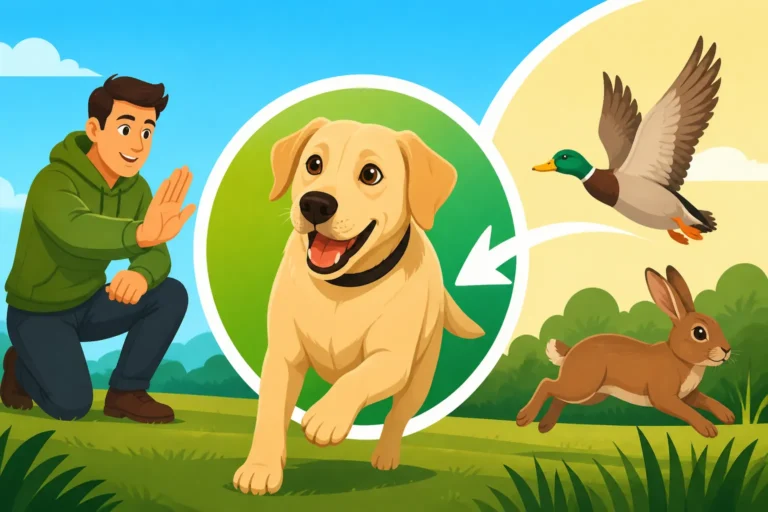
When a human moves quickly, waves their hands around, or runs across a room, a young retriever’s visual system registers that motion as fleeing game. Their immediate, instinctual response is to give chase, grab the moving target with their mouth, and hold on tight. Loose pant legs, fluttering skirts, and swinging jacket ties are irresistible triggers for a puppy with active working instincts.
Channeling these natural urges into structured games of fetch, tug, and controlled searches helps fulfill their psychological drive. By actively Channeling a Labrador’s Retrieving Drive, you convert an unruly impulse into a productive training exercise that satisfies their genetic need to capture and hold objects under your direction.
Distinguishing Play Mouthing from Over-Arousal
It is crucial to differentiate between relaxed, exploratory mouthing and mouthing driven by excessive excitement or stress. Exploratory mouthing occurs during calm interactions, characterized by a relaxed body, soft eyes, and slow tail wags. Over-arousal mouthing, by contrast, features stiff posture, rapid movements, growling, and hard, repetitive bites that often leave bruises.
When a puppy becomes over-aroused, its brain is flooded with adrenaline and cortisol, rendering standard verbal cues ineffective. Recognizing the early signs of high arousal allows owners to intervene with calm disengagement, quiet crate breaks, or slow scent-work activities before the puppy loses self-control entirely and resorts to aggressive-feeling biting.
Social Learning and Littermate Feedback Mechanics
Before a puppy leaves its mother and littermates at eight weeks old, it undergoes a vital lesson in physical social boundaries. The interactions that occur within the whelp box establish the foundational rules for how hard a puppy can bite before social interaction comes to a sudden halt.
Bite Inhibition Learned in the Whelp Box
During early play with littermates, puppies bite one another constantly on ears, paws, and scruffs. If a puppy bites a brother or sister too hard, the bitten puppy lets out a sharp, high-pitched yelp and immediately stops playing. This sudden loss of a play partner teaches the offending puppy a critical lesson: hard biting ends the fun.
This mechanism forms the basis of bite inhibition—the ability to control the force of one’s jaws. Puppies that miss out on early littermate interactions or are removed from their mother too early often lack this crucial feedback loop, requiring their human owners to work much harder during Labrador Puppy Socialization Windows to establish basic jaw control.
Human Interaction and Accidental Reinforcement
When puppies move into human homes, owners often unintentionally undo early bite inhibition lessons. When a puppy nips a human hand, many people react by pulling away rapidly, making high-pitched squealing noises, or pushing the puppy away playfully. To a high-drive working puppy, these reactions mimic prey behavior or an exciting game of wrestling, encouraging them to bite harder and faster.
To break this cycle, humans must mirror the clear, unemotional feedback of a littermate. Utilizing techniques like Freezing and Ignoring a Mouthy Labrador teaches the puppy that human skin is utterly uninteresting and that any forceful contact causes their fun companion to turn into an motionless, silent statue.
Fatigue, Overstimulation, and “The Puppy Zoomies”
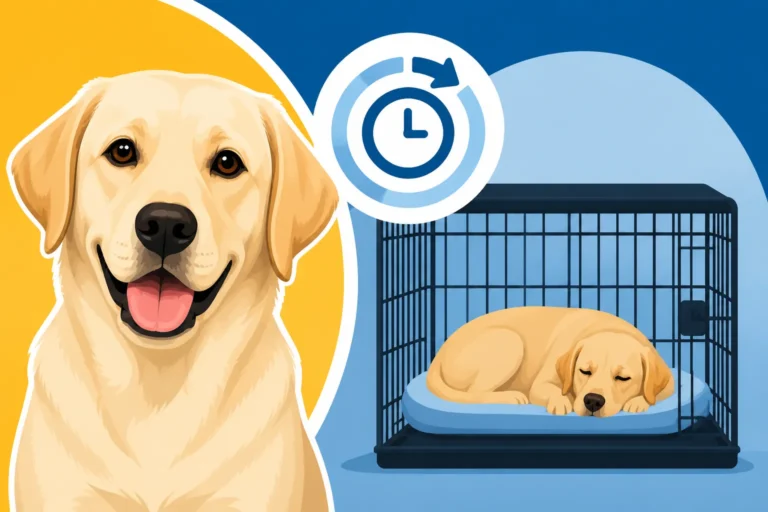
One of the most overlooked causes of severe puppy biting is simple exhaustion. Young Labradors require eighteen to twenty hours of sleep per day to support their rapidly growing bones and neural development. When puppies are kept awake too long, their self-regulation collapses, resulting in frantic biting episodes commonly called the “puppy zoomies.”
A frantic puppy that snaps at hands, bites leash handles, and runs wild through the living room is almost always overtired. Implementing structured nap schedules using a quiet crate environment provides the rest their nervous system desperately needs. If your puppy struggles to settle when overstimulated, focusing on Settling a Labrador Puppy Who Cries in the Crate will establish a reliable routine that prevents hyper-aroused biting spikes before they begin.
Practical Prevention and Redirection Strategies
Eliminating unwanted mouthing requires a balanced approach combining environmental management, high-value redirection, consistent boundaries, and structured instruction. Trying to rely on physical corrections or verbal scolding almost always backfires, causing anxiety or raising arousal levels further.
REMOVED ASCII FLOWCHART PER STRICT SYSTEM RULES
Process for Managing an Active Mouthing Episode
- Freeze Immediately: Stop moving your hands, feet, or clothing. Sudden movement fuels the puppy’s pursuit instinct.
- Offer a Verbal Bridge or Silence: Maintain a neutral posture without yelling or making high-pitched sounds.
- Redirect to an Approved Toy: Present a soft plush, rubber ring, or rope chew directly to the puppy’s mouth.
- Reward Toy Engagement: The moment the puppy transfers its teeth from skin to the toy, praise quietly or resume play.
- Implement a Short Timeout if Biting Persists: If the puppy ignores the toy and targets skin again, step behind a baby gate or door for 30 to 60 seconds to cut off all social access.
Environmental Management and Chewing Outlets
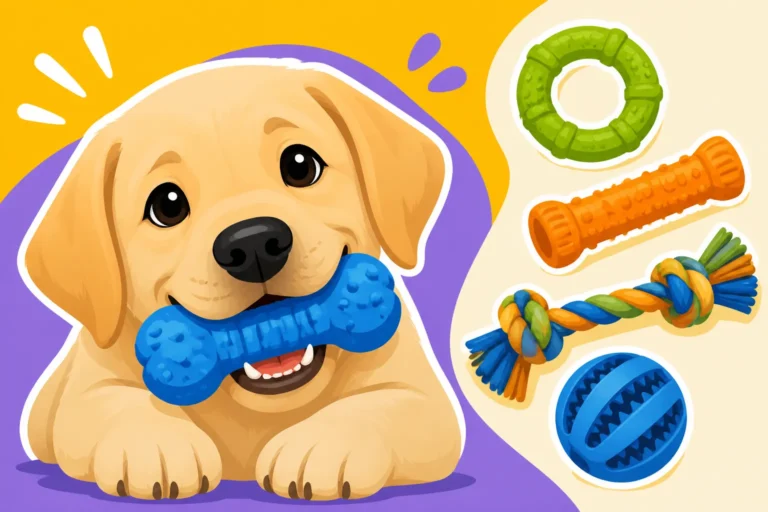
Prevention begins by setting up your living area so the puppy cannot access inappropriate chewing targets. Keep shoes behind closed doors, pick up children’s plastic toys, and secure loose cords. Providing an abundant array of safe, satisfying alternatives ensures that when the urge to chew hits, an acceptable item is always within reach.
Stock your home with a variety of textures, including natural rubber toys, durable nylon chews, and frozen plush items. Many owners browse online retailers like Amazon to source durable chew rings, puzzle toys, and textured teething keys that can be stuffed with wet food and frozen. Offering a frozen chew toy numbs sore gums while keeping the puppy mentally focused on an appropriate activity for thirty minutes at a time.
Structured Training and Behavioral Courses
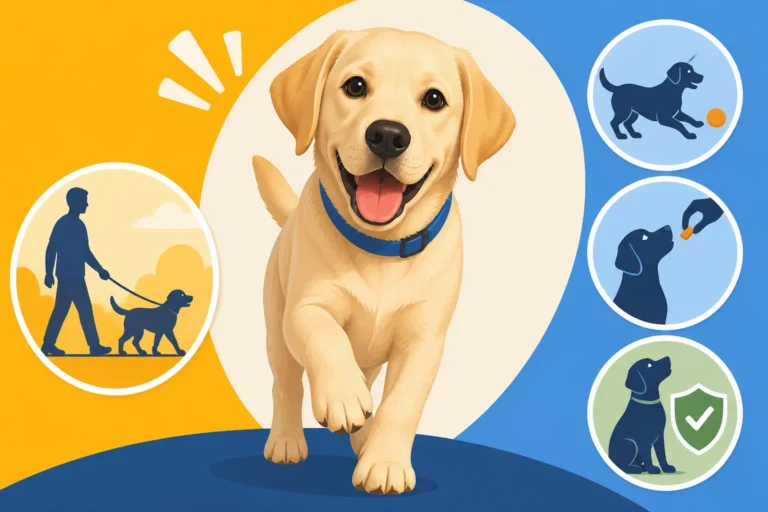
While management prevents mistakes, proactive training teaches your puppy what behaviors earn real rewards. Establishing clear communication through positive reinforcement helps a young dog realize that gentleness and self-control unlock play, treats, and affection faster than wild biting ever will.
For structured, home-based guidance, many new owners enroll in digital puppy platforms such as BAXTER & Bella, which offer step-by-step video lessons targeting bite inhibition, impulse control, and leash manners. Working through a step-by-step curriculum alongside daily training routines gives you the exact mechanics needed to teach your puppy a reliable “leave it” and “drop it” cue. Over time, you will notice When Labrador Puppy Mouthing Fades as consistent training replaces impulse biting with mature, calm choices.
Establishing Boundaries Without Aversive Methods
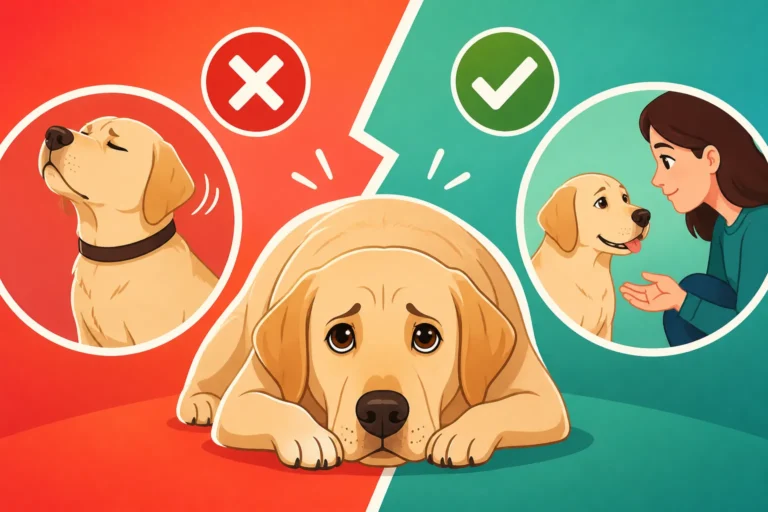
When dealing with a painful nip, it is tempting to use physical corrections such as holding the muzzle shut, popping the collar, or spraying water. These aversive tactics are highly counterproductive. They build fear, damage the bond of trust between you and your dog, and often make a high-drive Labrador respond with defensive or excited aggression.
Understanding What Not to Do When a Labrador Puppy Bites is just as critical as knowing the correct actions. Focus your energy on removing attention when bad choices occur, reinforcing quiet calmness, and supplying rich environmental enrichment so your puppy never feels the need to fight for control or vent frustration on your hands.
Comparing Mouthing Development Stages Across the First Year
A puppy’s mouthing behavior evolves dramatically as its body matures, its teeth change, and its brain undergoes hormonal shifts. The following comparison maps out what to expect during each developmental stage of your Labrador’s first year.
| Age Range | Primary Biological Driver | Common Mouthing Expression | Owner Focus & Key Action |
|---|---|---|---|
| 8 to 16 Weeks | Sensory exploration & basic bite inhibition | Soft nips, hand-seeking play, exploratory chewing | Frozen chew toys, soft redirection, time-out breaks |
| 4 to 8 Months | Adult tooth emergence & adolescent energy | Hard chewing on furniture, leash grabbing, jump-biting | Heavy exercise, brain games, training through Labrador Chewing Through Adolescence |
| 9 to 18 Months | Jaw strength maturation & hormonal testing | Targeted testing of boundaries, resource holding | Consistent impulse control, advanced field/obedience work, firm boundaries |
Early Puppyhood (8 to 16 Weeks)
In this initial phase, biting is frequent but driven by curiosity and soft baby teeth. The puppy is learning the physical limits of its body and building basic social skills with its human family. Skin injuries during this phase are common because baby teeth act like tiny scalpels, but the jaw strength behind those teeth remains relatively weak.
Your focus during these early weeks should be entirely on redirection, building positive associations, setting up proper nap schedules, and using digital resources like BAXTER & Bella to solidify foundation cues. Do not expect perfection; your main goal is simply teaching the puppy that human skin is fragile and off-limits.
Teething Peak and Early Adolescence (4 to 8 Months)
As the permanent adult teeth push through, the urge to chew becomes intense and structural. The jaw muscles widen and gain significant power, meaning a nip that was merely annoying at ten weeks can leave severe bruises at six months. Puppies in this stage frequently grab leash lines during walks, target baseboards, and test house rules as their independence grows.
Managing this phase requires plenty of long-lasting chews, durable rubber toys ordered from Amazon, increased physical exercise, and mental stimulation like scent games and trick training. Maintaining absolute consistency across every family member is essential during this stage; if one person allows play-biting on hands while another forbids it, the puppy will remain confused and mouthy.
Late Adolescence to Maturity (9 to 18 Months)
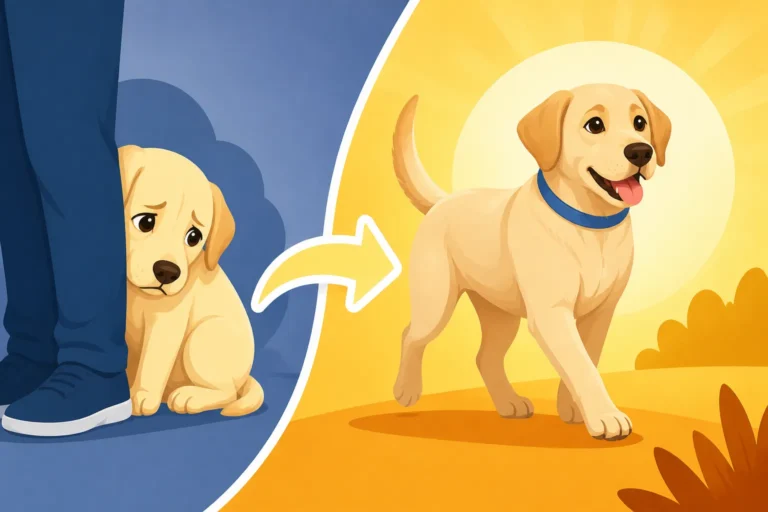
By nine to twelve months of age, all adult teeth are firmly set, but young Labradors retain a strong mental desire to use their jaws. High-energy adolescents may resort to mouthy behavior when frustrated, demanding dinner, or looking for attention. However, their impulse control is far more developed than it was in early puppyhood, making clear boundaries highly effective.
At this stage, mouthiness should be transformed almost completely into working tasks. Carry a favorite ball or bumper during walks, demand a seated wait before opening doors or dropping food bowls, and engage in structured retrieving games. When you channel their working heritage into purposeful jobs, the disruptive mouthiness of puppyhood naturally vanishes, leaving you with a focused, well-mannered adult retriever.
Disclaimer
This article is for general informational purposes only and does not constitute professional advice. Laws, prices and regulations vary by location and change over time. Consult a qualified professional for guidance on your specific situation.