Toys That Satisfy a Teething Labrador
Bringing a new Labrador puppy home is an absolute joy, but it doesn't take long for that tiny bundle of fur to turn into a chewing machine, seemingly intent on destroying everything in its path. That sharp, incessant need to chew as their adult teeth emerge can be incredibly frustrating for new owners, leading to damaged furniture, chewed shoes, and even dangerous situations. This guide will dive deep into understanding your teething Labrador's intense chewing instincts and help you navigate the tricky waters of puppy teething by identifying the safest, most satisfying, and durable toys to protect your home and keep your pup happy.
Understanding Your Teething Labrador's Instinct to Chew
When those tiny, needle-sharp puppy teeth start to fall out, and big, strong adult teeth begin to push through, your Labrador puppy experiences a lot of discomfort. Just like human babies, they have an overwhelming urge to put everything in their mouths to try and relieve the pressure and pain in their gums. It's not malicious; it's a completely natural, physiological process that you need to be prepared for.
Why Labradors Chew So Much During Teething
Labradors, by nature, are oral dogs. They were bred to retrieve game softly, carrying things gently in their mouths without damaging them. This inherent "mouthiness" means that when teething pain strikes, they lean into chewing even harder than some other breeds. Their jaws are developing, and they're exploring the world with their mouths, which compounds the problem. A teething Labrador isn't just chewing for comfort; they're also building jaw strength and learning about textures. Without appropriate outlets, this can quickly escalate into destructive habits that are much harder to break later on. It’s vital to understand that their need to chew is not a behavior problem at this stage; it’s a physical need.
The Stages of Labrador Teething
Labrador puppies go through a fairly predictable teething timeline:
- Birth to 2 weeks: No teeth yet. Just tiny, gummy mouths.
- 2-4 weeks: Puppy teeth (deciduous teeth) start to emerge. These are those tiny, sharp needles that feel like a thousand pins when they accidentally nip you.
- 8 weeks (around the time they come home): Most puppy teeth are in. This is when the serious chewing might begin as their mouths feel crowded.
- 12-16 weeks (3-4 months): The puppy teeth start to fall out, making way for adult teeth. This is the peak of teething pain and the most intense chewing phase. You might find tiny teeth around the house, or your pup might just swallow them.
- 6-7 months: By this point, most, if not all, adult teeth should have erupted. While the intense teething pain subsides, the strong Labrador chewing instinct will remain, so continuing to provide appropriate outlets is crucial.
During the peak period of 3-6 months, your Labrador's gums will be sore and inflamed. Providing them with a variety of textures can help massage those gums and ease the discomfort. This is also when you'll notice them trying to chew on absolutely everything – chair legs, shoes, hands, even the rug. It's a challenging time, but remember, it's temporary, and with the right approach, you can guide them through it. For more on handling this stage, check out Why Labrador Puppies Mouth Everything.
The Dangers of Inappropriate Chew Toys
Choosing the wrong chew toy can lead to serious problems, both for your puppy's health and your wallet in vet bills.
- Choking Hazards: Small toys, or toys that can be easily broken into smaller pieces, are a major choking risk. A Labrador's strong jaws can quickly demolish flimsy toys.
- Digestive Blockages: Pieces swallowed can cause internal blockages, requiring expensive and invasive surgery. This is a common and terrifying scenario.
- Dental Damage: Hard items like real bones (especially cooked ones), antlers, or very hard nylon toys can fracture puppy teeth. While adult teeth are stronger, excessive chewing on rock-hard items can still lead to breaks.
- Toxic Materials: Some cheap, poorly made toys can contain harmful dyes or chemicals that your puppy will ingest. Always look for non-toxic materials.
- Reinforcing Bad Habits: If your puppy learns that any chewable item is fair game, including your favorite slippers, you're setting them up for a lifetime of What a Teething Labrador Destroys.
It's tempting to grab the cutest, cheapest toy, but a little extra investment in appropriate, safe chew toys will save you a lot of headache and heartache in the long run.
Characteristics of the Best Teething Toys for Labradors
So, what makes a chew toy "good" for a teething Labrador? It comes down to a few key factors that prioritize safety, relief, and durability.
Durability and Safety First
This is non-negotiable. Labradors have powerful jaws and an incredible chewing drive. A toy that might last weeks for a smaller, less oral breed could be shredded by your Labrador in minutes. Look for:
- Non-toxic materials: Always check for labels confirming the materials are safe for dogs. Reputable brands like those found on Amazon generally adhere to safety standards.
- Solid construction: Avoid toys with small, easily detachable parts that can be chewed off and swallowed.
- Appropriate strength: The toy should be firm enough to provide resistance and gum massage but not so hard that it risks breaking teeth. A good rule of thumb: if you can't make a dent in it with your thumbnail, it might be too hard for your puppy's developing teeth.
Remember, even the most durable toys aren't indestructible. Regular inspection is key. If a toy starts to show significant wear, cracks, or pieces breaking off, it's time to replace it.
Texture and Comfort for Sore Gums
Variety is the spice of life, especially for a teething puppy! Different textures can provide different types of relief for sore gums.
- Soft rubber with nubs or ridges: These textures can gently massage inflamed gums, offering comfort.
- Cooling textures: Toys that can be frozen provide cold relief, which can numb sore areas.
- Slightly yielding materials: Toys that have a bit of "give" satisfy the chewing instinct without being overly abrasive.
Imagine your own gums hurting – sometimes you want something soft and soothing, other times a firm massage. Your puppy feels similarly! Offering a range of textures allows them to choose what feels best at any given moment.
Size Matters
A toy that's too small is a choking hazard, and one that's too large might be awkward or discouraging for a puppy to chew.
- Too small: The toy should be large enough that your puppy cannot swallow it whole or get it stuck deep in their throat. A good guide is that it should be wider than your dog's mouth.
- Too large: While safer, an oversized toy might not be engaging. Aim for something your puppy can comfortably hold between their paws or carry in their mouth.
As your Labrador grows, their size and jaw strength will increase dramatically, so their chew toys will need to "grow" with them. Don't forget to upgrade from puppy-sized to adult-sized chew toys as they mature.
Top Categories of Teething Toys for Labradors
Now that we know what to look for, let's explore some specific types of toys that tend to be a hit with teething Labradors.
Rubber Chew Toys
These are often the gold standard for teething puppies, and for good reason. They're durable, offer a satisfying chew, and many can be stuffed or frozen for extra appeal.
- Classic shapes (like a Kong): These are fantastic because their unpredictable bounce makes them fun, and they can be stuffed with soft treats, peanut butter, or yogurt and then frozen. The cold offers immense relief to sore gums, and the challenge of getting the goodies out keeps your pup engaged for a long time. For example, a classic red rubber Kong is practically a rite of passage for many Labrador puppies.
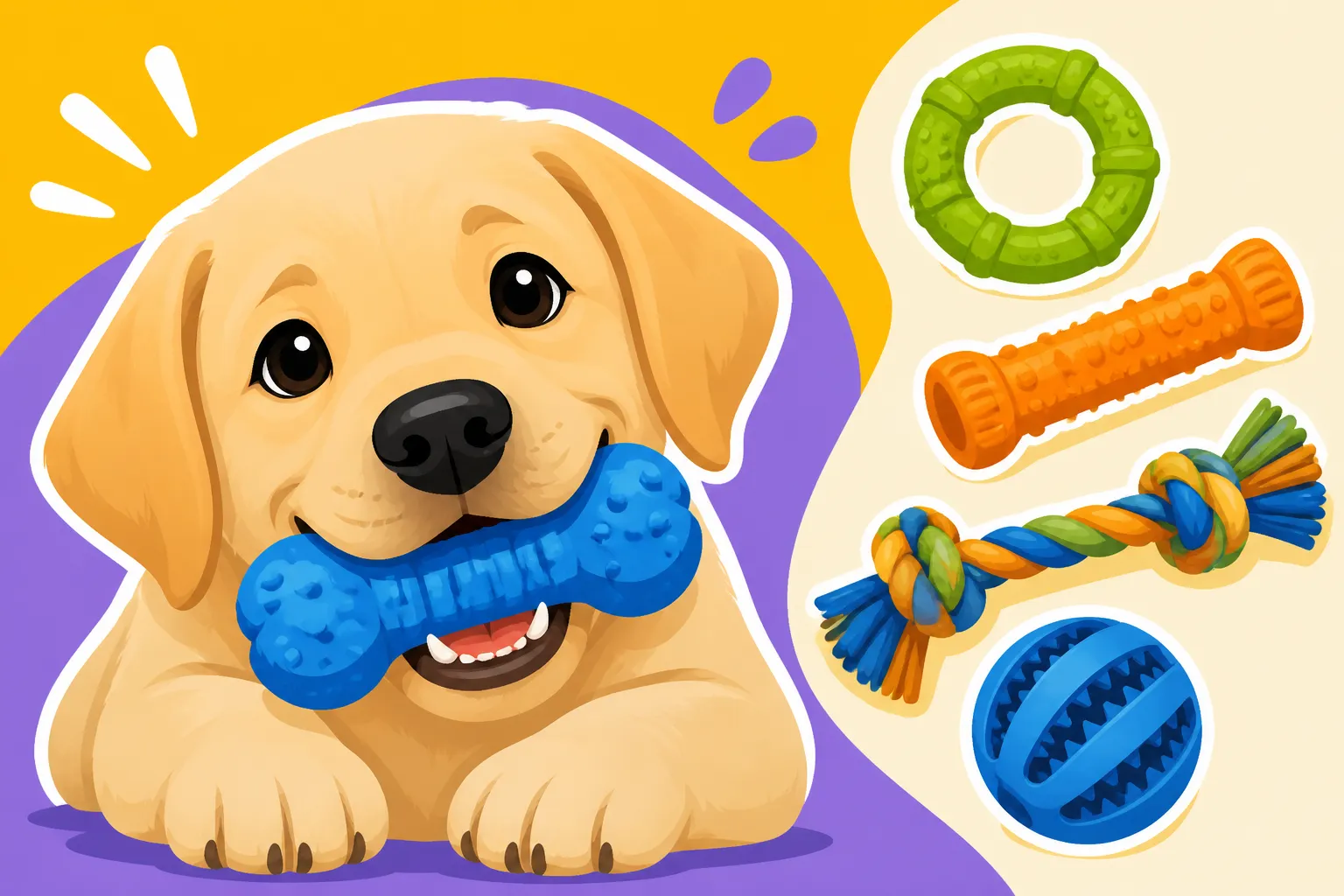
- Textured rubber toys: Look for rubber toys with nubs, ridges, or grooves designed to clean teeth and massage gums. These come in various shapes like rings, bones, or balls. Many brands offer durable rubber options specifically marketed for "extreme chewers" or "puppy chewers" that are suitable for growing Labradors.
- Durability and maintenance: High-quality rubber toys can withstand significant chewing. They are also relatively easy to clean with warm, soapy water, which is important for hygiene, especially if they're being stuffed with food.
Nylon Chew Toys
Nylon chews can be a good option for older, more aggressive chewers, but they come with important caveats for teething puppies.
- Pros: They are incredibly durable and can last a long time. They come in various shapes and flavors, and some are designed with textures that help clean teeth.
- Cons for puppies: The biggest concern is their hardness. For a puppy whose adult teeth are still erupting, a very hard nylon chew can be too abrasive and potentially chip or break teeth. It's often better to wait until your Labrador has all their adult teeth firmly in place before introducing these. Even then, choose ones with some give or texture that isn't too rigid.
- Monitoring is key: If you do introduce a nylon chew to an older puppy, supervise them closely. If you see any signs of discomfort, excessive wear on their teeth, or if they seem to be breaking off large pieces, remove the toy immediately.
Rope Toys and Dental Benefits
Rope toys can be a hit for interactive play, but they need careful supervision, especially during teething.
- Pros: The abrasive nature of the rope fibers can help clean teeth and massage gums. They are excellent for games of tug, which can be a great energy burner and bonding activity.
- Cons: As the rope frays, strands can be ingested. While small amounts might pass through, larger pieces or many strands can cause digestive blockages. This risk is higher with enthusiastic chewers like Labradors.
- Best use: Reserve rope toys for supervised play sessions only. When the game is over, put the rope toy away. If you notice significant fraying or pieces coming off, it's time to discard it. Never leave a teething Labrador unsupervised with a rope toy.
Puzzle and Dispensing Toys
These toys are fantastic for mental stimulation and can keep a busy Labrador puppy engaged for longer periods, redirecting their chewing energy constructively.
- Engagement factor: The mental challenge of getting treats out of a puzzle toy is incredibly satisfying for smart dogs like Labradors. This burns mental energy, which can be just as tiring as physical exercise, and distracts them from their sore gums.
- Examples: Beyond the classic Kong, there are various treat-dispensing balls and puzzles. Some require rolling, others flipping or pushing. Brands like BAXTER & Bella (though primarily a training platform) often recommend using interactive toys as part of their puppy curriculum to manage energy and build focus. You can often find a great selection of these on Amazon.
- Tips for use: Start with easier puzzles to prevent frustration, then gradually increase the difficulty. Use a portion of their daily kibble or low-calorie treats to avoid overfeeding. Freezing treats inside a puzzle toy can extend the fun and provide cooling relief.
| Toy Type | Pros for Teething Labradors | Cons / Considerations | Best Use During Teething |
|---|---|---|---|
| Rubber Chew Toys | Durable, gum-massaging textures, can be frozen/stuffed | None, if chosen correctly for size/durability | Daily chewing, treat dispensing, soothing sore gums |
| Nylon Chew Toys | Extremely durable, long-lasting for aggressive chewers | Can be too hard for developing puppy teeth, risk of dental damage | Best reserved for adult teeth, with caution and supervision |
| Rope Toys | Good for tugging, helps clean teeth | Strands can be ingested causing blockages, require strict supervision | Supervised interactive play only, put away afterward |
| Puzzle/Dispensing | Mental stimulation, prolongs engagement, can be frozen | Can be messy if stuffed with wet food, not all are chew-proof | Redirecting energy, mental enrichment, mealtime challenge |
| Edible Chews | Highly motivating, fully consumable (if digested safely) | Can be calorie-dense, some types pose choking/blockage risk, messy | Short, supervised sessions; choose easily digestible options |
Edible Chews (with supervision)
Edible chews can be highly motivating, but they need careful consideration for safety and calorie intake.
- Dental chews: Many brands offer dental chews designed to help reduce plaque and tartar, which can also satisfy chewing urges. Choose products made for large puppies or adult dogs, ensuring they are digestible and don't splinter.
- Bully sticks, collagen chews, or similar: These are natural, highly palatable, and can keep a puppy busy for a good amount of time. However, they are calorie-dense, so account for them in your dog's daily food intake. Always supervise your puppy with edible chews, especially as they get to the end, as the smaller piece can become a choking hazard. If your puppy tries to swallow large chunks, take it away.
- Avoid rawhide: Rawhide can be problematic as it softens and swells in the stomach, potentially causing blockages. Many veterinarians advise against it, particularly for powerful chewers like Labradors.
- Frozen treats: You can make your own safe, edible chews by freezing plain yogurt, broth, or mashed fruit (like bananas) in a stuffable toy or ice cube trays. These are low-calorie and provide excellent relief for sore gums.
Making Teething Toys More Appealing
Even the best chew toy won't do its job if your Labrador isn't interested in it! Here are some tricks to make those appropriate toys irresistible.
Freezing for Extra Relief
This is probably the most powerful hack for a teething puppy. The cold acts as a natural numbing agent, soothing inflamed gums.
- What to freeze: Any rubber toy that can be stuffed is a prime candidate. Fill a Kong with unsweetened applesauce, plain yogurt, or diluted peanut butter (xylitol-free!), then pop it in the freezer for a few hours. Even a wet washcloth tied in a knot and frozen can be a simple, effective teether.
- Benefits: Not only does it provide cold comfort, but it also increases the time your puppy spends on the toy, keeping them distracted from destructive chewing. It's a double win!
Stuffing for Engagement
Stuffing toys turns them into long-lasting entertainment rather than just a quick chew.
- Varied fillings: Beyond the classic peanut butter, consider mashed sweet potato, pureed pumpkin, canned dog food, or even their regular kibble mixed with a little water to form a paste. The goal is to make it challenging to get the food out.
- Progression: Start with loosely packed fillings for easier success, then gradually make them tighter or freeze them as your puppy gets better at solving the puzzle. This keeps them motivated and prevents frustration.
Rotating Toys to Maintain Interest
Just like kids, puppies get bored! Don't leave all the toys out all the time.
- The power of novelty: Keep a selection of 3-4 appropriate chew toys available, and rotate them every day or two. When a "new" toy appears, it instantly becomes more exciting and interesting.
- Strategic placement: Place desirable chew toys in areas where your puppy tends to chew inappropriately or where they settle down. If they often gnaw on the coffee table leg, make sure a super-appealing chew toy is nearby.
Managing Destructive Chewing Beyond Toys
While the right toys are paramount, they're only one piece of the puzzle. A multi-faceted approach will ensure your Labrador navigates teething safely and develops good habits.
Supervision and Redirection
This is where your active involvement comes in. You can't just throw a toy down and expect magic.
- Constant vigilance: During peak teething, your puppy needs almost constant supervision, especially when they're not crated or safely confined. Think of it as puppy-parenting – you wouldn't leave a human toddler unsupervised with access to dangerous items.
- The "Oops, Wrong Choice!" method: If you catch your Labrador chewing on something inappropriate (a shoe, a furniture leg), don't punish them. Instead, calmly but firmly interrupt the behavior, say "No," and immediately offer an appropriate chew toy. As soon as they take the toy, praise them lavishly. This teaches them what they should chew on.
- Interrupting unwanted behavior: Sometimes a clap or a sharp "Ah-ah!" can interrupt the unwanted chewing, giving you a chance to redirect. Consistency is key here. Everyone in the household needs to be on the same page. For more tips on this, see Labrador Puppy Mouthing and How to Redirect It.
Puppy-Proofing Your Home
The best defense is a good offense. Make it impossible for your Labrador to make the wrong choice.
- Remove temptations: Put shoes, bags, remote controls, books, and anything else within puppy reach away. If it's not available, they can't chew it.
- Block off areas: Use baby gates or exercise pens to restrict your puppy's access to certain rooms or areas of your home, especially when you can't give them your undivided attention.
- Protect furniture: Consider bitter apple spray on furniture legs or other items that can't be moved. While not a permanent solution, it can deter casual nibbling.
- Secure electrical cords: This is a major safety concern. Cover or secure all electrical cords to prevent your puppy from chewing on them.
Remember, your puppy isn't choosing to be naughty; they're acting on instinct. It's your job to manage their environment to set them up for success. Also, preparing for these costs is part of First Year Costs New Labrador Owners Forget.
Consistency in Training
Teething is also a prime time to reinforce basic obedience and good habits.
- "Leave It" and "Drop It" commands: These commands are invaluable. Teach your Labrador to leave items alone and to drop whatever is in their mouth on command. Practice with low-value items first, then gradually increase the challenge.
- Crate training: A crate, when used properly, is a safe haven where your puppy can relax with an appropriate chew toy without the risk of destroying your home. Never use the crate as punishment, and ensure it's a positive place for them. You can learn more about this in Crate Training a Labrador Puppy.
- Regular exercise and mental stimulation: A tired puppy is a good puppy. Ensure your Labrador gets plenty of appropriate exercise for their age, as well as mental enrichment through puzzle toys, short training sessions, and interactive games. An under-exercised or bored Labrador will find their own (likely destructive) ways to burn energy and alleviate teething discomfort. Remember, even short, frequent training sessions work well for a puppy's attention span. Check out How Long a Labrador Puppy Can Concentrate for more on this.
Teething can be a challenging period, but with the right chew toys, vigilant supervision, and consistent training, you and your Labrador will get through it with your sanity (and furniture) intact!
Disclaimer
This article is for general informational purposes only and does not constitute professional advice. Laws, prices and regulations vary by location and change over time. Consult a qualified professional for guidance on your specific situation.