Giving a Labrador Something to Carry
It’s a scenario many Labrador owners know all too well: you walk in the door after a long day, and your sweet, wiggly Lab greets you with a shoe in their mouth, a TV remote, or perhaps even your house keys. While it might seem like mischievous behavior, this deep-seated desire to carry objects is a fundamental part of what makes Labradors, well, Labradors! This guide will delve into understanding this natural instinct, how to channel it positively, and what to do when your furry friend’s carrying habits become a little too adventurous.
Understanding Your Labrador's Innate Desire to Carry
The Labrador Retriever was quite literally bred for retrieving, and that includes carrying things gently in their mouths. This isn't just a cute quirk; it's a vital part of their historical purpose and inherent temperament. Ignoring or suppressing this instinct can lead to frustration for both you and your dog.
The Deep Roots of the Retriever Instinct
Back when Labradors' ancestors, the St. John's water dogs, were helping fishermen in Newfoundland, their job involved retrieving nets, ropes, and fish that had escaped the lines. This required a dog that could not only swim in icy waters but also bring objects back to hand without damaging them. Over generations, this task shaped the breed's very essence. When British noblemen later developed the Labrador into the gundog we know today, that retrieving drive was further refined to gently pick up fallen game birds, carrying them back to their handler without a single feather ruffled.
This history means your Labrador isn't trying to be naughty when they parade around with your slippers. They are simply acting on an urge that has been hardwired into their DNA for centuries. It's a fundamental part of The Labrador Retriever Breed Explained and understanding this can shift your perspective from annoyance to appreciation for their heritage.
The Gentle Grip: What is a Soft Mouth?
One of the most remarkable traits of a well-bred Labrador is their "soft mouth." This term refers to their ability to carry objects, even delicate ones, without biting down or causing damage. It’s not something that happens by accident; generations of careful breeding have emphasized this trait, which was crucial for retrieving game without bruising or puncturing it. Your Labrador’s soft mouth means they can carry an egg without breaking it, or a tiny bird without a mark.
This gentle grip is why they often prefer to carry something in their mouth, even if it’s just a favorite toy or a stick from the yard. It's a comfortable and natural state for them. They often derive a sense of calm and purpose from having an object to hold, a direct echo of their working past. You'll often see them offering you objects as a greeting, or just holding them while they settle down, truly showing Why Labradors Have Soft Mouths.
Common Carrying Behaviors and Owner Frustrations
While the carrying instinct is natural and wonderful, it can certainly lead to some head-scratching moments for us humans. Labradors don't always pick the most appropriate items, and sometimes their enthusiasm can be a little much.
The "Borrowing" of Household Items
"Where's my other sock?" "Has anyone seen the TV remote?" "Did the dog just run off with my wallet?" These are refrains heard in countless Labrador homes. For a Lab, many everyday household items are fair game for carrying. Socks, shoes, gloves, dishcloths, children's toys, and even electronics often become targets. They're usually not trying to destroy them (though accidents happen, especially with puppies); they just want something to carry, and these items are readily available, often smell like their favorite people, and are the right size.
It can be incredibly frustrating to constantly hunt for your belongings or worry about valuable items being damaged. This is especially true when they grab something just as you need it, perhaps parading it around with a cheeky gleam in their eye. They often learn quickly what gets a reaction, and sometimes, even a negative reaction can be seen as attention.
Over-the-Top Greetings with Objects
Many Labradors develop a delightful, if sometimes chaotic, ritual of bringing you an object when you come home. This can range from a beloved stuffed animal to a random item they found on the floor. It's their way of saying, "Welcome home! Look what I found for you! I missed you so much!" It's an expression of pure joy and affection, mixed with their innate carrying drive.
The challenge arises when this greeting becomes overly enthusiastic. Imagine a boisterous 70-pound dog trying to bring you a large, slobbery toy while also wagging their entire body and jumping for attention. It can be difficult to manage, especially if you have guests or small children. While heartwarming, it requires careful guidance to ensure it remains a polite and pleasant interaction rather than an overwhelming one. How Affectionate Labrador Retrievers Are is certainly on display in these moments!
When Carrying Becomes Destructive: Beyond a "Soft Mouth"
Despite their "soft mouth" reputation, accidents and genuine destructive carrying can happen. A Labrador puppy exploring the world with their mouth might "borrow" your glasses and accidentally chew them. An adult Lab who is bored or anxious might pick up a remote control and meticulously dismantle it. This is where the carrying instinct crosses into problematic behavior.
Destructive carrying often stems from a lack of appropriate outlets for their oral fixations, boredom, stress, or even attention-seeking. A dog left alone for too long without mental or physical stimulation might turn to household items as a form of self-entertainment, which can quickly lead to expensive repairs or replacements. It's crucial to differentiate between an accidental chew and a consistent pattern of destruction, as the latter signals a deeper need that isn't being met.
Guiding Your Labrador: Teaching Them What To Carry
The good news is that you can absolutely guide your Labrador's natural carrying instinct towards appropriate and even helpful behaviors. It's all about providing the right outlets and teaching them clear expectations.
Choosing the Right Objects for Carrying
The first step is to provide your Labrador with appealing, safe, and durable objects that you want them to carry. Think about their natural preferences:
- Size and Weight: The object should be comfortable for them to hold in their mouth without strain, but not so small it's a choking hazard.
- Texture: Many Labs love items with a slightly textured or rubbery feel.
- Durability: Choose toys that can withstand gentle carrying and the occasional celebratory shake, but aren't necessarily meant for heavy-duty chewing if the goal is carrying, not destruction. Good quality rubber retrieves, soft canvas dummies, or even certain rope toys can work. Avoid items with small parts that can break off.
- Scent: Dogs are highly scent-driven. Toys that have been around you, or that have a mild, appealing scent (like some treat-dispensing toys), might be more attractive.
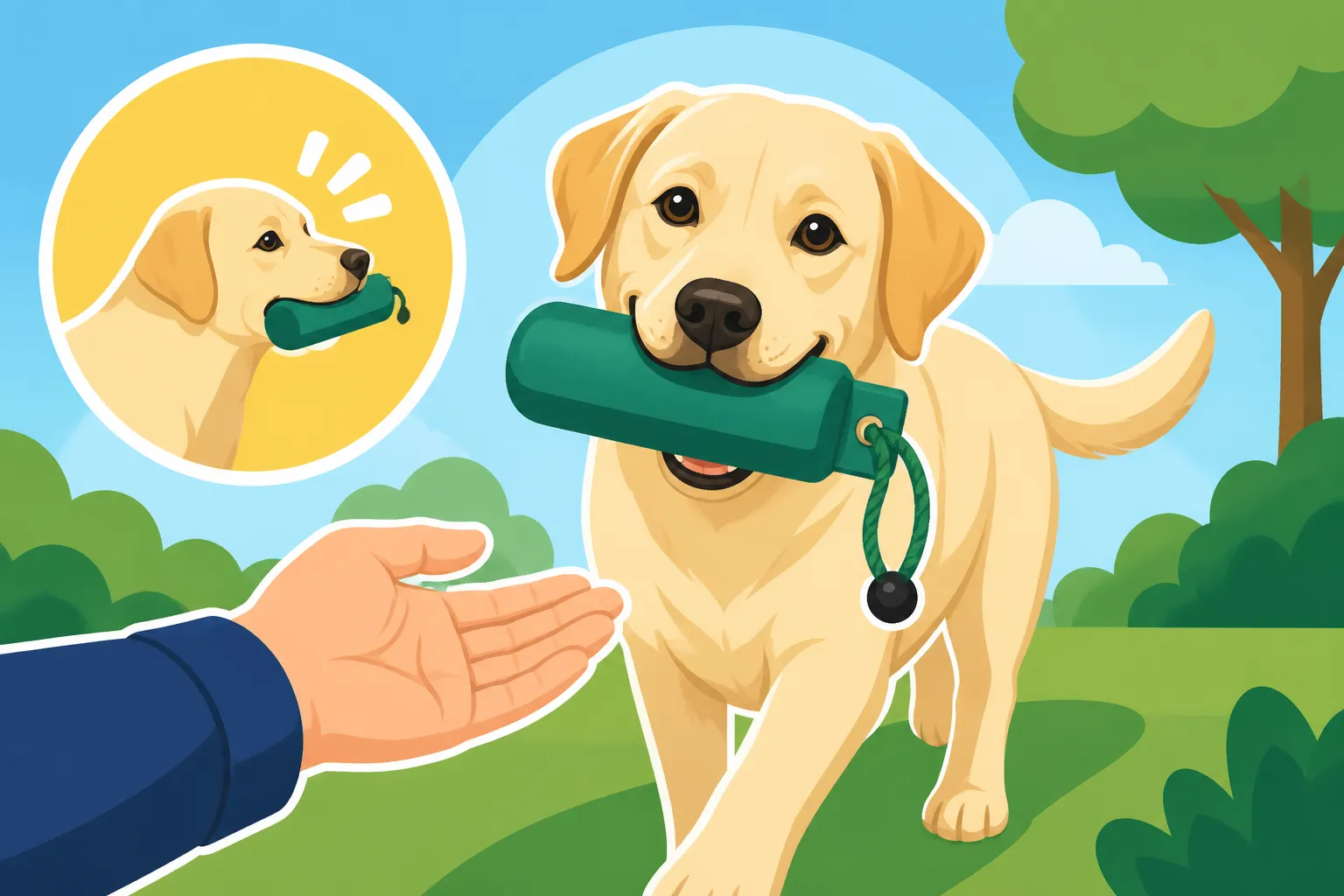
It’s often best to have a dedicated "carrying toy" that is easily accessible to them, especially when you arrive home. This gives them a clear, positive option instead of them having to "forage" for your socks. Many fantastic options can be found on online retailers like Amazon, from durable Kong products to canvas dummies designed for retrieve training.
Positive Reinforcement for Appropriate Carrying
When your Labrador picks up an appropriate item to carry, make a big deal out of it! This is where positive reinforcement shines.
- Verbal Praise: Use an excited, happy tone: "Good job!" "What a good boy!"
- Treats: Offer a small, high-value treat while they are still holding the item. This associates the act of carrying the correct object with something highly rewarding.
- Affection: Combine praise and treats with gentle petting or a scratch behind the ears.
The key is to reward the act of carrying the right thing, not just dropping it or letting it go. If your dog comes to greet you with their toy, praise them while they hold it, then ask for a "drop" or "give" and reward that action separately. This helps them understand that holding the object is part of the desired behavior. Using a Labrador's Food Drive as Leverage is very effective here.
Teaching the "Hold" Command
For more structured carrying, you can teach a "hold" command. This is particularly useful if you want your Labrador to carry specific items on cue, or to walk politely with something in their mouth.
- Start Simple: Begin in a quiet environment with a favorite, lightweight, and easy-to-hold toy.
- Introduce the Object: Offer the toy to your dog and say "Hold." As soon as their mouth closes around it, even for a second, praise them ("Yes!" or "Good hold!") and immediately give them a treat while they are still holding the toy. Then gently take the toy, or cue "drop it" and reward again.
- Increase Duration: Gradually ask them to hold the toy for longer periods before rewarding. Start with a second, then two, then five, and so on. Keep it positive and don't push too fast. If they drop it, simply pick it up and try again without fuss.
- Add Distractions: Once they are reliably holding the toy for several seconds in a quiet space, start introducing mild distractions, like walking a few steps or having someone else in the room.
- Generalize: Practice in different locations with various appropriate objects.
Consistency is key. Training programs like those offered by BAXTER & Bella can provide excellent step-by-step guidance on teaching these foundational obedience commands. Over time, your Labrador will understand that "hold" means to gently keep the object in their mouth until released.
Managing Undesirable Carrying: Setting Boundaries
While encouraging positive carrying, it's equally important to prevent and redirect undesirable carrying behaviors. This involves clear commands and proactive management of your home environment.
The Power of "Leave It" and "Drop It"
These two commands are indispensable for any Labrador owner, especially when dealing with their propensity to pick up everything.
- "Leave It": This command teaches your dog to ignore an object they are interested in, even if it's within reach. Practice this by putting a low-value treat on the floor and covering it with your hand. When your dog looks away, even for a split second, say "Leave it," praise, and give them a different high-value treat from your other hand. Gradually remove your hand, increase the duration, and introduce higher-value distractions.
- "Drop It": This teaches your dog to release an object they are already holding. Start with a toy they aren't overly obsessed with. Offer a high-value treat near their nose. As they open their mouth to take the treat, say "Drop it." Once the toy falls, praise and give the treat. Over time, they will learn that dropping the object leads to an even better reward.
Mastering these commands, as detailed in articles like Teaching a Labrador to Drop It Reliably, gives you crucial control and can prevent many headaches, like a chewed remote or a stolen snack.
Environmental Management: Labrador-Proofing Your Home
The simplest way to prevent your Labrador from carrying inappropriate items is to make those items unavailable. This isn't about punishment; it's about setting your dog up for success.
- Put Valuables Away: Keep shoes in closets, remotes on high shelves, and dirty laundry in hampers with lids. If it's not accessible, they can't carry it.
- Secure Trash Cans: Labradors are notorious counter-surfers and trash-raiders. Use secure, lidded trash cans to prevent them from "retrieving" interesting smells (and potentially dangerous items).
- Provide Alternatives: Ensure your Labrador always has a variety of appropriate chew toys and carrying toys readily available. If they have good options, they're less likely to seek out forbidden ones. Think about rotating toys to keep things fresh and interesting for them. Toys from Amazon can be a great way to always have new options on hand. Toys That Satisfy a Teething Labrador are especially important during puppyhood.
Think of it like child-proofing your home; you remove temptations and hazards to keep everyone safe and happy.
Addressing Underlying Causes: Boredom or Anxiety
Sometimes, excessive or destructive carrying behavior isn't just about instinct; it's a symptom of an underlying issue like boredom or anxiety.
- Boredom: A Labrador is a highly intelligent and energetic breed. If they aren't getting enough physical exercise or mental stimulation, they will find their own "jobs," which often involve exploring the world with their mouth. Ensure your Lab has plenty of opportunities for walks, runs, fetch games, and Mental Work for a Bored Labrador like puzzle toys or scent games.
- Anxiety: Some Labradors might carry objects as a self-soothing mechanism when they are feeling stressed or anxious, perhaps due to separation anxiety. If you suspect anxiety, look for other signs like excessive drooling, destructive chewing, pacing, or vocalization when left alone. Addressing the anxiety itself, often with the help of a professional trainer or veterinary behaviorist, will be key to resolving the carrying behavior.
By understanding why your Labrador is carrying certain items, you can implement targeted solutions that truly address their needs.
The Benefits of Channeling Carrying Behavior
When managed effectively, your Labrador's carrying instinct can be a fantastic asset, enriching their life and strengthening your bond in countless ways. It's a prime example of turning a potential "problem" into a powerful positive.
Mental Stimulation and Enrichment
For a breed as intelligent and driven as the Labrador, having a "job" is crucial for their mental well-being. Carrying and retrieving provide immense mental stimulation. It engages their senses, problem-solving skills, and innate drive to work alongside their human companions. Teaching them to retrieve specific items on command, or even just encouraging them to bring their favorite toy, gives them a sense of purpose.
This mental engagement helps prevent boredom, which, as we discussed, can lead to destructive behaviors. A mentally satisfied Labrador is generally a calmer, happier, and better-behaved dog. Retrieving Games That Tire a Labrador are not just about physical exercise; they're about satisfying that deep-seated need to work.
Strengthening Your Bond and Building Trust
Working with your Labrador on carrying and retrieving tasks is a fantastic way to deepen your relationship. When you engage in activities that tap into their natural inclinations, you're speaking their language. Every successful retrieve, every gentle "hold," and every rewarded "drop it" builds trust and reinforces your role as their leader and partner.
Your Labrador learns that engaging with you in these activities is rewarding and fun. This shared experience fosters a stronger, more respectful bond, turning what might otherwise be a source of frustration into an opportunity for connection and mutual enjoyment.
Practical Applications and Fun Activities
Beyond mental enrichment and bonding, a well-channeled carrying instinct can have incredibly practical applications:
- Helping Around the House: Imagine teaching your Labrador to retrieve your slippers, carry in the mail, or even bring you a specific toy on command. While this takes dedicated training, it's well within a Labrador's capabilities and can be a huge help.
- Gundog Work and Field Trials: For those interested in competitive activities, the carrying instinct is the foundation of gundog training. Labradors excel at retrieving game in challenging environments, and formal training like that sometimes offered through BAXTER & Bella can refine these skills.
- Service and Assistance Work: The Labrador's gentle mouth and desire to retrieve are key reasons they are so successful as service dogs, whether picking up dropped items for their handler or retrieving specific objects.
- Fun Games: Simple games of fetch, hide-and-seek with toys, or even teaching them to retrieve objects from water are wonderful ways to engage their natural drive and provide exercise. Channeling a Labrador's Retrieving Drive offers even more ideas.
The possibilities are truly endless when you embrace and guide this incredible aspect of your Labrador's personality.
Table: Choosing the Right Carrying Objects for Your Labrador
To help you guide your Labrador towards appropriate carrying, here's a quick overview of different types of objects, their benefits, and considerations:
| Object Type | Description | Benefits | Considerations |
|---|---|---|---|
| Soft Dummies | Canvas or soft plastic retrieve dummies. | Mimics game, good for training, soft on mouth. | Not chew-proof, easily damaged if left unsupervised. |
| Rubber Retrieves | Solid rubber toys (e.g., Kong, Classic Retrievers). | Durable, good texture, safe for enthusiastic carrying. | Can be heavy for puppies, some are chewable. |
| Stuffed Toys | Plush animals without small detachable parts. | Comforting, good for gentle carrying, often a favorite. | Easily ripped apart by strong chewers, stuffing can be a hazard. |
| Rope Toys | Braided cotton or fleece ropes. | Engaging texture, good for carrying and gentle tugging games. | Can fray and become choking hazard if ingested, not for heavy chewing. |
| Puzzle Toys | Toys that dispense treats when manipulated. | Mental stimulation, rewards carrying to a specific spot for a treat. | Can be complex, may require supervision, some are not durable. |
| Natural Chews | Antlers, bully sticks (supervised). | Satisfies oral fixation, long-lasting. | Primarily for chewing, not carrying; some splinter or are very hard. |
Troubleshooting Carrying Challenges
Even with the best intentions, you might encounter some bumps in the road when working with your Labrador's carrying behaviors. Here are some common challenges and how to approach them.
When Carrying Becomes Obsessive or Inappropriate
Sometimes a Labrador’s carrying can seem to take over their entire personality. They might incessantly search for things to carry, be reluctant to drop objects, or even become possessive. This shift from natural instinct to obsessive behavior or Resource Guarding in Food-Driven Labradors needs careful attention.
If your Labrador is constantly stressed without something in their mouth, or if they growl or become protective when you try to take an item, it's time to re-evaluate. This could indicate a deeper anxiety, a lack of appropriate stimulation, or a failure to establish clear boundaries. In such cases, seeking guidance from a certified professional dog trainer or a veterinary behaviorist is highly recommended. They can help identify the root cause and develop a tailored behavior modification plan to reduce the obsession and ensure your dog's well-being and safety.
Fear or Reluctance to Carry Objects
While most Labradors are natural-born retrievers, some might show reluctance or even fear towards carrying certain objects, or carrying anything at all. This can be confusing for owners who expect their Lab to be a carrying enthusiast.
- Past Negative Experiences: A dog might have had a bad experience with an object (e.g., a toy fell on them, something tasted bad).
- Genetics: While rare, some individual Labs might simply have a weaker retrieving drive than others.
- Sensitivity: Some dogs are more sensitive to textures or sounds of certain objects.
If your Labrador is hesitant, start with very soft, lightweight, and positively associated items. Make the experience extremely low-pressure and fun. Don't force them. Use lots of praise and high-value treats for even the slightest interest. You can gently encourage them to mouth an object without necessarily carrying it at first. The goal is to build positive associations and confidence, not to create fear.
Balancing Instinct with Modern Living
Living with a Labrador in a modern home means balancing their powerful instincts with the realities of human environments. Your home isn't a field or a fishing boat, and a full-time retrieving "job" isn't always practical. The key is to provide structured outlets for their instincts in ways that fit your lifestyle.
This means dedicating time each day to engaging activities like fetch, hide-and-seek with toys, or even structured obedience work that incorporates retrieving. It means having a variety of appropriate toys and chews available, and consistently reinforcing good habits. It's about respecting their breed traits while also teaching them how to be a well-mannered family member. By doing so, you'll have a happy, well-adjusted Labrador who uses their incredible carrying abilities for good, not for mischief.
Disclaimer
This article is for general informational purposes only and does not constitute professional advice. Laws, prices and regulations vary by location and change over time. Consult a qualified professional for guidance on your specific situation.