Signs a Labrador Is Ready for Adult Food
It's a common worry for us Labrador owners, isn't it? You bring home that fluffy, clumsy puppy, and suddenly they're a growing whirlwind, devouring every kibble in sight. Then, one day, you look at them and think, "Are they still a puppy? Or have they officially become a big dog?" Knowing when to switch your Labrador from puppy food to an adult formula is more than just a calendar date; it's about understanding their unique growth and ensuring they get the precise nutrients they need for a long, healthy life. This guide will help you spot the clear signs that your beloved Lab is truly ready for their adult food, taking away the guesswork and helping you feed them right.
Understanding Your Labrador's Growth Trajectory
The journey from a tiny, wiggly puppy to a magnificent adult Labrador is incredibly fast, but it's crucial to remember that their internal development takes longer than their outward appearance suggests. Getting the nutrition right during this critical phase is paramount for their long-term health, especially for a large breed like a Labrador Retriever.
The Critical Period of Puppy Development
Labrador puppies grow at an astonishing rate. In just a few months, they can go from a few pounds to a substantial adolescent dog. This rapid growth isn't just about getting bigger; it's about forming strong bones, developing healthy joints, and building robust organ systems. Puppy foods are specifically formulated to support this intense development, packing in higher calorie counts, specific protein levels, and a carefully balanced ratio of calcium and phosphorus. Too much or too little of certain nutrients, especially calcium, during this critical period can actually be detrimental, potentially leading to orthopedic issues later in life. We've all heard the advice about not letting puppies grow too fast, and their diet plays a huge role in that. It's a fine balance we're trying to strike, ensuring they have enough fuel without encouraging unnaturally rapid growth that could put stress on their still-developing skeletal system. How Fast Growth Damages a Labrador's Joints is a real concern for large breeds, making proper puppy nutrition absolutely vital.
Evolving Nutritional Needs
As your Labrador matures, their body's demands shift. They move from a phase of rapid construction to one of maintenance and controlled growth. This means their need for high-calorie, nutrient-dense puppy food starts to wane. Continuing to feed puppy food for too long can actually lead to unwanted weight gain, which is another significant health concern for Labs known for their hearty appetites. Adult dog food, particularly formulas designed for large breeds, is tailored to support a mature dog's energy levels without promoting excessive weight. These formulas typically have slightly lower fat and calorie content, along with different mineral balances appropriate for fully formed bones and joints. It's about providing sustainable energy and optimal health support rather than supercharging growth.
Physical Indicators Your Labrador is Maturing
Your Labrador's body will give you some of the clearest signals that they're ready for the switch. These aren't just subtle changes; they're noticeable shifts in their size, shape, and overall physical development.
Reaching Near Adult Size and Weight Stabilization
One of the most obvious signs is when your Labrador appears to have hit their adult height and length. While they might still fill out a bit more with muscle over the next few months, that rapid upward growth spurt has typically slowed down significantly or stopped entirely. You'll notice their legs don't seem quite so gangly, and their body proportions start looking more balanced and adult-like. Alongside this, their weight gain will also become much more gradual, or even plateau. Instead of steadily climbing several pounds a week, they might only gain a pound or two over a month, if any. This stabilization indicates that their major skeletal growth is largely complete. When you're What a Labrador Should Weigh at One Year, you're often looking at a dog whose growth is mostly done, or very close to it.
Changes in Body Composition and Muscle Development
Another key physical cue is the change in their body shape. Puppy fat starts to give way to lean muscle mass. You'll notice their waist becoming more defined, and their ribs, while still easily felt, won't protrude quite as much as when they were in their fastest growth phase. They'll start to look less like a chubby, soft puppy and more like the athletic, powerful adult Labrador you know and love. This transition in body composition means their energy is now being directed more towards maintaining existing muscle and bone rather than building new structures at a breakneck pace. It's always a good idea to perform a regular Checking a Labrador's Body Condition Score to ensure they're not becoming overweight, especially as they approach this transition. A healthy adult Lab should have a noticeable waist and easily palpable ribs without them being visible.
Growth Plate Closure
This is perhaps the most crucial biological indicator, though it's not something you can see with the naked eye. Growth plates are areas of cartilage at the ends of long bones where new bone tissue is produced, allowing the bones to lengthen. These plates gradually harden into solid bone as a dog matures, a process known as "closing." For large breeds like Labradors, these growth plates typically close between 12 and 18 months of age, though some individuals may close slightly earlier or later. Once the growth plates have closed, the bones can no longer lengthen, and the dog is considered skeletally mature. Feeding high-calorie puppy food after growth plates have closed is no longer beneficial for growth and can contribute to obesity and joint stress. While only a vet can definitively confirm growth plate closure via X-rays, the general age range is a strong guideline. Understanding When a Labrador's Growth Plates Close is vital for making an informed dietary decision.
Behavioral and Dietary Signals of Maturity
Beyond the visible physical changes, your Labrador's behavior and eating habits can also provide important clues that they're ready to transition to adult food. These cues often reflect their changing metabolism and energy requirements.
Subtle Shifts in Appetite and Eating Habits
While Labs are famously food-motivated throughout their lives, you might notice a subtle shift in your adolescent Labrador's eating habits as they near maturity. They may not attack their food bowl with quite the same frantic intensity they did as a tiny puppy. Perhaps they'll leave a few kibbles behind occasionally, or take a bit longer to finish their meal. This isn't necessarily a sign of illness, but rather that their body isn't demanding the same high-octane fuel for rapid growth. They might still be eager for food, but the desperate, ravenous hunger of early puppyhood starts to mellow. Of course, some Labs will always act like they haven't eaten in a week, even as adults, but for many, there's a slight deceleration in their eating frenzy.
Evolving Energy Levels and Activity Patterns
Labradors are energetic dogs, full stop. But the type and intensity of their energy do change as they mature. Early puppyhood is characterized by explosive bursts of energy, intense play, and frequent naps. As they transition into adolescence and young adulthood, their energy often becomes more sustained and purposeful. While they'll still enjoy vigorous play and exercise, those wild, unpredictable "zoomies" might become a little less frequent or intense. They may settle down more easily after a play session or be content with a slightly less frenetic pace. This shift in energy levels often correlates with a decreased need for the super-dense calories found in puppy food. You might even find yourself pondering Whether Labrador Energy Drops After Three, realizing that the relentless puppy energy does eventually mellow, even if it never fully disappears.
Digestive System Maturity
A puppy's digestive system is still developing, which is why puppy foods are often formulated to be highly digestible and gentle on their young stomachs. As your Labrador matures, their digestive system becomes more robust and capable of processing a wider range of ingredients and fiber levels. This means they are better equipped to handle the typically less calorie-dense, higher-fiber adult formulas. If you've noticed your Lab's stools have been consistently firm and healthy, and they haven't had frequent bouts of digestive upset, it's another good sign their system is ready for the change.
The Transition Process and Choosing Adult Food
Once you've observed these signs and feel confident your Labrador is ready, the actual transition to adult food needs to be handled carefully to avoid upsetting their digestive system.
Gradual Food Transition for Digestive Comfort
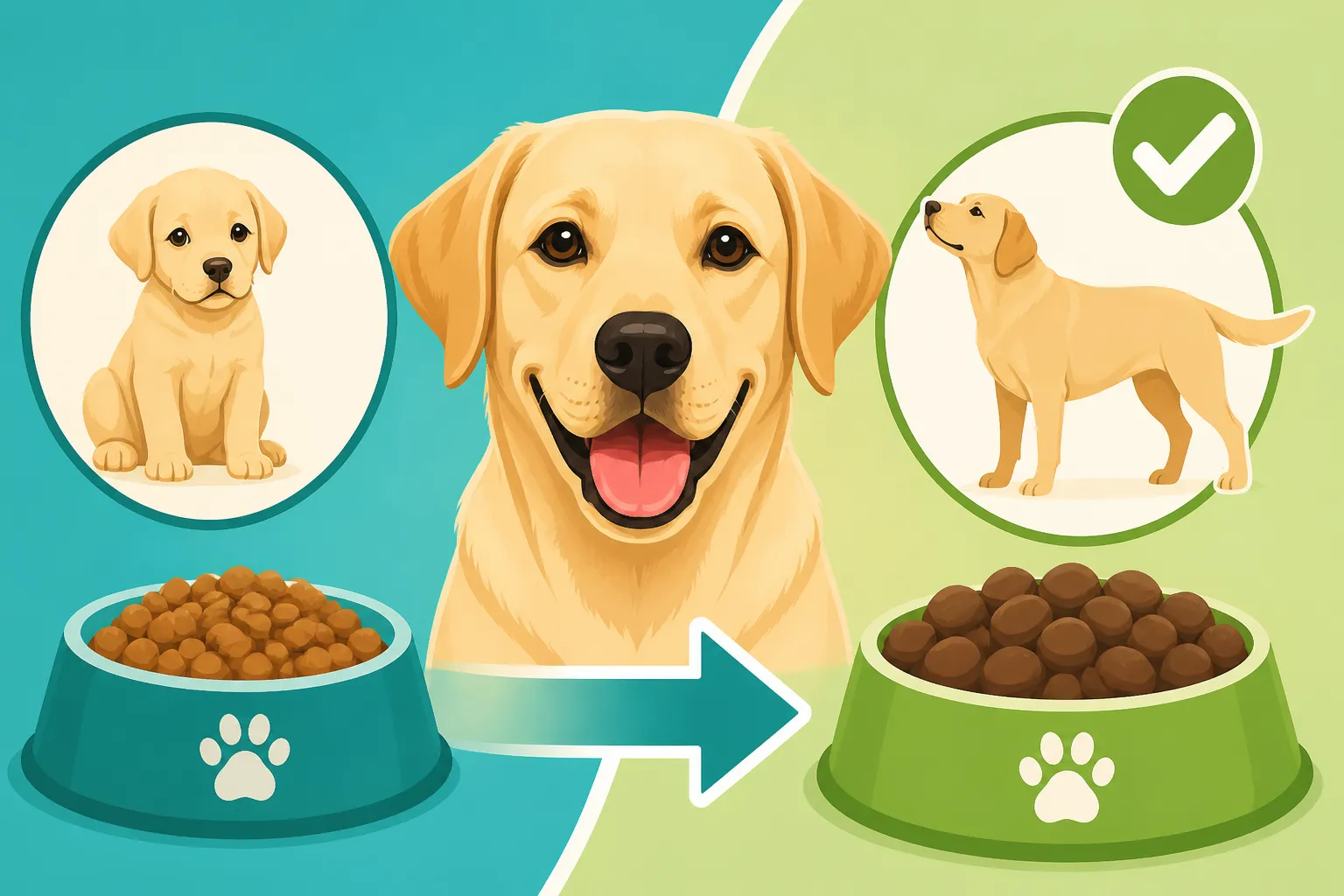
Suddenly switching your Labrador's food can lead to stomach upset, diarrhea, or vomiting. Their digestive system needs time to adjust to the new ingredients and nutrient profile. The best approach is a gradual transition over 7 to 10 days.
Here’s a simple schedule you can follow:
| Day | Old Food Percentage | New Food Percentage |
|---|---|---|
| 1-2 | 75% | 25% |
| 3-4 | 50% | 50% |
| 5-6 | 25% | 75% |
| 7+ | 0% | 100% |
During this transition, keep a close eye on your Labrador for any signs of digestive distress like loose stools, gas, or a decreased appetite. If they seem to be struggling, slow down the process and give them more time at each stage. This slow introduction is key to a smooth changeover, just as we'd advise for any significant dietary shift. You can find many reputable large breed adult formulas on sites like Chewy or Amazon, making it easy to plan your transition once you've picked the right one. This method is crucial to Switching a Labrador's Food Without Upset.
Selecting the Ideal Adult Formula for Your Labrador
Choosing the right adult food is just as important as the timing of the switch. For Labradors, a large breed adult formula is almost always the best choice. These foods are specifically designed to meet the needs of larger dogs, often with:
- Controlled Calorie Levels: To prevent obesity, which Labradors are prone to.
- Optimal Protein Content: To support muscle maintenance without excessive kidney strain. Protein Percentage That Suits a Labrador is a key factor to look for on the label.
- Joint Support Ingredients: Many large breed formulas include glucosamine and chondroitin to support joint health, which is a common concern for Labs.
- Appropriate Kibble Size: Larger kibble encourages chewing rather than gulping, which can aid digestion and reduce the risk of bloat.
When examining labels, look for a reputable brand that lists a named meat source (like "chicken meal" or "beef") as the first ingredient. Avoid foods with excessive fillers or artificial colors and flavors. You might also consider fresh food options, such as those from Ollie, if you're looking for a different approach to their nutrition, always discussing with your vet first. Don't forget to understand the recommended Cups Per Day for an Adult Labrador for your chosen food, as this can vary significantly between brands.
When in Doubt, Consult Your Veterinarian
Every Labrador is an individual, and while these guidelines are generally applicable, there can be variations. If you're still unsure whether your Lab is ready to switch, or if they have any underlying health conditions, your veterinarian is always the best resource. They can assess your dog's specific growth, weight, and overall health to provide personalized advice. A vet visit can also confirm growth plate closure if there's any uncertainty. Whether it's discussing their current diet during The First Vet Visit for a Labrador Puppy or a routine annual check-up, your vet can offer invaluable insights into their nutritional needs as they age. Don't hesitate to reach out to them; they're your partner in keeping your Labrador healthy and happy. They can also advise on things like Whether a Labrador is Too Thin or if any specific supplements are warranted.
Disclaimer
This article is for general informational purposes only and does not constitute professional advice. Laws, prices and regulations vary by location and change over time. Consult a qualified professional for guidance on your specific situation.