How Long to Transition a Labrador’s Food
You've just found what you think is the perfect new food for your beloved Labrador, maybe it's for sensitive stomachs, a new life stage, or just a different flavor your Lab might adore. But then the anxiety hits: how do you actually switch their food without causing a messy, uncomfortable disaster in your house? You've heard horror stories of upset tummies, vomiting, and diarrhea, and the thought of putting your cheerful, robust Labrador through that is enough to make anyone stick with the status quo. This guide is here to walk you through exactly how long and how carefully you should transition your Labrador's food, ensuring a smooth, happy, and healthy dietary change.
Why a Gradual Food Transition is Non-Negotiable for Labradors
It's tempting, when you've got a new bag of food in hand, to just swap it out entirely. After all, your Labrador probably eats everything in sight, right? A new bowl of kibble shouldn't be an issue. But trust me, as someone who's seen the aftermath, a sudden change in diet can throw a Labrador's sensitive digestive system into a tailspin. Their gut flora, the delicate balance of bacteria that helps them digest food, needs time to adjust to new ingredients, new protein sources, and different fiber levels. Think about it: if you suddenly switched from your usual meals to a completely different cuisine overnight, you'd probably feel a bit off too, maybe even experience some unpleasant digestive issues. Our Labs are no different, despite their iron stomachs when it comes to eating things they shouldn't!
The Inner Workings of a Labrador's Gut
A Labrador's digestive system, while generally robust enough to handle the occasional forgotten sock or discarded sandwich crust (don't act like it hasn't happened!), relies on consistency for optimal function. The stomach produces specific enzymes to break down the current food formula. The intestinal bacteria are accustomed to processing particular types of proteins, carbohydrates, and fats. When you introduce an entirely new food abruptly, these enzymes and bacteria are suddenly faced with an unfamiliar composition. It's like asking a finely tuned machine to process a completely different raw material without recalibrating.
This sudden shift can lead to inflammation in the gut, an overgrowth of "bad" bacteria, and a decrease in the "good" ones that aid digestion. The result is often gas, bloating, stomach pain, vomiting, and diarrhea – not a fun experience for anyone involved. Plus, Labradors are famously stoic, so by the time they're showing clear signs of distress, they're probably feeling pretty miserable. Understanding this physiological reality is the first step in committing to a gradual transition.
The Risks of Rushing the Switch
Beyond the immediate discomfort, a rushed food transition can have other implications. Severe diarrhea can lead to dehydration, especially in puppies or senior Labs, which might require a vet visit. In some cases, a particularly harsh reaction could even trigger or exacerbate underlying gastrointestinal sensitivities that you weren't even aware of. For a breed like the Labrador, known for their deep chests, any significant stomach upset, especially bloating and gas, can be concerning. While rare, extreme gas and discomfort could, in a worst-case scenario, contribute to issues like bloat (Gastric Dilatation-Volvulus), though a food change isn't a primary cause, it's always something to be mindful of. For more on preventative measures, you might want to read about Labrador Bloat Risk and Deep Chests.
Moreover, a negative experience with a new food can make your Labrador wary of it in the future, even if it's ultimately a better choice for them. We want the new food to be seen as a delicious treat, not something that made them feel sick. Patience now can save you headaches and vet bills later.
The Gold Standard: A 7-10 Day Transition Plan
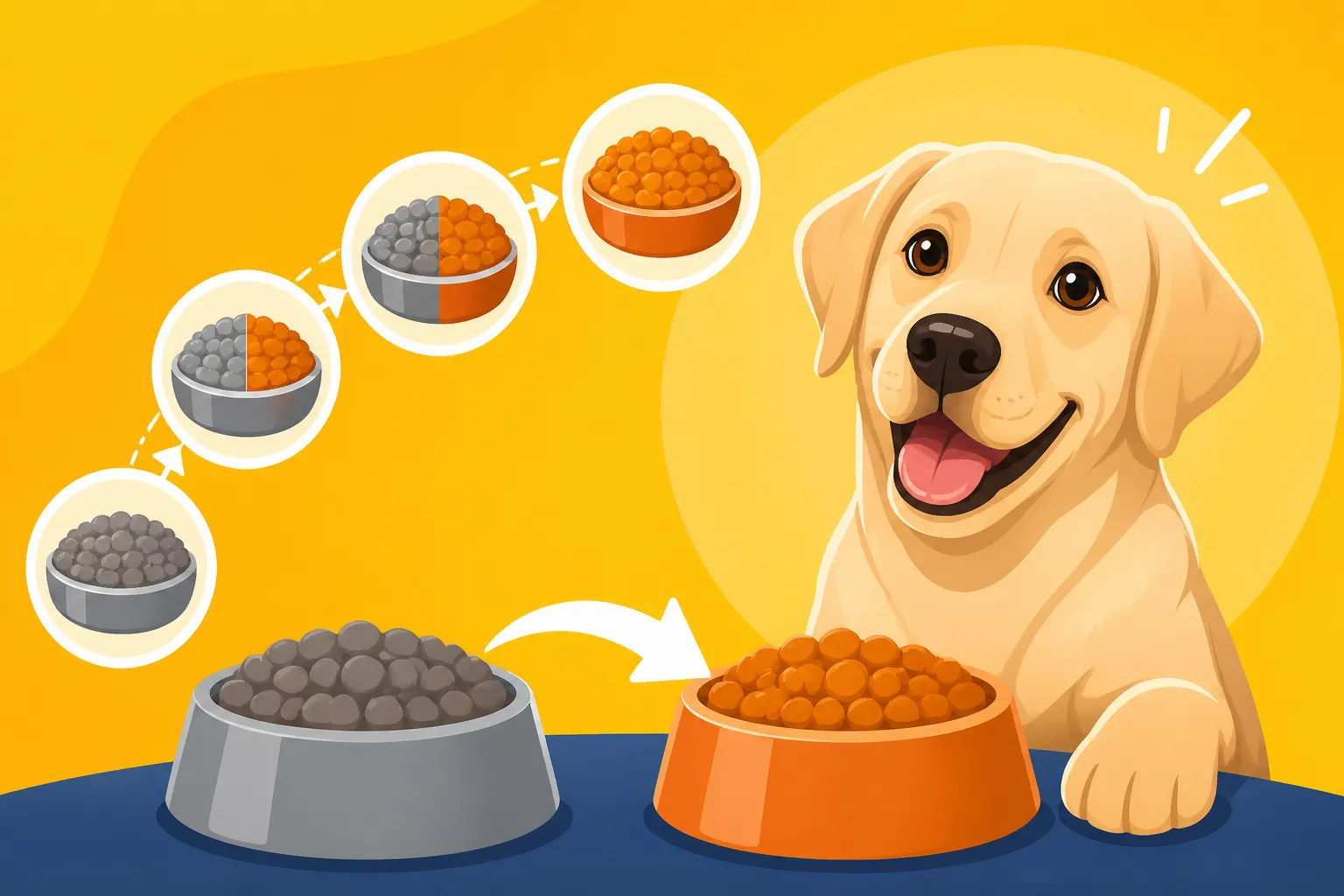
So, how long should you transition your Labrador's food? The consensus among veterinarians and experienced dog owners is a minimum of 7 to 10 days. For Labs with particularly sensitive stomachs, or if you're switching to a radically different type of food (say, from kibble to a fresh food diet like Ollie, or a high-protein to a lower-protein formula), you might even extend this to 14 days or more. This gradual approach allows your dog's digestive system to slowly adapt to the new ingredients without overwhelming it.
Your Step-by-Step Transition Schedule
Here’s a typical schedule to follow, broken down into manageable daily portions. Remember, these are guidelines, and you should always observe your Labrador closely and adjust as needed.
| Day | Old Food Percentage | New Food Percentage | Notes |
|---|---|---|---|
| 1-2 | 75% | 25% | Introduce a small amount of new food. Monitor stool. |
| 3-4 | 50% | 50% | Equal parts. Look for any changes in appetite or energy. |
| 5-6 | 25% | 75% | Predominantly new food now. Stools should be firm. |
| 7 | 0% | 100% | Full switch. Continue monitoring for a few more days. |
This table provides a basic roadmap, but let's dive into the specifics for a Labrador.
Days 1-2: The Gentle Introduction (75% Old, 25% New)
Start by adding just a quarter of the new food to three-quarters of their old food. Mix it thoroughly! Labradors, being the food connoisseurs they are, will often try to pick out the new bits if they don't like it, or gobble it all down without thinking. Mixing ensures they get a consistent blend. Over these two days, pay close attention to their bathroom habits. Are their stools still firm? Is there any gas or discomfort? A little extra gas might be normal as their gut adapts, but anything more than that, like loose stools, is a sign to slow down.
Days 3-4: The Halfway Mark (50% Old, 50% New)
If things are going well, you can now move to a 50/50 split. This is often the point where any underlying sensitivities might become more apparent. Continue to observe their energy levels, appetite, and stool consistency. Are they still eager to eat? Are they active as usual? If you notice any signs of diarrhea or vomiting, stop here and go back to the 75/25 split for a few more days until their system settles, then try to progress again more slowly. Remember, Switching a Labrador's Food Without Upset is the goal, so patience is key.
Days 5-6: Almost There (25% Old, 75% New)
By now, the majority of their meal is the new food. If your Labrador has been handling the transition smoothly, their digestive system is doing a fantastic job of adjusting. Stools should be well-formed and consistent. This period helps solidify the transition before the complete switch. If any minor issues pop up, you still have some old food to fall back on and can slightly increase its proportion for another day or two.
Day 7 Onward: Full Transition (100% New)
Congratulations! You've made it to the full switch. For most Labradors, by day seven, they should be comfortably eating 100% of the new food with no issues. However, it’s a good idea to continue monitoring them for a few more days, just in case. Sometimes, problems can take a day or two to fully manifest.
What to Look For: Observing Your Labrador
Your Labrador can't tell you how their tummy feels, so you need to be a keen observer.
- Stool Consistency: This is your primary indicator. Aim for firm, well-formed stools. Anything loose, watery, or with mucus indicates distress.
- Frequency of Bowel Movements: A slight increase or decrease might occur, but significant changes (e.g., going from two times a day to five, or not going for 24 hours) are a warning sign.
- Vomiting: Any vomiting, especially more than once, is a clear sign the transition is too fast.
- Appetite Changes: Is your Labrador still excited for meal times? Are they eating everything or leaving some behind? A sudden drop in appetite could signal nausea.
- Energy Levels: While a Labrador typically has boundless energy, any lethargy or unusual sluggishness could indicate they're not feeling well.
- Gas/Bloating: A little extra gas might happen, but excessive, foul-smelling gas or a visibly distended abdomen is a concern.
When to Pump the Brakes (or Speed Up)
This 7-10 day schedule is a suggestion, not a rigid rule. You know your Labrador best.
- Slow Down: If you notice any significant digestive upset (loose stools, vomiting, severe gas), immediately go back to the previous successful ratio for a few more days. For example, if diarrhea started on day 3 (50/50 mix), revert to day 1's 75/25 mix until their system calms down. You can then try to increase the new food again more slowly, perhaps adding only 10% new food every few days instead of 25%. Some Labs just need more time, and that's perfectly fine. Consider adding a canine-specific probiotic (many are available on Chewy or Amazon) during the transition to help support gut health. For more general advice on digestive health, you can look into Probiotics for a Labrador's Digestion.
- Speed Up: If your Labrador has a cast-iron stomach and shows absolutely no signs of distress at any stage, you might be able to shorten the transition to 5 days, but I'd still recommend at least 7 days to be safe. It’s better to err on the side of caution.
Troubleshooting Common Transition Problems
Even with the best intentions, sometimes things don't go perfectly smoothly. Here are some common hurdles and how to navigate them with your Labrador.
Persistent Diarrhea or Vomiting
This is the most common and worrying issue. If your Labrador experiences persistent diarrhea (more than 24 hours) or multiple episodes of vomiting, it's time to stop the new food entirely and return to their old food.
- Revert to Old Food: Feed only their old, trusted food for a few days until their symptoms completely resolve.
- Bland Diet (if necessary): If symptoms are severe, your vet might recommend a temporary bland diet (boiled chicken and plain rice) for 24-48 hours. This gives their gut a complete rest.
- Consult Your Vet: If symptoms don't resolve quickly on their old food or bland diet, or if they appear lethargic, weak, or dehydrated, contact your veterinarian immediately. It might be more than just a food sensitivity.
- Re-evaluate New Food: Once your Labrador is fully recovered, you need to reassess the new food. Was it too rich? Did it contain an ingredient they're sensitive to? You might need to pick a different brand or formula and start the transition process again, even more slowly next time (e.g., 10% new food over 2-3 days, then another 10%, extending the total transition to 2-3 weeks).
The Picky Eater (Yes, Even Labs!)
While "picky Labrador" sounds like an oxymoron, some Labs can be surprisingly finicky, especially if the new food doesn't quite hit their taste buds. Or perhaps they're just protesting the change.
- Make it Enticing: You can try adding a little warm water to the kibble to create a gravy, which can enhance the aroma and palatability. A dollop of plain yogurt (if they tolerate dairy) or a tiny bit of low-sodium broth can also help.
- No Free Feeding: Labradors often thrive on a schedule. If you free-feed, this might be a good time to reconsider. Put the food down for 15-20 minutes, then pick it up, whether they've eaten it or not. They'll quickly learn that mealtime is finite. This ties into the advice in Why Free Feeding Fails With a Labrador.
- Hand Feeding: For truly stubborn cases, hand-feeding a few pieces can sometimes spark their interest.
- Don't Give In: Avoid adding too many "extras" to tempt them, as this can create a cycle of pickiness. They'll quickly learn to hold out for the good stuff! A high-quality kibble from a brand like Purina Pro Plan or Royal Canin, often found at Chewy, usually has good palatability.
When to Consult Your Vet
You're your Labrador's best advocate. Don't hesitate to reach out to your vet if:
- Severe or Prolonged Symptoms: Vomiting multiple times, severe watery diarrhea, or symptoms lasting more than 24-48 hours.
- Lethargy or Dehydration: Your Labrador is unusually tired, has sunken eyes, dry gums, or skin that stays tented when gently pinched.
- Loss of Appetite: Your Lab refuses to eat for more than 24 hours.
- Pain or Discomfort: Whining, restlessness, a hunched posture, or a swollen abdomen.
- You're Concerned: Trust your gut feeling. If something just doesn't seem right, a quick call to your vet is always a good idea. They can offer specific advice, and potentially recommend a therapeutic diet or medication to ease the transition.
Choosing the Right New Food for Your Labrador
Before you even start a transition, a little homework on the new food can save a lot of trouble. Not all foods are created equal, and what's right for one Labrador might not be for another.
Dietary Needs at Different Life Stages
A Labrador puppy has different nutritional requirements than a senior Labrador.
- Puppies: Growing puppies need specific calcium and phosphorus ratios for bone development, especially large breeds like Labradors, to help prevent orthopedic issues down the line. Look for "large breed puppy" formulas. Learn more about How Much to Feed a Labrador Puppy.
- Adults: Active adult Labs need balanced nutrition for energy and maintenance. Pay attention to protein and fat levels appropriate for their activity level. You can find guidelines on Cups Per Day for an Adult Labrador.
- Seniors: Older Labs often benefit from fewer calories to prevent weight gain, joint support ingredients (like glucosamine and chondroitin), and sometimes higher fiber for digestive regularity. Feeding a Senior Labrador Retriever has more in-depth information.
Always check the packaging for the "AAFCO statement," which confirms the food meets nutritional levels for a specific life stage.
Understanding Ingredients and Labels
Reading a dog food label can feel like deciphering a foreign language, but it's crucial for making an informed choice.
- Protein Source: Look for a named meat source (e.g., "chicken meal," "lamb") as the first ingredient.
- Carbohydrates: Healthy carbs like brown rice, oats, barley, and sweet potatoes are good.
- Fats: Look for named fat sources like chicken fat or salmon oil, which provide essential fatty acids for skin and coat health.
- Avoid Fillers and Artificial Additives: Try to steer clear of vague ingredients like "meat meal" or excessive artificial colors and preservatives.
- Brand Reputation: Consider brands known for their research and quality control. Many reputable brands are available through major retailers like Chewy and Amazon, and specialized options, like fresh human-grade food from Ollie, can also be a great choice for some Labs.
For a deeper dive into making sense of dog food ingredients, check out Reading a Dog Food Label for a Labrador.
Ultimately, transitioning your Labrador's food is an act of love and responsible pet ownership. It requires patience, observation, and a willingness to adjust. By taking the time to do it right, you're helping your Labrador stay healthy, happy, and comfortable, avoiding those miserable upset tummy moments that no one wants to deal with.
Disclaimer
This article is for general informational purposes only and does not constitute professional advice. Laws, prices and regulations vary by location and change over time. Consult a qualified professional for guidance on your specific situation.