Switching a Labrador’s Food Without Upset
There's nothing quite like the panic you feel when your beloved Labrador is suddenly dealing with an upset stomach – loose stools, maybe even vomiting – all because you dared to change their food. It's a common, frustrating issue that can leave you feeling helpless, wondering if you've done something wrong. The truth is, a dog's digestive system, much like our own, needs time and a gentle hand when introducing new elements. This comprehensive guide is here to walk you through a seamless, stress-free food transition, ensuring your furry friend stays happy, healthy, and on an even keel, minimizing any gut disturbances.
Why a Gradual Transition is Crucial for Your Labrador
It might seem like a simple thing – swapping out one bag of kibble for another – but for your Labrador's sensitive digestive system, a sudden change can be quite a shock. Their gut is a finely tuned ecosystem, and rushing a new food into the mix can throw everything off balance, leading to uncomfortable and messy consequences.
The Science Behind Digestive Upset
Think of your Labrador's gut as a bustling city, full of microscopic residents – bacteria, yeasts, and other microorganisms – all working together to break down food and absorb nutrients. This is their gut microbiome, and it's incredibly specialized. When you introduce a completely new food, even if it's high quality, it often has a different blend of ingredients, protein sources, fiber types, and fats. The existing residents aren't equipped to handle this sudden shift. They need time to adapt, for new beneficial bacteria to grow, and for digestive enzymes to adjust.
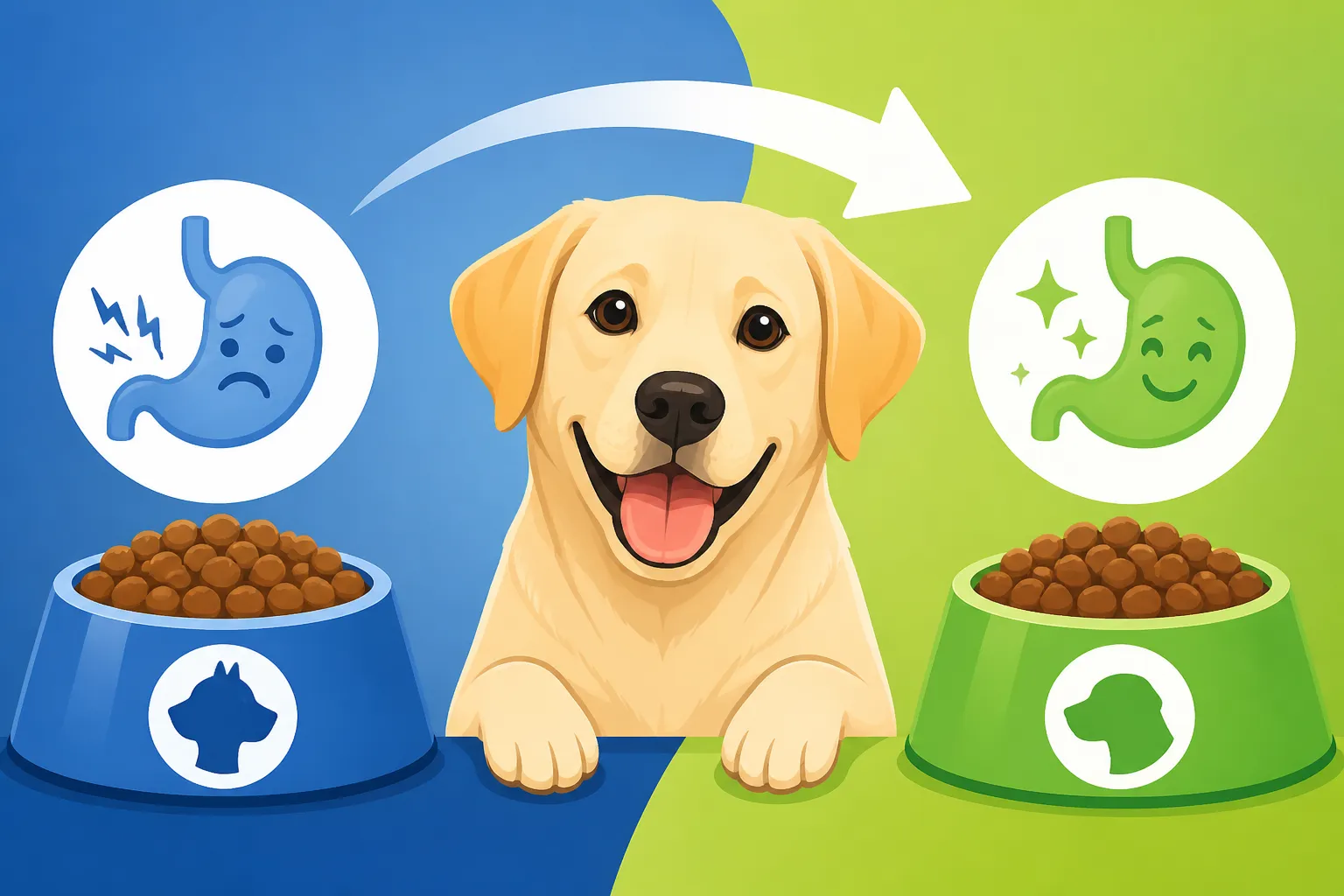
A sudden change forces the gut to process unfamiliar components too quickly. This can lead to an overgrowth of "bad" bacteria, inflammation, and reduced nutrient absorption. The visible signs? Diarrhea, vomiting, gas, and general discomfort. It's not just unpleasant for you; it's genuinely distressing for your dog. A slow transition allows this internal ecosystem to gradually adapt, minimizing the chances of gastrointestinal distress and ensuring your Labrador continues to thrive.
Why Labradors Are Especially Prone to Sensitive Stomachs
Labradors, bless their hearts, are often known for their incredible appetites. They're typically not picky eaters and will often devour whatever is put in front of them with gusto. This enthusiasm, however, can sometimes mask an underlying sensitivity. Just because they'll eat it doesn't mean their stomach will agree with it in large, sudden quantities. Their robust nature and boundless energy mean they need a lot of fuel, and their bodies are designed to process that fuel efficiently. Any disruption can be felt keenly.
Moreover, some Labradors can be prone to conditions like Labrador Bloat Risk and Deep Chests, and while a food change isn't a direct cause, maintaining digestive health is always paramount. Some research even suggests that the very genetic traits that make Labradors so food-motivated, like The POMC Gene and Labrador Appetite, might contribute to them eating things they shouldn't, further highlighting the need for careful dietary management. Rushing a food change can exacerbate any underlying sensitivities or simply create new ones, leading to an uncomfortable few days for both you and your furry companion.
The Step-by-Step Method for Switching Labrador Food
Successfully transitioning your Labrador to a new food is less about a single event and more about a carefully orchestrated process. Patience is your best friend here, as taking your time will save you a lot of clean-up and heartache in the long run.
Day-by-Day Mixing Guide
The golden rule for switching dog food is to do it gradually, typically over 7 to 10 days. This allows your Labrador's digestive system to slowly adjust to the new ingredients without being overwhelmed. Here's a common, effective schedule:
| Day | Old Food Percentage | New Food Percentage | Notes |
|---|---|---|---|
| 1-2 | 75% | 25% | Introduce a small amount of new food. Monitor closely. |
| 3-4 | 50% | 50% | Equal parts. Look for any changes in stool or behavior. |
| 5-6 | 25% | 75% | Mostly new food. Digestive system should be adapting well. |
| 7-10 | 0% | 100% | Full transition. Continue to observe for a few more days. |
During the first few days, you might not notice any change at all, which is a great sign! But if at any point your Labrador starts showing signs of an upset stomach, such as loose stools, vomiting, or excessive gas, it's time to slow down. Go back to the previous day's ratio for a few extra days, or even reduce the new food portion further, until their system stabilizes. Remember, this isn't a race; it's about making the transition as comfortable as possible for your dog. For some very sensitive Labs, this process might even stretch out to two weeks. The article How Long to Transition a Labrador's Food offers more insights into flexible timelines.
Monitoring Your Labrador's Response
Throughout the transition, you need to become a keen observer of your Labrador. Beyond just watching for outright vomiting or diarrhea, pay attention to more subtle cues. Is their stool softer than usual, even if not fully liquid? Are they passing more gas than normal? Do they seem a little less enthusiastic about their meals, or perhaps more restless after eating?
It's also worth noting their energy levels and general demeanor. A dog with an upset stomach might seem lethargic, withdrawn, or even a bit grumpy. While Labradors are generally stoic, they can definitely show discomfort. Keep a mental (or even physical) log of these observations. If you notice persistent issues for more than a day or two at any stage, it’s a clear signal to slow the transition or even consult your vet. Sometimes, if the issue is minor, adding a spoonful of plain canned pumpkin (not pie filling!) or a probiotic supplement can help soothe their gut, but always check with your vet first.
Sourcing Your New Food Efficiently
Once you've decided on a new food for your Labrador, getting it shouldn't be a hassle. Many pet supply retailers, like Chewy or Amazon, offer a wide variety of dog food brands and sizes, often with convenient delivery options. This can be particularly helpful if you're trying a smaller bag of the new food first to ensure your Labrador likes it and tolerates it well before committing to a larger, more economical bag.
If you're exploring fresh food options, companies like Ollie deliver pre-portioned, human-grade meals right to your door, which can be fantastic for sensitive stomachs but often require a different kind of transition. Just make sure to read the specific transition guidelines provided by any new food brand, as some might have slightly different recommendations. Having the new food on hand before you even start the transition ensures you won't run out midway through, preventing any accidental sudden switches.
Troubleshooting Common Issues During the Switch
Even with the best intentions and a gradual approach, sometimes things don't go perfectly smoothly. Your Labrador might still experience some hiccups during the food transition. Knowing how to differentiate between minor adjustments and more serious problems, and understanding when to act, is key to minimizing discomfort.
Mild Upset Versus Serious Problems
A little bit of soft stool or some extra gas during a food transition is relatively common and usually indicates your Labrador's digestive system is working to adapt. This is what we'd consider "mild upset." It's uncomfortable, but generally not a cause for immediate alarm if it's fleeting and doesn't progress. You might slow the transition down, or give it an extra day at the current ratio, and usually, things will resolve.
However, there’s a line where mild upset crosses into more serious territory. If your Labrador experiences profuse watery diarrhea, repeated vomiting, lethargy, loss of appetite for more than a day, blood in their stool, or seems to be in significant pain, these are red flags. These symptoms could indicate an allergic reaction, an intolerance, or even something more serious unrelated to the food itself. In these cases, it's crucial to contact your veterinarian immediately. They can help diagnose the underlying issue and provide appropriate treatment. For insights into recognizing more serious digestive issues, Signs a Labrador Is Aging Faster Than Expected can offer clues about changes in health.
When to Hit Pause or Restart
Knowing when to pause or completely restart the food transition is a critical skill for any Labrador owner. If you observe consistent loose stools, gas, or any signs of discomfort for more than 24 hours at any stage of the transition, it's a good idea to halt the progression. Go back to the previous ratio for another 2-3 days, or even revert entirely to the old food, and let your dog's system recover.
Sometimes, after pausing, you might find that the initial new food simply isn't a good fit. Perhaps your Labrador has a specific sensitivity to an ingredient in the new formula. In such cases, a complete restart with a different food might be necessary. It's frustrating, certainly, but prioritizing your dog's health and comfort is always the best approach. Don't be afraid to take a step back and re-evaluate if the current path isn't working.
Managing Persistent Sensitivity
For some Labradors, a sensitive stomach isn't just a temporary issue during food changes; it can be a lifelong trait. If your Labrador consistently struggles with digestive upset even after careful transitions, it's time to work closely with your veterinarian. They might recommend specific dietary plans, such as a limited ingredient diet, a hydrolyzed protein diet, or a veterinary-prescribed gastrointestinal formula.
There are also various supplements that can help manage chronic sensitivity, like probiotics to support a healthy gut microbiome, prebiotics to feed those beneficial bacteria, or digestive enzymes. Feeding smaller, more frequent meals can also sometimes help dogs with very sensitive systems, as it reduces the load on their digestive tract at any one time. It's a journey of discovery to find what works best, but with perseverance and professional guidance, you can help your Labrador live a comfortable life despite their tummy troubles. Remember, Labrador Dental Disease and Tartar can also be affected by diet, so finding the right balance is key for overall health.
Factors Beyond the Bag: What Else to Consider
While the type of food and the transition method are paramount, other factors play a significant role in your Labrador's digestive health and how smoothly a food switch goes. Understanding these can help you make more informed decisions and prevent future issues.
Age and Life Stage Considerations
A Labrador's nutritional needs change dramatically throughout their life, and these changes often necessitate a food switch. Puppy food, for instance, is specially formulated to support rapid growth and development, but feeding it for too long can lead to issues like How Fast Growth Damages a Labrador's Joints. Around 12 to 18 months, most Labradors are ready to transition to an adult formula. The article When a Labrador Moves to Adult Food provides excellent guidance on this specific transition.
Similarly, as your Labrador enters their senior years, typically around age 7 or 8, their metabolism slows down, and their activity levels may decrease. They might benefit from a senior-specific formula that is lower in calories, higher in fiber, and includes joint-supporting ingredients. Feeding a Senior Labrador Retriever offers valuable advice for this stage. Each of these life-stage changes requires the same gradual transition process to avoid digestive upset, tailored to their evolving needs.
Choosing the Right New Formula
Deciding on a new food isn't just about picking a brand; it's about understanding what your Labrador truly needs. If you're switching due to digestive issues, you might look for foods with fewer ingredients, novel protein sources (like duck or venison instead of chicken or beef), or easily digestible carbohydrates. For Labradors prone to weight gain, a weight control formula might be appropriate, and the article Weight Control Formulas for Labradors can help you understand those options.
Consider the protein percentage that suits your Labrador's activity level and age. Protein Percentage That Suits a Labrador delves deeper into this. Also, think about whether your Labrador truly needs a grain-free diet. While popular, Whether a Labrador Needs Grain in Their Food discusses the potential link between grain-free diets and certain heart conditions, so it's a decision best made with veterinary advice. Always read labels carefully, looking for reputable brands with clear ingredient lists and nutritional adequacy statements. Sometimes, even simply changing the protein source within the same brand can be enough to address a mild issue. This is where resources like Choosing Dog Food for a Labrador Retriever become invaluable.
Maintaining Consistency
Once you've found a food that works well for your Labrador and successfully transitioned them, consistency is key. Avoid frequent, unnecessary food changes, as this can repeatedly stress their digestive system. Establish a regular feeding schedule – typically two meals a day for adult Labradors – and stick to it. This helps regulate their metabolism and digestive rhythms.
Also, be mindful of treats and table scraps. While it’s tempting to share, too many extra foods can disrupt their balanced diet and lead to digestive upset, essentially acting like mini "food changes" every day. Remember that Labradors are famously food-motivated, and Why Labradors Beg After Eating explains this drive. Ensure any treats you give are appropriate and do not exceed 10% of their daily caloric intake. Using their regular kibble as training treats is an excellent way to maintain consistency while rewarding good behavior. Ultimately, a stable diet contributes significantly to a happy, healthy Labrador with a robust digestive system.
Disclaimer
This article is for general informational purposes only and does not constitute professional advice. Laws, prices and regulations vary by location and change over time. Consult a qualified professional for guidance on your specific situation.