How a Labrador Greets a Stranger
It’s a familiar scene for many Labrador owners: you're out for a walk, or a guest arrives at your door, and your beloved Lab transforms into a wiggling, jumping, tail-thumping ball of pure excitement, intent on showering the stranger with every ounce of their affection. While this enthusiasm is endearing, it can sometimes be a bit much, leaving new acquaintances overwhelmed or even a little wary. This guide is here to help you understand why your Labrador greets strangers the way they do and how to help them develop more polite, yet still friendly, manners.
The Heart of a Labrador: Why They're Such Enthusiastic Greeters
Labradors have earned their reputation as one of the friendliest breeds for a reason. Their natural disposition leans heavily towards being outgoing, eager-to-please, and generally joyful. This innate desire to connect with people, combined with their incredible energy, often translates into a rather boisterous greeting style. It’s not aggression or defiance; it's just pure, unadulterated happiness to see a new face!
An Innate Friendliness
Think about the history of the Labrador Retriever. They were originally bred to be working partners with fishermen, retrieving nets and fish in the icy waters off Newfoundland. This work required them to be biddable, intelligent, and, crucially, stable around humans. They weren't guard dogs; they were companions and helpers. This long history has cemented a deep-seated friendliness and a low suspicion of strangers into their genetic makeup. They inherently believe everyone is a friend they just haven't met yet. This is a core part of the Labrador Temperament and Personality.
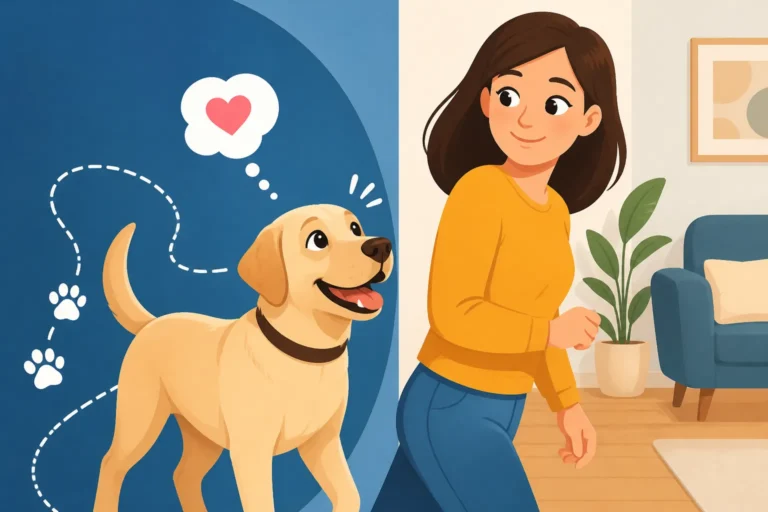
When a new person approaches, your Labrador isn't thinking, "Who is this intruder?" Instead, their brain is probably screaming, "New human! Potential pets! Maybe treats! Must say hello right now!" This instinct to engage and show affection is incredibly strong, and it's something we love about them, even if it needs a little refining sometimes. They just want to share their joy, and a new person is a fresh canvas for that.
The Power of Scent and Sound
Labradors possess an incredible sense of smell, far superior to ours. When a stranger approaches, your Lab is taking in a wealth of information through their nose before we even register the person's presence. They can smell emotions, other animals, what that person had for breakfast, and a million other things that create a fascinating profile. This olfactory data, combined with the new sounds of footsteps, voices, or even the crinkle of unfamiliar clothing, creates an exciting sensory overload that can trigger their over-the-top reactions.
Imagine walking into a room filled with your favorite scents and sounds – it's invigorating! For a Labrador, a stranger is often like that, a walking, talking, smelling novelty. This sensory input can ramp up their excitement levels almost instantly, making a calm greeting difficult unless they've been specifically taught how to manage that rush of information and emotion.
High Energy Levels and Excitement Thresholds
Let's be real, Labradors are often bundles of energy, especially when they're young. A typical Labrador, particularly a puppy or adolescent, has a lot of zest for life. When that energy meets the exciting prospect of a new person, it can easily spill over into jumping, bouncing, and general exuberance. They aren't trying to be rude; they simply haven't learned how to channel that immense excitement into a more controlled interaction.
Their excitement threshold can be quite low, meaning it doesn't take much to get them revved up. A quick glance, an outstretched hand, or a friendly tone of voice from a stranger can be all it takes to switch them from calm observation to full-on greeting mode. Understanding this high energy and low threshold is key to managing their behavior, as simply telling them "no" without providing an alternative rarely works with such a strong natural drive. It's a journey, especially during Labrador Energy Level by Age development.
Common Labrador Greeting Behaviors
So, what does this "over-the-top" greeting actually look like? Most Labrador owners have seen these behaviors firsthand, and while they're often born of good intentions, they can still be problematic. Let's break down the typical moves your Labrador might pull when encountering someone new.
The Full-Body Wiggle and Propeller Tail
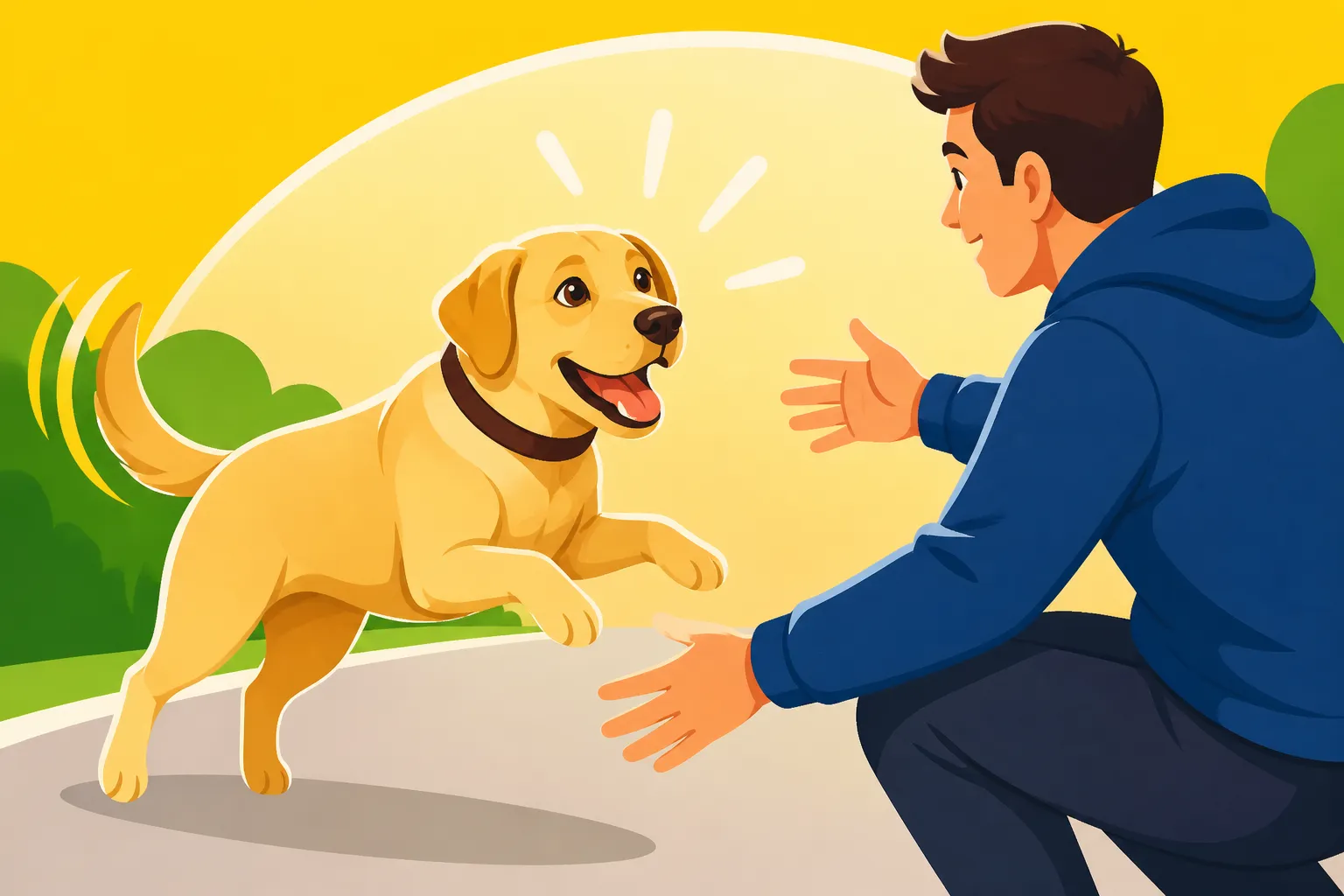
This is perhaps the most iconic Labrador greeting. Their entire body, from nose to tail, becomes a fluid, vibrating entity, often accompanied by a tail wagging with such force it could clear a coffee table. The "propeller tail" is famous for a reason – it's enthusiastic, powerful, and can indeed knock things over or even bruise an unsuspecting leg. This is your Lab's way of saying, "I am SO happy to see you, and my body can barely contain it!"
While adorable, this wiggle can make them seem much larger and less controlled than they are, especially to someone who isn't familiar with Labs. It's a non-verbal outpouring of joy, but it doesn't always convey the polite, calm respect we might want for our dogs, particularly around children or elderly individuals who might be knocked off balance.
Jumping Up for Attention
Ah, the classic jump! This is probably the most common complaint about Labrador greetings. They launch themselves upwards, often placing their front paws on the person's chest or shoulders. They’re usually trying to get closer to the person’s face, to lick, or simply to make full-body contact. It's their way of getting attention, saying "Hello!" at face level, and maybe even attempting to "hug" in their own way. However, it's also startling, can be painful, and can even tear clothing.
For a young, boisterous Labrador, jumping works. They jump, and people react – whether it's pushing them down, saying "no," or even petting them initially before realizing the problem. Any reaction, positive or negative, can inadvertently reinforce the behavior, making it harder to stop. It’s a habit that starts innocently enough but can quickly become deeply ingrained. You'll find a lot of guidance on Stopping a Labrador From Jumping Up.
Mouthing and Nipping
Some Labradors, especially puppies and adolescents, might also incorporate mouthing or gentle nipping into their greeting. This is usually not aggressive but rather a holdover from their puppyhood, where they explored the world with their mouths, or from their retrieving instincts, where they're used to carrying things "softly." They might try to take a sleeve, grab a hand, or just mouth at clothing. They’re trying to engage, but it can feel alarming to someone unfamiliar with the behavior.
This can be particularly problematic when they greet small children, who might not understand the difference between playful mouthing and an actual bite. It's important to differentiate this from true aggression, but it still needs to be addressed through consistent training to ensure everyone's comfort and safety. Luckily, there's plenty you can do about Labrador Puppy Mouthing and How to Redirect It.
Vocalizations: Whines and Excited Barks
While some Labradors are relatively quiet greeters, others might add a chorus of whines, excited barks, or even "woo-woos" to their routine. These vocalizations are another expression of their overwhelming excitement. A high-pitched whine might signal anticipation or frustration at not being able to get close enough, while sharp barks might be an attempt to command attention.
For some, these sounds add to the charm of the greeting. For others, particularly those who are easily startled or not used to dogs, it can contribute to a sense of being overwhelmed. Like jumping, vocalizations are often inadvertently reinforced when they lead to attention, even if it's negative attention like telling them to be quiet.
Managing Over-Enthusiastic Greetings
Okay, so we understand why Labradors greet the way they do. Now, how do we gently steer them towards a more polite approach without stifling their wonderful personality? It's all about consistency, redirection, and rewarding the right behaviors.
The "Four on the Floor" Rule
This is a golden rule for polite greetings. The moment your Labrador starts to lift their paws, the interaction stops. No pets, no eye contact, no talking. The instant all four paws are back on the ground, even for a split second, that’s when the praise, gentle pets, or a small treat appear. This teaches them that calm behavior earns them what they want – attention – while jumping makes it disappear.
It takes incredible consistency from everyone involved. Make sure all family members and even willing guests are on board. Explain the rule clearly: "Please don't reward jumping. As soon as his paws are down, even for a second, then you can give him a gentle pet." This might mean turning your back, stepping away, or even temporarily leaving the room if your dog is particularly persistent. Over time, your Labrador will learn that polite, calm greetings are far more effective. For practical steps, look up Teaching a Labrador to Greet Politely.
Using Leashes and Barriers for Control
Sometimes, especially with a young or particularly excited Labrador, you need to manage the environment to prevent unwanted behaviors. A leash is your best friend here. When guests arrive, or you meet someone on a walk, keep your Labrador on a leash. This allows you to physically prevent jumping and gives you more control to guide them into a sit or a stand-stay.
You can also use physical barriers, like a baby gate, to create a moment of calm before the greeting. Have your Labrador behind the gate when the doorbell rings or a visitor enters. This gives them a chance to observe the new person without being able to immediately rush them. Once they show a moment of calm (no frantic barking, no jumping at the gate), then you can allow a controlled, leashed approach. This strategy helps manage the initial surge of excitement and gives you an opportunity to reinforce calm behavior.
Redirecting Energy and Attention
Labradors are often food-motivated, which is a fantastic training tool! Before a stranger even gets close, you can redirect your Labrador's attention with a high-value treat. Ask for a "sit" or "down," and reward them heavily for maintaining that position while the stranger approaches. The goal is to make staying calm and focused on you more rewarding than jumping on the guest. Products from places like Chewy can be excellent for finding those high-value treats or even durable puzzle toys that can distract them during a chaotic arrival.
Another powerful redirection technique involves giving them something appropriate to carry or do. Their natural retrieving drive is strong; if they tend to mouth or grab at people, give them a favorite toy to hold in their mouth instead. This satisfies their oral fixation in a non-destructive way. Or, if they're particularly bouncy, engage them in a quick game of "find it" in another room to burn off some of that initial energy before a controlled greeting.
Gradual Introductions and Controlled Exposure
Not every greeting has to be a full-on, meet-and-greet session. Sometimes, a slow, gradual approach works best, especially if your Labrador gets extremely overstimulated. Start with short, controlled exposures to new people. For instance, have a friend stand a distance away, and reward your Labrador for simply looking at them calmly, without reacting. Gradually decrease the distance as your dog remains calm.
When someone first enters your home, instruct them to ignore your Labrador completely for the first few minutes. No eye contact, no talking, no petting. This gives your Lab a chance to calm down naturally, process the new person's presence, and realize that frantic behavior isn't gaining them anything. Once they've settled, the stranger can then initiate a calm, low-key interaction, rewarding polite behavior. Remember, every positive, calm interaction builds confidence and good habits. Socializing a Labrador Puppy should be a lifelong process, not just during puppyhood.
Socializing for Polite Greetings
The foundation for good greeting manners is solid socialization from a young age, followed by consistent training throughout their lives. A well-socialized Labrador is better equipped to handle novel situations and people with grace.
Early and Positive Exposure
The period between 8 and 16 weeks is crucial for puppy socialization. During this time, introduce your Labrador puppy to a wide variety of people of different ages, genders, appearances, and gaits. Think about people wearing hats, carrying umbrellas, using walkers, or just generally looking "different." Make these introductions positive, calm, and short. A friendly stranger offering a tiny treat (with your permission!) while your puppy remains calm can build wonderful associations.
Don't force interactions. If your puppy seems hesitant, give them space. The goal isn't for them to love every person instantly, but to view new people as neutral, non-threatening, and potentially positive encounters. Lack of early positive exposure can lead to nervousness, which can manifest as over-excitement or even fear-based reactions later on.
Structured Training in Different Environments
Formal obedience classes are fantastic for teaching your Labrador to focus on you amidst distractions, including other people. Practicing "sit," "stay," and "watch me" in a busy park or a pet-friendly store is invaluable. When a stranger approaches, you can ask your Labrador for a known command, giving them a job to do that distracts them from their impulse to jump and rewards their focus on you.
This structured training helps your Labrador generalize their good manners. It’s one thing to be calm when greeting family at home, but quite another to maintain composure when encountering a jogger and their dog on a trail. Consistent practice in varying environments reinforces that polite behavior is expected everywhere, not just in predictable situations. A good long line can be a great tool for practicing Labrador Recall and Working Off Leash and maintaining control during these training sessions.
Consistency is Key
We preach it all the time, but it bears repeating: consistency is the absolute cornerstone of effective training, especially when it comes to greetings. Every time your Labrador jumps and gets rewarded (even inadvertently), that behavior is strengthened. Conversely, every time they offer a polite greeting and are praised, that behavior is strengthened. If one family member allows jumping and another doesn't, it creates confusion for your dog and hinders progress.
Sit down with everyone who regularly interacts with your Labrador and establish clear rules for greetings. Make sure everyone knows what to do if the dog jumps, and what to do when the dog is polite. It might feel like a lot of effort initially, but the reward is a Labrador who is a joy to introduce to anyone, anytime, anywhere. This consistency also applies to things like Loose Leash Walking With a Labrador, as a dog who pulls on the leash often struggles with calm greetings.
Continued Reinforcement and Patience
Training a Labrador, like any dog, is an ongoing process, not a one-time fix. As they mature through adolescence and into adulthood, their energy levels and focus will change. What worked at six months might need refining at two years. Always be prepared to go back to basics if old habits resurface. Keep high-value treats handy, and continue to reward those calm, four-on-the-floor greetings, even after they've seemingly mastered it.
Remember, Labs are eager-to-please, but they're also exuberant. It takes time, patience, and understanding to shape their natural enthusiasm into polite manners. Celebrate the small victories, like a momentary pause before jumping, or a gentle sniff instead of a full-body tackle. Your dedication will pay off with a Labrador who can charm everyone they meet, without knocking them over.
Here's a quick comparison of desired vs. common greetings:
| Desired Polite Greeting | Common Over-Enthusiastic Greeting |
|---|---|
| Four paws on the floor, calmly approaching. | Jumping up, placing paws on chest/shoulders. |
| Gentle sniff, perhaps a soft muzzle nudge. | Mouthing hands, sleeves, or clothing. |
| Calm, low tail wag (if any), body relaxed. | Full-body wiggle, high-speed propeller tail. |
| Soft eye contact, looking to owner for cues. | Intense staring at stranger, ignoring owner. |
| Quiet or soft whines of anticipation. | Barking, loud whines, or excited vocalizations. |
| Accepting pets without excessive bouncing or pushing. | Pushing into person, demanding attention with force. |
Training your Labrador to greet strangers politely doesn't mean you're trying to extinguish their wonderful, friendly spirit. Quite the opposite! It means you're helping them learn how to appropriately share that joy with everyone, ensuring that their greetings are welcomed and appreciated, rather than endured. With consistent effort and a lot of love, your Labrador will become the perfect ambassador of good canine manners.
Disclaimer
This article is for general informational purposes only and does not constitute professional advice. Laws, prices and regulations vary by location and change over time. Consult a qualified professional for guidance on your specific situation.