Scent Work for a Labrador Indoors
It's a common dilemma: you've got a Labrador bursting with energy, a brain that's always on, and a rainy, snowy, or just plain scorching day outside that makes a long walk or a rousing game of fetch impossible. Your beloved companion is pacing, sighing, perhaps even trying to initiate a game of indoor tug-of-war with your favorite throw blanket, and you're wondering how on earth to tire them out without tearing down the house. This guide is all about channeling that incredible Labrador drive and intelligence into something incredibly rewarding, low-impact, and perfectly suited for indoors: scent work.
Why Scent Work is a Game Changer for Your Indoor Labrador
Labradors, bless their cotton socks, are born to work, and much of that work involves their phenomenal noses. When they're not retrieving ducks or tennis balls, their minds can feel a little… underutilized. That's where scent work comes in. It’s not just a cute party trick; it’s a powerful mental workout that taps directly into what makes a Labrador a Labrador.
Unleashing Their Primal Instincts: More Than Just a Cute Sniff
Think about it: from the moment they're born, a Labrador's nose is their primary tool for understanding the world. They navigate, they identify, they explore. We bred them for generations to use that nose to find things, to follow trails, to locate fallen game. While most of our pet Labs don't have a job retrieving waterfowl or finding truffles, that deep-seated drive to sniff and search is still very much alive within them. Ignoring it is like giving a brilliant mathematician a calculator and telling them they're never allowed to solve complex equations again. It just doesn't feel right, and it leaves a significant part of their being unfulfilled.
When your Labrador is bored and feeling restless indoors, it's often because their mind isn't getting the exercise it craves. A quick run around the yard might burn some physical energy, but it rarely engages their core instincts. Scent work, however, provides an outlet for that incredible olfactory prowess. It allows them to engage with the world on a primary level, to problem-solve using their most powerful sense. The satisfaction they get from finding a hidden treat or toy, purely by following a scent, is immense. You'll see their body language change: their tail might wag a little harder, their posture will be more confident, and they'll look at you with that "I'm a genius, aren't I?" expression that only a working Lab can truly master. It's a fundamental part of who they are, and giving them the chance to express it is incredibly enriching.
The Power of Mental Engagement: Tiring the Brain, Not Just the Body
We've all been there: you throw the ball for what feels like the hundredth time, your Labrador brings it back, drops it at your feet, eyes bright, tail wagging, ready for another round. Physically, they might be tired, but mentally? They're still wide awake and often looking for the next thing to do. This is why a short game of fetch often doesn't cut it when you're trying to achieve true calm indoors. Physical exertion without mental stimulation can often lead to a Labrador who is physically tired but mentally restless, like a college student who ran a marathon but then immediately has to study for finals.
Scent work flips this dynamic entirely. Instead of simply chasing, your Labrador has to concentrate, focus, and use their brain in a completely different way. They have to process information, discriminate between scents, and follow a faint trail. This kind of intense mental effort is incredibly tiring for dogs, far more so than a simple physical activity. Imagine trying to solve a complex puzzle versus simply running around the block – one drains your mental energy while the other drains your physical. After a good, focused scent work session, you'll often find your Labrador collapsing into a contented nap, not because their legs are tired, but because their brain is happily exhausted. It's a wonderful way to Tiring a Labrador on a Rainy Day or any day where outdoor exercise is limited. This mental drain can also be a fantastic way to prepare them for quiet time or even help with Settling a Labrador Puppy Who Cries in the Crate by using up some of that excess mental energy before bedtime.
Building Canine Confidence and Curbing Destructive Habits
Many of the common behavioral woes we face with Labradors indoors – the incessant barking, the frantic pacing, the counter-surfing, the destructive chewing – often stem from boredom and a lack of appropriate outlets for their intelligence and energy. A Labrador with nothing productive to do is a Labrador who will invent their own "job," and that job might involve redecorating your couch with their teeth or "retrieving" your slippers from the closet. It can be incredibly frustrating to come home to a shredded cushion, and you know your sweet Lab isn't being malicious; they're simply being a bored Labrador.
Scent work offers a constructive, engaging alternative. When your Labrador successfully finds a hidden treat, they experience a surge of self-satisfaction and confidence. They learn that their efforts lead to rewards, reinforcing positive problem-solving skills. This boost in confidence can be particularly beneficial for Building Confidence in a Timid Labrador who might be shy or anxious in new situations, as scent work is a low-pressure activity where they are almost guaranteed success. By providing a safe, enriching outlet for their natural drives, you're not only preventing destructive behaviors but actively shaping a more confident, calm, and well-adjusted companion. Instead of chewing on your furniture, they're focused on finding that delicious hidden crumb, transforming potential chaos into constructive engagement. This shift from destructive to detective work is a win-win for everyone in the household.
Starting Your Labrador's Indoor Scent Journey: The Absolute Basics
Embarking on scent work with your Labrador doesn't require any fancy equipment or a master's degree in dog training. It's all about starting simple, making it fun, and letting your Labrador's incredible nose lead the way. You'll be amazed at how quickly they pick it up!
Gathering Your Supplies: The Easiest "Scents" and "Hides"
You really don't need much to get started, which is one of the beauties of scent work. For your "scent," the easiest and most effective option is a high-value treat – something small, smelly, and irresistibly delicious that your Labrador absolutely loves. Think tiny pieces of cooked chicken, cheese, or even their favorite soft training treats. The smellier, the better, as this makes it easier for them to locate the initial hides. It’s also wise to choose treats that are consumed quickly, so they don’t spend too long munching when they should be searching for the next one. For many Labs, using Treats That Motivate a Food-Driven Labrador is key to engagement.
For "hides," start with things you already have around the house. A towel draped over a low stool, an empty cardboard box, or even just the open floor in front of you. The goal is to make it incredibly easy at first, so your Labrador understands the game and builds confidence. Avoid anything breakable, precarious, or that could be swallowed. Safety is always paramount, and especially with a food-motivated breed like a Labrador, you want to ensure they can't get into trouble when their nose is fully engaged. As you progress, you might want to invest in some dedicated puzzle feeders or snuffle mats, but for now, simple household items are perfect. If you're looking for more structured options, products available on platforms like Amazon offer a wide range of beginner-friendly snuffle mats and puzzle toys that can be great additions once your dog understands the basic concept.
The Foundational "Find It" Game: Step-by-Step for Success
This is where the magic begins! The "Find It" game is the cornerstone of all indoor scent work, and it's remarkably simple to teach. The key is to make it a positive, low-pressure experience right from the start.
- Start with "Cookie Toss": Get a few high-value treats ready. With your Labrador watching, toss one treat just a foot or two away from them on the floor and say "Find it!" in an excited, happy voice. As they eat it, toss another, slightly further. Repeat this a few times. The goal here is to associate the phrase "Find it!" with the action of searching and being rewarded. Don't hide it yet, just make the act of looking for it the fun part.
- Make it a Little Tricky: Once your Labrador understands that "Find it!" means "look for food on the floor," you can start making it slightly harder. While they are still watching, gently place a treat under a lightweight towel or a small, empty cardboard box that they can easily nudge with their nose. Again, say "Find it!" enthusiastically. Praise them lavishly when they find it. The goal is for them to realize that their nose is the tool to get to the treat.
- Introduce the "Hide" Command: Now, put your Labrador in a "sit-stay" (or have a helper gently hold them if they're too excited at first). Show them the treat, then place it in a very easy-to-find spot while they watch (e.g., just behind a chair leg or under the edge of a rug). Go back to your dog, release them with "Find it!" and encourage them to search. This step starts to build the concept of a "hide."
- Gradually Out of Sight: Once they're reliably finding treats you've placed while they watch, you can move to out-of-sight hides. Again, have them in a "sit-stay" or held. Show them the treat, then pretend to hide it in an easy, obvious spot (like just under the edge of a cushion) while they still watch you. Now, as you place it, cover it with your hand or turn your back for a split second to simulate them not seeing the final placement. Go back to your dog, release, and say "Find it!" The slight change encourages them to rely on their nose, not just their eyes.
Remember, keep these sessions short – Short Training Sessions That Suit a Labrador are always best to maintain enthusiasm, especially when they are learning something new. Always end on a positive note, even if it means doing one last super-easy hide.
Gradually Increasing the Challenge: From Obvious to Hidden Treasures
Once your Labrador is confidently finding treats in easy, slightly out-of-sight spots, you can begin to increase the challenge. The key word here is gradually. You want to stretch their abilities without overwhelming them or causing frustration.
-
More Complex Hiding Spots: Start using different surfaces and elevations. Instead of just on the floor, try hiding treats:
- Under a coffee table
- Behind a curtain (low down)
- In a cardboard box with other crumpled paper (no sharp edges!)
- Under a rug or mat
- On a low shelf (if it's stable and safe)
- Tucked into the folds of a blanket on the sofa (make sure they don't eat the blanket!)
Always ensure the hiding spot is safe and that your dog can access the treat without damaging furniture or injuring themselves.
-
Expanding the Search Area: Once they're good with one room, try hiding a few treats in a designated "search area" within that room. For example, confine them to the kitchen, hide 3-4 treats, and then release them to "Find it!" As they get better, you can open up another room, or even the whole downstairs. When doing this, make sure to clearly define the search area. You might say "Kitchen, find it!" so they know where to focus their efforts.
-
Introducing "Blinds": This is where you truly hide the treat without your Labrador seeing where you put it at all. This relies entirely on their nose. Put your dog in another room, close the door, or have someone hold them. Place a single treat in a moderate hiding spot. Then bring your dog in and say "Find it!" This is a huge step in building their independent searching skills. If they struggle, go back to an easier hide or a spot they saw you "pretend" to hide it. Remember, success is the best teacher. This is also a fantastic way to utilize Puzzle Feeders That Slow a Greedy Labrador or snuffle mats, as they inherently provide a more complex "hide" structure.
Elevating the Game: Advanced Scent Challenges for Your Clever Canine
Once your Labrador is a seasoned "Find It" pro, consistently locating hidden treats around the house, it's time to level up. This next stage introduces more sophisticated challenges, keeping their incredible nose and brain engaged and ensuring they never get bored.
Introducing Variety: New Hiding Spots and Gentle Distractions
Your Labrador might be a whiz at finding treats tucked under the sofa cushion, but the world offers so many more intriguing smells and surfaces! Varying the types of hides keeps the game fresh and builds their problem-solving skills, preparing them for more complex scenarios.
-
Utilizing Vertical Spaces: Think beyond floor level. Can you hide a treat:
- Tucked securely into a low book shelf (no valuable books nearby!).
- On the bottom rung of a chair or table leg.
- In a plant pot (empty, clean, and safe for dogs, of course!) on the floor.
- Inside an open cabinet (again, empty and safe!).
The idea is to make them lift their head, stretch, and think about how scent travels in three dimensions, not just across the floor. This also teaches them persistence when the scent isn't directly beneath their nose.
-
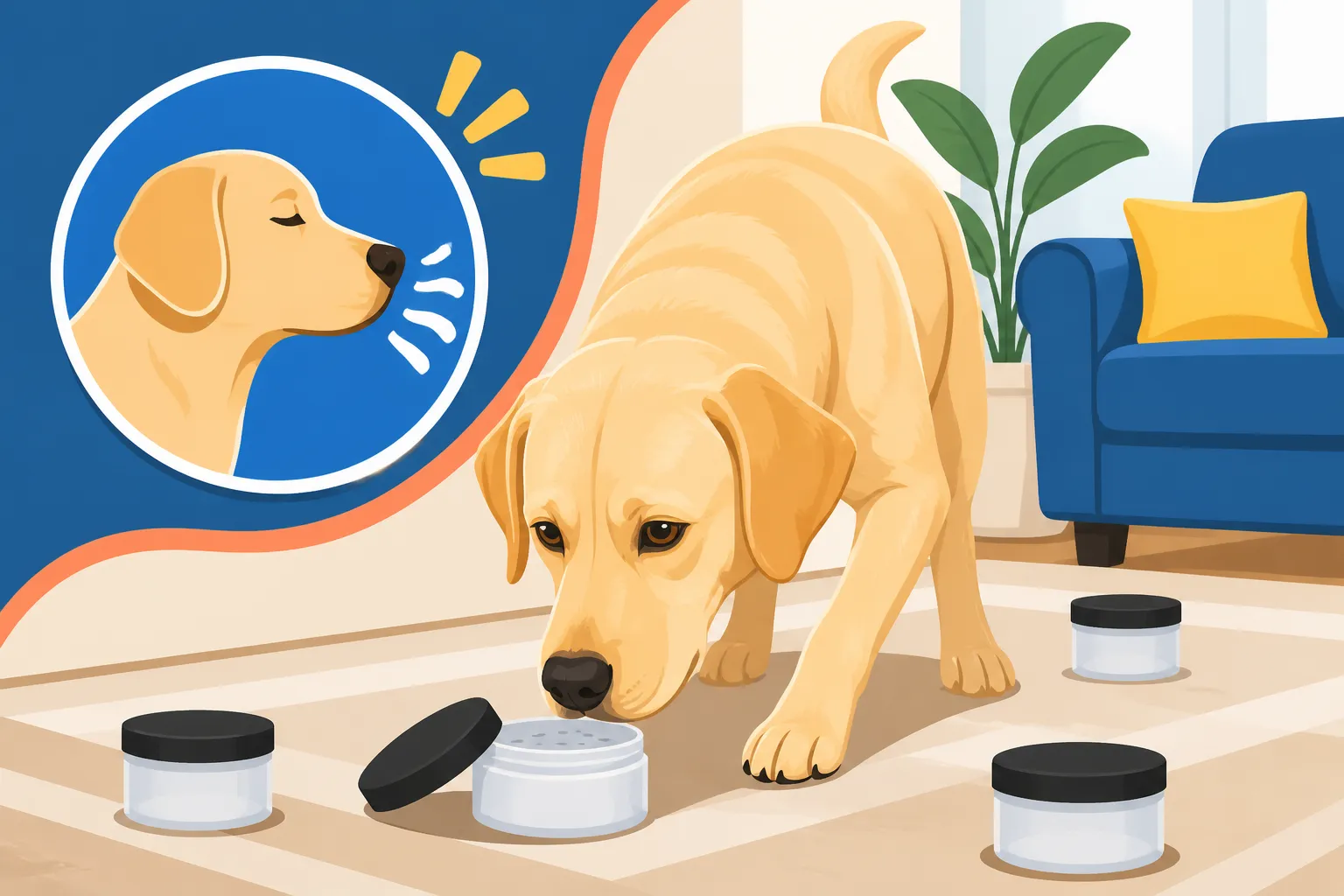
Introducing Container Searches: Gather several identical, clean cardboard boxes or even small plastic containers. Hide one high-value treat in just one of them. Arrange the boxes in a line or a small grid. Release your Labrador to "Find it!" As they get better, you can add empty boxes, making them discriminate the scent. This mimics the container searches used in formal detection work.
-
Subtle Distractions: While your Labrador is focused, you can start adding very mild distractions to the environment. This isn't about making it impossible; it's about teaching them to maintain focus. For example:
- A favorite toy lying nearby (but not part of the search).
- Soft music playing in the background.
- Another person quietly walking through a distant part of the house.
The goal is to teach them to stay "in the zone" of their scent work, even with minor ambient activity. This is also an excellent way to practice focus for Loose Leash Walking With a Labrador in busier environments, as it trains them to tune out irrelevancies. Remember, if they get distracted, simply make the next hide easier and reduce the distraction. We want success, not frustration!
Exploring Odor Recognition: Beyond Just Treats
While treats are fantastic for building initial enthusiasm and understanding, serious scent work often involves specific "target odors" that aren't food. This takes the game to a whole new level of sophistication and taps into the impressive capabilities of your Labrador's nose for discrimination.
- Introducing Novel Odors with Pairing: If you're ready to get serious, you can introduce actual scent work oils. Common starter scents include birch, anise, or clove, often sold in kits that include cotton swabs or felt pads. Brands found on platforms like Amazon often offer these starter kits.
- The Pairing Method: Start by placing a tiny drop of your chosen essential oil onto a cotton swab or a felt disc. Immediately place this scented item right next to a high-value treat. Put this "paired" hide in an easy spot. When your Labrador finds the treat, they also get the new scent. Repeat this many, many times over several sessions. The idea is to create a strong positive association: "that new smell always means good stuff!"
- Gradual Separation: After numerous successful pairings, you can start to gradually separate the scent from the treat. Hide the scented swab slightly away from the treat, then a little further. Eventually, your Labrador will be searching for the scent itself, knowing that finding the scent leads to you delivering a reward.
- Understanding Scent Theory (Simplified): Without getting too technical, teach yourself a little about how scent moves. Scent rises, it moves with air currents, and it can cling to surfaces. Understanding this helps you create more challenging hides. For example, placing a scented cotton swab above a treat encourages your dog to follow the plume of scent upwards.
- Dedicated Scent Training Programs: If you find yourself truly captivated by scent work, consider a structured online program. Resources like BAXTER & Bella often provide comprehensive online training courses, including modules on scent work, that can guide you through odor recognition and advanced techniques step-by-step. These programs can be invaluable for understanding the nuances of how to introduce and progress through target odors correctly.
Mastering Complex Searches: Trails, Grids, and Container Searches
Once your Labrador understands that a specific odor is what they're truly looking for (even if it's still paired with a treat for now), you can introduce more complex search patterns that demand more sustained effort and strategic thinking.
-
Laying Scent Trails: This involves creating a path of scent for your Labrador to follow.
- Treat Trail: Start easy by dragging a high-value treat along the floor for a few feet, leaving a faint scent trail, then placing the treat at the end. Your Labrador will follow the trail to the prize.
- Scented Swab Trail: As they progress, you can use your target-scented swab to lightly tap the floor every foot or so, leading to a "final hide" where the swab and a treat are placed. This teaches them to follow a track.
-
Advanced Container and Grid Searches: Take your container searches to the next level.
- More Containers: Increase the number of containers (up to 10 or more) and mix up their placement.
- Multiple Hides: Hide the target scent in more than one container within the grid, challenging your Labrador to indicate all finds.
- Grid Searches: Set up a "grid" using cardboard boxes, cones, or even pillows. Hide your target scent in one (or more) of the grid elements, and let your Labrador methodically search the area. This is a common practice in competitive scent detection.
-
Vehicle Searches (Safely Indoors): If you have a garage or enclosed area, you can simulate vehicle searches using an old spare tire or car seat. Hide the scent within the wheel well or under the seat, ensuring complete safety. This is a great transition to outdoor scent work.
-
"Proofing" Against Distractions: As your Labrador gains skill, begin to introduce stronger, more realistic distractions into searches where the target scent is present. This might include:
- Empty food bowls (but no food inside) near a hide.
- Toys that aren't the target object.
- Other household smells (laundry, cooking smells) that are part of normal life but not the target.
The goal is to teach your Labrador to focus on the target scent exclusively, ignoring other interesting smells. This level of focus is what sets truly talented detection dogs apart. Scent Work for a Labrador Indoors is a fantastic mental exercise that builds their confidence and teaches them problem-solving skills that translate to other areas of their training, like Labrador Recall and Working Off Leash where they need to focus on your commands despite environmental distractions.
Essential Tips for Scent Work Success and Avoiding Common Frustrations
Scent work is incredibly rewarding for both you and your Labrador, but like any training endeavor, there are best practices to follow and common pitfalls to avoid. Keeping it positive, safe, and fun is the ultimate goal.
Prioritizing Fun and Positive Reinforcement
This isn't a chore; it's a game! The absolute most important thing to remember is that scent work should always be a positive, enriching experience for your Labrador. This means a few crucial things:
- Keep Sessions Short and Sweet: Labradors, especially puppies or those new to scent work, have limited attention spans. Five to ten minutes of focused searching is often plenty. It’s better to do several short sessions throughout the day than one long, tedious one. Always leave them wanting more! This adheres to the principle of Short Training Sessions That Suit a Labrador.
- End on a High Note: Always, always conclude a session with a successful find, even if it means doing one final, super-easy hide. This reinforces the positive association with the game and leaves them feeling like a winner.
- Celebrate Every Success: When your Labrador finds the treat or scent, praise them enthusiastically! A happy "Good find!" or "Yes!" combined with the reward helps them connect their effort to your pleasure. Their body language will tell you how much they thrive on your approval.
- Never Punish or Correct: If your Labrador sniffs in the wrong spot, gets distracted, or simply gives up, it's not a failure; it's a sign that the hide was too difficult, or the session was too long. Simply make the next hide easier, or end the session. We want them to feel safe to explore and try, not fear making a mistake. This is a key aspect of building confidence and trust.
Navigating Enthusiasm and Setbacks: When to Simplify
Labradors, with their boundless enthusiasm, can sometimes be too eager, which can lead to frustration for both of you. On the flip side, some may get discouraged if the challenge is too great. Knowing how to adjust is vital.
- Managing Over-Excitement: If your Labrador is zooming around, knocking things over, or frantically pawing at everything, they might be over-threshold with excitement. This isn't productive searching.
- Start Line Routine: Teach a "start line" routine. Have your dog wait (on leash initially if needed) at a designated spot while you hide. This builds anticipation and teaches them to wait for a release cue (like "Find it!").
- Slower Delivery: Instead of tossing treats, gently place them. This can encourage a calmer, more methodical search.
- Easier Hides: Go back to very obvious hides. Success in easy tasks builds calm focus.
- Addressing Frustration or Giving Up: If your Labrador seems to lose interest quickly, stares at you helplessly, or walks away, it means the hide is too hard.
- Backtrack: Immediately make the next hide significantly easier. Maybe even let them see you place it.
- Stronger Scent/Treat: Use an even smellier, higher-value treat to increase motivation.
- Help Them Out: You can subtly point towards the general area of the hide with your finger or foot, or even walk towards it yourself to guide them, without giving away the exact spot.
- Keep it Brief: Again, short sessions are key. If they're getting frustrated, it’s better to end the session and try again later with easier hides.
Remember, the goal isn't perfection, but engagement and enjoyment. It's perfectly normal for your Labrador's enthusiasm to ebb and flow, or for them to have days where they grasp a concept quickly and days where they struggle. Patience and consistency, coupled with a willingness to adjust the difficulty, will pave the way for a successful and happy scent work journey. Consider online training communities or resources like those offered by BAXTER & Bella if you're looking for tailored advice on common challenges.
Keeping Safety Paramount: What to Watch Out For
While indoor scent work is generally very safe, a Labrador's strong drive and sometimes clumsy enthusiasm mean you need to be mindful of potential hazards. A determined nose can lead them into places they shouldn't be.
- Hazard-Proof Your Search Area: Before any session, do a quick sweep of your chosen search area.
- No Toxic Substances: Ensure no cleaning supplies, medications, or Grapes, Onions and Labrador Emergencies are within reach or hiding range.
- No Breakables: Remove any fragile items that could be knocked over or shattered.
- Electrical Safety: Make sure no loose wires or electrical outlets are accessible, especially if hiding treats near furniture.
- Swallowing Hazards: Be mindful of small, non-food items your Labrador might mistakenly ingest while searching for treats. Labradors are notorious for Why Labradors Steal and Swallow Things. Small buttons, coins, or tiny decorative items can be incredibly dangerous.
- Safe Hiding Spots:
- Always choose stable surfaces.
- Avoid tight spaces where your dog could get stuck or injure themselves trying to reach a treat.
- Be cautious with elevated hides; ensure your dog isn't jumping excessively or risking a fall, especially if they have joint issues. For Labrador Arthritis in Middle Age or Labrador Hip and Elbow Dysplasia, keep hides low to the ground.
- If using essential oils, ensure they are dog-safe and used in tiny, diluted amounts. Always store them securely away from your dog when not in use.
- Physical Limitations: While scent work is low-impact, pay attention to your Labrador's physical condition.
- Puppies: For Labrador Puppy Health in the First Year, avoid high jumps or twisting motions that could stress developing joints.
- Senior Dogs: Caring for a Senior Labrador means being mindful of their mobility. Keep searches confined to one level and ensure comfortable footing.
- Heat Tolerance: Even indoors, prolonged intense activity can lead to overheating, especially for a thick-coated Labrador. Ensure fresh water is always available.
- Supervision is Key: Never leave your Labrador unsupervised during a scent work session, especially when they are new to it or when you've introduced new hiding spots. You need to be there to guide, reward, and intervene if necessary.
By taking these precautions, you can ensure that your indoor scent work sessions are not only mentally stimulating and fun but also completely safe for your beloved Labrador. It's a fantastic way to foster their natural talents while strengthening your bond.
| Difficulty Level | Primary Scent Focus | Typical Hiding Spots | Key Skill Emphasized | Example Scenario |
|---|---|---|---|---|
| Beginner | High-value treats | Open floor, under a towel, behind a book | Association, Basic Search | "Find it!" for treats on kitchen floor |
| Intermediate | Stronger treats/toy | Under cushions, in empty boxes, in another room | Sustained Search, Focus | 3-4 treats hidden in living room furniture |
| Advanced | Specific Odors | Elevated surfaces, multiple containers, grid pattern | Discrimination, Problem-solving | Scented swab in one of five identical boxes |
Disclaimer
This article is for general informational purposes only and does not constitute professional advice. Laws, prices and regulations vary by location and change over time. Consult a qualified professional for guidance on your specific situation.