Why a Labrador Coat Has Two Layers
When you picture a Labrador Retriever, you probably imagine a happy, eager dog bounding into the water, seemingly unfazed by the cold or wet. This isn't just because they love a good swim; it's intrinsically linked to their incredibly unique and highly functional coat. Many owners, though, don't fully grasp the intricate design of their Labrador's fur or what that means for daily care and understanding their dog's natural abilities. This guide will thoroughly explain why a Labrador coat has two layers, detailing the purpose of each, how they work in harmony, and what owners need to know to properly care for this remarkable feature.
The Ingenious Design: Understanding the Labrador's Double Coat
A Labrador Retriever's coat isn't just a single layer of fur; it's a sophisticated, dual-layered system perfectly evolved for their original purpose as water retrievers in harsh climates. This double coat is the secret behind their ability to withstand icy waters and rugged terrain, keeping them warm, dry, and surprisingly buoyant. Understanding each layer helps us appreciate the breed's heritage and care for them appropriately.
The Guard Hairs: A Weatherproof Outer Shell
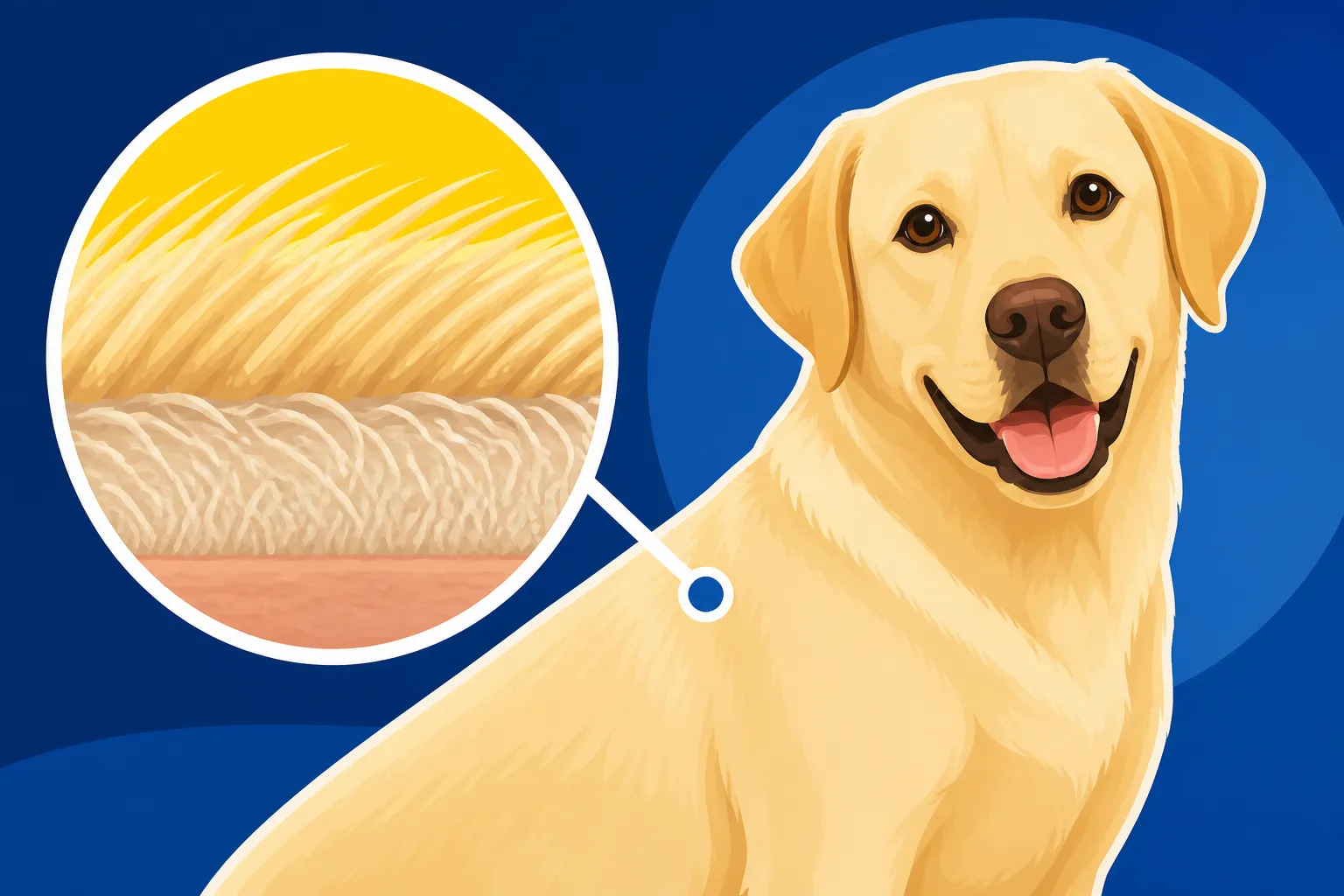
The outer layer of a Labrador's coat is made up of what are known as "guard hairs." These hairs are coarser, straighter, and slightly longer than the undercoat. They lie flat and are relatively stiff, forming a protective shield over the softer fur beneath. Imagine a high-quality, waterproof anorak; the guard hairs serve a very similar function.
Their primary role is protection. These hairs are naturally oily, which acts as an incredibly effective water repellent. When a Labrador dives into a lake or trots through a rainy field, the water beads up and rolls right off the outer coat, preventing it from ever reaching the skin. This natural oiliness also protects against mud, dirt, and minor abrasions from brush or thorns. Without these strong, water-shedding guard hairs, a Labrador would quickly become waterlogged and chilled, making their work as a retriever far less efficient and much more dangerous. They are the first line of defense, a robust barrier against whatever the environment throws their way. This amazing water-repelling quality is a cornerstone of the breed's effectiveness, as we discuss further in What Makes a Labrador Coat Repel Water.
The Dense Undercoat: Nature's Insulator and Buoyancy Aid
Beneath the resilient guard hairs lies the Labrador's dense, soft, and woolly undercoat. This layer is an absolute marvel of natural engineering, packed with fine, downy hairs that are significantly shorter than the guard hairs. You might not see it readily when looking at a clean, dry Labrador, but if you part the outer coat, you'll find a thick, almost cotton-like layer.
The undercoat's main job is insulation. Think of it like a down jacket; the thousands of fine hairs trap a layer of air close to the dog's body. This trapped air acts as a thermal barrier, keeping the Labrador warm in freezing temperatures and icy water. Even when soaking wet, the undercoat attempts to retain some trapped air, which also contributes to the Labrador's natural buoyancy in the water. This is crucial for a dog that spends hours swimming and retrieving in cold environments. Without this insulating layer, their body temperature would plummet, leading to hypothermia. This dense, fluffy layer is also why Labradors are known for their significant shedding, especially during seasonal "coat blows," as this thick undercoat is replaced. Understanding this insulating capability helps explain why Labradors generally handle cold weather well, as opposed to breeds with single coats who might shiver much more easily.
More Than Just Good Looks: The Functions of the Double Coat
The Labrador's double coat isn't just an aesthetic feature; it's a testament to centuries of natural selection and selective breeding, making them perfectly equipped for the tasks they were bred to perform. Every aspect of their coat serves a vital purpose, allowing them to excel in the field and adapt to various climates.
Superior Water Resistance and Buoyancy
The combination of the oily, water-repellent guard hairs and the dense, air-trapping undercoat creates an almost impenetrable barrier against water. When a Labrador enters the water, the outer coat sheds most of the moisture, preventing it from saturating the undercoat and reaching the skin. Any water that does penetrate is quickly warmed by the dog's body heat within the trapped air of the undercoat, ensuring they remain comfortable even in chilly conditions. This means their skin stays remarkably dry, preventing uncomfortable chafing and rapid heat loss.
Beyond insulation, the undercoat's ability to trap air provides a degree of natural buoyancy. This helps them stay afloat with less effort, conserving energy during long retrieves or extended periods in the water. This is a huge advantage for a dog whose primary job involved plunging into cold North Atlantic waters to retrieve fish that had escaped nets or lines, or bringing back waterfowl. It's a key part of their The Labrador's Fishing and Retrieving Heritage. This innate advantage not only made them better working dogs but also contributes to their enduring love for water sports today.
Natural Temperature Regulation
While the undercoat is famed for keeping Labradors warm, it also plays a role in regulating their temperature in warmer weather. During warmer months or intense activity, the hairs of the undercoat lie somewhat flatter, allowing for better air circulation closer to the skin, which can help dissipate excess heat. However, it's critical to remember that while the double coat helps, Labradors, especially those with darker coats, can still overheat in extreme conditions. Their thick coat means they can struggle to release heat effectively when temperatures soar, making monitoring for Signs of Heatstroke in a Labrador vital.
This natural insulation makes them incredibly versatile, able to work and play comfortably in environments ranging from snowy fields to brisk autumn lakes. It's truly a year-round system designed for endurance and resilience.
Protection from Elements and Injury
The robust nature of the Labrador's double coat also offers excellent physical protection. The dense guard hairs act as armor against thorns, sharp grasses, and brush that a dog might encounter while working in dense cover. This reduces the risk of cuts, scrapes, and skin irritations.
Furthermore, the coat provides a degree of protection from UV radiation from the sun, although lighter-colored Labradors, particularly those with sparse coats, can still be susceptible to sunburn on less dense areas. It's a comprehensive protective layer, shielding them not just from water and cold, but from many of the minor hazards of an active outdoor life. It's why grooming is so important, because maintaining the health of this coat ensures your Labrador remains well-protected.
Living With a Double-Coated Labrador: Grooming and Care Implications
Understanding the "why" behind your Labrador's double coat is just the first step; knowing the "how" of caring for it is equally important. This unique coat requires specific attention to remain healthy, functional, and to keep your home from becoming perpetually covered in fur.
Managing the Shedding "Snow Storm"
Let's be real: Labradors shed. A lot. Their dense undercoat is shed seasonally, particularly in spring and fall, during what's affectionately known as a "coat blow." During these times, you'll literally find clumps of soft, woolly undercoat coming out, resembling small snow drifts around your house. Regular grooming is not just about aesthetics; it's essential for your Labrador's comfort and coat health.
Weekly brushing with appropriate tools is crucial to remove loose undercoat and prevent matting, though matting is less common with Labs than long-haired double-coated breeds. During heavy shedding seasons, daily brushing might be necessary. Tools like a deshedding rake or a good slicker brush can work wonders. Many owners find a Furminator-style tool very effective, but be careful not to overdo it, as vigorous use can damage the guard hairs. Regular brushing helps to distribute the natural oils across the coat, keeping both layers healthy and shiny. You can find a fantastic selection of brushes and grooming supplies on Chewy to help manage this. For more in-depth advice on keeping your home from turning into a fur factory, check out our guide on Labrador Shedding and How to Manage It.
Bathing Best Practices to Preserve Coat Integrity
While Labradors love water, frequent bathing with harsh shampoos can strip their coat of its natural oils, compromising its water-repellent properties and potentially leading to dry skin or irritation. Aim to bathe your Labrador only when necessary – when they're truly dirty or smelly, perhaps once every 2-3 months, or after a particularly muddy adventure.
When you do bathe them, use a dog-specific shampoo that is gentle and formulated for their skin and coat type. Rinse thoroughly to ensure no residue is left behind, as this can cause skin issues. Most importantly, ensure your Labrador is completely dry after a bath, especially the undercoat. A damp undercoat can create a breeding ground for bacteria and yeast, leading to skin infections. A high-velocity pet dryer can be incredibly helpful for pushing water out of that dense undercoat, dramatically reducing drying time and preventing problems. After a dip in the lake, remember that even their amazing coat needs a little help; drying their ears, in particular, is vital to prevent infections, as explored in Drying a Labrador's Ears After the Lake.
Never Shave a Double Coat
This is perhaps one of the most important pieces of advice for any double-coated breed owner: never shave your Labrador. While it might seem like a good idea to shave them in summer to keep them cool, it actually does more harm than good. The double coat provides insulation against both cold and heat. Shaving removes the protective guard hairs and disrupts the natural insulating layer of the undercoat.
When shaved, the guard hairs may not grow back correctly, or they may grow back coarser and uneven, compromising the coat's ability to repel water and protect the skin. Furthermore, removing the undercoat exposes the skin to direct sunlight, making your Labrador more susceptible to sunburn and increasing their risk of skin cancer. It also takes away their natural barrier against insects and abrasions. Instead of shaving, focus on regular deshedding to remove the loose undercoat, which is what traps heat. For a deeper dive into why this practice is detrimental, refer to Why You Never Shave a Labrador.
Here’s a quick overview of the two layers:
| Feature | Outer Coat (Guard Hairs) | Undercoat |
|---|---|---|
| Texture | Coarse, straight, somewhat stiff, smooth | Soft, dense, woolly, fluffy |
| Primary Function | Water repulsion, protection from elements and abrasions | Insulation (warmth), air trapping, buoyancy |
| Appearance | Shiny, lies flat, forms the visible coat | Dull, hidden beneath guard hairs, often lighter in color |
| Shedding Pattern | Sheds individual hairs throughout the year, less noticeable | Sheds heavily during seasonal "coat blows" in clumps |
| Water Interaction | Repels water, prevents it from reaching the skin | Traps air for insulation even when wet, aids buoyancy |
| Maintenance Need | Regular brushing to keep clean and distribute oils | Frequent deshedding to remove loose hair during seasonal sheds |
Caring for your Labrador's double coat means respecting its natural design. It's a small investment in time and the right tools (many of which you can easily find on Chewy), but it pays dividends in their health, comfort, and the overall cleanliness of your home. Embracing their coat for what it is—a perfectly engineered marvel—will help you understand and enjoy your wonderful Labrador even more.
Disclaimer
This article is for general informational purposes only and does not constitute professional advice. Laws, prices and regulations vary by location and change over time. Consult a qualified professional for guidance on your specific situation.