Labrador Feeding Chart by Weight
It's incredibly frustrating when you're trying to do your best for your beloved Labrador, only to be met with conflicting advice on how much to feed them. You read the back of the dog food bag, and the recommendations seem so generic, often leading to a perpetually hungry Lab (and a guilt-ridden owner!). Finding that sweet spot where your Labrador is satisfied, energetic, and most importantly, healthy, feels like a constant balancing act. This guide is here to cut through the confusion and provide a comprehensive look at how to approach your Labrador's feeding chart by weight, considering all the nuances that make your dog unique.
Understanding Your Labrador's Unique Nutritional Needs
When it comes to feeding, Labradors are a breed apart, aren't they? Their boundless energy, their seemingly insatiable appetites, and their undeniable charm can sometimes make it tricky to know just how much is enough. It's not as simple as scooping a fixed amount into their bowl twice a day; there's a real science and an art to keeping them lean and healthy.
Why a "One-Size-Fits-All" Approach Fails Labradors
Anyone who's lived with a Labrador knows they're often described as "food motivated" – which is a polite way of saying they'd eat till they burst if given the chance! This isn't just a quirky personality trait; it's rooted in their genetics. Many Labradors carry a gene mutation that affects their satiety, meaning they don't feel full in the same way other dogs might. This genetic predisposition, coupled with their dense double coats that can hide weight gain, means that generic feeding guidelines often fall short. They can lead to overfeeding, which, in a breed already prone to joint issues and other health concerns, is a recipe for trouble. We often see how quickly those extra pounds creep on, making it essential to be proactive about their diet. Why Labradors Gain Weight So Easily delves deeper into this genetic aspect.
Factors Beyond Weight That Influence Feeding
While your Labrador's current weight is a crucial starting point, it's far from the only factor in determining their daily caloric intake. Think of it like this: a human athlete needs more fuel than someone with a desk job, even if they weigh the same.
- Age: Puppies need more calories for growth, but specific large-breed puppy formulas are vital to prevent too-rapid growth, which can harm developing joints. Adult Labs need maintenance calories, and seniors often require fewer calories as their metabolism slows down, even if they stay active.
- Activity Level: A field-line Labrador working on a farm or a highly active agility dog will burn significantly more calories than a show-line Labrador who enjoys leisurely walks and couch naps. Adjusting for daily exercise is paramount.
- Metabolism: Just like people, individual Labradors have different metabolic rates. Some can eat a bit more and stay lean, while others seem to gain weight just by looking at food.
- Health Conditions: Certain medical conditions, like thyroid issues, can impact metabolism. Recovering from surgery or dealing with chronic illness can also alter nutritional needs. Always consult your vet if your Labrador has any health concerns that might affect their diet.
- Spay/Neuter Status: Neutered or spayed Labradors often have reduced metabolic rates and require fewer calories to maintain a healthy weight. Ignoring this change can lead to quick weight gain.
The Importance of Consulting Your Vet
I can't stress this enough: while this guide provides general insights, your veterinarian is your absolute best resource for tailoring a feeding plan specific to your Labrador. They consider your dog's age, current health status, body condition score, activity level, and any underlying medical issues. They can also recommend appropriate food types, discuss supplements if needed, and help you set realistic weight goals if your Labrador needs to shed a few pounds. Don't be shy about asking them to walk you through a body condition assessment, or to help you calculate daily caloric intake based on the specific food you're using. A quick chat during an annual check-up can save you a lot of guesswork and ensure your Lab stays in peak condition.
Deciphering the Dog Food Bag: Manufacturer Guidelines vs. Reality
That chart on the back of the kibble bag, with its neat little rows and columns, looks so official, doesn't it? It promises to tell you exactly how much to feed your Labrador based on their weight. But if you've ever tried to follow it religiously, you might have found yourself with a dog who is either constantly begging or, worse, starting to put on a bit of a belly. It’s a common frustration, and you’re not alone in feeling like those numbers just don't quite add up in the real world.
Why Manufacturer Charts Are Just a Starting Point
The biggest secret about those feeding charts is that they are designed to cover a very broad range of dogs. They assume an "average" dog with an "average" metabolism and an "average" activity level. The problem? There's no such thing as an average Labrador! Some are highly active working dogs, others are much more sedentary family pets. Many Labradors, due to their genetic makeup, are particularly efficient at utilizing calories, meaning they don't need as much food as other breeds of similar size.
These charts also tend to err on the side of generosity. If a company suggests slightly more food, a dog might eat more, leading to more bags purchased. It's an unfortunate truth in the pet food industry that these recommendations can often lead to overfeeding, especially for a less active Lab who isn't burning off the excess calories. Think of it as a maximum guideline, not a strict instruction. It's a place to start, but you'll almost certainly need to adjust.
Calculating Calorie Needs: How to Adjust Based on Activity Level
Instead of blindly following the bag, a more precise approach involves understanding your Labrador's actual caloric needs. Dog food companies calculate the metabolizable energy (ME) in their foods, usually listed in kilocalories per cup or per kilogram. Your vet can help you determine your Labrador's ideal daily caloric intake using a formula based on their ideal weight and activity level.
For example, a less active, spayed/neutered adult Labrador might need fewer calories per pound of body weight than an intact, highly active working dog. You'll take the initial recommendation from your vet or a reliable online calculator (again, verified by your vet!), then use that daily calorie target to figure out how many cups of your specific food translate to those calories. If your Lab is a lean, mean, retrieving machine, they'll naturally need more fuel. If they're more of a lounge lizard, fewer calories will be necessary to prevent them from becoming overweight. This hands-on approach is much more effective for Keeping a Labrador at a Healthy Weight.
The Perils of Free Feeding a Labrador
Ah, free feeding. The idea of leaving a bowl of kibble out all day so your dog can graze whenever they please sounds so convenient, doesn't it? For some breeds, it might even work out. But for a Labrador? It's almost always a recipe for disaster. Why Labrador Puppies Should Never Free Feed touches on this, and the same principles apply to adults.
Labradors, with their incredible food drive and genetic predisposition to overeat (remember that POMC gene?), rarely regulate their own intake effectively. A free-fed Labrador is almost guaranteed to become overweight or obese, which can lead to a host of health problems like joint issues, diabetes, and heart disease, and can even shorten their lifespan. Instead, structured mealtimes are crucial. Dividing their daily food allowance into two or three distinct meals helps manage their intake, allows you to monitor their appetite, and makes potty training (for puppies) or house training (for adults) much easier. It also gives you designated times to check in with them and ensure they're eating properly.
Creating a Labrador Feeding Chart by Weight (Practical Application)
So, we know the bag isn't gospel, and individual factors are huge. Now, let's get into the nitty-gritty of putting together a practical feeding chart by weight, keeping in mind the different stages of your Labrador's life. This isn't about giving you exact cup measurements – those always depend on your specific food's calorie density – but rather a framework for how to think about and adjust those portions.
Puppy to Adult Transition
Labrador puppies grow at an astonishing rate, and their nutritional needs change almost weekly. It's tempting to want them to be big and robust as quickly as possible, but rapid growth can actually harm their developing joints. This is why large breed puppy formulas are so important; they typically have a carefully balanced calcium-to-phosphorus ratio and a slightly lower calorie density to promote slower, steadier growth.
- Puppy Stage (8 weeks to 6 months): You'll generally be feeding 3-4 times a day. The key here is to feed based on their projected adult weight and age, rather than their current weight, using the puppy food manufacturer's guidelines as a starting point. Monitor their body condition constantly – you should be able to feel their ribs easily without seeing them jut out. A slight "tuck" at the waist is ideal. Overfeeding at this stage is particularly detrimental. For detailed guidance, check out Labrador Puppy Feeding Amounts and Schedule.
- Adolescent Stage (6 months to 12-18 months): As they approach maturity, you'll likely transition to 2-3 meals a day. This is a tricky period because they're still growing but their metabolism might be starting to slow slightly. Continue to monitor their body condition closely. This is often when owners accidentally start overfeeding because the puppy energy levels are still high, but the intense growth phase is winding down.
- Transition to Adult Food: The general recommendation is to switch to an adult formula around 12-18 months of age, depending on the specific dog and the food manufacturer's advice. When a Labrador Moves to Adult Food offers more insights into this critical switch. When you do transition, do it slowly over 7-10 days to avoid digestive upset.
Adult Labrador Maintenance
Once your Labrador reaches adulthood, typically between 12 and 18 months, their growth plates have closed, and their caloric needs stabilize somewhat. The goal now is maintenance – keeping them at a healthy, lean weight for their entire adult life.
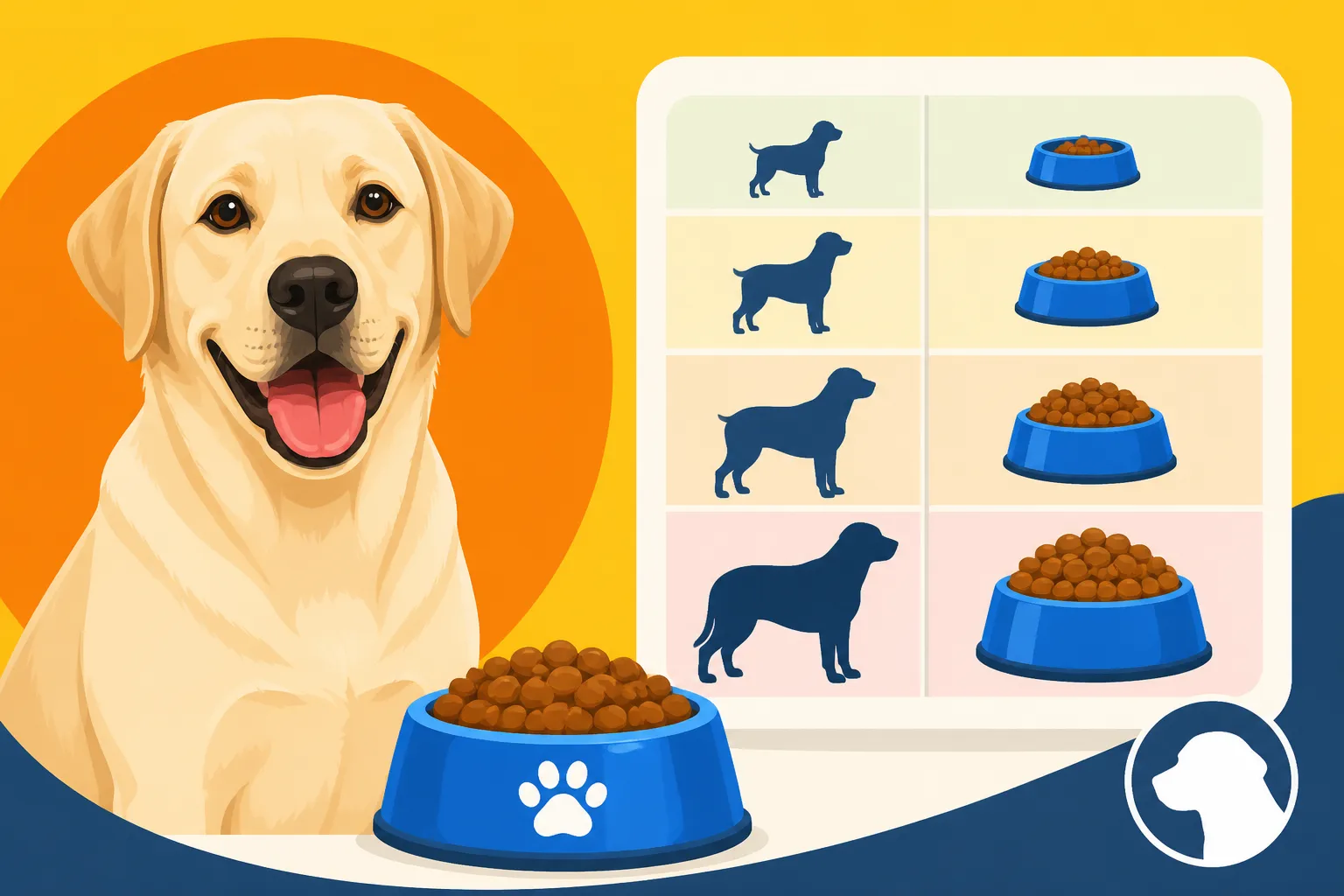
| Labrador Weight (Ideal) | Activity Level (Example) | Estimated Daily Calories (Kcal)* | General Kibble Cups/Day (Example)** |
|---|---|---|---|
| 55-65 lbs (Female) | Low (couch potato) | 1100-1300 | 2 – 2.5 cups |
| 55-65 lbs (Female) | Moderate (daily walks, play) | 1300-1600 | 2.5 – 3 cups |
| 55-65 lbs (Female) | High (working, active sport) | 1600-1900 | 3 – 3.5 cups |
| 65-80 lbs (Male) | Low (couch potato) | 1300-1500 | 2.5 – 3 cups |
| 65-80 lbs (Male) | Moderate (daily walks, play) | 1500-1800 | 3 – 3.5 cups |
| 65-80 lbs (Male) | High (working, active sport) | 1800-2200 | 3.5 – 4.5 cups |
* These are rough estimates. Individual needs vary greatly. Always consult your vet.
** Based on an average kibble of 375-400 kcal per cup. Always check your specific food's caloric content.
This table is a starting guide only. Your specific kibble, your Labrador's unique metabolism, and their exact daily activity will dictate the precise amount. The most important thing is to regularly assess your Labrador's body condition. You should be able to easily feel their ribs, but not see them. They should have a distinct waist when viewed from above and a nice tuck-up from the side. If you're consistently feeding the recommended amount and your dog is gaining weight, it's time to reduce portions or increase exercise.
Senior Labrador Adjustments
As Labradors age, typically starting around 7-8 years, their needs shift again. While some remain surprisingly active, many start to slow down. Their metabolism often decreases, and they may experience joint stiffness or other age-related issues. This means their caloric needs generally decrease, even if their appetite doesn't!
- Lower Calorie Needs: Continuing to feed the same amount as an active adult will almost certainly lead to weight gain in a senior Lab. Obesity in older dogs exacerbates joint problems and can lead to other health complications.
- Joint Support Considerations: Many senior dog foods incorporate ingredients like glucosamine and chondroitin for joint health, and omega-3 fatty acids for anti-inflammatory benefits. While these foods can be beneficial, always discuss supplements with your vet.
- Protein Levels: Some senior diets maintain higher protein levels to help preserve muscle mass, which can naturally decline with age.
- Meal Frequency: You might consider sticking to two smaller meals a day to aid digestion and prevent bloat, which can be a concern for deep-chested breeds like Labradors.
Adjusting your senior Labrador's diet is a crucial part of Caring for a Senior Labrador. Regular vet check-ups become even more important to catch any changes in health or metabolism and to tailor their feeding plan accordingly.
The Nuances of Different Food Types and Their Impact on Portions
It's easy to assume a cup is a cup, no matter what kind of food it holds. But just like a cup of lettuce doesn't have the same calories as a cup of nuts, different types of dog food have vastly different caloric densities and nutritional profiles. This is a huge factor that often gets overlooked when people are trying to figure out their Labrador's feeding needs.
Dry Kibble: Discussing Calorie Densities
Dry kibble is the most common food choice for Labradors, and it comes in an incredibly wide range of formulations. The most critical factor when using kibble to calculate portions is its caloric density, usually expressed as kilocalories (kcal) per cup or per kilogram. This number can vary wildly from one brand to another, and even between different formulas from the same brand.
- High-Energy Formulas: Some kibbles are designed for highly active working dogs or puppies, packing a lot more calories into each cup. Feeding this to a sedentary house Lab will lead to rapid weight gain.
- Weight Management Formulas: Conversely, many brands offer "light" or "weight management" kibbles that have fewer calories per cup, often with higher fiber content to help dogs feel full.
- Measuring Accurately: This is where many owners go wrong. A "cup" of kibble isn't just any old mug. Use a standard 8-ounce measuring cup designed for cooking, or better yet, a digital kitchen scale. Measuring by weight (grams or ounces) is far more accurate than by volume, as kibble pieces vary in size and density, affecting how much fits into a cup. Brands like Amazon offer great, affordable digital scales that can make a huge difference in precision. Measuring a Labrador's Food Accurately highlights the importance of this.
Always check the specific kcal/cup or kcal/kg on your bag of kibble and use that number, along with your Labrador's target calorie intake, to determine the precise daily portion. If that information isn't readily available, contact the manufacturer directly.
Wet, Fresh, and Raw Diets: Changing Portion Sizes
The popularity of alternatives to traditional dry kibble has exploded, and for good reason. Wet, fresh, and raw diets can offer excellent nutrition, but they come with their own set of considerations for portioning.
- Wet Food: Canned or pouched wet food has a very high moisture content, often 70-80%. This means that for the same caloric intake, you'll need to feed a much larger volume of wet food compared to kibble. While it can be great for hydration and palatability, it can also be more expensive and requires larger portions to meet caloric needs.
- Fresh Food: Services like Ollie deliver freshly prepared, human-grade meals to your door. These diets are typically customized to your dog's specific needs and often have detailed feeding instructions based on their caloric density. Because they also contain more moisture than kibble, the portion size will appear larger. These diets are excellent for digestibility but require careful adherence to the provided guidelines to prevent over or underfeeding.
- Raw Diets: Raw feeding involves feeding uncooked meat, bones, and organs. This is a complex area and should only be undertaken with extensive research and, ideally, guidance from a veterinary nutritionist. Raw diets have varying caloric densities depending on the fat content and specific ingredients, and portion sizes will be calculated very differently than for commercial kibble. The risks of nutritional imbalance and bacterial contamination are higher if not done correctly.
When feeding any of these alternatives, the principle of knowing your Labrador's daily caloric need remains the same. You'll just need to work with the specific food's density to translate that into an appropriate volume or weight of food.
Treats and Supplements in the Daily Calorie Budget
This is a big one, especially for Labs! Those irresistible puppy-dog eyes staring at you while you eat, or their unwavering enthusiasm for a training treat, make it so easy to hand out extras. However, treats and supplements are not "free calories." They must be factored into your Labrador's total daily intake.
- Treats: A few small treats throughout the day can add up quickly. Many commercial treats are surprisingly high in calories. When training, consider using small pieces of their regular kibble as rewards, or low-calorie options like plain cooked green beans, carrots, or apple slices (without seeds). If you're giving richer treats, remember to slightly reduce their main meal portion for that day. Treats That Fit a Labrador's Calorie Budget provides excellent ideas for low-calorie options.
- Dental Chews: While beneficial for dental health, some dental chews are also calorie bombs. Always check the caloric content and factor it in.
- Supplements: Most supplements, like fish oil or joint support chews, are relatively low in calories, but if your dog is on the edge of being overweight, every calorie counts. Be mindful, but generally, supplements are less of a concern than high-calorie treats.
The goal is to ensure your Labrador isn't exceeding their overall calorie budget, regardless of whether those calories come from their main meal or extra goodies. This meticulous approach is key to long-term health. Many online retailers like Chewy provide detailed nutritional information for treats and supplements, making it easier to track those extra calories.
Monitoring Your Labrador's Body Condition and Adjusting Portions
You've done the research, you've chosen a great food, and you're measuring carefully. But the journey doesn't end there! Your Labrador's body is a dynamic system, constantly changing. What worked perfectly for six months might need adjusting next month. This is why ongoing monitoring is absolutely essential. It’s about becoming fluent in your dog's physical language, reading the subtle signs that tell you if they're thriving or if a tweak is needed.
Beyond the Scale: The Body Condition Score (BCS)
The number on the scale is certainly a piece of the puzzle, but it doesn't tell the whole story. Two Labradors of the same weight can have vastly different body compositions. One might be lean and muscular, while the other might be carrying too much fat. This is where the Body Condition Score (BCS) comes in. It's a visual and tactile assessment that veterinarians use to evaluate a dog's fat reserves, on a scale of 1 to 9 (with 5 being ideal) or 1 to 5 (with 3 being ideal).
- What to Look For (Ideal BCS of 5/9 or 3/5):
- Ribs: You should be able to easily feel your Labrador's ribs without seeing them, feeling like the knuckles of your hand when your palm is flat. If they're visible, your dog might be too thin. If you can't feel them without pressing hard, they're likely overweight.
- Waistline: When viewed from above, your Labrador should have a distinct waist, an hourglass shape after their ribs. If they look like a straight line or bulge out, they're carrying too much weight.
- Abdominal Tuck: When viewed from the side, their abdomen should tuck up slightly from their chest, not hang low or be straight across.
Learning to accurately Checking a Labrador's Body Condition Score is one of the most valuable skills an owner can develop. It's much more informative than just weighing them.
Feeling for Ribs and Tucking Waistline: Practical Tips
It takes a little practice to get good at assessing BCS, but it's worth the effort.
- For the Ribs: Gently run your flat hands along your Labrador's sides, just behind their front legs. You're feeling for individual ribs. You should feel them distinctively, like running your fingers over a washboard, but they shouldn't feel sharp or prominent. If you have to press firmly to feel them, or if there's a soft, squishy layer over them, your Lab is likely overweight.
- For the Waistline: Have your Labrador stand squarely. Look down at them from directly above. Imagine drawing a line from their shoulders to their hips. There should be a noticeable indentation or "cinch" just after their rib cage and before their hips. This is their waist. If this area is straight or bulges outward, they've lost their waist.
- For the Abdominal Tuck: Stand to the side of your Labrador. Look at the line of their belly from their chest to their hind legs. It should angle upwards, creating a "tuck" rather than being flat or sagging.
Make this a routine check, perhaps once a week or every time you give them a good petting session. It’s a low-stress way to keep tabs on their physical condition.
When to Adjust Food Portions: Signs Your Labrador Needs More or Less Food
The BCS is your primary indicator for when to make adjustments.
- If your Labrador is too thin (BCS below ideal): You can see their ribs, hip bones, or spine easily; they have an exaggerated waist tuck. This might indicate they need a slight increase in food, or perhaps they're not absorbing nutrients properly due to an underlying health issue. A vet check is always wise if they're underweight. If health is clear, gradually increase their daily portion by about 5-10% and reassess in a couple of weeks.
- If your Labrador is overweight (BCS above ideal): You can't easily feel their ribs, they have no discernible waist, or their belly sags. This is a clear sign that they are consuming too many calories for their activity level. Begin by gradually decreasing their daily food portion by 5-10%. You might also look for ways to increase their exercise safely. Remember, losing weight should be a slow and steady process, typically 1-2% of their body weight per week. Rapid weight loss can be unhealthy.
- If your Labrador's activity level changes: A new hiking routine, a sudden injury that limits exercise, or even the natural slowdown that comes with aging all necessitate a re-evaluation of their caloric intake.
- If their food changes: Even switching between different flavors of the same brand can sometimes mean a slight difference in caloric density, requiring a minor adjustment.
Making small, incremental adjustments and patiently monitoring the results is the most effective way to manage your Labrador's weight over their lifetime. Consistency is key, and patience is a virtue!
Common Feeding Mistakes and How to Avoid Them
Even with the best intentions, it's easy to fall into common traps when feeding our beloved Labradors. Their charming, food-focused personalities can make us feel guilty or lead us astray. Recognizing these pitfalls is the first step toward correcting them and ensuring your Lab leads a long, healthy life.
Ignoring the Genetic Predisposition to Overeating
This is perhaps the most significant challenge specific to Labrador owners. As we touched on earlier, a good portion of Labradors carry the POMC gene deletion, which essentially means their brains don't get the "I'm full" signal as strongly as other dogs. For them, every meal, every crumb, is a potential feast. It's not a lack of training or a personality flaw; it's a biological reality. The POMC Gene and Labrador Appetite provides crucial context for this.
How to avoid it:
- Accept it: Understand that your Labrador will always seem hungry. It's not a reflection on your feeding skills, but their genetics.
- Stick to the plan: Resist the urge to give in to those pleading eyes or persistent nudges. Your measured portions are scientifically determined for their health.
- Enrichment over extra food: Instead of more food, provide mental stimulation with puzzle feeders, snuffle mats, or chew toys. This makes their meal last longer and satisfies their foraging drive without adding calories.
- Low-calorie alternatives: When you simply must give a treat, reach for tiny pieces of carrot, green bean, or their own kibble ration.
Over-relying on Measuring Cups
You might think you're being precise by using a measuring cup. You scoop, you level, you pour. Perfect, right? Unfortunately, not quite. The density of kibble, the shape of the individual pieces, and even how much you "pack" the cup can lead to significant discrepancies. Over time, these small differences add up to hundreds, if not thousands, of extra calories.
How to avoid it:
- Invest in a digital kitchen scale: This is arguably the single best tool for accurate feeding. Dog food manufacturers often provide caloric content per gram or ounce, making a scale the most reliable way to ensure your Labrador gets the exact amount they need. These scales are widely available from retailers like Amazon and are a worthwhile investment for your dog's health.
- Weigh everything: Get into the habit of weighing your Labrador's daily food ration. It might seem like an extra step at first, but it quickly becomes second nature and provides peace of mind.
- Calibrate your measuring cup (if you must): If a scale isn't an option, at least weigh one "cup" of your specific kibble once to see how much it actually weighs. Then, adjust your volumetric measurement to get closer to the desired weight.
Not Adjusting for Changing Activity Levels or Age
Life happens, and your Labrador's routine changes. They might go from an energetic puppy to a more settled adult, or from a daily dog park enthusiast to a senior dog who prefers shorter strolls. Their diet needs to reflect these shifts. A common mistake is to continue feeding the same amount of food to a 7-year-old Labrador as you did when they were a rambunctious 2-year-old.
How to avoid it:
- Regular assessments: Routinely check your Labrador's body condition score (BCS) every few weeks. This is your most reliable indicator of whether their current diet is appropriate.
- Annual vet check-ups: These are crucial for discussing age-related changes in metabolism and activity. Your vet can advise on whether it's time to switch to a senior formula or simply reduce existing portions.
- Be proactive: Don't wait until your Labrador has gained a noticeable amount of weight before making changes. If you anticipate a period of reduced activity (e.g., recovery from an injury), preemptively adjust their food down.
- Consider seasonal changes: Some Labradors are more active outdoors in warmer months and less so in winter. Factor this into your feeding plan if it significantly impacts their energy expenditure.
By being mindful of these common mistakes, you can take control of your Labrador's nutrition and pave the way for a happier, healthier life. Avoiding Labrador Obesity and the Years It Costs is one of the greatest gifts you can give your companion.
Disclaimer
This article is for general informational purposes only and does not constitute professional advice. Laws, prices and regulations vary by location and change over time. Consult a qualified professional for guidance on your specific situation.