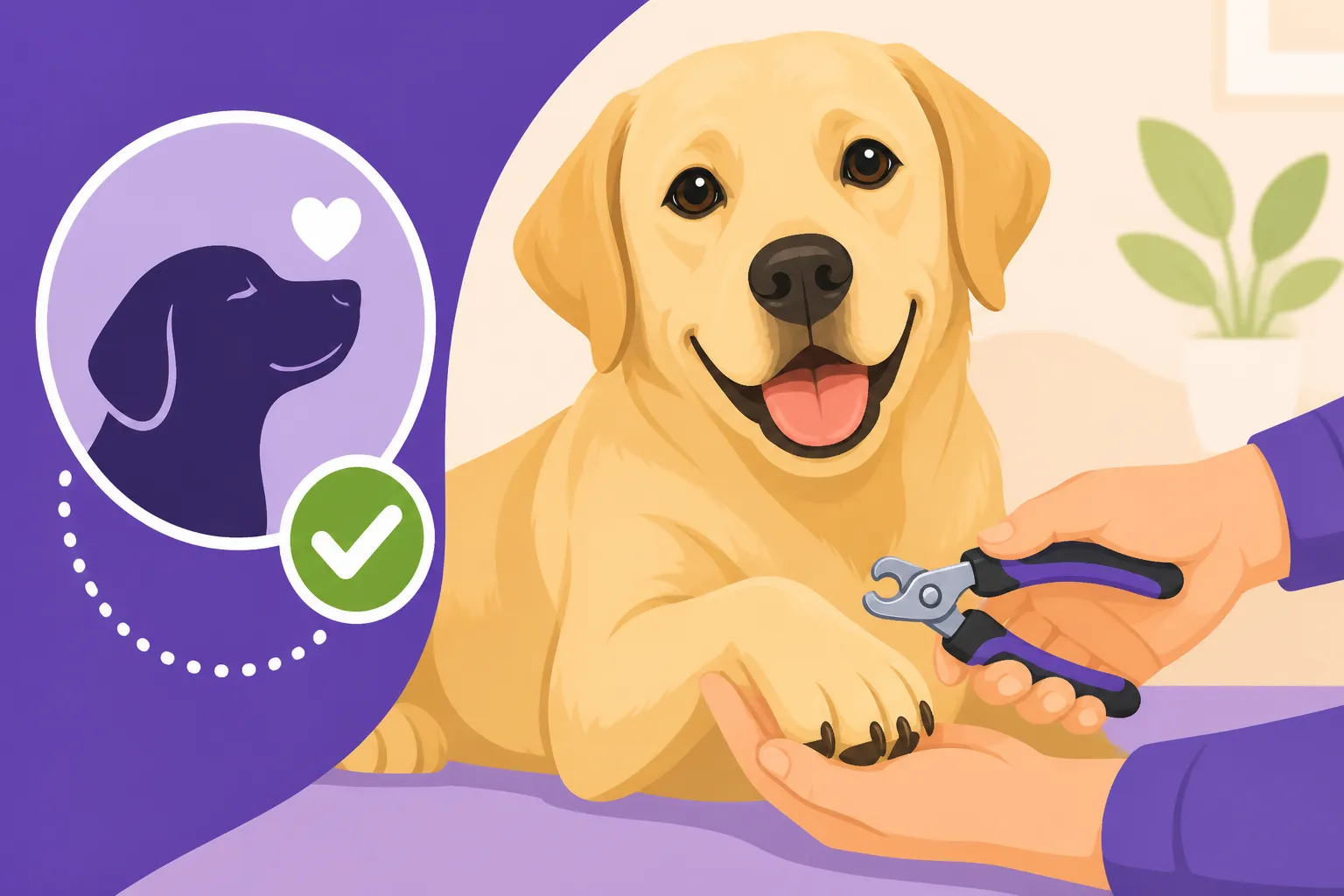
Desensitizing a Labrador to Nail Trims
Oh, the nail trim struggle is real for so many Labrador owners! You're not alone if you dread the moment you pull out the clippers, only for your normally happy-go-lucky companion to transform into a squirming, whining, or even growling escape artist. This guide is all about turning that stressful ordeal into a calm, positive experience, helping your Labrador not just tolerate, but eventually accept their pawicures with grace.
Why Nail Trims Are Such a Battle for Labradors
It's easy to feel frustrated when your otherwise perfect Labrador turns into a drama queen (or king) at the sight of nail clippers. But there's usually a good reason behind their resistance, and understanding it is the first step toward a more peaceful trimming routine.
The Labrador's Instinctual Resistance
Think about it: a Labrador's paws are their primary tool for exploring the world, for running, swimming, and retrieving. They're designed for rugged terrain and provide stability. Having someone mess with them, especially in a way that feels unnatural or painful, can trigger a very strong instinct to pull away. Their paws are incredibly sensitive, packed with nerve endings, and touching them in a forceful or awkward way can be genuinely uncomfortable, even without pain.
Many Labradors also dislike having their feet held or restricted, which is often a necessary part of the trimming process. This isn't stubbornness; it's a natural reaction to feeling vulnerable. If they've had even one slightly negative experience, like a little pinch, their memory kicks in, and they anticipate that discomfort every time the tools come out. It's a classic case of "once bitten, twice shy," and for a strong, athletic dog like a Labrador, that "shyness" can manifest as a powerful struggle.
Quicking and Negative Associations
The most common reason for a Labrador's fear of nail trims boils down to a phenomenon called "quicking." Inside each of your Labrador's nails, there's a bundle of blood vessels and nerves known as the "quick." If you cut too far back, hitting this quick, it's incredibly painful and will bleed. For Labradors with dark nails, especially Trimming Black Nails on a Labrador, it can be incredibly difficult to see where the quick ends, making accidental quicking a real possibility for even experienced owners.
A single quicking incident can undo months of positive training. Your Labrador associates the tools, the position, and even your presence during nail trims with that sharp, shocking pain. They learn very quickly that the sound of the clippers or the feel of the grinder could mean another painful episode. This creates a deeply ingrained negative association, making future trims exponentially harder. It's not that your Labrador is being difficult on purpose; they are genuinely afraid, remembering that unexpected jolt of pain. They might start resisting the moment you touch their paws, or even just when they see the clippers. This is why a gentle, patient approach is not just recommended, but absolutely essential for their well-being and your sanity.
Gathering Your Desensitization Toolkit
Before you even think about touching a nail, it's crucial to have the right gear ready. The tools themselves can make a huge difference in your Labrador's comfort and your confidence.
Choosing the Right Nail Trimmer or Grinder
There are two main camps when it comes to trimming Labrador nails: traditional clippers and electric grinders. Both have their pros and cons, and what works best often comes down to individual preference – both yours and your dog's!
Nail Clippers:
- Scissor-style clippers: These are often preferred for larger, stronger nails like those of a Labrador. They resemble a pair of pliers and give you a good grip and leverage. Brands like Safari or Millers Forge are popular choices and can be found readily on sites like Chewy or Amazon.
- Pros: Quick, efficient, and quiet. If your Labrador tolerates it, you can get the job done fast.
- Cons: Higher risk of quicking if you're not experienced. The "snapping" sound can be startling for some dogs.
- Guillotine-style clippers: These have a small hole where you insert the nail, and a blade slides across to cut it. They are generally less common for large breeds like Labradors, as their thick nails can be harder to fit and cut cleanly.
- Pros: Can be easy for small to medium nails.
- Cons: Less control for large, thick nails. The blade can dull quickly.
Electric Grinders (Dremel-style):
- These tools use a rotating abrasive bit to file down the nail slowly. Many Labradors find the vibrating sensation and the sound to be less intimidating than the sudden snap of clippers.
- Pros: Less risk of quicking, as you remove small amounts at a time. Can create smoother edges, reducing snagging. Great for gradually receding the quick over time.
- Cons: The noise and vibration can still be unsettling for some dogs. It takes longer than clipping. You'll need to keep the dog's hair clear of the rotating bit.
- Tip: If you choose a grinder, look for one designed for pets, which may be quieter than a standard hardware store Dremel. You can find excellent options on Amazon or Chewy.
Ultimately, the "best" tool is the one that causes the least stress for your Labrador. Some dogs prefer the quick snip of clippers, while others are calmer with the slow grind. Don't be afraid to try both to see which your dog tolerates better during the desensitization process.
High-Value Treats and Calming Aids
For any desensitization program, your Labrador needs a strong motivation to endure something they find uncomfortable. This is where truly high-value treats come in. Forget the dry kibble or everyday biscuits; we're talking about the good stuff, the treats that make your Labrador's eyes light up and their tail wag uncontrollably.
-
Top-Tier Treats: Think small pieces of cooked chicken, cheese, hot dogs, liverwurst, or even a smear of peanut butter on a lick mat. Some commercial soft, meaty treats are also highly palatable. The key is that these treats are reserved only for nail trims and other challenging situations, making them extra special. You can even find fresh, human-grade food options from brands like Ollie that can be cut into tiny, irresistible training treats. The higher the value, the more willing your Labrador will be to participate. Remember, Labs are often incredibly food-motivated, which is a powerful tool in training, as discussed in Treats That Motivate a Food-Driven Labrador.
-
Calming Aids (Optional but helpful): For particularly anxious Labradors, some owners find success with calming aids, always after consulting with their veterinarian.
- Pheromone sprays/diffusers: Products that release synthetic appeasing pheromones can help create a more relaxed environment.
- Calming supplements: Some supplements contain ingredients like L-theanine or melatonin, which can help take the edge off anxiety. Discuss these thoroughly with your vet before introducing them.
- Thundershirts/Anxiety Wraps: These provide gentle, constant pressure, which can have a calming effect on some dogs, similar to swaddling an infant.
- Lick Mats: A lick mat smeared with peanut butter, cream cheese, or wet dog food can keep your Labrador distracted and happily occupied for several minutes, providing a positive outlet while you work on their nails.
Having these tools and treats ready ensures that every interaction around nail trims is as positive and rewarding as possible, setting your Labrador up for success.
A Step-by-Step Desensitization Program for Your Labrador
Desensitization isn't about forcing your Labrador to accept nail trims; it's about gradually changing their emotional response from fear to indifference, or even excitement, because good things happen when the clippers come out! This takes patience, consistency, and a whole lot of delicious treats.
Phase 1: Building Positive Associations with Tools
The very first step is to neutralize the "threat" of the nail trimming tools. Right now, your Labrador likely sees them as instruments of torture. We need to flip that script.
- Introduce the Tools (Sight): Simply bring the clippers or grinder into the room. Don't touch your dog with them. As soon as your Labrador sees the tool, offer a high-value treat. Put the tool away. Repeat this several times a day, for just a minute or two each session. The goal is: tool appears = delicious treat. Tool disappears = no treat.
- Introduce the Tools (Sound): If using a grinder, turn it on briefly (away from your dog, perhaps in another room initially, or just across the room from them). As soon as the sound starts, treat. Sound stops, no treat. Gradually bring the grinder closer as your Labrador remains calm and focused on the treats. If using clippers, make the "snip" sound in the air, away from your dog's paws, and immediately treat.
- Place the Tools Nearby: Once your Labrador seems indifferent to the sight and sound, start placing the tool on the ground near them while they are relaxed (e.g., while they're chewing a favorite toy or enjoying a Kong). Again, treats for calm behavior.
- Touch the Tool to Their Body (Not Paws): Gently touch the outside of the closed clippers or the off grinder to your Labrador's shoulder, then quickly remove it and treat. Progress to their leg, still avoiding the paw for now. The idea is to associate the feel of the tool with positive rewards, without any trimming action.
Keep these sessions super short – 30 seconds to a minute at most. You want to end before your Labrador shows any signs of stress or boredom. The key is positive repetition, linking the tool to good things.
Phase 2: Gentle Paw Handling and Touch
Many Labradors are sensitive about their paws, even without the added stress of nail trims. This phase focuses on making paw handling a pleasant, routine part of their day.
- One Paw at a Time: Start by simply touching one of your Labrador's paws. Immediately treat and release. Don't hold it. Repeat a few times.
- Increase Duration: Gradually increase the time you hold the paw. Touch, count to one, treat, release. Then count to two, treat, release, and so on. Always stop before your Labrador pulls away.
- Massage and Manipulate: Once holding the paw is comfortable, start gently massaging the paw pad. Then, gently touch each toe. Finally, softly manipulate an individual nail between your fingers. Each step should be paired with a treat and praise. The moment your Labrador shows discomfort, ease off and go back a step.
- Practice Regularly: Do these paw handling exercises daily, even when you're not planning a nail trim. Make it a normal, pleasant interaction. You're building trust and teaching your Labrador that paw handling isn't threatening. This also helps you observe for other issues, like checking for signs of injury or foreign objects, which can also cause a dog to be sensitive about its paws, similar to how we might check for Labrador Dental Disease and Tartar during a routine dental check.
Remember to stay calm and positive. If you feel frustrated, take a break. Your emotional state can easily transfer to your Labrador.
Phase 3: Introducing the Trimmer to the Nail (Without Cutting)
Now that your Labrador is more comfortable with the tools and with paw handling, it's time to bring them together, still without any actual cutting or grinding.
- Tool Near Paw: Hold the clippers (closed) or the grinder (off) in one hand, and gently hold your Labrador's paw with the other. Just bring the tool close to the nail, then treat. Remove the tool. Repeat.
- Touch Tool to Nail: Gently touch the closed clippers or the off grinder to one nail. Immediately treat and remove. Do this for a few different nails.
- Simulate Clipping/Grinding (No Action):
- For Clippers: Place the open clippers around a single nail, but do not close them or apply pressure. Just position them, then quickly remove and treat. Repeat this several times on different nails.
- For Grinder: Turn the grinder on briefly, touch it (off) to the nail, then turn it off and treat. Or, if your dog tolerates the sound, turn it on near the nail (but not touching), treat, then turn off. Gradually, with patience, you can begin to touch the off grinder to the nail while it's on, for just a fraction of a second, then quickly remove and treat.
- The "Quick Peek": As you handle the paw, try to gently push back the fur and lift the paw pad to get a better look at the quick, especially if your Labrador has dark nails. Reward heavily for allowing this. Understanding the quick is key to avoiding pain and managing the nail length safely, tying into the broader topic of How Often a Labrador Needs Nails Trimmed.
This phase is all about teaching your Labrador that the tool touching their nail does not automatically mean pain. It means treats and positive attention.
Phase 4: The First Tiny Trim
This is the big moment, but remember, "tiny" is the operative word. Your goal here is success, not perfection.
- Set the Scene: Choose a time when your Labrador is relaxed and a bit tired (after a walk, for example). Have your high-value treats ready and easily accessible.
- Identify the Target: Focus on just one nail. Look for the very tip – the part that's clearly lifeless and furthest from the quick. If you're unsure, just take off the tiniest sliver. It's always better to take too little than too much.
- The Actual Trim:
- For Clippers: Hold the paw gently, isolate one nail. Position the clippers, snip off a tiny piece of the nail, and immediately follow with a shower of treats and enthusiastic praise.
- For Grinder: Turn the grinder on, touch it to the very tip of one nail for a second, then pull away, turn it off, and offer treats. You're aiming to take off just enough to smooth the tip.
- One Nail, Many Treats: For your first few trimming sessions, aim to do only one or two nails, if that's all your Labrador can tolerate. End on a positive note, even if you only trimmed one nail. You can always come back for more later. The goal is to reinforce that the actual act of trimming is quick, painless, and leads to rewards.
- Be Observant: Pay close attention to your Labrador's body language. Are their ears back? Are they licking their lips excessively? Are they trying to pull away? These are all Quiet Signs a Labrador Is Hurting or stressed. If you see these, stop, offer comfort, and try again another time, perhaps going back a step in the desensitization process.
Over time, as your Labrador builds confidence, you can gradually increase the number of nails you trim per session. Consistency is far more important than speed or completing all nails at once.
Common Pitfalls and Troubleshooting
Even with the best intentions, desensitizing your Labrador to nail trims can be a bumpy road. It's normal to hit snags, but recognizing and addressing them quickly will keep you both moving forward.
Dealing with Setbacks and Fear
It's almost guaranteed that at some point, you'll feel like you've taken two steps forward and one step back. Maybe your Labrador suddenly becomes resistant again, or perhaps an accidental quicking incident sets you back significantly. Don't despair!
- Regression is Normal: If your Labrador shows renewed fear or resistance, it simply means you've moved too quickly, or a negative experience has re-established fear. The solution is always to go back to an earlier, easier step in the desensitization process where your Labrador was comfortable. If they now hate the clippers, go back to just showing the clippers from a distance and treating. If they resist paw handling, go back to just gentle paw touches.
- Patience and Consistency: This cannot be stressed enough. Desensitization is a marathon, not a sprint. Some Labradors will pick it up quickly, while others might take weeks or even months. Daily, short sessions are far more effective than infrequent, long, and stressful ones. Make it a part of your daily routine, like their walk or mealtime.
- Identify Triggers: Try to pinpoint exactly what sets your Labrador off. Is it the sight of the clippers? The sound of the grinder? The feeling of their paw being held? Focus your desensitization efforts specifically on that trigger, breaking it down into even smaller steps if necessary.
- Positive Interruption: If your Labrador starts to get anxious during a session, don't push through. Immediately stop, give them a happy, distracting command (like "sit" or "shake a paw"), reward it, and then end the session on that positive note. This teaches them that they can "opt-out" politely, rather than having to struggle.
- Empathy Over Anger: It's incredibly frustrating when your Labrador fights you. But getting angry or forceful will only make their fear worse. Remember, their fear is real. Approach each session with calm, positive energy. If you're stressed, your dog will pick up on it. Take a deep breath or postpone the session until you both feel calmer.
When to Seek Professional Help
Sometimes, despite your best efforts, a Labrador's fear of nail trims can be so profound that it becomes a safety risk for both of you, or it causes severe distress to the dog. This is when it's absolutely okay – and often necessary – to call in the professionals.
- Veterinarian Assistance: Your vet is a fantastic resource. They can offer advice, demonstrate proper trimming techniques, and, if necessary, perform the nail trim in a controlled environment. For extremely fearful Labradors, a vet might even suggest a mild sedative to help them relax for the trim. This isn't a long-term solution, but it can break the cycle of acute stress and allow you to restart desensitization from a less traumatic baseline. They can also rule out any underlying medical reasons for paw sensitivity, such as arthritis or injuries that might make paw handling painful.
- Professional Groomers: Many professional groomers are highly skilled at handling dogs with nail trim anxiety. They often have specialized tools, techniques, and a calm demeanor that can make a big difference. Some groomers even offer "cooperative care" sessions, where they work with you and your dog to gradually build tolerance, similar to the desensitization steps outlined here.
- Certified Professional Dog Trainers or Behaviorists: If the fear is deeply ingrained and accompanied by aggression, a certified professional dog trainer or veterinary behaviorist can provide a tailored behavior modification plan. They can assess your Labrador's specific triggers and develop a specialized approach to help them overcome their fears more effectively. This can be especially helpful if your Labrador also exhibits other anxiety-related behaviors, such as Separation Anxiety in Labrador Retrievers, which might indicate a generally anxious temperament.
The goal is always your Labrador's comfort and well-being. Don't view seeking professional help as a failure; view it as an act of responsible pet ownership, ensuring your beloved companion gets the care they need in the least stressful way possible.
Disclaimer
This article is for general informational purposes only and does not constitute professional advice. Laws, prices and regulations vary by location and change over time. Consult a qualified professional for guidance on your specific situation.