How Fishermen Used Labrador Ancestors
When you look at your Labrador today, maybe curled up on the sofa or joyfully splashing in a puddle, it’s easy to forget that their ancestors weren't always pampered pets. These dogs were, first and foremost, working dogs, integral to the survival and success of rugged fishing communities. If you've ever wondered about the origins of your Lab's tireless energy, water obsession, or gentle mouth, understanding their earliest job on the icy coasts of Newfoundland will shed a lot of light on their enduring traits. This guide will take you back in time to explore the vital role these remarkable dogs played in the lives of 19th-century fishermen, revealing the roots of the beloved breed we know today.
The St. John's Water Dog: A Fishermen's Best Friend
Long before the name "Labrador Retriever" was even a whisper in a British kennel, there existed a remarkable breed known as the St. John's Water Dog. These dogs were not bred for show rings or leisurely strolls in the park; they were forged by necessity in the harsh, unforgiving environment of Newfoundland's fishing villages. For the struggling cod fishermen, these dogs weren't just companions; they were essential crew members, their very presence often making the difference between a successful day and a missed opportunity. Imagine the biting winds, the freezing spray, and the sheer physical labor of working on small boats in the North Atlantic – these were the conditions that shaped the Labrador's forebears.
The island of Newfoundland, with its abundant cod fisheries, attracted European fishermen for centuries. They brought with them a variety of working dogs, and over time, a distinct local breed emerged. These dogs were perfectly adapted to the cold waters and the demanding work. They were sturdy, medium-sized, and possessed an incredible affinity for the water, a trait that would become a hallmark of their descendants. It's a testament to their resilience that they thrived in a place where human survival itself was a constant challenge. Their existence was intrinsically linked to the fishing industry, making them an invaluable part of the local economy and culture.
Without these dogs, the daily grind of fishing would have been immeasurably harder. The fishermen relied on them for a myriad of tasks that required both strength and intelligence, allowing for efficiency in an industry where every minute and every fish counted. Their physical characteristics, from their dense, water-repellent coats to their strong, muscular builds, were all honed by generations of natural selection and selective breeding for the specific demands of marine work. You might consider that without the relentless pressures of that environment, the Labrador as we know it today might never have existed. To truly appreciate the modern Labrador, you must first understand the life of the St. John's Water Dog. The St. John's Water Dog Behind the Labrador details even more of their history.
The Maritime Environment That Forged the Breed
Newfoundland's environment is rugged, to say the least. The North Atlantic is notorious for its icy temperatures, strong currents, and unpredictable weather. For fishermen, this meant facing conditions that could easily lead to lost equipment, or worse, lost lives. The St. John's Water Dog was built for this. Their thick, oily double coat, a trait still very much present in today's Labradors, provided crucial insulation against the frigid water and air. You've probably noticed how water just beads off your own Labrador's coat after a swim; that's a direct inheritance from those hardworking ancestors who spent hours submerged.
Beyond the coat, their overall conformation was suited for boat life. They were powerful swimmers, not just dabblers. Their bodies were compact and muscular, allowing for agile movement on slippery decks and easy hoisting back into small boats, often by their sturdy tails. Imagine trying to haul a huge, ungainly dog back into a dory with waves crashing – impossible. But the St. John's dogs were built for it. Their medium size also meant they didn't take up too much precious space on the crowded fishing vessels, yet they were substantial enough to perform their demanding duties effectively.
The natural landscape also meant that these dogs often had to retrieve items from rocky shorelines or navigate through choppy waters to reach nets set further out. This required not only physical prowess but also keen intelligence and an unwavering desire to please their human counterparts, ensuring they would follow commands even in chaotic conditions. The dogs were essentially living tools, perfectly adapted to the niche they filled. When you see your Labrador fearlessly dive into a lake or push through thick underbrush, you're witnessing the echoes of generations trained to tackle whatever the harsh environment threw at them. What the St. John's Water Dog Looked Like goes deeper into their physical characteristics.
Early Tasks and Daily Contributions
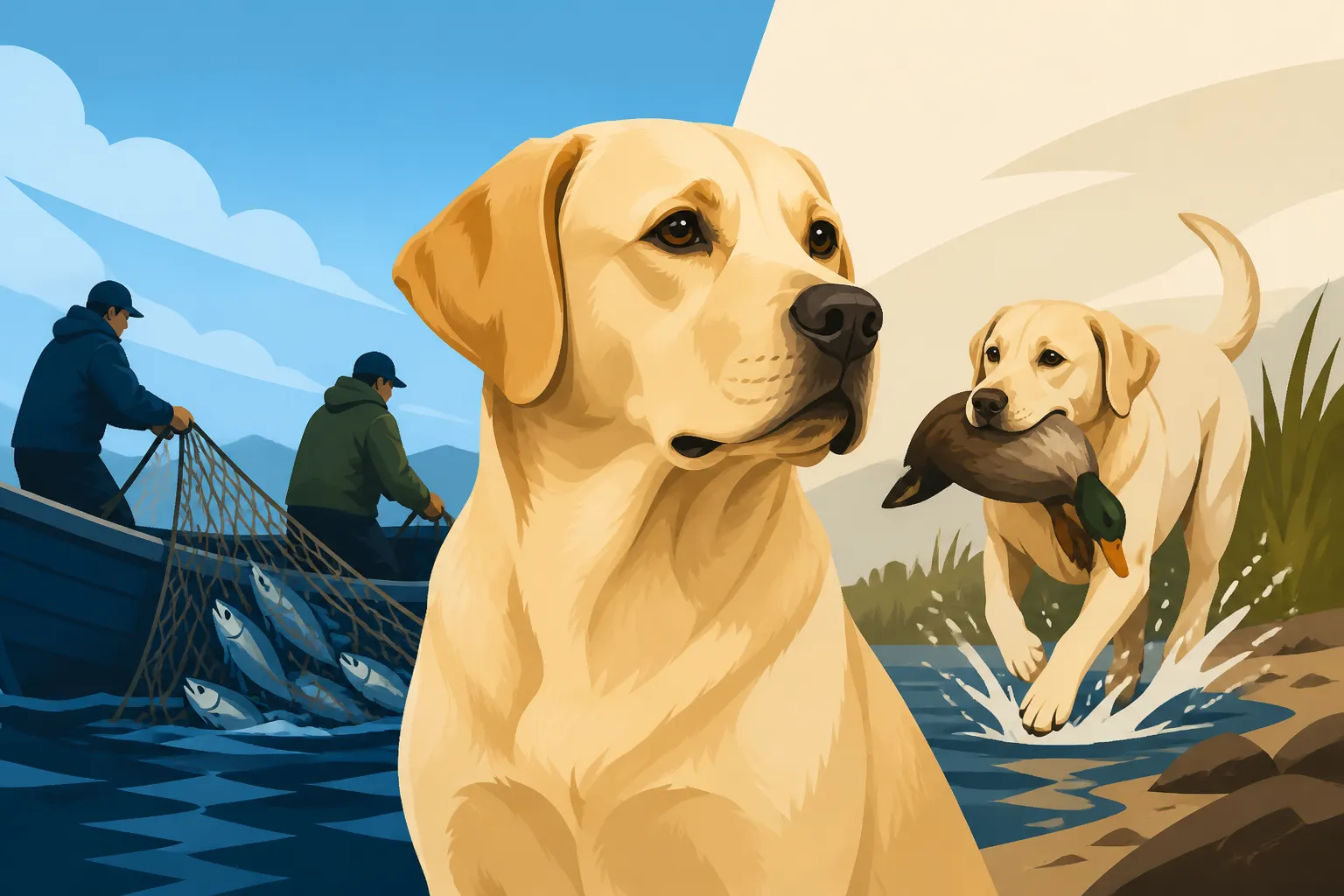
The primary role of the St. John's Water Dog was, quite simply, to retrieve. Cod fishing was a brutal, labor-intensive business. Lines, nets, and fish could easily go overboard, and in the days before sophisticated machinery, retrieving these items from the freezing water was incredibly dangerous and time-consuming for humans. This is where the dogs shone. They would plunge into the icy depths without hesitation, swim out to retrieve floating fishing lines, lost nets, or even individual fish that had slipped away, bringing them back to the boat or shore.
Imagine a fisherman, hands numb with cold, dropping a crucial piece of equipment. Instead of risking a perilous dip himself, he could simply point, and his dog would be off, swiftly paddling through the waves to bring it back. This saved not only time but also potentially lives. These dogs were not merely fetching sticks; they were retrieving the very means of their owners' livelihood. Their ability to work independently yet remain responsive to commands was critical.
Beyond retrieval, they were also valuable companions and even informal guardians. Life on a small fishing boat could be lonely, and the dogs offered comfort and loyalty. On shore, they might have helped guard the day's catch from scavengers or other animals, although their primary focus was always on the water and the fishing operations. Their intelligence and biddability made them incredibly trainable, allowing them to understand complex tasks and adapt to changing situations, a trait that continues to make Labradors such versatile working dogs today. Where the First Labrador Ancestors Worked offers more context on their original habitat and purpose.
The Signature Traits: Why They Were Perfect for Fishing
The Labrador Retriever's most defining characteristics—their "soft mouth," dense, water-repellent coat, webbed feet, and inherent desire to retrieve—were not accidental features. They were meticulously honed over generations by the demands of their life with fishermen. These traits weren't just pretty attributes; they were survival tools, each serving a critical function in the dogs' ability to perform their duties effectively and endure the extreme conditions of the North Atlantic. Without these specialized adaptations, they simply wouldn't have been able to contribute to the extent they did.
Consider the sheer practicality of these traits. A dog that couldn't handle freezing water or retrieve delicate items without damaging them would be useless to a fisherman. Instead, the St. John's Water Dogs were perfectly engineered biological machines for the job. Their genetic makeup and physical attributes were shaped by a direct need, proving that form truly follows function in the world of working dogs. These are the same traits we admire in our Labradors today, passed down through a lineage of dedicated working animals.
It's fascinating to think that the very things that make your Labrador such a joy to live with – their enthusiasm for fetching, their love of swimming, their gentle hold on objects – are direct links to their heritage. When your Lab brings you a toy without a single tooth mark, they are echoing the actions of their ancestors who carefully delivered precious fish or broken lines back to their owners. These characteristics weren't just beneficial; they were absolutely necessary for the dog's role on the fishing boats.
The Legendary "Soft Mouth"
Perhaps one of the most famous traits of the Labrador is their "soft mouth." This isn't just a charming quirk; it was an absolutely critical skill for their early fishing duties. Imagine a dog tasked with retrieving a valuable cod or a delicate piece of netting from the water. A dog with a hard bite would render the fish unmarketable or tear the net beyond repair. The St. John's Water Dogs were prized for their ability to carry objects, even live fish, gently without damaging them. What a Soft Mouth Meant on a Fishing Boat truly brings this concept to life.
This gentle grip meant that if a fish was dropped back into the water, the dog could retrieve it, and it could still be sold. If a line or net had to be pulled in, it wouldn't be further frayed or punctured by the dog's mouth. This delicate touch, combined with their strong jaws and eagerness to hold, made them invaluable. They weren't just retrieving; they were preserving the catch and the equipment. This instinct is so deeply ingrained that even today, many Labradors will carry an egg in their mouth without breaking it, or gently bring a bird back to a hunter.
This trait also speaks to their temperament. A dog with a soft mouth is often one that is less prone to aggressive biting and more amenable to training, especially for tasks requiring precision and self-control. It suggests a dog that is intelligent enough to understand the value of the item it's carrying and has the discipline to handle it with care. This combination of strength, gentleness, and intelligence made them unique and highly sought after by the fishing communities.
The Insulating Coat and Webbed Feet
The Newfoundland waters are bitterly cold for much of the year. For a dog to spend hours in and out of the ocean, an ordinary coat simply wouldn't do. The St. John's Water Dogs possessed a thick, dense double coat: a soft, downy undercoat for insulation, and a coarser, water-repellent outer coat. This coat acted like a natural wetsuit, keeping them warm and mostly dry even after prolonged exposure to icy water. The oiliness of the outer coat prevented water from soaking through to the skin, allowing them to stay in the water longer and recover more quickly once back on the boat.
Their coat shedding, especially during seasonal "coat blows," is a legacy of this intense working requirement, ensuring they always had the optimal level of insulation for the fluctuating temperatures. This robust coat is still a hallmark of the breed and a major reason why Labradors are so comfortable in and around water. When you're brushing your Labrador and notice the sheer volume of fur, especially that thick undercoat, you're interacting with a direct link to their ancestry in the North Atlantic. Labrador Coat Type in the Standard delves deeper into this fascinating feature.
Equally important were their unique paws. Labradors have noticeably webbed feet, a trait that makes them exceptionally efficient swimmers. These webbed toes act like paddles, increasing the surface area of their feet and propelling them through the water with powerful strokes. This anatomical advantage meant they could swim faster and more strongly than other dogs, making them perfect for retrieving objects over distances or in strong currents. Labrador Webbed Feet and Swimming explains how this anatomical feature functions. This combination of an insulating coat and webbed feet created a canine aquatic athlete, perfectly suited to the demands of their environment.
From Fishing Boats to British Estates
The St. John's Water Dog's reputation for being an exceptional water retriever didn't stay confined to the shores of Newfoundland. As British fishermen, traders, and sailors frequented the island, they began to take notice of these remarkable dogs. Many were brought back to England, initially as curiosities or working dogs for sport. It was here, in the stately homes and sprawling estates of British aristocracy, that the St. John's Water Dog began its transformation into the Labrador Retriever we recognize today. This shift in environment brought new demands and new purposes, but the core traits forged by the fishermen remained.
The appeal was clear: these dogs were natural retrievers, highly intelligent, eager to please, and possessed an incredible resilience. They were everything a British sportsman could want for retrieving game birds from land or water during hunting excursions. The British gentry, with their passion for hunting and dog breeding, quickly recognized the potential of these hardy dogs. They started selectively breeding them, refining their traits to suit the needs of game retrieval rather than cod fishing, but always building upon the strong foundation laid in Newfoundland.
The journey from a rugged fishing companion to a distinguished sporting dog is a fascinating chapter in the breed's history, highlighting its incredible adaptability and enduring charm. This transition ultimately ensured the survival of the breed, as the St. John's Water Dog eventually faced extinction in its homeland. When the St. John's Water Dog Died Out explains more about this unfortunate turn of events in Newfoundland.
The British Discovery and Transformation
During the 19th century, British noblemen like the Earl of Malmesbury and the Duke of Buccleuch became enamored with the St. John's Water Dog. They imported them to England, initially to work alongside pointers and setters in retrieving game during hunting parties. The dogs quickly proved their worth, exhibiting the same tireless work ethic and natural retrieving ability they displayed on the fishing boats. They excelled at bringing back downed game, both on land and from frigid ponds and rivers, without damaging the birds – a clear echo of their "soft mouth" heritage.
These early British breeders began a systematic program to develop and standardize the breed. They interbred the St. John's dogs with other British retrieving breeds, most notably the Tweed Water Spaniel, to further enhance their retrieving skills and conformation for game work. It was during this period that the name "Labrador Retriever" began to emerge, distinguishing them from the larger Newfoundland dog, which also originated from the island. The efforts of these early fanciers were crucial in establishing the breed and setting its course for global recognition. How Labradors Reached Poole in Dorset sheds light on their arrival in England.
The formal recognition of the breed by the Kennel Club in 1903 cemented their place in canine history. From being an indispensable, unsung hero of the North Atlantic fisheries, they rose to prominence as one of the most beloved and versatile sporting and family dogs in the world. Yet, every time a Labrador eagerly plunges into water or gently carries an item, they carry the spirit of those original St. John's Water Dogs and the hardworking fishermen they served. You can find excellent quality products designed for active Labs, perfect for channeling their retrieving drive, on sites like Chewy.
Enduring Legacy in the Modern Labrador
Even today, centuries removed from their seafaring origins, the core traits of the St. John's Water Dog are undeniably present in every Labrador Retriever. Their incredible enthusiasm for fetching, their boundless energy, their remarkable patience, and their unwavering loyalty are all direct echoes of their past. The desire to carry things, often just to bring you a sock or a remote control, is a diluted but distinct manifestation of that soft-mouthed retrieving instinct. This innate drive is part of what makes Labradors so eager to participate in activities like dock diving, field trials, or even just a vigorous game of fetch in the backyard.
Many modern Labradors still possess that dense, water-repellent coat and the distinctive "otter tail" – a strong, thick tail that acts like a rudder in the water, aiding in propulsion and steering. When your Lab uses their tail to great effect while swimming, they are mimicking the movements of their ancestors navigating the choppy Atlantic. What the Labrador's Otter Tail Does in the Water provides more insights into this unique tail. Their natural athleticism and stamina, honed by countless hours of swimming and retrieving in harsh conditions, still manifest in their need for regular, vigorous exercise. Owners often find that a bored Labrador is a destructive Labrador, and providing outlets for their innate drive is key to their happiness and good behavior.
The Labrador's intelligence and biddability, so crucial for understanding complex commands from fishermen over the roar of the ocean and the clang of equipment, continue to make them highly trainable for various roles today. Whether as service dogs, detection dogs, or simply well-mannered family pets, their willingness to learn and work alongside humans is a direct inheritance. Many owners find that mental stimulation, perhaps with puzzle toys from Chewy or engaging training sessions, is just as important as physical exercise for their clever Labs. Ultimately, the spirit of the St. John's Water Dog lives on, making the Labrador Retriever one of the most capable, adaptable, and beloved dog breeds in the world.
Here's a quick look at how the early St. John's Water Dog traits connect to the modern Labrador:
| Trait | St. John's Water Dog Purpose | Modern Labrador Manifestation |
|---|---|---|
| Soft Mouth | Retrieving fish/nets without damage | Gentle hold on toys, household items, game birds |
| Dense, Oily Double Coat | Insulation from icy North Atlantic waters | Excellent cold-weather tolerance, water-repellent (e.g., swimming) |
| Webbed Feet | Powerful, efficient swimming | Strong swimmers, love for water activities |
| Otter Tail | Rudder for steering in strong currents | Used for balance in water, distinctive breed feature |
| Intelligence/Biddability | Following commands amidst chaos on boats | High trainability for obedience, service, detection work |
| Retrieving Drive | Essential for recovering lost gear and fish | Endless enthusiasm for fetch, carrying items |
| Stamina/Resilience | Enduring long hours in harsh conditions | Requires significant daily exercise, hardy constitution |
This table really highlights how those ancient necessities are still deeply woven into the fabric of our modern Labs, making them the incredible dogs they are. If you're looking for gear that honors their working heritage, like durable retrieving dummies or water toys, Chewy is a great place to start.
Disclaimer
This article is for general informational purposes only and does not constitute professional advice. Laws, prices and regulations vary by location and change over time. Consult a qualified professional for guidance on your specific situation.