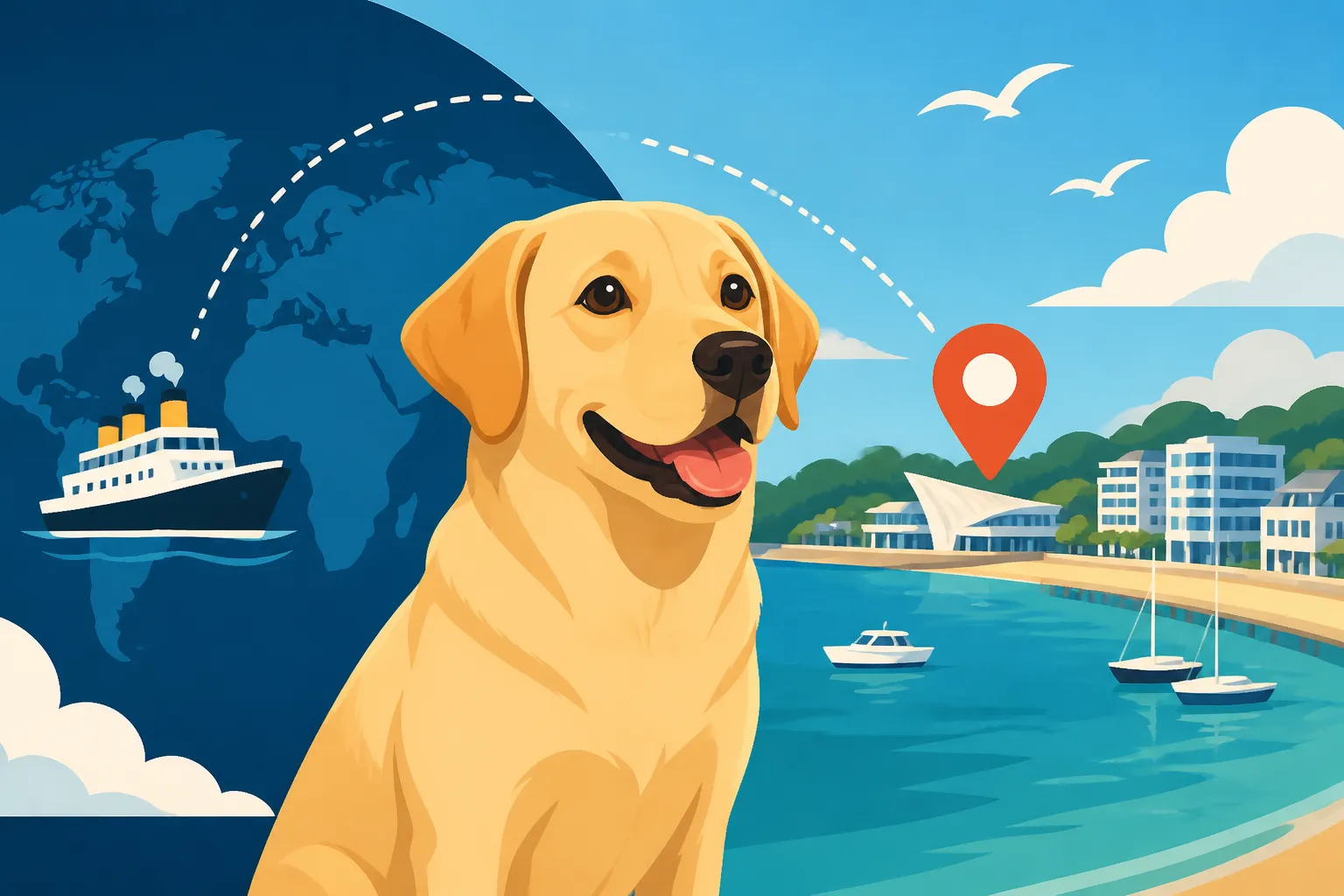
How Labradors Reached Poole in Dorset
It's incredible to think about the journey our beloved Labradors took to become the companions we know today. Many of us simply adore their gentle nature and endless enthusiasm without realizing the rich history behind them, a history that traces back to chilly Newfoundland fishing boats and eventually across the Atlantic to the bustling docks of England. This guide will take you on a deep dive into how these remarkable dogs, or their ancestors, first found their way to the historic port town of Poole in Dorset, marking a pivotal moment in the breed's development.
The St. John's Water Dog: Labrador's North American Roots
Before the Labrador Retriever was formally recognized as a breed, its ancestors were hard at work alongside fishermen in Newfoundland, Canada. These dogs, collectively known as St. John's Water Dogs, were indispensable members of the community, performing tasks that were vital for survival in a harsh, maritime environment. They were not just pets; they were partners in every sense of the word.
Characteristics of the Original St. John's Dogs
The St. John's Water Dogs weren't the sleek, refined Labradors we see in show rings today. They were rugged, medium-sized dogs, built for resilience and functionality. Imagine a dog with a thick, dense coat that was highly water-resistant, often black, designed to withstand the icy waters of the North Atlantic. They possessed a powerful "otter tail" – thick at the base and tapering to a point – which acted like a rudder in the water, a trait still prized in Labradors. Their webbed feet were perfectly adapted for swimming, allowing them to glide through the water with remarkable efficiency. These dogs were known for their incredible endurance, intelligence, and unwavering loyalty, making them ideal companions for the demanding life of a fisherman. They had an inherent "soft mouth," a trait that allowed them to retrieve fish, lines, and nets without damaging them, a characteristic that modern Labradors famously retain. What the St. John's Water Dog Looked Like
The Newfoundland Fishing Industry and Canine Partners
Newfoundland in the 18th and 19th centuries was a bustling hub for the cod fishing industry, attracting fishermen from across Europe, particularly from Britain. These fishing crews relied heavily on their canine companions. The St. John's dogs would retrieve fish that had slipped from nets, pull in lines, and even help haul small fishing boats. Their ability to swim in freezing conditions and their tireless work ethic made them invaluable assets. The dogs were not confined to the boats; they were part of the whole operation, often seen on the docks, interacting with sailors and traders. This constant interaction meant they were exposed to various people and situations, fostering their naturally friendly and adaptable temperament. Their presence on fishing vessels created the perfect opportunity for some of these dogs to hitch a ride across the ocean. Where the First Labrador Ancestors Worked
Across the Atlantic: The Maritime Journey to England
The journey from Newfoundland to England was long, arduous, and often perilous, but it was a regular route for merchant ships laden with fish, timber, and other goods. These ships served as the unwitting transporters of the St. John's Water Dogs, bringing them from their working lives in North America to the shores of Great Britain.
Transatlantic Shipping of Goods and Dogs
British vessels frequently sailed to Newfoundland to collect their catches and conduct trade. It wasn't uncommon for sailors and fishermen, charmed by the St. John's dogs' working abilities and amiable nature, to bring them aboard as companions or even as working dogs for the journey. These dogs proved useful on board, sometimes helping with retrieving items that had fallen overboard or simply offering companionship during the long voyages. The dogs were considered a valuable commodity, not just as working animals but also as a curiosity, especially as their unique skills became known. This movement wasn't organized, but rather a natural byproduct of the busy trade routes connecting the New World with the Old.
The port towns in England that received these shipments were often those with strong fishing and trade links, and Poole in Dorset was one such significant hub. Merchants and ship captains arriving back in England would sometimes disembark with these unusual and talented dogs, introducing them to a new environment and new potential owners. When Labradors First Crossed to England
Conditions of the Journey for the Dogs
Life on board an 18th or 19th-century merchant ship was far from luxurious, especially for animals. The St. John's dogs would have endured cramped conditions, the unpredictable nature of sea travel, and rudimentary care. They would have needed to be hardy, adaptable, and robust to survive the weeks-long crossing. Water and food would have been rationed, and sanitation basic. However, these dogs were working animals, accustomed to harsh conditions and outdoor life. Their strong constitutions and deep bond with humans would have helped them immensely through this challenging transit. It speaks volumes about their resilience and adaptability that they not only survived these journeys but often thrived upon arrival, ready to embark on the next chapter of their lives.
The Dorset Coast: Poole's Role as a Gateway
Poole, a historic port town in Dorset, England, holds a special place in the early history of the Labrador Retriever. Its strategic location and busy maritime trade made it a natural entry point for goods and, crucially, for the St. John's Water Dogs arriving from Newfoundland.
Poole as a Major Port in the 19th Century
In the 19th century, Poole was a bustling commercial center, known for its extensive fishing fleet and thriving trade with North America. Its natural harbor offered sheltered anchorage, making it an ideal destination for transatlantic ships. The docks would have been a hive of activity: ships being loaded and unloaded, goods being inspected, and sailors coming and going. This constant flow of trade and people meant that anything, or anyone, arriving from Newfoundland was likely to pass through a port like Poole. This wasn't just a casual landing spot; it was a well-established route for trade and communication between Britain and its North American territories. The local population, accustomed to maritime activity, would have seen all manner of interesting cargo disembarking from these ships.
Customs and Arrival Procedures
When ships docked in Poole, there would have been a process of customs clearance and cargo inspection. While there weren't specific "dog import laws" as we know them today, any animals brought ashore would have been part of the ship's manifest or simply allowed off with their owners. It's likely that some of the St. John's dogs were brought over simply as companions or for their novelty, while others might have been intended for sale or as gifts to local landowners who were increasingly interested in sporting dogs. The arrival of these unique "water dogs" would have sparked curiosity among the locals and the wealthy landowners in the surrounding Dorset countryside, who were always on the lookout for superior gundogs to enhance their hunting estates. How Labradors Reached Poole in Dorset
The Early Patrons: Nobility and the Breed's Foundation
The arrival of the St. John's Water Dogs in England coincided with a burgeoning interest among the British aristocracy in improving their gundogs. These discerning noblemen recognized the exceptional retrieving abilities of the Newfoundland dogs, particularly their proficiency in water. It was their patronage and selective breeding efforts that began the transformation of the St. John's dog into the Labrador Retriever.
The Earls of Malmesbury's Influence
Perhaps the most significant figure in the early development of the Labrador was the 2nd Earl of Malmesbury, who resided in Heron Court, Christchurch, not far from Poole. He was one of the first to acquire these "Newfoundland dogs" directly from the ships arriving in Poole. He was deeply impressed by their retrieving prowess and their remarkable ability to withstand cold water. It's said that he would regularly send his gamekeepers to the docks in Poole to meet incoming vessels and acquire these unique working dogs. He referred to them as "Labrador Dogs," likely because they came from the Labrador region of Newfoundland, even though the dogs themselves originated from the island of Newfoundland. This early naming convention stuck.
The Earl was meticulous in his breeding, focusing on enhancing their retrieving instincts, their kind temperament, and their robust build. He understood that these dogs were superior for fowl hunting, especially in the marshy and aquatic environments common in the south of England. His efforts were crucial in establishing a distinct line of these dogs, setting the foundation for what would eventually become the modern Labrador Retriever. The Earl of Malmesbury and Early Labradors
The Duke of Buccleuch's Contribution
While the Malmesbury family were instrumental in the initial importation and development, another noble family, the Dukes of Buccleuch in Scotland, played an equally vital role in solidifying the breed's characteristics. The 6th Duke of Buccleuch, Lord John Scott, also recognized the exceptional qualities of these "Labrador Dogs." He acquired his first dogs directly from the Malmesbury kennels. What makes the Buccleuch contribution so critical is that they maintained a strong working line of these dogs, carefully breeding them for generations.
The Buccleuch kennels were known for their rigorous selection process, ensuring that only the best working dogs were bred. They focused on maintaining the retrieving drive, intelligence, and trainability. Crucially, in the late 19th century, when the St. John's Water Dog population in Newfoundland began to decline due to new dog taxes and quarantine laws, the lines established by the Malmesbury and Buccleuch families became the genetic cornerstone for the entire breed. A historical exchange of dogs between these two prominent kennels effectively saved the burgeoning Labrador breed from potential extinction, ensuring the continuation of these magnificent animals. The Duke of Buccleuch's Labrador Kennel
From St. John's Dog to Formal Breed: The Transformation
The journey from a hardy working dog of Newfoundland to a recognized breed in England was a fascinating process of selective breeding, refinement, and dedicated effort by early enthusiasts. The transformation saw the breed's characteristics solidify, setting it apart from its ancestors and other retriever types.
Selective Breeding for Retriever Traits
Once these dogs were established on English estates, particularly in Dorset and later in Scotland, breeders began a deliberate process of selective breeding. The goal was to refine their natural retrieving instincts and create a dog perfectly suited for British sporting traditions, especially game bird hunting. This meant emphasizing the "soft mouth," the water-resistant coat, the powerful swimming ability, and a biddable, intelligent temperament. Dogs that showed exceptional drive, loyalty, and trainability were favored, leading to the gradual standardization of the breed's physical and behavioral traits.
Early breeders didn't just breed for looks; they bred for performance. A dog's ability to retrieve fallen game, often from dense cover or icy water, was paramount. This focus on utility helped to shape the Labrador into the highly capable and versatile retriever we know today. It was a hands-on, observational approach, where the dogs' natural talents were nurtured and enhanced over generations. What Labradors Were Bred to Do
Distinguishing Features of the English Labrador
As the "Labrador Dogs" became more established in England, their distinctive features began to emerge and differentiate them from their St. John's ancestors and other British gundog breeds like the Flat-Coated Retriever or the Curly-Coated Retriever.
| Feature | St. John's Water Dog (Ancestor) | Early English Labrador (Developing Breed) |
|---|---|---|
| Primary Role | Fisherman's helper, retrieves fish | Gundog, retrieves game birds |
| Coat | Dense, water-resistant, often black | Dense, water-resistant, black, yellow, chocolate |
| Tail | "Otter tail," rudder-like | "Otter tail," strong, never curled |
| Temperament | Hardy, intelligent, loyal, biddable | Even-tempered, intelligent, eager to please |
| Build | Rugged, strong, medium-sized | Solid, athletic, more refined in proportion |
| Focus of Breeding | Functionality, survival | Specific retrieving traits, standardization |
The coat, in particular, was a defining characteristic. The short, dense double coat with its oily texture was perfect for repelling water and insulating against cold, a direct inheritance from their Newfoundland origins. The strong "otter tail" was another non-negotiable trait, vital for balance and propulsion in water. The calm, intelligent expression, often described as "kind," also became a hallmark of the developing breed. By the late 19th century, the Labrador Retriever was clearly recognizable as a distinct type of gundog, poised for formal recognition. The Labrador's Fishing and Retrieving Heritage
Formal Recognition and Life in Dorset
The efforts of the early patrons and breeders culminated in the formal recognition of the Labrador Retriever as a distinct breed. This momentous occasion, combined with their continued presence in areas like Dorset, solidified their place in British canine history.
When the Labrador Breed Was Formalized
The formal recognition of the Labrador Retriever by the Kennel Club in England came in 1903, a pivotal moment that cemented its status as a purebred dog. This acknowledgment was a testament to the decades of dedicated breeding by families like the Malmesburys and Buccleuchs, who had carefully cultivated the unique traits of these remarkable dogs. Following this, the Labrador Retriever Club was founded in 1916, further promoting the breed and establishing breed standards. This standardization meant that breeders now had a clear blueprint for what constituted a "true" Labrador, guiding future breeding decisions to preserve the qualities that made the breed so special.
This period marked a transition from a working dog known only in specific circles to a dog with a defined identity and an expanding fan base. It was no longer just a "Newfoundland dog" brought over on a boat; it was the Labrador Retriever, with its own history, characteristics, and future. When the Kennel Club Recognized Labradors
Early Labradors on English Estates and Beyond
Once formally recognized, the Labrador Retriever's popularity soared, particularly among the landed gentry and sporting enthusiasts in England. On estates in Dorset and throughout the country, they became indispensable partners for gamekeepers and hunters. Their superior scenting ability, tireless energy, and inherent desire to retrieve made them unmatched in the field. They were frequently employed during large shooting parties, showcasing their discipline and efficiency.
But the Labrador's charm wasn't limited to the field. Their gentle and affectionate nature made them beloved family companions, easily transitioning from a hard day's work to a cozy evening by the fire. This dual capability, as both an exceptional working dog and a wonderful family pet, contributed significantly to their widespread appeal. The initial influx of St. John's dogs into ports like Poole laid the groundwork for a breed that would, in time, become one of the most popular and cherished dog breeds not just in England, but across the globe. Their legacy, born on the fishing boats of Newfoundland and refined on the estates of Dorset, continues to thrive, a testament to their enduring qualities. How Labradors Reached the United States
Disclaimer
This article is for general informational purposes only and does not constitute professional advice. Laws, prices and regulations vary by location and change over time. Consult a qualified professional for guidance on your specific situation.