How Fast Labrador PRA Progresses
It's incredibly distressing to see our beloved Labradors face any health challenge, but when their vision starts to fade, it can feel particularly heartbreaking and disorienting for both of you. You might find yourself wondering how quickly this terrible condition will advance, or how long your energetic companion will still be able to see the ball you throw. This guide is here to shed light on Progressive Retinal Atrophy (PRA) in Labradors, explaining its progression, what to expect, and how you can best support your furry family member through each stage.
Understanding Progressive Retinal Atrophy in Labradors
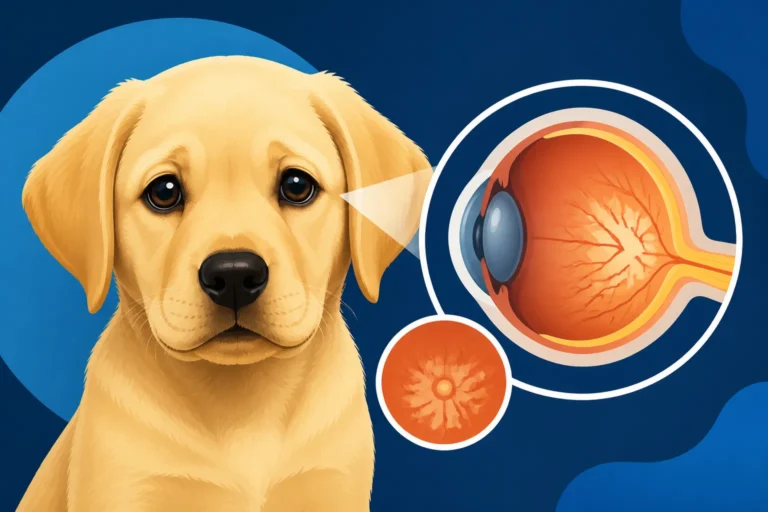
Progressive Retinal Atrophy (PRA) isn't just one disease; it's actually a blanket term for a group of genetic conditions that lead to the degeneration of the photoreceptor cells in a dog's retina. These are the specialized cells at the back of the eye that are responsible for detecting light and sending signals to the brain, allowing your dog to see. When these cells start to break down, vision inevitably deteriorates, eventually leading to blindness. For Labrador owners, it's a concern because certain forms of PRA are quite prevalent in the breed, often leaving families feeling blindsided and helpless.
What is PRA and How Does It Affect Vision?
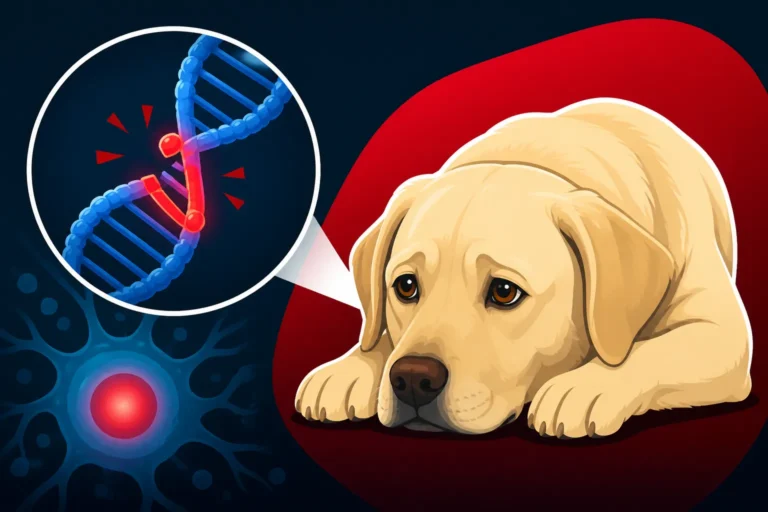
At its core, PRA is a genetic condition. This means it's inherited from a dog's parents, even if the parents themselves don't show symptoms (they could be carriers). In Labs, the most common form is often linked to specific gene mutations, such as the PRCD gene mutation. When these photoreceptor cells, which include rods (for low light vision) and cones (for bright light and color vision), begin to die off, it's a one-way street; they don't regenerate.
The progression typically starts with the rods, meaning your Labrador will first experience difficulty seeing in dimly lit environments. Think about those evening walks, fetching toys in the fading light, or navigating a dark house at night. What used to be second nature suddenly becomes a struggle. As the disease advances, the cones also begin to degenerate, impacting their daytime vision. This leads to increasing clumsiness, bumping into furniture, and a general reluctance to move around unfamiliar spaces. The impact on their joy of life, especially for a breed as active and engaged as the Labrador, can be profound. It's not just about seeing clearly; it's about their ability to interact with their world and continue their favorite activities.
Early Signs: How Owners Miss Them
One of the most frustrating aspects of PRA, particularly in its early stages, is how subtly it can manifest. Labs are incredibly resilient and adaptive animals, often compensating for their diminishing sight with their other keen senses – smell and hearing. This means you might not notice any obvious changes right away, and by the time you do, the condition might have already progressed significantly.
Initially, the signs are almost exclusively related to night vision. Your Labrador might become hesitant to go outside after dark, stumble on familiar paths in the evening, or bump into objects in a dimly lit room that they would normally navigate with ease. They might be slower to react to toys thrown in low light, or seem more startled when approached from the side in a dark hallway. Owners often dismiss these as signs of old age, or simply attribute it to a dog being "tired." Another subtle clue can be dilated pupils, which are trying to let in more light to compensate for the failing photoreceptors. If you catch your Labrador staring at something with unusually large pupils, especially indoors, it might be worth paying closer attention. It's a classic example of how their stoic nature can inadvertently hide a serious problem until it's more advanced. You can learn more about specific indicators in our article about the First Signs of Retinal Atrophy in a Labrador.
The Stages of PRA Progression in Labradors
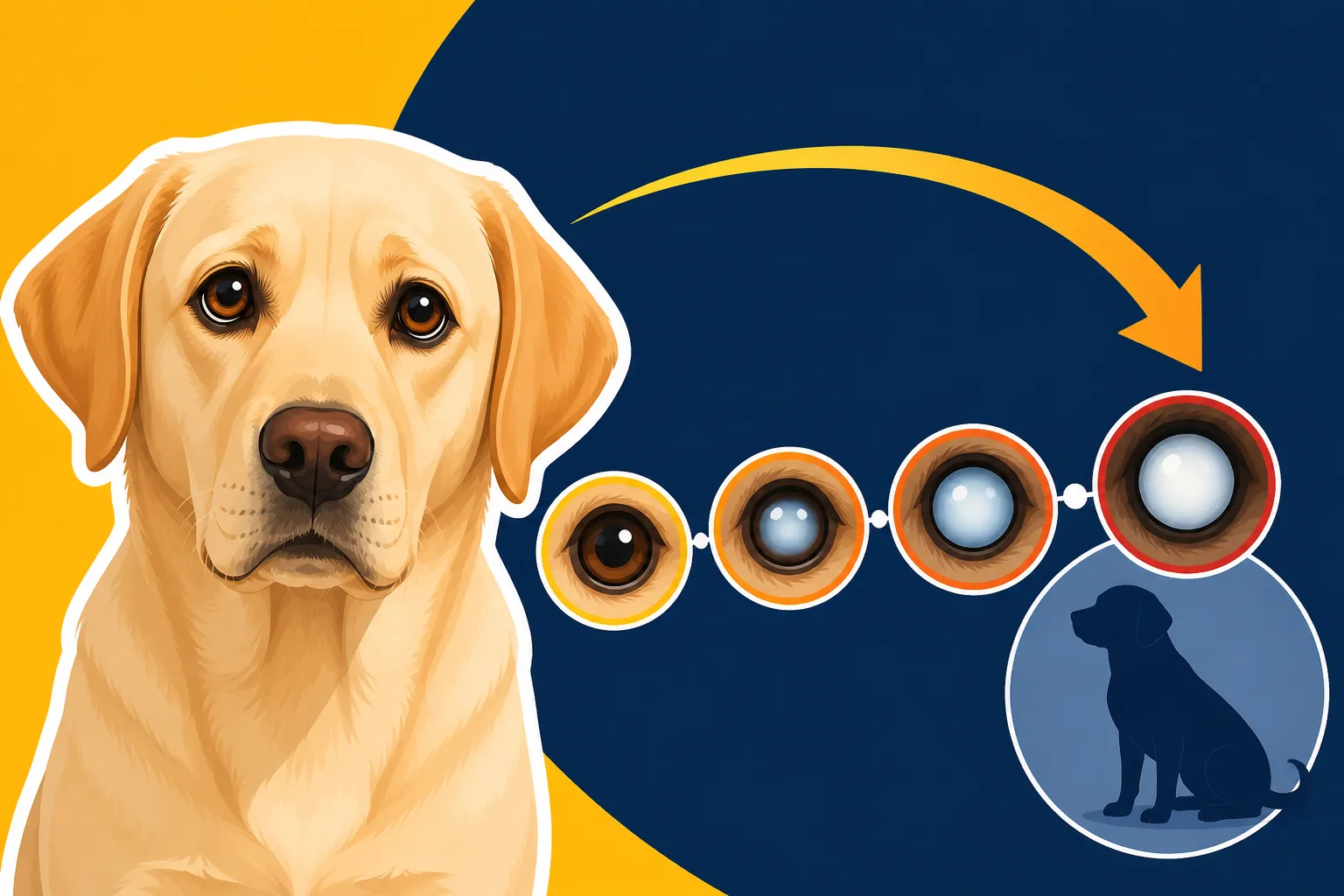
The progression of PRA in Labradors isn't a sudden event; it's a gradual decline that unfolds over months or even years. Understanding these stages can help you anticipate changes and provide the best support for your dog. While the exact timeline can vary, there's a general pattern that most Labradors with PRA follow.
Initial Onset and Night Blindness
For most forms of PRA in Labradors, the first noticeable symptom is night blindness, also known as nyctalopia. This typically begins when your dog is around 3 to 5 years old, though some forms can manifest earlier or later. During this stage, the rod cells, which are critical for vision in low light, start to degenerate. Your Labrador might struggle to navigate at dusk or in dark rooms, becoming hesitant, bumping into furniture, or getting disoriented in familiar surroundings once the lights are out.
Owners often report that their dogs become more "clingy" at night, sticking closer to them, or seem anxious about going out in the yard after sunset. They might refuse to go down stairs in low light or might walk slower and more cautiously. Their pupils might appear more dilated than usual, especially in normal indoor lighting, as their eyes try to gather every bit of available light. This is a crucial period where early detection can lead to better management strategies, even though there's no cure. If you're noticing these behaviors, an immediate visit to a veterinary ophthalmologist is highly recommended. Catching it early can help you understand what's happening and begin to adapt your routine and home environment.
Daytime Vision Deterioration
As the disease progresses, often over a period of 1 to 3 years after the onset of night blindness, the cone cells also begin to degenerate. This is when daytime vision starts to significantly worsen. What was once a subtle hesitancy in the dark now becomes more apparent in brighter conditions. Your Labrador might begin to bump into objects in broad daylight, especially if they are in an unfamiliar layout. Their once confident strides might become tentative, and they may rely more on their whiskers and nose to navigate.
You might notice that they miss catching toys you throw, or they struggle to locate a treat dropped on the floor if it's not directly under their nose. Their eyes might develop a cloudy or reflective appearance (hyper-reflectivity) due to changes in the tapetum lucidum, a reflective layer behind the retina. This is the stage where their world truly starts to shrink, and their ability to engage in activities they once loved, like chasing squirrels or playing fetch in an open field, becomes severely limited. Maintaining a consistent home environment and routine is vital now, as sudden changes can cause immense stress. Regular check-ups are important; discuss what to expect with your vet, and perhaps consider pet insurance like Healthy Paws to help with the ongoing costs of specialized care and potential adaptations.
Complete Blindness and Adaptation
Eventually, often within 2 to 4 years from the first signs of night blindness, most Labradors with PRA will experience complete blindness. While this sounds devastating, it's important to remember that dogs are incredibly resilient and can adapt remarkably well to living without sight. Their senses of smell and hearing, which are already far superior to ours, become even more acute. They create detailed "scent maps" of their environment, allowing them to navigate familiar spaces with surprising confidence.
At this stage, your Labrador will rely entirely on sound cues, tactile information, and scent trails. They might startle more easily, so approaching them gently and speaking to them before touching is crucial. Maintaining consistency in your home layout is paramount – avoid moving furniture, food bowls, or water dishes. Ramps for stairs, textured mats to mark doorways, and scent markers can all help them stay independent. Many blind Labradors still enjoy walks on a leash, especially if they know the route, and love playing scent games or using puzzle toys. While it's a huge adjustment, the love and bond you share with your Lab will undoubtedly deepen as you help them navigate their new reality. You can find more practical advice in our article on Living With a Blind Labrador.
Factors Influencing PRA Progression Speed
The speed at which Progressive Retinal Atrophy (PRA) progresses in Labradors is not a fixed timeline for every dog. Several factors can influence how rapidly your beloved companion's vision deteriorates. Understanding these variables can help set realistic expectations and allow you to better prepare for the journey ahead.
Genetic Mutations and Breed-Specific Forms
The most significant factor influencing PRA progression is the specific genetic mutation responsible for the condition. As mentioned, PRA is a group of diseases, and different breeds can be affected by different genetic forms, each with its own typical age of onset and rate of progression. For Labradors, the most commonly identified mutation is associated with the PRCD gene, leading to a form often referred to as prcd-PRA. This specific type is characterized by a generally slower, more gradual progression compared to some other forms of PRA found in different breeds.
While prcd-PRA typically starts with night blindness in middle age (3-5 years old) and progresses to full blindness over several years, other less common or yet-to-be-identified mutations could theoretically lead to faster or slower progression. This is why breeders are encouraged to conduct comprehensive Genetic Panels Worth Running on a Labrador to screen for known PRA mutations and other inheritable diseases. Knowing the specific genetic cause can give your veterinary ophthalmologist a better idea of the expected course of the disease, although individual variations still occur. It’s a bit like knowing the specific type of engine in a car – you get a general idea of its performance, but factors like maintenance and driving style still play a role.
Age of Onset and Individual Variation
While genetics provide a roadmap, the age at which PRA symptoms first appear, combined with individual differences in each dog, also plays a crucial role in how fast the condition progresses. Generally, if PRA manifests earlier in a Labrador's life, it might tend to progress more rapidly than if symptoms appear in their senior years. This isn't a hard and fast rule, but it's a common observation. A young, otherwise healthy Labrador whose photoreceptor cells begin degenerating at, say, 18 months, might reach complete blindness faster than an older Labrador who only starts showing signs at age 7 or 8.
However, individual variation is key. Just like humans, no two dogs are exactly alike, even if they share the same genetic mutation. Metabolic rates, overall health, nutrition, and even environmental factors could subtly influence how quickly the retinal cells decline. Some Labs with prcd-PRA might lose their vision steadily over three years, while others might take five or even six years to become completely blind. It’s important not to compare your Labrador's journey directly to another's, as each dog is unique. Regular monitoring by a veterinary ophthalmologist can help track the progression more accurately and provide tailored advice for your dog's specific situation. This personalized approach is really what makes all the difference for our furry friends.
Managing a Labrador Through PRA Progression
Receiving a diagnosis of Progressive Retinal Atrophy can feel overwhelming, but remember that a PRA diagnosis isn't a death sentence for your Labrador's quality of life. With thoughtful management, patience, and some adaptations, your dog can continue to lead a happy, fulfilling life, even as their vision declines. It’s about focusing on their remaining senses and providing a safe, predictable environment.
Veterinary Diagnosis and Monitoring
The first step after noticing any potential signs of vision loss is to schedule an appointment with your veterinarian. They will likely perform a thorough ophthalmic exam, which may include checking for dilated pupils, observing your dog's reflexes to light, and examining the retina with an ophthalmoscope. If PRA is suspected, your vet will usually recommend a referral to a board-certified veterinary ophthalmologist.
The ophthalmologist can confirm the diagnosis through more specialized tests. The most definitive diagnostic tool for PRA is an electroretinogram (ERG), which measures the electrical activity of the retinal cells in response to light. This test can detect photoreceptor degeneration long before visible signs of vision loss are apparent. Genetic testing can also confirm the specific mutation responsible for PRA, which can help predict the general progression. Once diagnosed, regular monitoring is crucial. Your ophthalmologist will want to see your Labrador periodically to track the progression of the disease, assess their remaining vision, and rule out any secondary complications, such as cataracts, which can sometimes develop in conjunction with PRA. These visits are also an excellent opportunity to ask questions and get advice on how to support your dog. Our article on How Often a Labrador Needs an Eye Exam can offer more insights into this routine.
Adapting Your Home for a Visually Impaired Labrador
As your Labrador's vision declines, making your home a safe and navigable space becomes incredibly important. Consistency is key. Try to keep furniture and dog beds in the same locations. If you need to rearrange, introduce changes gradually and guide your dog through the new layout.
Here are some practical tips:
- Clear Pathways: Remove clutter, loose rugs, and anything your dog might trip over.
- Safety Gates: Block off stairs or dangerous areas like pools to prevent accidents.
- Scent Markers: Use distinct scents (e.g., vanilla extract, essential oils on cotton balls) near doorways, stairs, or important items like their water bowl. Remember to refresh these regularly.
- Sound Cues: Attach bells to other pets or children so your Labrador knows where they are. Talk to your dog frequently as you move around the house.
- Ramps and Steps: If your Labrador loves to get on the couch or bed, consider ramps to help them navigate safely without jumping.
- Outdoor Safety: Keep your yard fenced and ensure gates are always closed. If you have steps, consider adding a ramp.
- Consistent Routines: Stick to a predictable feeding, walking, and play schedule. This predictability helps reduce anxiety.
By making these adjustments, you empower your Labrador to maintain confidence and independence, even when their world goes dark. It’s amazing to see how quickly they adapt when given the right support.
Emotional Support for You and Your Labrador
Watching your vibrant, once-sighted Labrador lose their ability to see can take a significant emotional toll on you as an owner. It's completely normal to feel sadness, frustration, or even grief. Allow yourself to process these feelings. It’s also crucial to manage your own stress, as dogs are incredibly perceptive and can pick up on our emotions. Your calm demeanor will reassure your Labrador.
For your Labrador, the transition to blindness can be confusing and scary at first. They might seem more anxious, disoriented, or even depressed. Offer them extra reassurance, gentle praise, and physical affection. Engage their other senses with scent-based games, auditory toys, and lots of petting. Continue to take them on walks in familiar, safe environments, letting them sniff to their heart's content. This provides mental stimulation and reinforces their connection to the world. Many owners find that while the initial adjustment is hard, their bond with their blind Labrador often deepens. They become more attuned to each other's needs, and the dog learns to trust their human companion implicitly. Support groups for owners of blind dogs can also be a wonderful resource for shared experiences and practical advice, reminding you that you're not alone in this journey. It's a challenging path, but one filled with immense love and the opportunity to truly be there for your best friend.
| PRA Stage | Typical Age of Onset | Key Symptoms | Progression Time to Next Stage |
|---|---|---|---|
| Initial Onset | 3-5 years (prcd-PRA) | Night blindness, hesitation in low light, dilated pupils | 1-3 years |
| Daytime Impairment | 4-8 years | Bumping into objects in daylight, hesitation in new environments, cloudy eyes possible | 1-2 years |
| Complete Blindness | 5-10 years | Total loss of vision, increased reliance on other senses, heightened startle response | N/A |
Disclaimer
The information provided in this article is for general informational purposes only and is not a substitute for professional veterinary advice. Always consult with a qualified veterinarian or veterinary ophthalmologist regarding any medical condition or treatment for your Labrador.