Mental Work for a Bored Labrador
It’s a scene many Labrador owners know all too well: you’ve just gotten home, and your usually well-behaved pup has decided the leg of your dining room table needed a new, tooth-marked design, or perhaps they’ve emptied the trash bin for the third time this week. This kind of destructive behavior, or even just persistent nudging and restless pacing, often stems not from naughtiness, but from a profound lack of mental stimulation. Your Labrador isn't just a physically active dog; they have a brilliant, problem-solving mind that craves engagement. This comprehensive guide is here to walk you through exactly how to tap into that intelligence and provide the mental workouts your beloved Labrador needs to thrive, preventing boredom and fostering a happier, calmer companion.
Why Mental Stimulation is Crucial for Labradors
Anyone who lives with a Labrador knows they're not just couch potatoes. These dogs were bred for demanding jobs, requiring both physical stamina and keen intelligence. Ignoring the latter is like giving a brilliant student coloring books instead of challenging academic projects – they'll find their own "projects," and you might not like the results.
Understanding the Labrador Mind
Labradors are intelligent, eager-to-please, and highly food-motivated dogs with a strong retrieving drive. Their history as working dogs, assisting fishermen and hunters, means they are hardwired to think, solve problems, and collaborate. They had to navigate complex environments, track scents, retrieve items from land and water, and do it all with focus and precision. This isn't a breed content to simply exist; they need to use their brains. Think about the joy your Labrador gets from fetching a thrown ball—it’s not just the running, but the job of bringing it back. That same satisfaction comes from mental tasks. Their minds are like sponges, and if you don't give them something productive to soak up, they'll inevitably soak up something you'd rather they didn't.
Signs of Mental Boredom
A bored Labrador is rarely a quiet Labrador. The signs can be subtle or glaringly obvious. You might notice increased barking at nothing, or persistent whining and pawing for attention even after a walk. Destructive chewing is a huge indicator—those expensive chew toys are ignored in favor of furniture legs, shoes, or even doorframes. Digging, often in inappropriate places like your flower beds, is another classic symptom. Some Labs might become restless and agitated, pacing incessantly or inability to settle down. Others might seem lethargic or withdrawn, which can sometimes be mistaken for a calm demeanor but is actually a sign of under-stimulation leading to mild depression. They might Why Labradors Lick Their Paws Raw as a self-soothing mechanism, indicating stress or boredom. It's easy to dismiss these behaviors as 'bad,' but it's important to recognize them as a cry for mental engagement.
Preventing Destructive Behaviors
The good news is that preventing these frustrating, costly, and sometimes dangerous behaviors is often as simple as redirecting that mental energy. When a Labrador's mind is actively engaged in solving a puzzle, learning a new trick, or searching for a hidden treat, they simply don't have the mental capacity or desire to chew your sofa or raid the pantry. Mental exercise provides an outlet for their innate intelligence and drive. It can reduce anxiety, build confidence, and strengthen the bond between you and your dog. Imagine coming home to a calm, tired Labrador whose mental energies have been happily spent, rather than one who greets you with the aftermath of their self-appointed "home improvement project." This isn't about exhausting them physically, but about engaging their impressive cognitive abilities.
Types of Mental Enrichment Activities
Mental enrichment isn't a one-size-fits-all solution; it's a diverse toolkit of activities designed to tap into different aspects of your Labrador's intelligence and instincts. The more variety you offer, the more well-rounded and satisfied your dog will be.
Scent Work and Nose Games
This is perhaps one of the most natural and deeply satisfying forms of mental work for a Labrador. Their noses are incredible instruments, and letting them use this primary sense is incredibly enriching. Think about it: they process the world largely through scent. A simple "find it" game can turn a mundane afternoon into an exciting hunt. Start by hiding a high-value treat in an obvious spot, like under a cup, and encourage your Labrador to sniff it out. As they get the hang of it, you can increase the difficulty, hiding treats in different rooms, under blankets, or even outside in the grass.
More structured scent work, often called "Nose Work" or "Scent Detection," can be incredibly rewarding. You can join local classes or even find online courses that teach you how to train your dog to find specific target odors. This transforms their natural sniffing into a focused, problem-solving activity. You'd be amazed how much mental energy a 15-minute scent session can burn compared to a 30-minute walk. It teaches them patience, focus, and independence, all while honoring their powerful olfactory abilities. Many owners report that their dogs are happily exhausted after a good session of nose games.
Puzzle Toys and Food Dispensers
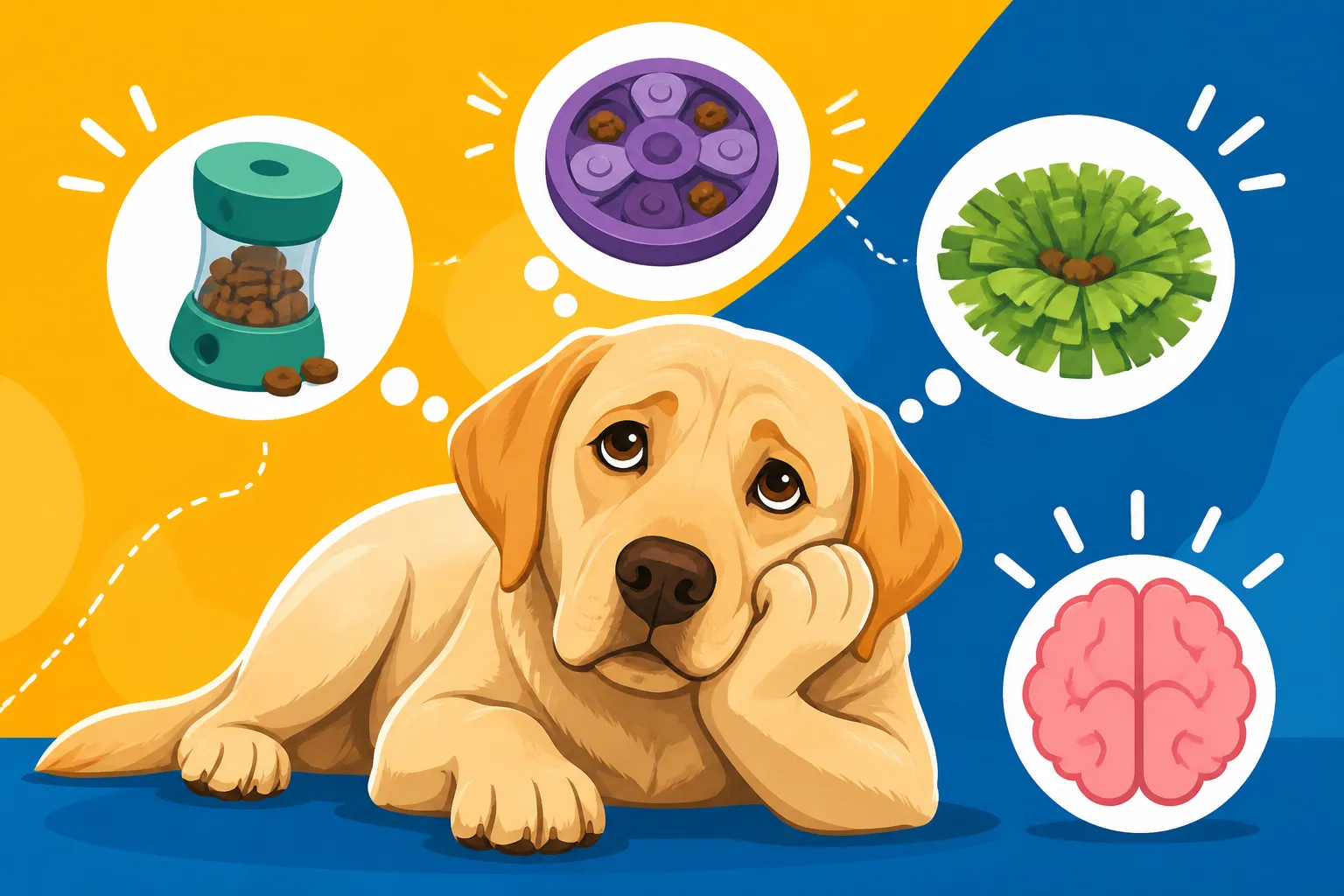
For our famously food-driven Labradors, puzzle toys are an absolute game-changer. These toys require your dog to manipulate them in some way—rolling, nudging, licking, or prying—to release hidden treats or kibble. This slows down their eating, prevents boredom, and gives them a rewarding challenge. Forget just gulping down dinner in 30 seconds from a bowl; make them work for it! Puzzle Feeders That Slow a Greedy Labrador are essential tools here.
You'll find a vast array of options on platforms like Amazon, from simple KONGs that you stuff with peanut butter or wet food, to more complex multi-step puzzles with sliding compartments and removable pieces. Start with easier puzzles to build their confidence, then gradually introduce more challenging ones. Some require more finesse, others more brute force (which Labradors excel at!). Rotate these toys regularly to keep them fresh and interesting. A bored Labrador will quickly figure out the trick to one puzzle, so having a selection ensures continued engagement. These are fantastic for quiet indoor time or when you need to leave your dog alone for a short period.
Interactive Play and Communication
Mental stimulation doesn't always have to involve treats or solitary work; interactive play with you can be incredibly mentally stimulating. Games like fetch (with a twist!), hide-and-seek, or even teaching them to put their toys away can engage their brains. For example, instead of just throwing the ball, hide it and ask your Labrador to "find the ball." This turns a physical game into a mental one.
Teaching your Labrador to understand and respond to different verbal cues for toys or actions also counts as mental work. Learning the names of their toys—"get your duck," "where's the rope?"—challenges their cognitive abilities and strengthens their vocabulary. Even simple communication exercises, like asking for a "sit" and "stay" before releasing them for a meal, build focus and impulse control. Engaging your Labrador in structured play where they have to think about what you're asking, rather than just reacting, builds their problem-solving skills and reinforces your bond through positive communication. This interaction is particularly valuable for breeds as social and people-oriented as Labradors.
Incorporating Training and Learning
Training isn't just for puppies or for fixing "bad" behaviors; it's a lifelong journey of learning and engagement that provides immense mental stimulation for your Labrador. Their intelligence makes them highly receptive to learning new things, and the process itself is a wonderful brain workout.
Learning New Commands and Tricks
Beyond basic obedience, teaching your Labrador fun tricks can be a fantastic way to engage their minds. Think "shake a paw," "roll over," "play dead," or even more complex sequences. Each new trick requires concentration, problem-solving, and coordination. It’s not just about the physical action, but about understanding the cue, remembering the sequence, and performing it for a reward. This keeps their brains active and prevents boredom. A consistent, short daily session of trick training can be just as tiring, if not more so, than a long walk.
The beauty of trick training is that there's no limit to what you can teach. Resources like BAXTER & Bella's online training programs often include a plethora of trick ideas and step-by-step guides, which can be invaluable for keeping things fresh and challenging. These aren't just parlor tricks; they build confidence, improve communication, and strengthen your relationship. Imagine the pride your Labrador feels when they successfully perform a new trick and receive your enthusiastic praise and a tasty reward!
Advanced Obedience and Dog Sports
For Labradors who excel at basic commands and seem eager for more, venturing into advanced obedience or dog sports can be incredibly rewarding. Activities like Rally Obedience, Competitive Obedience, or Agility require intense focus, precision, and teamwork. In Rally, your dog follows a course with numbered signs, each indicating a different exercise to perform. Agility involves navigating an obstacle course with jumps, tunnels, and weave poles. These sports demand both physical and mental prowess, challenging your Labrador to think quickly, respond to cues, and execute complex sequences.
Field trials and hunt tests are another natural fit for Labradors, tapping into their ancestral working drives. These events simulate hunting scenarios, requiring dogs to retrieve ducks or birds, often from water or dense cover, and demonstrating exceptional marking, memory, and steadiness. Gundog Training Costs for a Field Labrador might seem like an investment, but for many owners, it's the ultimate way to fulfill their Labrador's purpose. Even if you don't compete, simply training for these activities provides an incredible amount of mental stimulation and purpose, leaving your dog truly satisfied.
Consistent Reinforcement and Engagement
Regardless of the specific training you choose, consistency and positive reinforcement are key. Short, frequent training sessions (5-10 minutes) are often more effective than one long, tedious session, especially for holding a Labrador's attention. Keep it fun, positive, and always end on a high note, even if it's just repeating an easy command they know perfectly. High-value treats, enthusiastic praise, and favorite toys can all serve as powerful motivators.
Remember that training isn't just about structured sessions. Integrating commands into your daily life – asking your Labrador to "wait" before going through a door, or to "settle" when visitors arrive – reinforces their learning and keeps their mind active throughout the day. This consistent engagement tells your Labrador that their brain is valued, and that thinking is a rewarding activity. It prevents them from falling into mental ruts where boredom can easily take hold.
DIY and Store-Bought Puzzle Solutions
Sometimes, you need to provide mental stimulation without direct supervision, or you're looking for budget-friendly ways to engage your dog. This is where DIY and store-bought puzzle solutions shine.
Homemade Brain Games
You don't need to spend a fortune to keep your Labrador's mind active. Many household items can be repurposed into engaging brain games.
- Towel Roll-Up: Spread out a towel, sprinkle some kibble or small treats across it, then roll it up tightly. Your Labrador has to figure out how to unroll and get to the goodies.
- Muffin Tin Game: Place treats in some of the muffin tin holes, then cover each hole with a tennis ball. Your dog needs to remove the balls to get the treats.
- Box and Crinkle Paper: Take an empty cardboard box, put some treats inside, and then fill it with crumpled paper (or even some clean, old towels). Your Labrador will love digging and snuffling through the layers to find the reward.
- Plastic Bottle Puzzle: For a more advanced challenge, take a clean, empty plastic water bottle (remove the label and cap ring), put a few pieces of kibble inside, and let your Labrador figure out how to get them out. They'll learn to roll and bat it around.
- "Find It" in the House: Hide treats or a favorite toy in various locations around the house and then release your Labrador to "find it!" This is a simple, effective scent game.
These homemade games are not only cost-effective but can be easily varied to keep things interesting. Always supervise your dog initially to ensure they don't ingest non-food items, and adjust the difficulty as they learn.
Top-Rated Commercial Puzzles
If you prefer purpose-built solutions, the market is brimming with fantastic puzzle toys designed specifically for canine enrichment. Platforms like Amazon offer an incredible selection, making it easy to find something that suits your Labrador's chewing style and intelligence level.
- KONG Wobbler: This is a favorite for many Labrador owners. You fill it with kibble, and as your dog nudges and bats it around, food tumbles out. It's durable and keeps them engaged.
- Snuffle Mats: These fabric mats have numerous flaps and pockets where you can hide dry kibble or small treats. Your Labrador uses their nose to snuffle through the fabric, mimicking foraging behavior. They're great for slowing down fast eaters and providing calming mental work.
- Nina Ottosson Puzzles by Outward Hound: This brand offers a range of interactive dog puzzles with varying difficulty levels. From sliding blocks to flip-open compartments, these require significant cognitive effort to solve. They’re usually made of durable plastic and are easy to clean.
- Lick Mats: While not strictly a puzzle, lick mats (often made of silicone with textured surfaces) can provide calming mental engagement. Spread something sticky like peanut butter, plain yogurt, or canned pumpkin on them. The act of licking is soothing and can keep a Labrador occupied for a good stretch of time.
When choosing commercial puzzles, consider your Labrador's chewing habits. If they're a heavy chewer, opt for durable rubber or hard plastic rather than softer materials that might be quickly destroyed.
Choosing the Right Puzzle for Your Lab
The key to successful puzzle engagement is choosing the right challenge level. If a puzzle is too easy, your Labrador will solve it in seconds and quickly lose interest. If it's too difficult, they might become frustrated and give up, or even try to chew through it to get to the prize.
Start with beginner-level puzzles and observe your dog's interaction. Do they understand the concept quickly? Are they motivated to keep trying? Once they master a puzzle consistently, move up a level. Rotate puzzles frequently to keep their minds fresh and prevent them from becoming bored with the same old routine. A good rotation might include one "easy" puzzle for quick satisfaction, one "medium" for a sustained challenge, and one "hard" for those days when you need maximum mental exertion. Remember, the goal is engagement and enjoyment, not frustration.
| Activity Type | Engagement Level | Required Supervision | Common Benefits | Ideal Scenarios |
|---|---|---|---|---|
| Scent Games | High | Moderate to Low | Calming, focus building, natural instinct fulfillment, builds confidence | Rainy days, energy reduction, building independence |
| Puzzle Toys | Medium to High | Low to Moderate | Slows eating, reduces destructive chewing, provides independent engagement | Alone time, quiet relaxation, meal times |
| Trick Training | High | High | Strengthens bond, boosts confidence, improves communication, mental agility | Daily short sessions, bonding time, showing off skills |
| Advanced Sports | Very High | High | Full mental & physical challenge, builds teamwork, fosters discipline | Dedicated training, high-energy Labs, competitive spirit |
| DIY Brain Games | Medium | Moderate to High | Cost-effective, customizable, creative outlet for owner | Budget-conscious, varied challenges, quick boredom buster |
| Lick Mats | Low to Medium | Low | Calming, anxiety reduction, easy engagement for all ages | Relaxation, crate training, vet visits |
Managing Boredom in Specific Scenarios
Life happens, and sometimes our Labradors need mental stimulation in less-than-ideal circumstances. Whether you're out of the house or the weather has other plans, there are still plenty of ways to keep their intelligent minds active.
When You're Not Home
Leaving your Labrador alone, especially for longer periods, can be a prime recipe for boredom and potential mischief. Planning for their mental well-being before you walk out the door is essential. A stuffed KONG or a durable puzzle toy filled with frozen peanut butter or wet dog food can provide a long-lasting challenge. Freezing the contents makes it last much longer, extending the mental engagement. You can find excellent options for these on Amazon, often in multi-packs, so you always have one ready.
Beyond physical puzzles, consider leaving the radio or TV on to provide some auditory stimulation, or even investing in a camera with a treat dispenser. Some even allow for two-way communication, letting you check in and offer a verbal cue followed by a reward. This isn't a substitute for human interaction, but it can break up long periods of quiet. For younger Labradors or those prone to separation anxiety, building alone-time tolerance gradually is crucial, and having engaging mental toys is a key part of that process. Remember that a mentally tired Labrador is far less likely to be a destructive one. Leaving a Labrador Home Alone successfully involves a good strategy.
Rainy Days and Limited Outdoor Access
We've all faced those stretches of bad weather where long walks and park visits are simply not feasible. For an energetic breed like the Labrador, this can quickly lead to pent-up energy, both physical and mental. This is where indoor mental games become your best friend. Instead of the usual outdoor fetch, switch to an indoor game of "find it" with treats or toys, hiding them in increasingly difficult spots around the house. This forces your dog to use their nose and brain more actively. Tiring a Labrador on a Rainy Day often means getting creative indoors.
Another excellent indoor activity is a dedicated training session focused on learning new tricks or refining existing commands. Even 10-15 minutes of focused mental work can be surprisingly tiring. You can also set up a mini-agility course using household items—a blanket over two chairs for a tunnel, cushions for jumps (low to the ground, of course, to protect joints). The goal is to make them think, problem-solve, and move in varied ways, not just to physically exhaust them. A new BAXTER & Bella lesson might be just the thing to spark some indoor excitement.
For Senior or Less Mobile Labradors
As Labradors age, their physical capabilities often decline. Arthritis, hip dysplasia, or other conditions can make long walks or vigorous play painful or impossible. However, their minds often remain sharp, and mental stimulation is just as, if not more, important to keep them engaged and happy. Gentle scent work is perfect for senior Labradors. Hiding treats in easy-to-reach places around the house, or using a snuffle mat, allows them to use their powerful noses without putting strain on their joints.
Puzzle toys are also excellent for older dogs, as they can often be solved while lying down or sitting comfortably. Choose puzzles that require less physical manipulation and more cognitive effort. Continuing with gentle, short training sessions, focused on reviewing known commands or learning very simple new ones, can keep their minds active and reinforce their bond with you. Even just spending time together, engaging in soft petting and gentle conversation, provides comfort and connection, which is a form of mental and emotional enrichment. Caring for a Senior Labrador deeply involves understanding and adapting to their changing needs, including their mental ones.
The Link Between Mental and Physical Health
It's a common misconception that a tired dog is solely the result of a long walk or a vigorous game of fetch. While physical exercise is undoubtedly crucial for a Labrador's health, it's only half the equation. A dog that is physically exhausted but mentally under-stimulated can still exhibit restless or destructive behaviors. True contentment comes from a balance of both.
Reducing Anxiety and Stress
When a Labrador's mind isn't challenged, the resulting boredom can quickly morph into anxiety and stress. Think about how you feel when you have nothing to do and your brain is buzzing with unspent energy; it can lead to restlessness, irritability, and even feelings of sadness. Dogs experience similar emotions. A dog constantly looking for something to do, but finding no productive outlets, can develop habits like excessive barking, incessant licking, or even destructive chewing as self-soothing or attention-seeking behaviors.
Mental work, on the other hand, provides a positive outlet for that energy. When a Labrador is focused on solving a puzzle, tracking a scent, or learning a new command, their brain is engaged in a constructive way. This kind of focused activity can be incredibly calming and satisfying. It reduces the underlying anxiety that fuels many undesirable behaviors, leading to a more relaxed and content dog. A mentally fulfilled Labrador is a dog less prone to stress-related issues.
Improving Overall Well-being and Longevity
Just like humans, dogs benefit from cognitive engagement throughout their lives. Keeping their brains active can help maintain cognitive function as they age, potentially slowing the onset of canine cognitive dysfunction (similar to dementia in humans). Regular mental workouts keep neural pathways strong and can contribute to a better quality of life. An alert, engaged senior Labrador is a joy to behold, and mental stimulation plays a huge role in that.
Furthermore, a Labrador that is consistently engaged mentally and physically is generally a happier and healthier dog. They're less likely to be overweight (especially when puzzle feeders slow down their eating and reduce scarfing), and they tend to have a stronger, more trusting relationship with their owners. This holistic approach to well-being – caring for their bodies and their brilliant minds – truly enhances their Labrador Lifespan and What Changes It, allowing them to live their best lives as cherished family members. It's an investment in their happiness, health, and the peace of mind you get from having a well-adjusted companion.
Disclaimer
This article is for general informational purposes only and does not constitute professional advice. Laws, prices and regulations vary by location and change over time. Consult a qualified professional for guidance on your specific situation.