Retraining a Rescued Adult Labrador
Bringing a rescued adult Labrador into your home is an incredibly rewarding experience, but let's be honest, it often comes with its own unique set of challenges. You're opening your heart to a dog with an unknown past, and that means you might encounter some behaviors that leave you scratching your head, or even feeling a bit overwhelmed. This guide is here to walk you through understanding these behaviors, setting up a stable environment, and using gentle, effective retraining strategies to help your wonderful new companion settle in and truly thrive.
Understanding the Unique Challenges of a Rescued Adult Labrador
It's easy to fall in love with a Labrador's sweet eyes and wagging tail at the shelter, but once they're home, the reality of their past can start to surface. Unlike a puppy you've raised from eight weeks, an adult rescue brings a whole lifetime of experiences, or lack thereof, into your household. This isn't a bad thing, but it means your approach to training and integration needs to be thoughtful and incredibly patient.
The Unknown History and Its Impact
One of the biggest hurdles when you adopt an adult Labrador is the mystery of their previous life. You might not know if they were a beloved family pet who simply got lost, if they were neglected, or if they spent years in a kennel environment with little human interaction. Each of these scenarios leaves a different imprint on a dog's psyche and affects how they perceive their new world with you. It’s crucial to remember that your dog isn't trying to be difficult; they're simply reacting to what they've learned, or what they haven't learned, up until now.
For instance, a dog accustomed to being tethered outside might have no concept of house-training or leash manners. One who lived in isolation might be anxious around new people or sounds. The key here is to become a keen observer. Watch how your Labrador reacts to different stimuli – new places, new people, other dogs, loud noises. These observations will be your roadmap to understanding their needs and fears. Give them space, time, and consistent gentle guidance to show you who they truly are beneath any past trauma or lack of experience.
Patience isn't just a virtue here; it's a non-negotiable requirement. Your Labrador needs time to decompress, to realize they are safe, and to understand that their new life is one of routine and kindness. Don't expect immediate perfection. Instead, celebrate the small victories, like a relaxed sigh on the couch or choosing to lie near you. These are monumental steps for a dog learning to trust again.
Common Behavioral Quirks in Rescued Labs
While every Labrador is an individual, many rescued adults present with a similar set of "quirks" that often stem from insecurity, past experiences, or simply a lack of previous training. You might notice things like separation anxiety, where your dog becomes distressed when left alone, or perhaps Fearful Behavior in a Labrador when faced with new environments. These aren't indicators of a "bad dog," but rather a dog trying to cope.
Another common issue is resource guarding, especially around food or beloved toys. A Labrador who has had to compete for food or gone hungry might view mealtime as a high-stakes event. This behavior is rooted in survival and requires a calm, non-confrontational approach to retraining. Similarly, a lack of house-training might manifest as accidents indoors, not because they're spiteful, but because they've never been taught an appropriate place to relieve themselves or have lost previous training due to stress.
Leash pulling, counter-surfing, excessive barking, or even destructive chewing are other behaviors you might encounter. Many Labs end up in shelters precisely because their previous owners didn't understand how to channel their energy or manage these behaviors. For example, a food-obsessed Labrador might resort to Why Labradors Steal and Swallow Things if they've learned that scavenging is the only way to get treats. Your job is to provide clear boundaries, consistent expectations, and positive reinforcement to guide them toward more appropriate behaviors.
Setting Up for Success: Creating a Stable Environment
When you bring home a rescued adult Labrador, the first thing on your mind is often "how do I fix X behavior?" But before you dive into active training, the most impactful step you can take is to create an environment that feels safe, predictable, and supportive. Think of it as building a strong foundation before you start adding the walls and roof of training.
Establishing Routine and Predictability
Dogs, especially those with uncertain pasts, thrive on routine. Predictability helps to lower anxiety and builds confidence because they learn what to expect and when. Imagine moving to a new country where you don't speak the language and nothing makes sense – a stable routine is like a friendly guide, showing you the ropes. For your Labrador, this means consistent feeding times, regular potty breaks, and scheduled exercise.
Start by establishing a daily schedule from the moment your dog wakes up. For example, morning potty break, breakfast, short walk, quiet time. Then afternoon potty break, play, another short walk, dinner, evening potty break, and finally, bedtime. Stick to this schedule as closely as possible, even on weekends. Over time, your Labrador will begin to anticipate these events, which helps reduce stress and confusion. This predictability also aids in Building Alone-Time Tolerance in a Labrador Puppy (even if yours is an adult, the principles apply) as they learn when you'll be leaving and when you'll be returning.
Beyond the daily schedule, make sure interactions are consistent. If you don't want your Labrador on the furniture, everyone in the household needs to enforce that boundary every time. If you use a specific cue for 'sit,' always use that cue. Inconsistency is confusing and can undo progress. Your Labrador will learn faster and feel more secure if the rules are clear and applied uniformly.
Creating a Safe Space and Management
Every rescued Labrador needs their own safe space – a sanctuary where they can retreat when feeling overwhelmed or simply want to nap undisturbed. This might be a crate, a dog bed in a quiet corner, or a sectioned-off room. The important thing is that this space is always positive and never used for punishment. Make it inviting with soft bedding, a favorite toy, and maybe a long-lasting chew.
A crate can be an invaluable tool for a rescued adult Labrador, especially for dogs struggling with house-training or separation anxiety. It provides a den-like feel, can prevent destructive behaviors when you can't supervise, and offers a clear boundary. Introduce it slowly and positively, making it a comfortable, happy place. Remember, even an adult dog needs to learn that the crate is a good spot. You can learn more about appropriate use in How Long a Labrador Can Stay Crated.
Beyond a dedicated safe space, proactive management of your home environment is crucial. Use baby gates to restrict access to certain rooms (like the kitchen if your Lab is a notorious counter-surfer) until they've learned better manners. Keep valuable or dangerous items out of reach. This isn't about stifling your dog; it's about setting them up for success by preventing them from rehearsing undesirable behaviors while they're learning the ropes.
Essential Gear for Your New Lab
Having the right gear on hand can make a world of difference when retraining a rescued adult Labrador. You don't need to break the bank, but a few key items will be incredibly helpful. First, a well-fitting flat collar with ID tags and a sturdy leash are non-negotiable for walks. For Labs who pull, a front-clip harness can be a game-changer, giving you much more control without causing discomfort. Many great options are available, and you can often find them on sites like Amazon.
Next, consider a comfortable bed or two. Your Lab will appreciate a soft place to rest, especially if their previous life involved sleeping on hard surfaces. Chew toys, especially durable ones designed for strong chewers, are also essential. Labradors love to mouth and chew, and providing appropriate outlets can prevent them from redirecting that energy onto your furniture. Again, Amazon has a vast selection, but be sure to choose items suitable for a large, powerful dog.
Finally, think about enrichment. Puzzle feeders can slow down a food-obsessed Labrador at mealtime and provide mental stimulation. Brands like BAXTER & Bella offer not just gear, but also online training programs and resources that can be incredibly helpful for new rescue owners, providing structured guidance and support for common behavioral issues. Having these tools ready before your Lab arrives means you're prepared to integrate them smoothly and start building good habits right away.
Gentle Retraining Strategies for Common Issues
Once your rescued Labrador has settled into their new routine and safe space, it's time to gently start addressing specific behaviors. The key word here is "gentle." This isn't about dominance or force; it's about understanding, communication, and building a cooperative relationship.
Building Trust and Positive Reinforcement
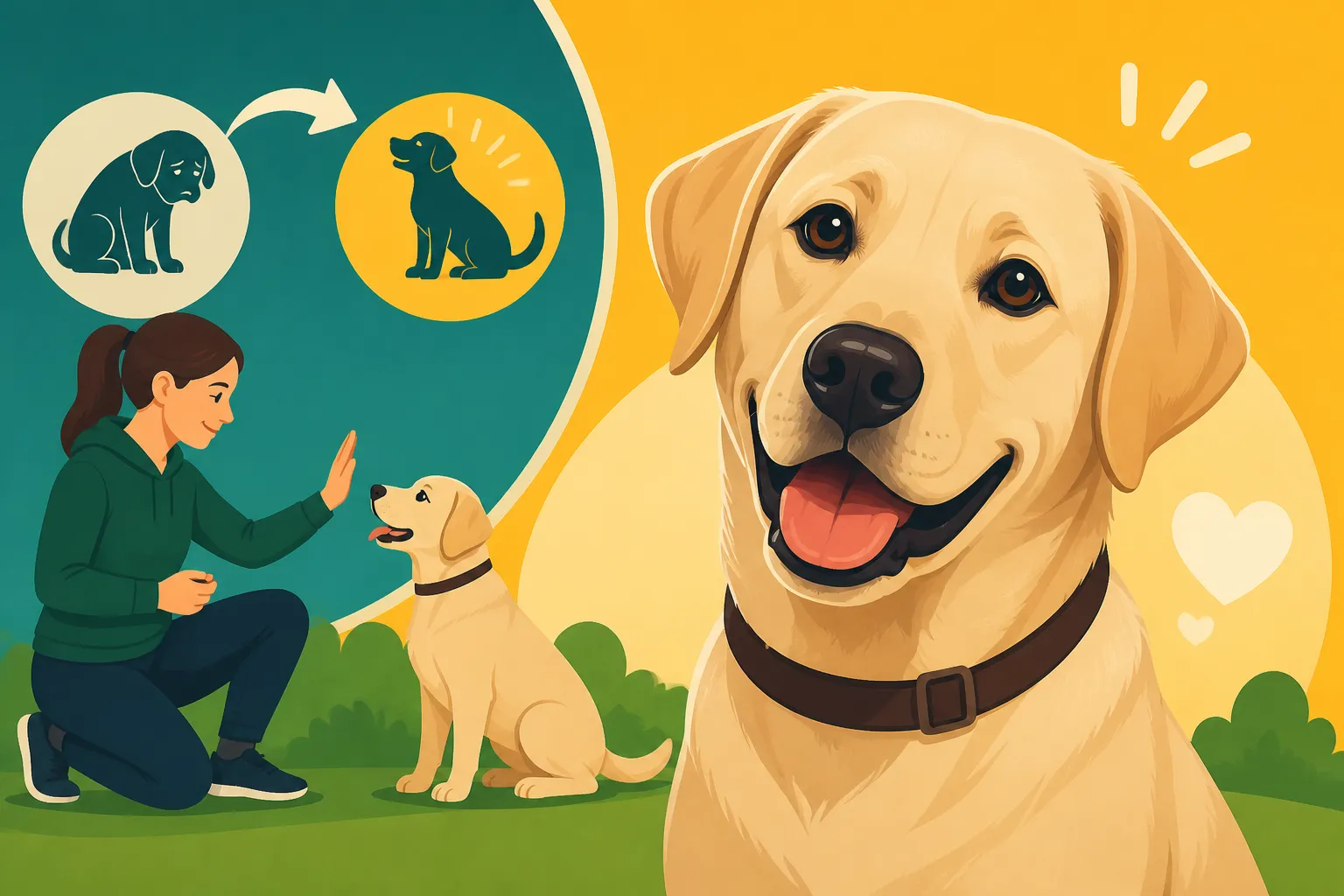
The foundation of all successful retraining with a rescued adult Labrador is trust. Many rescue dogs have experienced neglect, fear, or inconsistency, so rebuilding their faith in humans is paramount. Positive reinforcement is your most powerful tool. This means rewarding behaviors you want to see with something your dog values – treats, praise, a favorite toy, or a quick game of fetch. Ignore or redirect behaviors you don't want.
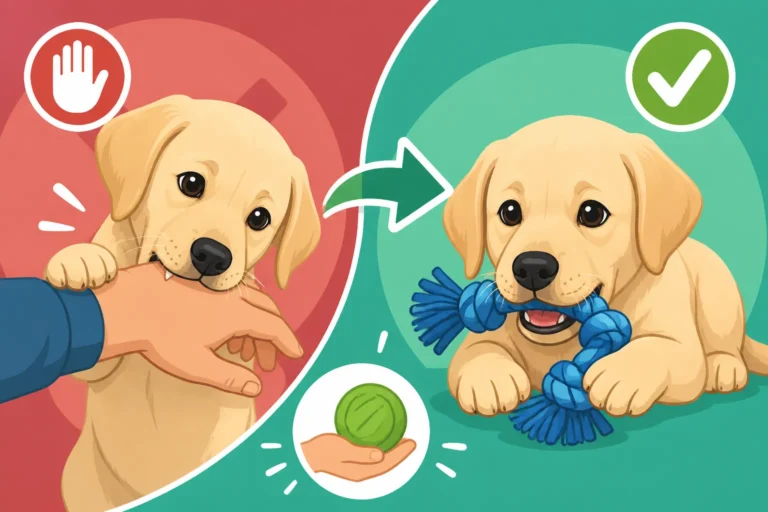
For example, if your Labrador quietly lies on their bed while you're eating, drop a treat near them or offer calm praise. If they jump up, calmly turn your back until all four paws are on the floor, then reward. This teaches them what earns them good things in their new life. Avoid punishment-based methods, which can erode trust, increase anxiety, and often suppress symptoms without addressing the underlying cause. A dog that is afraid to exhibit a behavior out of fear of punishment is not truly learning, and the behavior may resurface or manifest in new, more problematic ways.
Consistency is also vital here. Everyone in the household needs to be on the same page, using the same cues and rewarding the same behaviors. If one person allows counter-surfing and another punishes it, your Labrador will become confused and stressed, hindering their progress. Consider signing up for an online training program like those offered by BAXTER & Bella, which can provide a structured curriculum and ensure everyone in the family uses a consistent approach.
Addressing House-Training Setbacks
House-training regressions are common with rescued adult Labradors, even if they were previously house-trained. Stress, a new environment, and a change in routine can all contribute. The best approach is to go back to basics, treating your adult Lab like a puppy for a while. This means frequent trips outside – every hour or two, after waking up, after eating, and before bed.
Always accompany your Labrador outside on a leash during potty breaks. This isn't about control; it's about supervision. You need to be there to praise and reward them immediately when they go to the bathroom in the right spot. A small, high-value treat given the moment they finish their business creates a strong positive association. If they don't go, bring them back inside and try again in 15-20 minutes.
Any accidents indoors should be cleaned thoroughly with an enzymatic cleaner to eliminate odors that might encourage repeat offenses. Never scold or punish your Labrador for an accident; they don't understand it after the fact, and it will only teach them to hide their accidents from you. If you catch them in the act, calmly interrupt them ("Oops!") and immediately take them outside to finish, praising heavily if they do. For more detailed guidance, consider revisiting resources on Potty Training a Labrador With No Yard or Overnight Potty Breaks for a Labrador Puppy, adapting the principles to your adult dog's needs.
Tackling Leash Pulling and Reactivity
Walking a strong Labrador who pulls on the leash can be exhausting and even dangerous. Many rescued Labs have never been taught proper leash manners. Start by investing in a good front-clip harness, which discourages pulling by redirecting the dog's momentum back towards you. Brands found on Amazon often have a variety of styles that can work effectively for a powerful Labrador.
Begin with short, frequent walks in low-distraction environments. Every time your Labrador walks beside you with a loose leash, reward them with a treat and praise. If they pull, stop walking immediately. Only resume when the leash slackens. This teaches them that pulling gets them nowhere, but a loose leash keeps the walk going. This method is often called "stop-and-go" or "treeing" and is highly effective for building Loose Leash Walking With a Labrador.
If your Labrador is reactive (barking, lunging) towards other dogs, people, or cars, you'll need a more specific approach called "desensitization and counter-conditioning." This involves gradually exposing them to the trigger at a distance where they notice it but don't react, and then feeding them high-value treats. The goal is to change their emotional response from fear or aggression to a positive association (e.g., "Oh, another dog! That means treats!"). This process often benefits greatly from professional guidance.
Managing Resource Guarding and Food Obsession
Resource guarding, where a dog becomes defensive over food, toys, or even people, is a serious behavior rooted in insecurity or past competition. It's especially common in Labs due to their strong food drive and can range from subtle stiffness to growling or biting. Addressing this requires a delicate, non-confrontational approach focused on building trust.
If your Labrador guards their food bowl, never reach into it or stand over them while they eat. Instead, teach them that your approach means more good things. As they eat, walk by and toss a high-value treat near the bowl (not in it). This teaches them that your presence predicts good things, not threats. Gradually, you can work up to gently dropping a treat in the bowl as you pass. For a comprehensive guide on this, consult Fixing Bowl Guarding in a Labrador.
For toy guarding, practice "trade-up." Offer a higher-value toy or treat in exchange for the guarded item, praising them as they release it. Always return the original item afterwards to reinforce that trading is positive and doesn't mean permanent loss. With Labs, their powerful food drive can sometimes lead to Why a Food-Driven Labrador Guards Its Bowl, so managing their environment is crucial to prevent them from guarding items they shouldn't have in the first place. Consider using slow feeder bowls or puzzle toys from Amazon to make mealtime an enriching experience rather than a rushed, high-stress event.
Patience, Persistence, and Professional Help
The journey of retraining a rescued adult Labrador is a marathon, not a sprint. There will be days of incredible progress and days where you feel like you've taken ten steps backward. It’s important to manage your expectations and remember that every small step forward is a victory.
Realistic Expectations for Progress
It can take weeks, often months, and sometimes even a full year for a rescued adult Labrador to truly decompress, settle into their new home, and fully integrate. Behaviors that seem ingrained might take longer to change, especially if they are coping mechanisms for anxiety or fear. Don't be discouraged if you don't see immediate results. Your Labrador needs time to unlearn old habits and learn new, desirable ones.
Celebrate every small win: a relaxed sigh, a moment of eye contact, a successful potty break, a few steps on a loose leash. These seemingly minor achievements are monumental for a dog who is learning to navigate a brand new world. Keep a journal if it helps you see the progress over time, especially during those challenging moments when you feel frustrated. Remember, your consistent kindness and patience are literally reshaping your dog's world.
Think about it like this: your dog has a deeply worn path of old habits in their brain. You're trying to help them forge a new path, and that takes repeated, consistent effort. There might be days when they revert to the old path out of stress or habit. That's okay. Gently guide them back to the new path, and eventually, it will become the default.
When to Call in a Professional Trainer or Behaviorist
While many common issues can be addressed with consistent positive reinforcement and patience, some behaviors require the expertise of a professional. If your Labrador is exhibiting aggression towards people or other animals, severe separation anxiety, intense resource guarding, or debilitating fears and phobias, it's time to seek help. These aren't behaviors that most owners can safely or effectively manage on their own.
Look for a certified professional dog trainer (CPDT) or a veterinary behaviorist who uses positive, force-free methods. Avoid anyone who suggests harsh corrections, dominance theory, or "alpha" techniques, as these can exacerbate fear and aggression, especially in a dog with a sensitive past. A good professional will assess your dog's individual needs, help you understand the root cause of the behavior, and create a tailored training plan. They can also offer invaluable support and guidance when you feel overwhelmed. Don't hesitate to reach out; it's a sign of a responsible and caring owner. For guidance on finding the right person, read Choosing a Trainer for a Labrador.
A trainer can help you decode your Labrador's body language, which is crucial for understanding what they are trying to communicate. They can also help you implement management strategies that keep everyone safe while you work on modifying behavior. Sometimes, a fresh pair of eyes and expert knowledge can provide the breakthrough you need, turning frustrating challenges into manageable steps towards a happier, healthier relationship with your rescue Lab.
Maintaining a Lifelong Bond
Retraining a rescued adult Labrador isn't a one-and-done event; it's a continuous process that strengthens the bond between you and your dog. As your Labrador gains confidence and settles in, continue to engage them with training, enrichment, and plenty of love. Ongoing training, even simple refreshers of basic cues, keeps their minds sharp and reinforces good habits.
Mental stimulation is just as important as physical exercise for a Labrador. Incorporate puzzle toys, scent games, and short training sessions into your daily routine. This helps prevent boredom, which can lead to new undesirable behaviors. Continue to provide a stable, predictable environment, but also introduce new, positive experiences gradually to help them continue building confidence and Socializing a Labrador Puppy (or adult, in this case) in a controlled way.
Ultimately, the goal is to provide your rescued Labrador with a life filled with security, love, and joy. The investment of time and patience you make in retraining them will be repaid tenfold in the form of an incredibly loyal, loving, and happy companion. Every day is a new opportunity to deepen your connection and celebrate the wonderful dog they are becoming under your care.
Disclaimer
This article is for general informational purposes only and does not constitute professional advice. Laws, prices and regulations vary by location and change over time. Consult a qualified professional for guidance on your specific situation.