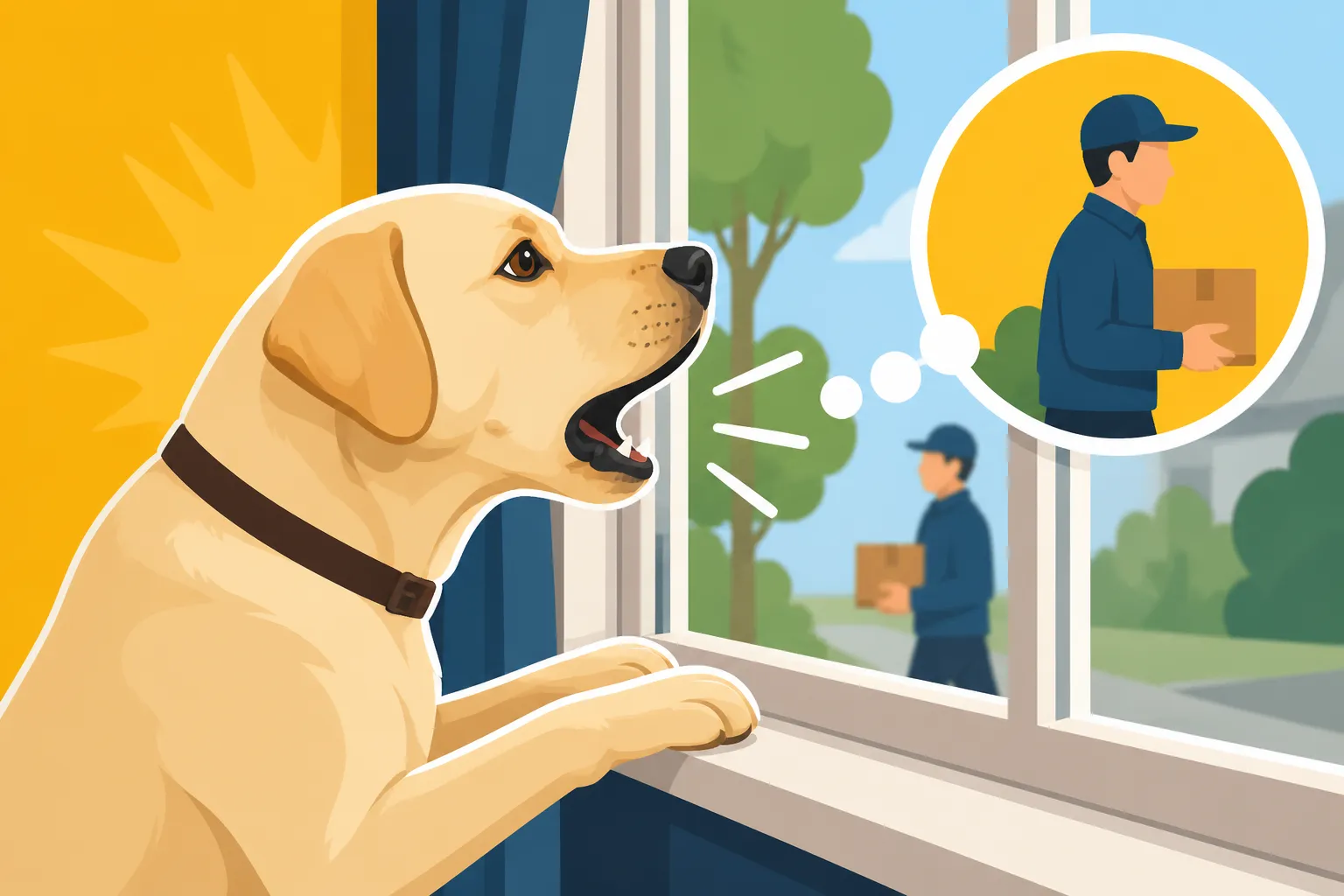
Why Labradors Bark at the Window
Oh, the window barking! If you're a Labrador owner, you know this struggle all too well. One minute your sweet, goofy companion is snoozing peacefully, the next they've morphed into a furry, four-legged alarm system, barking frantically at an innocent squirrel, the mail carrier, or sometimes, it seems, at thin air. It's frustrating, often embarrassing, and can make you feel like your home is under constant siege. This guide is here to help you understand why your beloved Lab is doing this and, more importantly, what concrete steps you can take to bring some peace back to your home and quiet to your windows.
Understanding the "Why": Common Reasons Labradors Bark at Windows
It's easy to dismiss window barking as just a "bad habit," but for your Labrador, it's almost always rooted in something more fundamental. These aren't random acts; they're driven by instincts, emotions, and sometimes, simply a lack of appropriate outlets. Getting to the bottom of the motivation is the first crucial step in addressing the behavior.
Territoriality and Alert Barking
Labradors, despite their friendly reputation, are still dogs with natural instincts. One of the strongest is the urge to protect their territory and alert their "pack" to anything new or unusual. When your Lab barks at the window, often they're acting as your home's personal security system. They see someone walking by, another dog, or a delivery person, and their instinct kicks in: "Intruder alert! I must warn my humans!"
Think about it from their perspective. Your home is their den, their safe space. Anything moving outside that perceived boundary can be seen as a potential threat or, at the very least, something that needs to be acknowledged. This isn't necessarily aggression; it's often more about communication. They might be trying to make the "threat" go away, or they might just be telling you, "Hey, did you see that?" It’s especially common in areas with a lot of foot traffic or if you have a prominent front window. The endless stream of visual stimuli can keep a territorial Lab on high alert, making it difficult for them to relax.
Boredom and Understimulation
Let's be honest, Labradors are smart, energetic dogs. They were bred to work, to retrieve for hours, and to be engaged. When they don't get enough physical exercise or mental stimulation, that excess energy has to go somewhere. The window, with its ever-changing panorama of sights and sounds, becomes the most exciting show in town. For a bored Labrador, watching the world go by can be a full-time job.
A dog who is left alone for long stretches, or one who isn't getting enough walks, games, or puzzle time, might turn to window barking as a self-entertainment strategy. It’s a way to burn off steam and relieve the monotony of their day. They might start by simply observing, but the thrill of a reaction (even if it's just your sigh of exasperation) can reinforce the behavior. They learn that barking gets attention, whether from you or from the person/animal outside. This is a common pitfall, and it's something we often see, especially if a Lab has a strong retrieving drive that isn't being channeled productively. Providing Mental Work for a Bored Labrador can be a game-changer for these pups.
Excitement and Frustration
Sometimes, window barking isn't about warning or boredom, but pure, unadulterated excitement or frustration. Your Labrador might see a dog walking by, and instead of a territorial display, they're genuinely thrilled and want to go play! The fence or the window acts as a barrier, leading to what's known as "barrier frustration." They bark, whine, and sometimes even jump, not out of malice, but because they desperately want to interact and can't.
This type of barking often comes with a different body language: a wagging tail (even if frantic), play bows, and an eager, forward lean. It's the equivalent of a toddler excitedly pointing and shouting, "Look! Doggy!" It can also stem from pure over-arousal. Labs are enthusiastic by nature, and sometimes that enthusiasm just overflows. They see something interesting, their arousal levels spike, and barking is the most immediate outlet for that energy. It's not a calculated move; it's an emotional reaction. Understanding these Labrador Barking Triggers is crucial for effective intervention.
Decoding Your Labrador's Window Barking Triggers
To effectively address your Labrador's window barking, you need to become a bit of a detective. What exactly sets them off? Is it specific sights, certain sounds, or a particular emotional state? Observing these patterns will give you invaluable clues for developing a targeted plan.
Visual Stimuli: What Your Lab Sees
This is often the most obvious trigger. Your Labrador sees something, and then they bark. But what specifically are they seeing? Is it all people, or only men in hats? Is it every dog that walks by, or only small, yappy ones? Does the mail truck consistently set them off, but not the garbage truck?
Start keeping a mental note, or even a literal log, of what your Lab is reacting to. A person walking on the sidewalk, a child riding a bike, another dog on a leash, a squirrel darting across the lawn, or even just leaves blowing past. Pay attention to movement. Labradors have excellent vision, and quick, unexpected movements can trigger their alert system faster than a slow, predictable stroll. Sometimes, it's not even the specific object, but just the presence of anything new or out of place in their usual visual field. For example, my old Lab, Charlie, used to go absolutely bonkers if someone moved a garden gnome in our neighbor's yard, even though he'd ignored it for years in its previous spot. It was the change that got him.
Auditory Stimuli: What Your Lab Hears
While visual triggers are front and center, don't underestimate the power of sound. Your Labrador's hearing is far superior to yours, picking up nuances and frequencies that you might miss entirely. A distant siren, a car door slamming down the street, children shouting at the park, or even the subtle crunch of gravel as someone approaches your driveway can all be potent barking triggers, even if your dog hasn't seen a thing yet.
Consider how sounds might be combining with visuals. Perhaps your Lab first hears the mail truck approaching, and by the time it comes into view, they're already ramping up their reaction. Or maybe they hear the neighbor's dog barking and feel compelled to join the chorus, even if they can't see the other dog. Some Labs are particularly sensitive to high-pitched sounds, like children's laughter or squeaky bike brakes. Pinpointing specific sounds can be tougher than visuals, but if your dog barks when nothing is visibly present, sound is very likely the culprit. You might even want to set up a hidden camera to watch their behavior when you're not around to see if you can catch the specific sound that sparks their reaction.
Emotional State: Anxiety or Overarousal
Beyond what your Labrador sees or hears, their underlying emotional state plays a huge role in how they react. A dog who is generally anxious, stressed, or overly aroused is much more likely to resort to barking as an outlet. Are there other signs of anxiety in your Lab, such as excessive licking, pacing, destructive chewing, or inappropriate elimination? Separation Anxiety in Labrador Retrievers can sometimes manifest as barking when left alone, even if there's no visible trigger.
Similarly, a Labrador who is chronically under-exercised or under-stimulated might be living in a constant state of mild overarousal. Every little thing becomes a huge deal because they have so much pent-up energy and emotional tension. When they see something outside, it's not just a sighting; it's an explosion of energy that translates into barking. Telling Labrador Boredom From Real Anxiety is important here. A bored dog might bark, but an anxious dog's barking often comes with more intense, sometimes frantic, body language and can be harder to interrupt. Addressing the root cause of anxiety or providing sufficient physical and mental outlets can significantly reduce the likelihood of excessive window barking.
Practical Strategies to Reduce Window Barking
Now that we understand some of the underlying reasons, let's talk about what you can actually do. Tackling window barking often requires a multi-pronged approach, combining management, enrichment, and consistent training.
Managing Access and Sightlines
The quickest way to reduce window barking is to remove the opportunity for it to happen. If your Labrador can't see the triggers, they can't bark at them. This isn't a cure, but it's an essential first step in breaking the habit and preventing it from getting worse.
- Block the View: This is the most straightforward solution. You can use window film, blinds, curtains, or even strategically placed furniture to obscure your Labrador's view of the outside world. If they love watching out a particular window, consider blocking just that one. Some owners even use temporary solutions like frosted window clings on the lower half of the window, allowing light in but blocking the dog's eye-level view. For areas with heavy foot traffic, this can be incredibly effective. Remember, out of sight, out of mind!
- Restrict Access to Problem Areas: If blocking the view isn't practical or desirable for all windows, you might need to restrict your Labrador's access to the rooms where the barking is most prevalent. Use baby gates or close doors to keep them out of "barking zones" when you're not there to supervise or redirect. This helps prevent the behavior from being practiced and reinforced.
- Create a "Safe Zone": Designate a cozy, quiet area in your home where your Labrador can relax without the constant stimulation of the windows. This might be a crate in a den, a bed in a quieter room, or a spot behind a sofa. Equip this space with comfy bedding, a favorite chew toy, or a Puzzle Feeders That Slow a Greedy Labrador filled with treats to make it an inviting retreat. Encourage them to go there when things get busy outside.
Enrichment and Exercise Solutions
A tired Lab is a good Lab, and a mentally stimulated Lab is even better. Many window barking issues stem from an abundance of untapped energy and intelligence. Increase their daily exercise and mental challenges to help them channel that energy more appropriately.
- Physical Exercise: Labradors need a lot of exercise. A quick walk around the block might not cut it. Aim for at least two vigorous walks or play sessions a day. Think fetch in a secure yard, trips to a dog park (if appropriate), swimming, or long hikes. The goal is to physically tire them out. A Lab who has just had a good run or swim is much more likely to nap peacefully than one who's been cooped up all day. Consider How Much Fetch a Labrador Actually Needs to truly feel satisfied.
- Mental Stimulation: Don't forget the brain! Labradors thrive on mental challenges. Incorporate puzzle toys, sniff games, obedience training sessions, or even scent work into their daily routine. These activities engage their minds, help them focus, and burn energy in a constructive way. You can hide treats around the house and let them sniff them out, or work on new tricks for a few minutes multiple times a day. Even simple training, like practicing "sit" and "stay" with high-value treats, can be mentally tiring for a Lab.
- Chew Toys and Kongs: Provide plenty of appropriate chew toys to keep them occupied, especially when you can't actively supervise. Fill a Kong with peanut butter or wet dog food and freeze it for a long-lasting distraction. This gives them an acceptable outlet for their oral fixation and can help them settle down. Many great, durable chew toys can be found on Amazon, perfect for even the most enthusiastic chewers.
Training and Behavior Modification Techniques
Management and enrichment create the foundation, but training is what truly changes the behavior in the long run. You need to teach your Labrador what you want them to do instead of barking.
- "Quiet" Command: This is a classic and effective technique. The idea is to teach your dog to be quiet on command. Start by letting them bark a few times at a trigger. Then, calmly say "Quiet," and immediately distract them with a high-value treat, a squeaky toy, or by having them perform another command like "sit" or "down." As soon as they are quiet for even a second, praise them enthusiastically and reward them. The timing is crucial. You want to reward the absence of barking, not the barking itself. Gradually increase the duration of quiet time before the reward.
- Redirection and Interruption: When your Labrador starts to bark, interrupt the behavior immediately. A sharp clap, a vocal interjection, or a gentle leash correction (if they are on leash) can break their focus. The moment they stop barking and look at you, redirect them to a more appropriate activity, like chewing a toy, playing a game, or practicing a known command. Reward them heavily for engaging in the desired behavior.
- Desensitization and Counter-Conditioning: This involves changing your Labrador's emotional response to the triggers. If they bark at the mail carrier because they're anxious or overexcited, you want them to associate the mail carrier with something positive.
- Desensitization: Expose your Lab to the trigger at a low intensity, where they don't react. For example, if they bark at people walking by, start by having them in a room far from the window where they can barely see or hear someone.
- Counter-Conditioning: While the trigger is present (at a low intensity), give your Labrador high-value treats or engage them in a fun game. The goal is for them to associate the presence of the trigger with good things happening. Gradually increase the intensity (move closer to the window, or have the trigger closer) as long as your dog remains calm. If they start to react, you've gone too fast; back up to an easier step. Consistency is key here. Online training programs, like those offered by BAXTER & Bella, can provide structured lessons and support for implementing these techniques effectively.
- Reward Calm Behavior: Don't just focus on stopping the barking; actively reward your Labrador when they are not barking at a trigger. If they see someone walk by and remain quiet, immediately toss them a treat or give them calm praise. This teaches them that calm observation is what gets the good stuff.
| Strategy Type | Goal | Example Action | Key Benefit |
|---|---|---|---|
| Management | Prevent the behavior | Close blinds, use window film, restrict room access | Immediate reduction of barking opportunities |
| Enrichment | Address underlying energy/boredom | Longer walks, puzzle toys, scent games | Channels energy constructively, reduces need to bark |
| Training | Teach alternative, desired behaviors | "Quiet" command, redirect to chew toy, reward calm | Builds new habits, changes emotional response |
| Counter-Condition | Change emotional association | Treat when trigger appears calmly | Dog associates trigger with positive things |
When to Seek Professional Help for Window Barking
While many window barking issues can be managed with consistent effort at home, there are times when the problem is too deeply ingrained or intense for a DIY approach. Knowing when to call in the cavalry can save you a lot of stress and accelerate your progress.
Persistent or Escalating Barking
If you've been diligently working on the strategies above for several weeks or even months, and you're seeing little to no improvement, or if the barking seems to be getting worse, it's a clear sign that you might need professional guidance. A Labrador who barks incessantly for extended periods, or whose barking is accompanied by other frantic behaviors like pacing, spinning, or lunging at the window, could be experiencing more severe anxiety or over-arousal that requires a specialist's touch.
It's particularly concerning if the barking is impacting your quality of life significantly, leading to complaints from neighbors, or causing you to feel overwhelmed and frustrated with your dog. A professional can assess the specific nuances of your Labrador's behavior, identify any subtle triggers you might be missing, and develop a tailored plan that goes beyond general advice. Sometimes, what seems like a simple barking problem is actually a symptom of a larger behavioral issue that needs expert intervention.
Accompanying Destructive or Anxious Behaviors
Window barking rarely exists in a vacuum. If your Labrador's barking is just one piece of a larger puzzle of undesirable behaviors, it's definitely time to get a professional involved. Look for behaviors such as:
- Destructive chewing: Especially chewing on window sills, curtains, or doors near the barking areas.
- Pacing and panting: Even when there's no visible trigger or when the house is quiet.
- House soiling: Accidents inside, even if your dog is otherwise house-trained.
- Excessive licking: Licking paws, furniture, or themselves to the point of irritation.
- Aggression or fear: If the barking turns into growling, snapping, or fearful hiding when certain triggers are present.
These accompanying behaviors often point to significant underlying stress, anxiety, or frustration, which can be difficult for an untrained owner to diagnose and treat effectively. A certified professional dog trainer or a veterinary behaviorist can help you understand the root cause of these interconnected behaviors. They might recommend specific counter-conditioning protocols, environmental modifications, or in some cases, even discuss medication as a temporary aid to help your Labrador cope with severe anxiety while behavior modification is underway. Services like BAXTER & Bella's online community and direct trainer access can be a great starting point for seeking personalized advice before committing to in-person sessions, or for supplementary support. Investing in professional help isn't a sign of failure; it's a commitment to your Labrador's well-being and your household's peace.
Disclaimer
This article is for general informational purposes only and does not constitute professional advice. Laws, prices and regulations vary by location and change over time. Consult a qualified professional for guidance on your specific situation.