Teaching a Labrador to Swim and Retrieve Water
It's a common misconception, isn't it? You get a Labrador, arguably the most water-loving breed out there, and you just assume they'll dive in and start paddling like a pro. But then you get to the lake, or the kiddie pool, or even just turn on the sprinkler, and your beloved Lab acts like it's made of acid. This guide is here to tell you that you're not alone in that frustration, and more importantly, it will walk you through gentle, effective steps to help your Labrador not just tolerate water, but truly learn to love swimming and retrieving from it.
Understanding Your Labrador's Natural Affinity for Water
You might have heard that Labradors are "born to swim." While it's true they have a deep-seated history with water, it doesn't mean every single Labrador puppy arrives knowing how to do the doggy paddle or loves a chilly dip. Their heritage definitely gives them a head start, but instinct needs to be nurtured and sometimes, even taught from scratch.
The Labrador's Aquatic Heritage
Let's dive back into history for a moment, because understanding why Labradors are supposed to be water dogs really helps. Our wonderful Labs trace their ancestry back to the St. John's Water Dog, a breed developed in Newfoundland. These dogs weren't just pets; they were working companions to fishermen, helping to retrieve nets, ropes, and fish that had escaped hooks, often in icy cold North Atlantic waters. They were essentially aquatic retrievers, built for the job.
This working past ingrained certain physical traits and an undeniable drive in the breed. For instance, Labradors have a distinctive double coat that's dense and water-resistant. The outer coat is coarse and straight, acting like a protective shield against the elements, while the soft, thick undercoat provides insulation, keeping them warm even in cold water. Then there's their famous "otter tail" – thick at the base and tapering, it acts like a rudder, helping them navigate and propel themselves through the water with incredible efficiency. And of course, those wonderfully Labrador Webbed Feet and Swimming are perfectly designed to paddle powerfully. This combination of physical attributes means they are truly built for the water, even if their mind hasn't quite caught up yet. You can learn more about The Labrador's Fishing and Retrieving Heritage to appreciate just how ingrained water work is in their DNA.
Why Some Labs Are Reluctant It's Not Always Instinct
Despite all that amazing aquatic heritage, some Labradors just aren't instant water dogs. And honestly, it can be a bit disheartening when you see other Labs splashing around joyfully while yours looks like you're asking them to walk on hot coals. But don't despair! A Labrador's reluctance usually stems from a few understandable reasons, and it rarely means they'll never enjoy water.
Sometimes, it's simply a lack of exposure. A puppy who hasn't been introduced to water in a positive, gentle way might be wary. Imagine being thrown into a swimming pool without ever seeing one before – it would be startling! For dogs, it can be the same. They might be spooked by the unfamiliar sensation, the depth, or the cold. A bad first experience, like falling into a pool or being forced into the water, can also create a lasting fear. Some Labs are just more sensitive or timid by nature, and while the breed generally has a wonderful Labrador Temperament and Personality, individual personalities always vary. It's crucial to remember that fear is a powerful emotion, and pushing a scared dog will only make things worse. Patience, positive reinforcement, and a gradual approach are your best friends here.
Preparing for Your Labrador's First Swim
Before you even think about getting your Labrador wet, a little preparation goes a long way. Setting the stage for success dramatically increases the chances of a positive first experience, rather than a frantic scramble or a terrifying splash.
Essential Gear for Water Safety
Safety first, always! Especially if your Labrador is a beginner or you're heading to open water, there are a few items that are non-negotiable.
The absolute top of the list is a well-fitting dog life jacket. Even if your Lab is a natural swimmer, a life jacket provides buoyancy, reduces fatigue, and gives you a handle to easily guide or retrieve them if they get into trouble or get tired. It's like a safety net for both of you. You can find excellent options on platforms like Amazon, with brands often specializing in durable, comfortable designs that don't chafe. Look for bright colors for visibility and sturdy handles on the back. For deeper insights, consider reading Life Jackets for a Labrador in Open Water.
Another useful tool, particularly for building confidence in open water or around new environments, is a long line. This isn't for pulling them in, but for giving them a sense of security and allowing you to guide them gently without getting soaked yourself. It's also great for practicing recall around water distractions. And, of course, plenty of high-value, waterproof treats and floating toys will be essential for positive reinforcement!
Choosing the Right Location for Introduction
The environment where you introduce your Labrador to water plays a huge role in their comfort level. You want to make it as inviting and non-threatening as possible.
Avoid rushing to the ocean or a fast-flowing river for a first swim. Instead, look for a calm, shallow body of water with a gradual, easy entry point. Think about a quiet section of a lake with a sandy beach, a shallow pond, or even a large, child-friendly wading pool in your backyard. The water temperature matters too; a warm, sunny day and lukewarm water will be far more appealing than a chilly plunge. The goal is a place where your Lab can comfortably walk in and out, where their feet can touch the bottom for reassurance, and where there are no strong currents or unexpected drop-offs. A quiet location also means fewer distractions, allowing your Labrador to focus on the new experience.
Building Confidence on Land First
Before your Lab even sets a paw in a natural body of water, you can start building positive associations right at home. This is especially helpful for hesitant pups.
A small, shallow paddling pool is an excellent starting point. Fill it with just an inch or two of water and toss in some favorite toys or treats. Let them explore it at their own pace. Don't force them in. Many Labs will naturally be curious and step in to retrieve a toy. If they're still unsure, you can sit beside the pool, put your own feet in, and encourage them with calm praise. You can also make a game out of it by gently spraying them with a hose on a low setting, making it a fun, playful interaction rather than a surprise drenching. The key is to keep it light, fun, and always end on a positive note, even if it's just a quick step into the shallow end. This low-pressure exposure helps them get used to the sensation of water on their paws and coat without the overwhelming vastness of a lake.
Gentle Steps to Introduce Your Labrador to Water
Now that you're prepared, it's time for the real fun! Remember, every step should be about positive experiences, patience, and celebrating small victories. No forcing, ever.
Making the First Dip a Positive Experience
Okay, you're at your chosen, calm water spot. The air is warm, the water is inviting. Now what? The most critical rule here is: never force your Labrador into the water. Forcing creates fear, and fear creates aversion. Instead, lead by example and make it seem like the most fun thing ever.
Start by wading into the shallow water yourself, just ankle or knee-deep. Call your Labrador to you, using an enthusiastic, happy voice. If they hesitate, toss a high-value treat just a foot or two into the water, where they can easily reach it. The goal is for them to associate the water with good things. You can also bring their absolute favorite floating toy and toss it just out of reach in the super shallow part. Praise them profusely for even just stepping a paw in! If they're really unsure, try walking along the very edge of the water, letting them splash their paws accidentally. The aim is gentle exposure, allowing them to initiate contact and discover the joy for themselves. This initial stage is all about building trust and showing them there's nothing to be scared of.
Encouraging the First Strokes
Once your Labrador is comfortably wading in the shallow water, perhaps retrieving a toy from a few feet in, you can encourage those first actual swimming strokes. Again, gentle guidance is key.
If they're wearing a life jacket, this is where it really shines. You can hold onto the handle of their vest as you wade a little deeper. Encourage them to paddle a short distance. Support their belly if they seem a bit wobbly or unsure. Most Labradors will instinctively start to paddle with all four paws. Keep the distance very short at first – literally just a few feet – and quickly return to the shallow area for praise and treats. The idea is to make each successful paddle a hugely rewarding experience. Don't let them struggle or get tired; you want them to finish each session feeling triumphant and eager for more. A good resource for understanding their overall exercise needs and how swimming fits in is Exercise a Labrador Needs Each Day.
The Role of Play in Water Introduction
Play is a Labrador's love language, and it's an incredibly powerful tool for water introduction. When something feels like a game, the perceived risk or fear often diminishes.
Bring those beloved floating toys! Squeaky ducks, buoyant bumpers, or even just a tennis ball that floats can be irresistible. Start by playing fetch on the sand near the water, gradually tossing the toy closer and closer to the edge, then a little bit into the shallow water. When your Lab retrieves it, celebrate wildly! This positive association with water and their favorite game builds enthusiasm. If you have a friend with a confident, water-loving dog, a supervised playdate can also work wonders. Many Labs are social creatures and will be encouraged by seeing another dog having a blast in the water. Just make sure the other dog isn't too boisterous and doesn't accidentally overwhelm your hesitant Lab. Platforms like Amazon offer a wide variety of durable floating toys specifically designed for strong chewers like Labs, ensuring they last through countless retrieves.
Developing Water Retrieving Skills
Once your Labrador is confidently swimming, the next natural step for this retrieving breed is to engage their inherent drive to bring things back. This is where their true joy in water often blossoms.
Starting With Simple Retrieves Near Shore
Building on those first swimming successes, you can now start to formalize the water retrieve. It's a natural extension of their land-based fetch games.
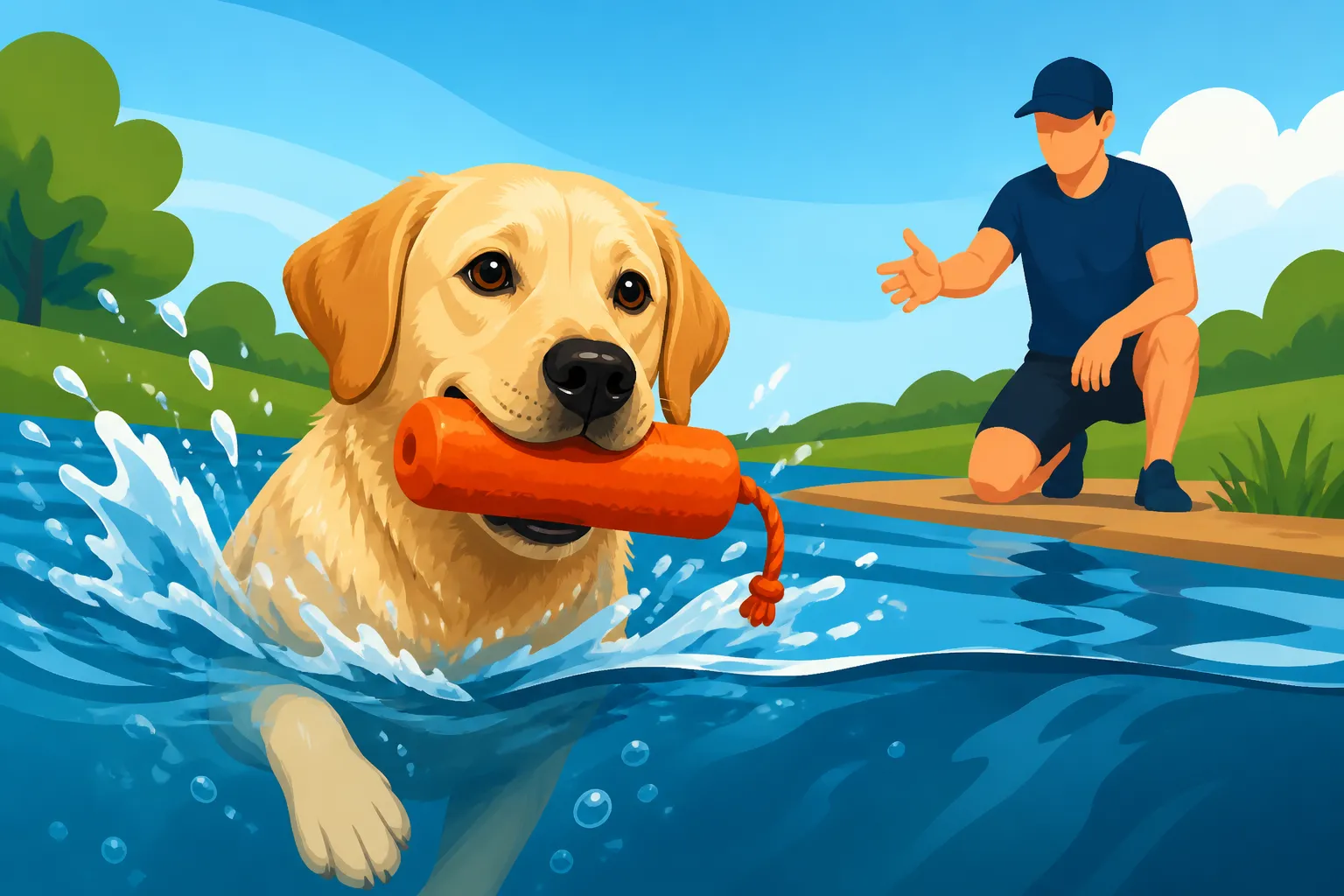
Begin by tossing a floating toy a short distance, perhaps 5-10 feet, into the water from the shore. The key is to make sure your Lab sees where it lands. Give a clear "fetch" or "retrieve" command, and enthusiastically encourage them to go get it. As they paddle out and grab the toy, offer verbal praise. When they return, have a treat ready at the water's edge and ask for a "drop it" before rewarding them. This reinforces both the retrieve and good manners. Consistency is important here; always ask for the drop and offer a reward. This positive reinforcement, often taught using methods like those from BAXTER & Bella, will solidify the behavior. Keep these initial retrieves short and sweet, ensuring success every time. You want them to feel like a champion retriever!
Gradually Increasing Distance and Depth
As your Labrador gains confidence and stamina, you can slowly start to increase the challenge of the retrieve. This is where their natural athleticism really starts to shine.
Extend the distance you throw the toy, making them swim further. You can also move into slightly deeper water, so they have to truly swim rather than just wading. This isn't about exhausting them, but about building their endurance and enjoyment. Pay close attention to their body language. Are they still eager? Are their tails wagging? Are they returning quickly? If you notice them slowing down or appearing less enthusiastic, scale it back. Remember, short, positive sessions are always better than long, tiring ones. You might even consider having two identical floating toys. When they bring one back, you can immediately toss the second, creating a fluid game that keeps their interest high. For more ideas on keeping your Lab engaged, check out Mental Work for a Bored Labrador and How Much Fetch a Labrador Actually Needs.
Choosing the Right Retrieving Toys
Not all toys are created equal when it comes to water retrieving, and having the right gear makes a difference for both safety and enjoyment.
You'll want toys that are highly visible, brightly colored, and, most importantly, buoyant. Tennis balls, while popular, tend to sink after a while or become waterlogged, which can be frustrating for a dog trying to retrieve. Purpose-built floating dummies or bumpers are fantastic. They are designed to float high on the water, making them easy for your Labrador to spot and grab. Look for durable materials that can withstand a Labrador's strong jaws. Brands available through retailers like Amazon often have great options specifically for water play. Ensure the size is appropriate for your dog to comfortably carry without being a choking hazard. Avoid anything that could become waterlogged and heavy, or toys with small parts that could break off.
Advanced Water Work and Safety Considerations
Once your Labrador is a confident swimmer and loves retrieving from the water, you can explore more advanced activities. But remember, with greater enjoyment comes a greater responsibility for safety.
Moving to Deeper Water and Longer Swims
As your Lab's confidence and stamina grow, they might naturally start venturing into deeper water or enjoying longer swims. This is a wonderful stage, but it requires continued vigilance.
Always ensure you're in a safe area free from strong currents, heavy boat traffic, or unseen hazards below the surface. A good rule of thumb is if you wouldn't feel safe swimming there, your dog shouldn't either. Continuously monitor your Labrador for signs of fatigue. Even the strongest swimmers can get tired, especially if they're particularly enthusiastic. A life jacket remains a wise choice for extended swims, providing that extra bit of support and visibility. Remember that swimming is a fantastic full-body workout for Labs, but it can be strenuous. Balance longer swims with rest periods to prevent over-exertion.
Incorporating Obedience in Water Retrieves
Just like on land, reinforcing obedience commands in the water is essential for safety and control. A well-behaved dog is a safe dog, especially near open water.
Practice commands like "stay" before sending them for a retrieve, "come" if they stray too far, and "drop it" when they return with the toy. Consistency is key here. Make sure they know that bringing the item back to you is the most rewarding part of the game. Using a long line initially, even with a confident swimmer, can help reinforce these commands in a new environment. If you're working with a positive reinforcement trainer, they can offer specific techniques for perfecting water obedience. Programs like BAXTER & Bella often provide modules that can be adapted for working in distracting environments like lakes and rivers, reinforcing solid communication between you and your dog.
Water Safety Beyond the First Swim
Water activities come with a unique set of safety concerns that every Labrador owner should be aware of, especially those whose dogs are avid swimmers.
Always be mindful of water quality. Avoid stagnant water, water with visible algae blooms (especially blue-green algae, which can be toxic), or areas with known pollution. After any swim, especially in natural bodies of water, a thorough rinse is crucial. This removes any potential irritants, bacteria, or chemicals from their coat. Pay particular attention to their ears; Labradors are prone to ear infections due to their floppy ears trapping moisture. Gently cleaning and drying their ears after every swim, as outlined in Drying a Labrador's Ears After the Lake, is vital. Also, be aware of the weather. On hot days, even water can lead to overheating, so watch for Signs of Heatstroke in a Labrador and ensure they have access to fresh drinking water. Never let your dog drink from natural bodies of water as they can contain parasites or harmful bacteria.
Common Challenges and Troubleshooting
Even with the best intentions and preparations, you might hit a few bumps in the road. It's okay! Understanding common challenges and how to address them can help you stay positive and persistent.
Overcoming Fear or Refusal
If your Labrador still seems genuinely scared or just flat-out refuses to enter the water, it can be frustrating, but patience is your superpower here.
Revisit the basics. Go back to super shallow water, even just a damp patch, and make it a treat party. Don't pressure them. If they won't even go near the paddling pool, try spraying a toy with a hose and letting them play with the wet toy on dry land. Associate the idea of water with fun. Sometimes, having another confident, well-behaved dog (who is a strong swimmer) can act as a fantastic role model. Your Lab might watch and eventually, if given the space and time, decide to join in. If deep-seated fear persists despite all your gentle efforts, don't hesitate to consult with a professional dog trainer specializing in positive reinforcement. They can offer tailored strategies and help identify underlying issues. Learning how to select the right professional can be found in Choosing a Trainer for a Labrador.
Preventing Over-Exertion and Injury
Labradors, especially young ones, sometimes have more enthusiasm than good sense when it comes to exercise. This means you, as their owner, need to be their responsible लिमिट-setter.
Swimming is excellent exercise, but it can be surprisingly tiring. Over-exertion can lead to muscle strains, exhaustion, or even more serious issues like "limber tail" (a painful condition affecting the base of the tail, often seen after intense swimming in cold water). Always start with short sessions and gradually increase duration and intensity. Watch for signs of fatigue: excessive panting, lagging behind, or a drooping tail. Ensure a good warm-up on land before diving in and a cool-down period afterward. If your Labrador has any pre-existing joint conditions, like those discussed in Labrador Hip and Elbow Dysplasia, consult your vet before extensive swimming to ensure it's a safe form of exercise for them.
Dealing with Environmental Concerns
Natural environments, while beautiful, come with their own set of potential hazards that you need to be aware of to keep your swimming Labrador safe.
- Algae and Water Quality: As mentioned, avoid green, scummy water. If the water looks murky or has a strong odor, it's best to find another spot.
- Currents and Undertows: Lakes, rivers, and oceans can have powerful currents. Always assess the water movement. If it looks strong, keep your Lab on a leash or out of the water entirely.
- Debris and Sharp Objects: Before letting your dog swim, quickly scan the entry area for broken glass, sharp rocks, fishing hooks, or other dangerous debris that could injure their paws or body.
- Water Temperature: While Labs have a double coat, extremely cold water can still cause hypothermia, especially for prolonged exposure. Conversely, very warm water (especially in stagnant ponds) can harbor more bacteria.
- Wildlife: Be aware of local wildlife, like snakes, alligators, or even aggressive waterfowl, that might pose a threat.
Being vigilant about these environmental factors ensures that every water adventure remains a happy and safe one for your beloved Labrador.
| Safety Gear Item | Purpose | Key Features to Look For | When to Use It |
|---|---|---|---|
| Dog Life Jacket | Buoyancy, fatigue reduction, easy retrieval | Bright colors, sturdy handle, adjustable straps, good fit | All new swimmers, open water, long swims, boating |
| Long Line | Control, confidence, recall practice | Lightweight, waterproof material, secure clip, appropriate length | Exploring new water, training recall, hesitant swimmers |
| Floating Toys | Motivation, focal point, fun | High visibility, durable, buoyant (not just water-resistant) | Every water session, especially initial introductions and retrieves |
| Waterproof Treats | Positive reinforcement, reward system | Small, high-value, easy to chew, doesn't dissolve quickly | Any time you want to reward positive interaction with water |
| Ear Cleaner/Wipes | Prevent infections | Vet-approved formula, gentle | Immediately after every swim, especially in natural water |
Disclaimer
This article is for general informational purposes only and does not constitute professional advice. Laws, prices and regulations vary by location and change over time. Consult a qualified professional for guidance on your specific situation.