How Long a Labrador Puppy Can Concentrate
It's incredibly frustrating when you're trying to teach your enthusiastic Labrador puppy something new, only for their attention to vanish quicker than a treat in their mouth. Many new puppy parents mistake this short attention span for naughtiness or stubbornness, but the truth is, a puppy's brain isn't built for long stretches of focus. This guide will walk you through the realities of your Labrador puppy's concentration levels, why they're so short, and how you can structure training and daily interactions to make the most of their fleeting focus.
Understanding Your Labrador Puppy's Developing Brain
Bringing home a Labrador puppy is an absolute joy, but it also means bringing home a tiny, wiggly sponge with a brain that's still very much under construction. Expecting a young pup to have the focus of a seasoned working dog is simply unrealistic, and it can lead to frustration for both of you. Their world is new, exciting, and full of captivating smells, sounds, and sights, all competing for their limited attention.
The Stages of Puppy Brain Development
Just like human toddlers, Labrador puppies go through rapid phases of brain development. In their earliest weeks, their world is primarily about survival, comfort, and bonding with their mother and littermates. When they come home with you, usually around 8 weeks, they're entering a critical socialization period where they're absorbing everything around them like crazy. This intense learning is happening, but it's often fragmented and driven by immediate stimuli.
Their little brains are literally building connections, and this takes immense energy. They're learning what the world is, what's safe, what's fun, and what you expect of them. It’s a huge undertaking! During these early months, their capacity for sustained focus is incredibly small because their brains are prioritizing observation, exploration, and rapid processing of new experiences over deep, prolonged concentration on a single task. Think of it like a computer with lots of programs running in the background; there's just not much RAM left for a demanding new application. This is why short, frequent sessions are key, as discussed in Short Training Sessions That Suit a Labrador.
Why Labradors Have Short Attention Spans (It's Normal!)
Labrador puppies, while intelligent and eager to please, are also notoriously energetic and curious. Their breed history as retrieving dogs means they have a strong drive to explore, pick things up, and be active. This inherent drive, coupled with their young age, naturally translates to a short attention span. They haven't yet learned to filter out distractions or to self-regulate their excitement.
Imagine trying to concentrate on a math problem while a party is happening around you. That's a bit like what it's like for a puppy. A falling leaf, a bird chirping outside, the distant sound of a car, or even an itchy ear can completely derail a training session. It's not that they're trying to ignore you; it's that their brains are wired to react to novelty and stimulation. A two-month-old Labrador puppy might only be able to genuinely focus on a single task for a minute or two, sometimes even less, before their mind wanders. This isn't a sign of a "bad" puppy; it's a completely normal part of being a young, developing creature.
How to Measure and Maximize a Labrador Puppy's Concentration
You're probably wondering, "Okay, so what is the limit?" While every puppy is an individual, there are some general guidelines for how long you can expect a young Labrador to concentrate, and practical ways you can make the most of that limited window.
General Guidelines for Puppy Attention Span by Age
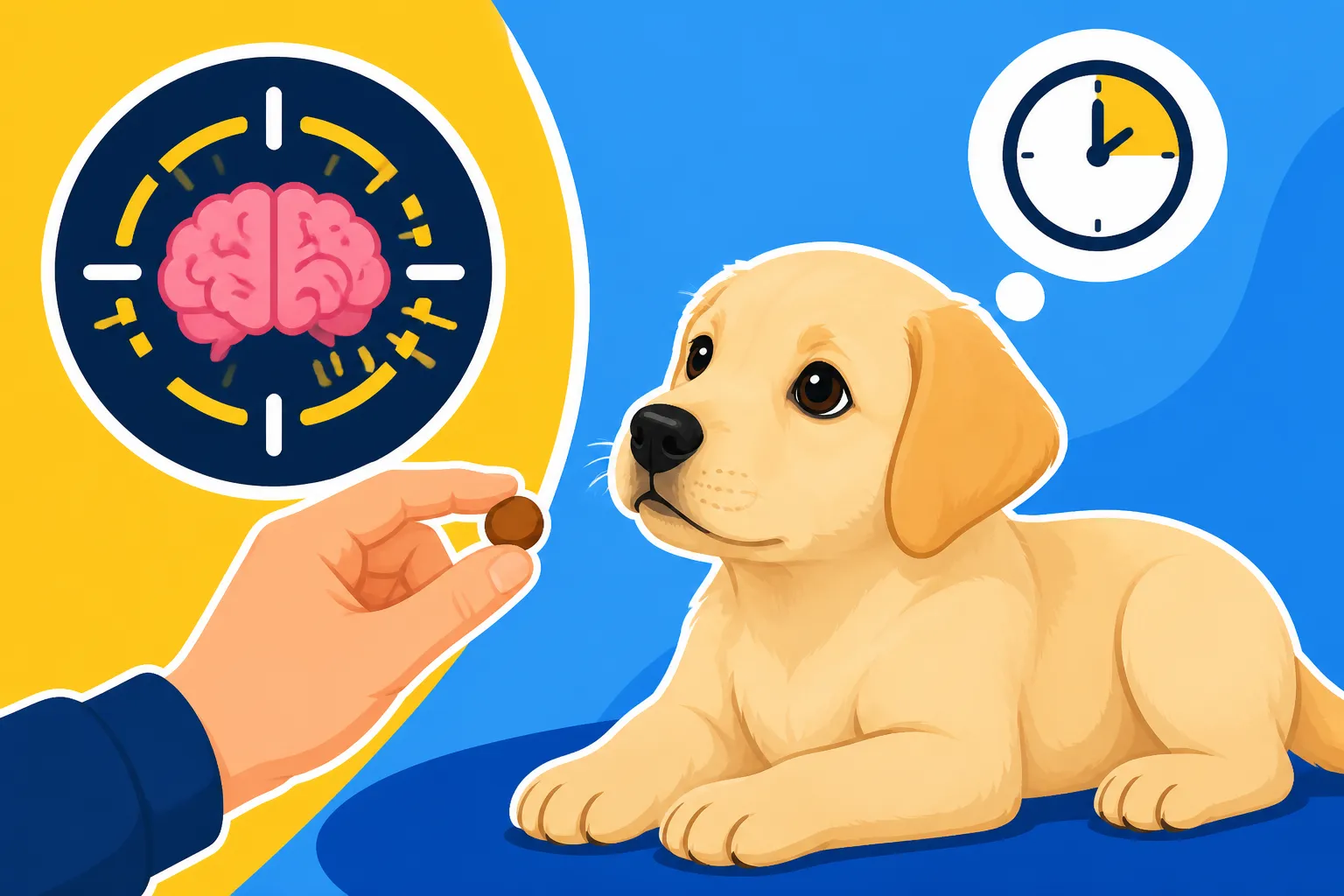
A good rule of thumb for many puppies, including Labradors, is one to two minutes of focused attention per month of age. This means:
- 8-week-old (2-month) puppy: 2-4 minutes
- 12-week-old (3-month) puppy: 3-6 minutes
- 16-week-old (4-month) puppy: 4-8 minutes
These aren't hard and fast rules, but rather a starting point. Some puppies might have slightly longer or shorter bursts of focus. What's crucial is understanding that these are maximums for a single, focused activity. You're not aiming for a 20-minute training session with a 10-week-old puppy; you're aiming for multiple, super-short, engaging sessions throughout the day. This philosophy is perfectly captured in Why Five Minute Sessions Work on a Labrador.
Here's a quick look at how attention span generally progresses:
| Age of Labrador Puppy | Typical Maximum Focused Attention | Best Training Approach |
|---|---|---|
| 8-10 Weeks | 1-3 minutes | Super short, high-value rewards, minimal distractions |
| 10-16 Weeks | 2-5 minutes | Short, frequent sessions, varying locations, introduce mild distractions |
| 4-6 Months | 5-10 minutes | Building duration, proofing commands in new environments, still keeping it fun |
| 6-12 Months | 10-20 minutes | Longer sessions, more complex tasks, focus on consistency, managing adolescence |
The Power of Short, Frequent Training Sessions
Given these short attention spans, the most effective way to train your Labrador puppy is through short, frequent sessions. Instead of one long 15-minute session, aim for five 3-minute sessions scattered throughout the day. This allows their brain to absorb information without getting overwhelmed or bored. It prevents them from hitting a wall where their concentration completely dissipates and they start making mistakes out of frustration or disinterest.
These short bursts capitalize on their natural curiosity and desire for interaction. They also keep things exciting! When a training session is always short, sweet, and ends on a high note, your puppy is more likely to eagerly anticipate the next one. This builds a positive association with learning and with you. Many online training platforms, like those offered by BAXTER & Bella, structure their programs around these very principles, making it easy for busy owners to fit in quick, effective lessons.
Practical Strategies for Effective Training Sessions
Knowing their limits is one thing, but actually implementing strategies to work with their short attention span is another. It's about being smart, patient, and making learning the most exciting thing in their world, even if only for a few minutes at a time.
Setting Up for Success: Environment and Timing
The environment plays a massive role in a puppy's ability to concentrate. When you first start training, choose a quiet space with minimal distractions. This could be a specific room in your house, or even just a corner of the living room away from high-traffic areas. As your puppy matures and their focus improves, you can gradually introduce more distracting environments, but start simple. A noisy park or a busy household with kids and other pets is not the place for a 10-week-old to learn "sit."
Timing is also critical. Don't try to train your puppy when they're overly tired, overly excited, or have just woken up from a nap. The sweet spot is usually after they've had a potty break and a bit of energy-burning play, but before they're completely exhausted. A puppy who's had their immediate needs met (potty, play, maybe a small drink of water) is more likely to offer you a few moments of focus. This also ties into building a Potty Training Schedule for a Labrador Puppy.
Engaging Your Puppy with High-Value Rewards and Enthusiasm
Labradors are famously food-motivated, which is a huge advantage in training! Use high-value treats – something truly irresistible that they don't get at any other time. Small pieces of cooked chicken, cheese, or specialized training treats from brands you can find on Amazon can work wonders. The treat itself needs to be tiny so you can deliver many repetitions without overfeeding your pup.
Beyond food, your enthusiasm is a powerful motivator. Use a cheerful, upbeat tone of voice, praise them lavishly, and celebrate their successes, even tiny ones, like they've just won the lottery. A happy "Yes!" followed by a delicious treat and a gentle pet makes a lasting impression. When you keep the energy positive and the rewards flowing, your puppy learns that engaging with you is incredibly rewarding. Read more on this in Treats That Motivate a Food-Driven Labrador.
Breaking Down Complex Behaviors into Tiny Steps
Instead of trying to teach your puppy to "stay" for a minute right away, break it down. First, teach "sit" (even for a second!). Then, ask for a "sit" and take one step back, return, and reward. Build duration and distance incrementally. Each tiny step, no matter how small, counts as a win. This is how you gently extend their ability to concentrate without pushing them past their limits.
For example, when teaching recall, you wouldn't start by letting them off-leash in a wide-open field. You'd begin in a hallway, call their name, reward them for turning, then for taking a step towards you, then for coming all the way. These small, achievable goals prevent frustration and keep your puppy engaged and successful. This methodical approach is key to building a strong Building a Labrador's Recall From Scratch.
Recognizing the Signs of a Fading Attention Span
One of the most important skills you can develop as a puppy owner is learning to read your dog. Your Labrador puppy will give you clear signals when their concentration is waning. Ignoring these signals and pushing them further will only lead to frustration, disengagement, and potentially, unwanted behaviors.
Common Indicators Your Puppy is Losing Focus
When your Labrador puppy starts to lose focus, you might notice a few things:
- Looking away frequently: Their eyes might dart around the room, or they might stare into space, seemingly ignoring you and the task at hand.
- Sniffing the ground: This is a classic "I'm checking out" behavior. The ground suddenly becomes far more interesting than your exciting training game.
- Mouthing or nipping: A puppy might start to mouth your hands or clothes, not out of aggression, but because they're overstimulated, bored, or trying to redirect their energy. This is distinct from regular Labrador Puppy Mouthing and How to Redirect It.
- Wandering off: They might simply walk away from the training area, even if you're holding a treat.
- Performing old behaviors incorrectly: A puppy who usually aces "sit" might suddenly offer a down, or refuse to sit at all, not because they've forgotten, but because their brain isn't fully processing your cues.
- Exaggerated yawning or lip licking: While these can sometimes be signs of stress, they can also indicate a puppy who is mentally fatigued and trying to self-soothe or signal they need a break.
If you see these signs, it's time to end the session.
The Difference Between Disinterest and Being Overwhelmed
It's important to distinguish between a puppy who is simply losing interest because the session is too long or boring, and one who is truly overwhelmed.
- Disinterest: This often manifests as mild wandering, sniffing, or slow responses. The puppy isn't distressed, just checked out. This means you need to shorten sessions, increase the value of rewards, or make the game more exciting next time.
- Overwhelmed: A puppy who is overwhelmed might show more pronounced stress signals: excessive panting, frantic pacing, persistent whining, trying to hide, or even an increase in "zoomies" as they try to release built-up energy and stress. If your puppy looks stressed, immediately stop the session, offer comfort, and give them a quiet space to decompress. Pushing an overwhelmed puppy can be detrimental to their confidence and your relationship.
Always aim to end every training session on a positive note. Even if your puppy only performed one successful "sit" during a brief window of attention, celebrate that success. It ensures they associate training with fun and achievement, rather than frustration or confusion. This will set them up for a lifetime of eager learning, even if their attention span starts small!
Disclaimer
This article is for general informational purposes only and does not constitute professional advice. Laws, prices and regulations vary by location and change over time. Consult a qualified professional for guidance on your specific situation.