Labrador Recall Around Birds and Wildlife
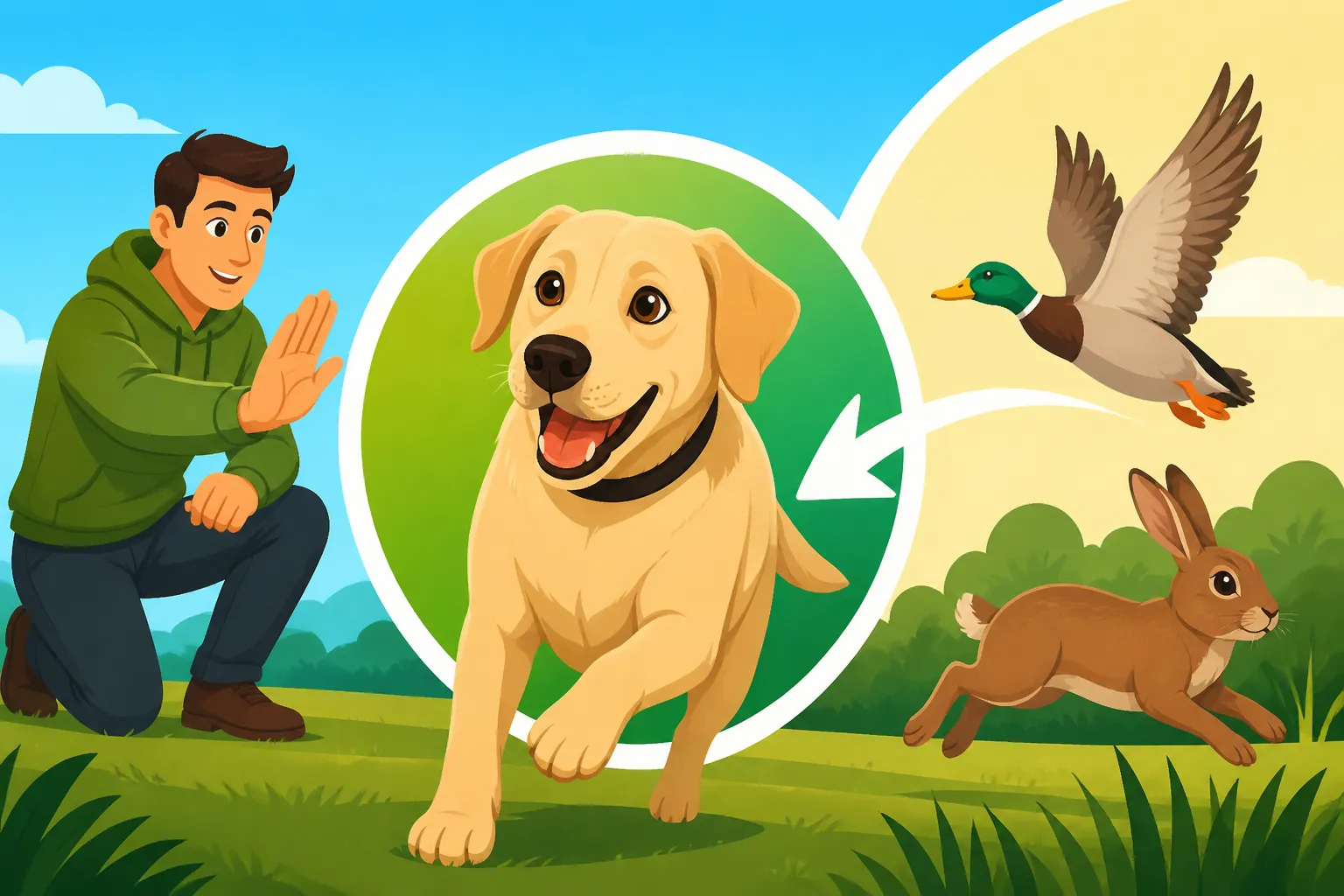
It’s a classic Labrador owner dilemma: you’re out enjoying a beautiful walk, maybe at the local park or a quiet nature trail, when suddenly a flock of geese lands, a squirrel darts across the path, or a deer prances into view. In that instant, your perfectly behaved, loving Labrador transforms into a laser-focused hunting machine, utterly deaf to your frantic calls. The sheer frustration, and sometimes sheer panic, of calling your Labrador’s name repeatedly only to be completely ignored is something many of us know all too well. This guide is here to walk you through understanding why your Labrador seems to forget everything you’ve taught them around birds and wildlife, and, more importantly, how to build a recall so strong that even the most tempting distraction struggles to break it.
Understanding the Powerful Drive Behind Your Labrador's Distraction
When your Labrador ignores you for a bird, it's not personal, nor is it defiance. It's a complex interplay of their inherent breed traits, deeply ingrained instincts, and the incredible reward they perceive from interacting with wildlife. We often feel hurt or frustrated, wondering why our otherwise obedient companions suddenly lose their minds, but a deeper look at what makes a Labrador a Labrador can offer some clarity and, ultimately, help us strategize better.
The Deep-Seated Instinct to Chase
Let's be honest, Labradors were bred for a job, and that job involved a keen interest in birds and game. While their primary role was retrieving fallen game for hunters, the line between retrieving and pursuing can get blurry when instinct kicks in. They have an innate prey drive, a hardwired inclination to detect, stalk, chase, and sometimes capture small, fast-moving objects or creatures. This isn't naughtiness or a deliberate act of disobedience on their part; it’s a powerful, primal urge that evolved over centuries. Imagine being offered your absolute favorite meal after a long fast – that’s akin to how a strong prey drive feels to a Labrador when a squirrel bolts or a bird takes flight. It's a fundamental part of Whether Labradors Have Strong Prey Drive, and acknowledging it is the first step towards effective training.
This strong drive means that simply expecting them to ignore a fluttering bird or a scurrying rabbit without significant training is often unrealistic. It’s like asking a child to ignore their favorite cartoon character jumping out of the screen right in front of them – it requires an immense amount of self-control. Your Labrador’s entire genetic makeup screams "chase!" in those moments, and it takes a lot of careful conditioning to teach them that your voice is more compelling than that ancient whisper of the wild.
What makes it even more challenging is that Labradors are highly intelligent and quick learners. Unfortunately, they can learn the wrong lessons just as quickly as the right ones. Every successful chase, even if it's just for a few seconds before the squirrel vanishes up a tree, is a self-rewarding experience. The sheer joy and exhilaration of the pursuit act as an incredibly potent positive reinforcement. This means that if they repeatedly get the chance to indulge this instinct without consequence, that behavior becomes deeply ingrained and incredibly hard to interrupt with a mere "come!" command.
Why Wildlife is More Rewarding Than Your Voice
Consider this from your Labrador’s perspective: on one hand, there’s you, perhaps standing at a distance, calling their name with varying degrees of urgency. On the other hand, there’s a real, live, flapping, chirping, or scurrying creature that triggers every hunting instinct they possess. The scent, the movement, the sound – it's an explosion of sensory input that promises an immediate, intense, and deeply satisfying experience. The thrill of the chase, the rush of adrenaline, and the pure, unadulterated excitement of engaging with wildlife are often far more rewarding in that split second than any treat you could offer or any praise you could give.
When a Labrador successfully gives in to the urge to chase, even if they don't catch anything, the act itself is intensely gratifying. The internal reward system lights up like a Christmas tree, reinforcing the idea that chasing is a highly desirable activity. This makes your job of being the "bigger" reward incredibly difficult. You’re not just competing with a bird; you’re competing with a lifetime of evolutionary programming and immediate, visceral gratification. This is precisely why our training needs to be meticulously designed to make coming back to us even more exciting and consistently rewarding than the chase itself.
It's also worth noting that the novelty and unpredictability of wildlife often amplify its appeal. A squeaky toy might be fun, but it's predictable. A squirrel, however, offers an element of surprise and challenge that can be intoxicating to a dog with a strong prey drive. Each encounter is a unique adventure, and your Labrador is hardwired to seek out and engage with these types of stimulating experiences. Our task then becomes transforming our recall command into an equally stimulating, consistent, and irresistibly rewarding event that trumps the fleeting excitement of an unplanned chase.
Overwhelmed by Sensory Input
Labradors, like many dogs, are highly attuned to their environment. Their senses of smell and hearing are exponentially more powerful than ours, allowing them to detect wildlife long before we even see it. A sudden movement, a faint rustle, or a distinct scent can instantly capture their attention and switch them into "hunt" mode. In these moments, their brain's focus narrows dramatically, and peripheral information, including your voice, can effectively be filtered out. They’re not being stubborn; they're genuinely overwhelmed by the intense sensory information related to the wildlife, making it incredibly difficult for them to process your command.
Imagine trying to have a conversation with someone while a fire alarm is blaring in the background – it's nearly impossible to focus on their words. For your Labrador, the sudden appearance of a bird might be just as disruptive to their ability to hear and respond to your voice. Their instinctual response can be so powerful that it overrides any learned behavior, especially if that learned behavior (coming when called) hasn't been practiced extensively and rewarded consistently under similar levels of distraction.
This sensory overload explains why sometimes your Labrador might even appear confused or "snapped out of it" a few moments after the wildlife has disappeared. It’s as if their brain had temporarily rebooted. Understanding this helps us approach training with more empathy and strategic planning. We can't just expect them to ignore these powerful stimuli; we need to teach them how to redirect their focus and attention back to us, even when their environment is shouting a different message. This means gradually building up their tolerance to distractions and making your presence and commands the most reliable and rewarding elements in their world, no matter what else is happening.
Building a Foundation of Irresistible Recall (Before the Distractions)
Before you can even dream of your Labrador ignoring a flock of pigeons, you need to ensure their recall is absolutely rock-solid in less distracting environments. Think of it like building a house: you wouldn't start with the roof before laying a strong foundation. This foundational work is often overlooked, but it's the key to success when the real-world challenges arise.
Making Recall the Most Exciting Game Ever
The first step to a bulletproof recall is making it the most fun, exciting, and rewarding thing your Labrador can possibly do. Forget polite invitations; you want to make coming to you a party! Start in a completely distraction-free environment, like your living room or a securely fenced backyard. When you call your Labrador's name, use a cheerful, enthusiastic tone, then immediately pair it with an action that makes them want to come closer. As they approach, celebrate with huge praise, a rapid-fire succession of their absolute favorite high-value treats, or a quick game with their most loved toy. This isn't about simply handing over a piece of kibble; it's about creating a joyous, unforgettable experience every single time.
Vary your rewards to keep things unpredictable and exciting. One time it might be five tiny pieces of hot dog, the next it might be a quick tug-of-war game, then a handful of cheese. The goal is to make your Labrador think, "Wow, what amazing thing is going to happen if I go to my human right now?" Avoid using your recall cue for anything unpleasant, like nail trims or leaving the park, as this can quickly erode the positive association you're trying to build. Remember that Treats That Motivate a Food-Driven Labrador are your best friend here, especially when building initial enthusiasm. If you’re looking for structured guidance on making training engaging, online resources like those from BAXTER & Bella can provide excellent step-by-step programs focused on positive reinforcement and making training a truly fun experience for both you and your dog.
Consistency is paramount. Everyone in the household needs to be on the same page, using the same command and rewarding the same way. Practice short, frequent recall sessions throughout the day, even when your Labrador is right next to you. Call them, reward them, then release them to go back to what they were doing. This builds a strong habit and prevents the recall command from becoming associated only with ending fun. The more positive experiences they have with recall, the stronger that positive association becomes, laying the groundwork for more challenging situations.
The Power of the Long Line and Controlled Exposure
Once you've established a strong, enthusiastic recall in low-distraction environments, it's time to introduce the long line. This is a non-negotiable tool for building reliable recall around distractions. A long line, typically 15 to 30 feet long, allows your Labrador some freedom to explore while still giving you control to enforce the recall command. You can easily find these on platforms like Amazon, and they are truly a game-changer for safe training. The key is to let the line drag, allowing your dog to feel a sense of independence, but always being ready to step on it or gently guide them back if they don't respond to your call. Long Line Work to Build Labrador Recall is essential because it bridges the gap between a fenced yard and an off-leash scenario.
With the long line, start practicing in areas with very minor distractions – maybe a park during off-peak hours where other people or dogs are distant, or a quiet field. The moment your Labrador starts to wander or sniff something interesting, give your recall command. If they come immediately, great! Reward heavily. If they hesitate or start to drift towards a distraction, gently but firmly guide them back with the long line while repeating your command. The line isn't there to yank them around, but to prevent them from practicing ignoring you. The goal is to ensure they never get the chance to self-reward by chasing something while ignoring your call.
This method allows you to control the environment and your Labrador’s success. Each successful recall, even when gently guided by the long line, reinforces the idea that "come" means "good things happen with my human." This controlled exposure gradually teaches your Labrador to make the choice to return to you, even when there are tempting things in the environment. It also teaches them that you are still in control, even when they feel a sense of freedom. Remember, the long line is a training tool, not a permanent substitute for a leash.
Consistency, Timing, and Reward Placement
Building a bulletproof recall isn't just about calling your dog; it's about flawless execution on your part. Consistency is key across all aspects of training. Use the same, clear recall word every time. Everyone who interacts with your Labrador needs to use the same command and reward system. If one person lets your Labrador get away with ignoring a recall, it undermines all the hard work everyone else is putting in. This often means having a family meeting about training protocols and making sure everyone understands the importance of not inadvertently rewarding non-compliance.
Timing is absolutely crucial. When your Labrador comes to you, the reward must be delivered immediately – within a second or two. If there's a delay, your Labrador might not associate the reward with the act of coming, but rather with whatever they were doing just before they got the treat. This means having your high-value treats readily accessible at all times during training sessions. Keep them in a pouch, pocket, or easily accessible container so you’re never fumbling around. The precision of your timing directly impacts how quickly and effectively your Labrador learns.
Finally, consider reward placement. When your Labrador reaches you, don't just toss the treat at them. Use the treat to reinforce their position right in front of you, or even better, have them touch your hand with their nose. This reinforces staying close and attentive once they’ve arrived. As your Labrador gets more reliable, you can start to phase out the visible food reward and introduce other types of rewards, like enthusiastic praise, a quick game of tug, or the chance to go sniff something interesting after they've checked in with you. This process, often called Fading Food Rewards With a Labrador, is critical for moving beyond needing a treat every single time, though high-value treats will always be useful for high-distraction scenarios.
Strategies for Training Recall Around Birds and Wildlife
Now that you've got a solid recall foundation in place, it's time to tackle the big guns: actual birds and wildlife. This stage requires patience, vigilance, and a methodical approach. You’re essentially teaching your Labrador to override a very strong instinct, and that doesn't happen overnight or with a single training session.
Gradual Introduction of Distractions
The mistake many owners make is going from a distraction-free backyard straight to a duck-filled pond and expecting success. Instead, you need a ladder of distractions, slowly increasing the challenge. Start by going to places where wildlife is present but distant and unmoving. Perhaps a park where you often see pigeons perched far away, or a field where you know squirrels might be active on distant trees, but not darting right in front of you. Always, always, always use your long line during these sessions.
The moment you see your Labrador notice the wildlife – before they're fully engaged and charging – give your recall command with enthusiasm. If they turn to you, celebrate like they've just won the lottery and reward them with the highest value treat you have. If they hesitate or start to pull towards the distraction, gently reel them in with the long line, still using your cheerful recall word, and reward them enthusiastically when they reach you. The key here is prevention: don't let them practice ignoring you or get the self-reward of chasing. Every time they turn away from the distraction to come to you, they are building a new, positive association.
As your Labrador consistently succeeds at this level, you can gradually decrease the distance to the wildlife or increase the level of activity. For example, move from static pigeons to pigeons walking, then perhaps to a few pigeons taking a short flight. Never set them up for failure by putting them in a situation where the distraction is so overwhelming that they simply can't respond. This gradual process teaches them that no matter what cool things are out there, coming to you is always the better, more rewarding choice.
The "Engage-Disengage" Method
This strategy focuses on teaching your Labrador that seeing wildlife is okay, but engaging with it (by chasing) is not. Instead, they should disengage from the wildlife and re-engage with you. It's a powerful way to leverage Using a Labrador's Food Drive as Leverage in a challenging context. Using your long line, allow your Labrador to notice a bird or squirrel at a distance. Let them look, maybe even get a little excited, but before they launch into a full chase, call their name and your recall command.
The moment they turn even an inch towards you, mark that behavior (with a clicker or a verbal marker like "yes!") and immediately reward them with an incredibly high-value treat. If they ignore you, gently use the long line to turn them towards you and reward the instant they start moving in your direction. The goal is to teach them that the sight of a bird means "Look at bird, then look at human for super awesome treat!" rather than "Look at bird, then chase bird." This fundamentally changes the association in their mind.
This method effectively makes you the gateway to a better reward. While the chase is inherently rewarding, you are introducing an even more rewarding outcome for choosing you. Think of it as: "Oh, there's a squirrel! That means if I turn to Mom/Dad, I get cheese!" This powerful association helps to rewire their instinctual response. Over time, they learn that while wildlife is interesting, you hold the key to an even better experience.
Teaching a "Leave It" or "Watch Me" Command
Beyond just recall, two other commands are invaluable when dealing with wildlife: "Leave It" and "Watch Me." These commands act as preventative measures, helping to interrupt your Labrador's focus on wildlife before it turns into a full-blown chase and a recall crisis.
The "Leave It" command teaches your Labrador to ignore tempting items on the ground or in the environment. Start practicing this indoors with low-value items, gradually increasing the temptation. Once they understand it, you can take it outside, practicing with dropped treats or non-moving objects. The ultimate goal is to apply it to static wildlife (e.g., a bird perched on a branch) or even wildlife at a distance. When you see your Labrador fixating on something, give a calm but firm "Leave It." If they disengage and look at you, reward them lavishly. This teaches them self-control and that ignoring temptations leads to good things from you.
The "Watch Me" or "Look" command teaches your Labrador to make eye contact with you on cue, regardless of what else is happening. This is immensely powerful for breaking their focus on a distraction. Start in quiet environments, holding a treat near your eye and saying "Watch Me." The instant they make eye contact, mark and reward. Gradually increase the duration of eye contact and introduce minor distractions. When you're out and about and you spot wildlife before your dog does, or if they start to become too focused, a reliable "Watch Me" can redirect their attention back to you, giving you a chance to then either recall them or calmly walk past the distraction. Incorporating these commands as part of their general Training a Labrador From Puppy to Adult is crucial for overall obedience and safety.
Managing Expectations and Environment for Success
It's important to be realistic about your Labrador's recall around birds and wildlife. While you can significantly improve it, some Labradors, due to their intense prey drive, may never be 100% reliable in every single high-distraction scenario. Your ultimate goal should be safety and consistent effort, not perfection.
Knowing When Not to Trust Off-Leash
This is perhaps the most important realization for many Labrador owners. There will be environments where, for your dog's safety and the safety of wildlife, your Labrador should not be off-leash. This might be certain nature preserves, areas known for high wildlife activity, or simply places with unpredictable variables. Knowing When a Labrador Can Be Trusted Off Leash is a judgment call that you must make based on your dog's individual temperament, your training consistency, and the specific environment. When in doubt, keep them on a leash or a long line. It's far better to prevent a potential disaster than to regret it afterward.
Even with excellent training, a sudden, unexpected flush of birds or a deer bolting across a field can trigger an involuntary, instinctual response in even the most well-trained Labrador. By keeping them leashed in these situations, you remove the opportunity for them to practice ignoring you and to potentially harm themselves or wildlife. Consider using a hands-free leash that clips around your waist for comfortable walking while maintaining control. This allows you to still enjoy the outdoors together without the constant anxiety of a potential bolt.
Furthermore, recognize that your Labrador's energy levels and mental state can influence their recall reliability. A highly stimulated or under-exercised Labrador might be more prone to bolting. Ensure your dog is getting enough appropriate exercise and mental stimulation. For example, engaging in structured activities like How Much Fetch a Labrador Actually Needs in a safe, enclosed area can help satisfy their retrieving drive without the risks of off-leash excursions in tempting environments.
Preventing Self-Rewarding Chases
Every time your Labrador successfully chases a bird, even if they don't catch it, they get a huge dopamine hit. This self-reward reinforces the behavior, making it harder to interrupt next time. The single most effective way to improve recall around wildlife is to prevent your Labrador from ever getting the chance to complete a chase while ignoring your command. This means being proactive and vigilant. If you see wildlife first, interrupt your dog's focus immediately with a "Watch Me" or a strong recall, or physically remove them from the situation.
This might involve changing your walking routes, choosing less stimulating times of day, or seeking out securely fenced dog parks for off-leash exercise. If you know a particular area is teeming with squirrels, either avoid it or keep your Labrador on a short leash and use it as a training opportunity for "Leave It." The goal is to build a history of successful recalls and unsuccessful chases when you've given a command. This teaches your Labrador that chasing while ignoring you doesn't pay off, but coming to you always does.
Consider implementing a "check-in" habit. When walking in an area where your Labrador has some freedom, periodically call their name for a quick check-in and reward, even if there are no distractions. This reinforces the habit of looking to you regularly and makes it less jarring when you need their attention for a real distraction. The more consistently you prevent the self-reward of chasing, the faster your Labrador will learn to prioritize your commands.
Mental Stimulation as an Alternative Outlet
A bored Labrador is often a Labrador looking for a job, and if you don't provide one, they'll find their own entertainment – which often involves chasing things! Labradors are intelligent working dogs and need more than just physical exercise; they need mental stimulation to truly thrive. Channeling their natural drive for scent and retrieve into structured, positive outlets can significantly reduce their urge to randomly chase wildlife. Engaging their minds can be just as tiring as a long walk, and sometimes even more so.
Consider incorporating scent work into your daily routine. Hide treats around the house or yard and encourage your Labrador to "find it." This taps into their incredible sense of smell, which is often stimulated by wildlife scents, but in a controlled, rewarding way. Puzzle feeders, which you can easily find on Amazon, are another fantastic way to engage their brains during meal times. Instead of just gulping down kibble, they have to work to get their food, which provides valuable mental enrichment. Puzzle Feeders That Slow a Greedy Labrador can also prevent them from eating too fast, which is a bonus.
Structured retrieve games, both on land and in water, can also satisfy their innate drive to carry and bring things back to you. This is their historical job! Playing fetch with specific rules, teaching them to retrieve different objects, or even introducing them to a flirt pole in a safe area can provide immense satisfaction. Look into concepts like Mental Work for a Bored Labrador to find a variety of engaging activities. By consistently providing engaging, constructive outlets for their natural instincts, you create a more fulfilled Labrador who is less likely to seek unauthorized "jobs" like chasing every bird they see.
| Distraction Level | Training Strategy | Key Tools | Example Scenario |
|---|---|---|---|
| Low | Basic Recall, Name Recognition, High-Value Rewards, Positive Reinforcement | Leash, High-Value Treats, Clicker | Backyard, Quiet room, Empty corridor indoors |
| Medium | Long Line Practice, "Engage-Disengage" Method, Short Leash Intervals | Long Line (e.g., from Amazon), Super High-Value Treats, Clicker | Park with distant people/dogs, Quiet walking path with occasional movement |
| High | "Leave It" with temptations, Gradual exposure to controlled wildlife-like objects, Remote lead (if using) | Long Line, Remote Lead (if professionally trained), Highest-Value Treats | Park with visible but distant birds, Nature trail with known squirrel spots (on leash) |
| Extreme | Strict Management, Avoidance, Focused Attention, Reinforcement of Proximity | Secure Leash (short), Harness, Focus Exercises, Muzzle (if necessary for safety or legal requirements) | Heavily populated wildlife areas, Untrained encounters, High-traffic trails with unpredictable wildlife |
Disclaimer
This article is for general informational purposes only and does not constitute professional advice. Laws, prices and regulations vary by location and change over time. Consult a qualified professional for guidance on your specific situation.