Using a Labrador’s Food Drive as Leverage
It's no secret that Labradors are famously food-motivated creatures, and sometimes it can feel like you're just a walking treat dispenser to them. This intense love for all things edible can be a real frustration when you're trying to keep them from counter-surfing or begging at the dinner table, but what if I told you that very same obsession is your greatest asset in training? This guide will show you how to effectively harness your Labrador's powerful food drive, turning it into a powerful lever for teaching good manners, advanced commands, and building a stronger bond.
Understanding Your Labrador's Deep-Seated Food Drive
If you've ever owned a Labrador, you know their love for food isn't just a casual fondness – it's practically a way of life. They live to eat, and often, eat to live! This isn't just a quirk; it's deeply ingrained in their genetics and their history as working dogs. Labradors were originally bred to work alongside fishermen, retrieving fish and nets from icy waters. Their survival depended on having a strong drive to work for rewards, and food was (and still is) a primary motivator.
The Genetic Component of Labrador Appetite
While all dogs appreciate a tasty treat, Labradors often take it to another level. We've even learned through scientific studies that many Labradors carry a specific gene mutation (in the POMC gene) that predisposes them to greater hunger and a higher likelihood of obesity. This isn't just them being "greedy"; it's a genuine biological difference that makes them feel less full and constantly on the lookout for their next meal. Understanding this genetic predisposition helps us approach training with more empathy and strategic thinking. It's not about punishing their natural inclination, but rather channeling it productively. Why a Quarter of Labradors Overeat by Genetics delves deeper into this fascinating aspect.
Food as a High-Value Reward
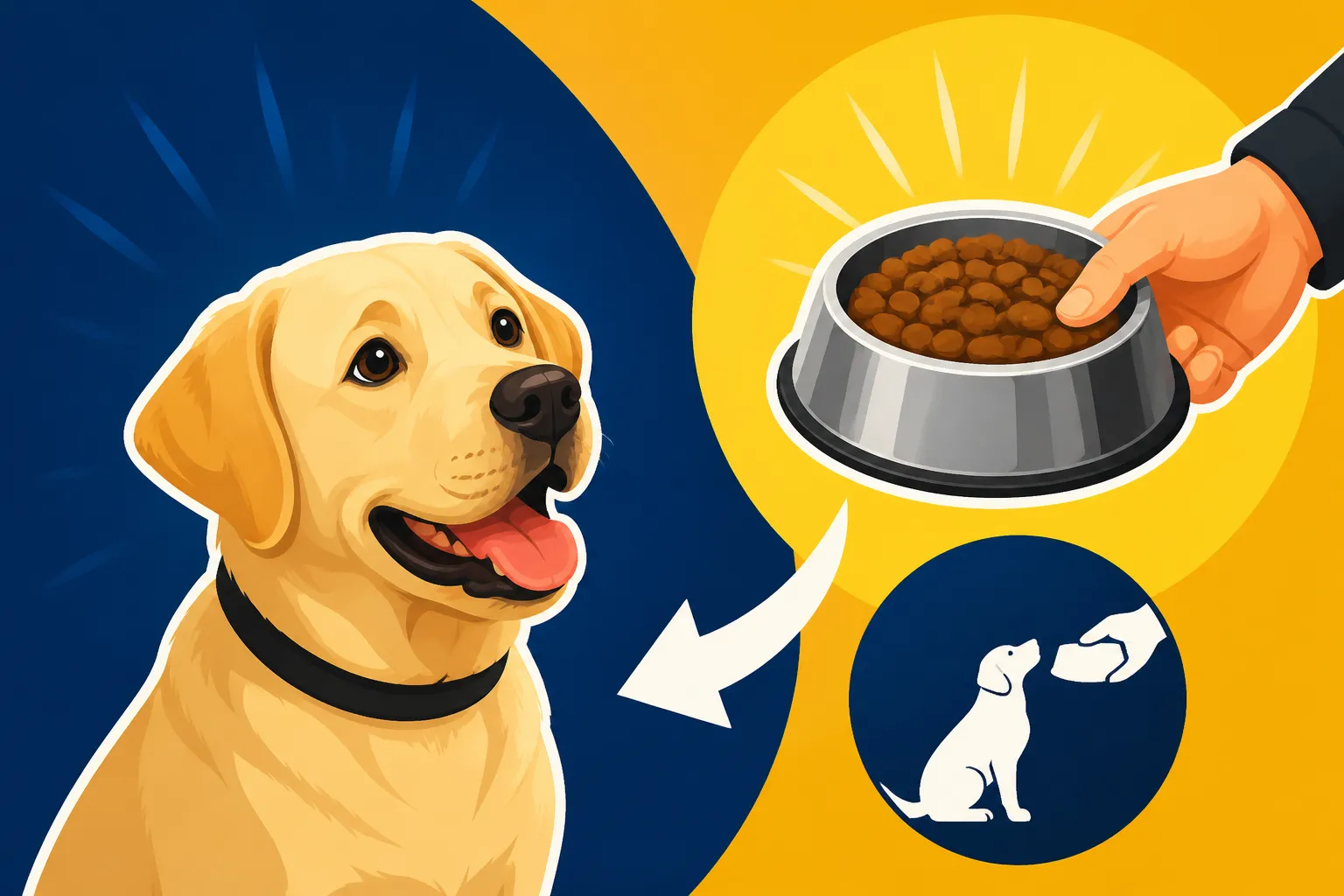
For a Labrador, food isn't just a reward; it's often the ultimate reward. This high-value status makes it incredibly effective in shaping behavior. When your Labrador knows that performing a desired action will result in a delicious bite, they are much more likely to repeat that action. This is the foundation of positive reinforcement training, and for a breed as food-driven as the Labrador, it's a goldmine. Think about it: if you offer a high-value treat for a perfect "come," that dog is going to rocket back to you next time you call, because the payoff is so worth it.
Strategies for Leveraging Food in Training
Now that we understand why Labradors are so food-motivated, let's talk about the how. It's not just about tossing them a biscuit; it's about making food a powerful, intentional tool in your training arsenal.
Using Meals as Training Opportunities
One of the biggest mistakes owners make is separating mealtime from training. For a food-driven Labrador, their entire daily food ration can be leveraged for training. Instead of simply putting a bowl down, use a portion of their kibble for short training sessions throughout the day. This transforms feeding into a valuable learning experience.
For instance, before every meal, ask for a "sit" and a "stay." Only when they calmly perform the command do they get the food bowl. This teaches impulse control and reinforces basic obedience multiple times a day. You can also hand-feed their meals, one piece of kibble at a time, for simple commands like "look," "touch," or walking nicely on a leash for a few steps. This makes every meal a mini-training session, maximizing the value of their daily food intake. Why Free Feeding Fails With a Labrador explains further why this approach is so beneficial.
Varying Treat Value and Delivery
Not all food is created equal in your Labrador's eyes. Some treats are "okay," and some are "OMG, YES!" Learning to differentiate these values is key. Use low-value kibble for everyday reinforcement of known behaviors, but save the truly high-value treats – like small pieces of cooked chicken, cheese, or high-quality commercial training treats – for new, challenging, or critical behaviors like a reliable recall in a distracting environment. Treats That Motivate a Food-Driven Labrador offers more ideas on what makes a treat truly high-value.
| Treat Value | Examples | Use Case |
|---|---|---|
| Low | Regular kibble, plain cheerios | Daily reinforcement, known commands, low distraction |
| Medium | Dog biscuits, dried liver treats | Learning new behaviors, moderate distraction |
| High | Cooked chicken, cheese, hot dogs, salmon | Urgent recall, high distraction, overcoming fear |
Varying delivery is also important. Sometimes you can simply hand them the treat. Other times, you might toss it a short distance to engage their retrieve drive and add a bit of physical activity, or place it on the ground for a "find it" game. For focus work, holding the treat at your nose or eye level can help them make eye contact. A good training pouch, readily available on Amazon, can make this seamless, allowing you to quickly access treats without fumbling.
Using Food Lures and Fading Them
Food lures are a fantastic way to guide your Labrador into position for a new command. For example, to teach "sit," you can hold a treat just above their nose and move it slowly back over their head. Their nose naturally follows, causing their rear end to drop into a sit. The moment their bottom touches the ground, mark the behavior with a verbal "yes!" or a click, and give them the treat.
The critical next step is fading the lure. You don't want your Labrador to forever rely on seeing a treat to perform a command. Once they reliably follow the lure, start making the hand motion smaller and faster, gradually phasing out the actual treat in your hand. Soon, the hand signal alone will prompt the behavior. After that, you introduce the verbal cue ("Sit!") before the hand signal, then eventually remove the hand signal, relying only on the verbal cue. The treat still comes after the successful action, but it's no longer used to guide the action. Fading Food Rewards With a Labrador provides a more in-depth look at this process.
Mental Stimulation Through Food Puzzles
Your Labrador's intelligent mind and powerful nose are just begging to be put to work, and food puzzles are an excellent way to do it. Instead of just devouring their meal in thirty seconds, a food puzzle makes them think, problem-solve, and work for their food. This provides valuable mental enrichment, burns energy, and slows down their eating.
There's a huge variety of puzzle feeders available, from simple slow-feeder bowls that make kibble harder to access, to more complex toys that require pushing, flipping, or rolling to release treats. Brands like BAXTER & Bella often recommend incorporating these into their online puppy training programs to keep smart, food-motivated pups engaged. You can even make your own by hiding kibble around the house in a "find it" game, forcing your Labrador to use their incredible scenting abilities. This not only tires them out mentally but also teaches them to engage with their environment in a productive way, rather than resorting to destructive behaviors out of boredom. Puzzle Feeders That Slow a Greedy Labrador offers more specific recommendations.
Common Challenges and Solutions
While food drive is a fantastic training tool, it can also present its own set of challenges. Learning to navigate these will make your training even more effective.
Managing Over-Arousal and "Mugging"
Sometimes, a Labrador's excitement for food can be so intense that they become overly excited, jumpy, or even try to "mug" you for the treat. This is counterproductive to polite training. The key here is to teach impulse control.
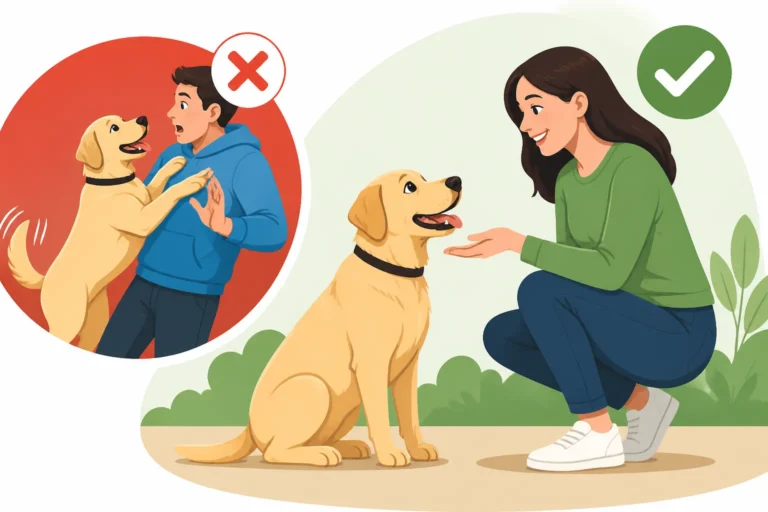
First, ensure you're in a calm environment when introducing new commands with high-value treats. If your Labrador is too hyped, ask for a known calm behavior, like a "sit" or "down," before presenting the treat. If they jump or get too pushy, immediately hide the treat behind your back or put it in a pouch. Only bring it out when all four paws are on the floor and they are calm. This teaches them that calm, polite behavior earns the treat, while pushy behavior makes it disappear. Patience is crucial here; it might take a few repetitions, but your Labrador will quickly learn the rules.
Avoiding Food Dependency
The goal is not to have a Labrador that only obeys when a treat is visible. As discussed with fading lures, the treat should eventually become an intermittent reward, not a constant bribe. Once a behavior is reliably learned, start to vary when you give the treat. Sometimes they get one, sometimes they get praise, a quick game of tug, or a belly rub. This unpredictable reinforcement actually makes the behavior stronger and more resistant to extinction.
Also, pair verbal praise like "Good dog!" or "Yes!" with the treat every single time. This makes the verbal praise itself a secondary reinforcer. Eventually, your "Good dog!" will carry some of the same positive association as the treat itself. This combination helps transition your Labrador to perform commands even when food isn't immediately present. Whether a Food-Obsessed Labrador Can Be Trained Out explores the nuances of this balance.
Using Food for Cooperative Care
Beyond basic obedience, a Labrador's food drive can be a game-changer for cooperative care. Many Labradors are not thrilled about nail trims, ear cleaning, or vet visits. By pairing these often unpleasant experiences with high-value food, you can create positive associations.
For example, when trimming nails, have a helper feed a steady stream of delicious treats while you quickly trim one nail. Stop the treats and the trimming. Over time, you can gradually increase the duration or number of nails. This teaches your Labrador that these procedures predict wonderful things. For ear cleaning, put a dollop of peanut butter (xylitol-free, of course!) on a lick mat or the shower wall to distract them while you clean their ears. This transforms potentially stressful moments into something tolerable, even enjoyable, due to the food reward. It's a fantastic way to build trust and make necessary care much easier for everyone involved. Labrador Ear, Paw and Nail Care offers practical tips for these routine tasks.
The Role of Precision in Feeding
When using food as a training tool, especially with a breed prone to weight gain, precision in how much you're feeding is paramount. Every treat, every piece of kibble from a puzzle toy, and every training reward needs to be accounted for in their daily calorie intake. This means measuring their regular meals carefully and adjusting them based on how many training treats they've received.
Investing in a kitchen scale for accurate portioning is incredibly helpful, as "cups" can vary widely depending on how densely you scoop. Remember, even a few extra calories a day can lead to weight gain over time, and Labrador Obesity and the Years It Costs highlights the serious health implications. So, be diligent, make training treats part of their daily food budget, and you'll keep your Labrador both well-trained and healthy.
Conclusion
Your Labrador's incredible food drive is not a burden; it's a gift. It's a powerful, inherent motivation that, when understood and leveraged correctly, can make training faster, more effective, and a genuinely enjoyable experience for both of you. By being consistent, valuing treats appropriately, and strategically fading their visible presence, you can teach your Labrador incredible things, foster excellent manners, and strengthen your bond without turning them into a perpetual food vacuum. Embrace their love for food, and watch them thrive under your guidance.
Disclaimer
This article is for general informational purposes only and does not constitute professional advice. Laws, prices and regulations vary by location and change over time. Consult a qualified professional for guidance on your specific situation.