When Labrador Guarding Needs a Behaviorist
It's incredibly disheartening and frankly, quite scary, when your beloved Labrador — a breed renowned for its gentle nature and amiable disposition — starts displaying aggressive tendencies over their possessions. Resource guarding, whether it's over a food bowl, a favorite toy, a prime napping spot, or even your attention, can be a bewildering and upsetting experience for any dog owner. This guide aims to help you understand when those moments of possessiveness have crossed the line from a manageable training challenge into a situation that truly requires the specialized expertise of a professional veterinary behaviorist.
Understanding the Nuances of Resource Guarding in Labradors
Resource guarding isn't always a sudden, dramatic explosion of aggression. Often, it begins subtly, almost imperceptibly, before escalating. For a Labrador, a breed that is often highly food-motivated and enjoys carrying things, resource guarding can manifest in various ways, from a low growl to a full-blown bite. It’s crucial to recognize the spectrum of this behavior to assess its severity.
Common Signs of Resource Guarding
You might initially notice some seemingly minor behaviors that, over time, become more pronounced. Imagine your Labrador, normally a happy-go-lucky companion, suddenly tensing up when you approach their food bowl while they're eating. Perhaps their body stiffens, their ears might flatten slightly, or they might even lower their head over the bowl, giving you a quick, intense stare. This is often the starting point.
These subtle signals are your dog's way of communicating, "Hey, this is mine, back off." It could be a soft growl as you reach for a discarded tissue they found on a walk, or a quick snatch of a favorite toy as another dog approaches in the park. Sometimes, it's not even about an object; it can be about space, like a preferred spot on the sofa, or even a person, where your Labrador might try to push another pet or family member away from you. Understanding these early warning signs is key to intervening before the behavior escalates. The more attuned you are to these nuances, the better equipped you'll be to decide on the next steps.
Why Labradors Might Guard Resources
While Labradors are known for their easygoing temperament, they are still dogs with natural instincts. In the wild, guarding valuable resources like food or a safe den space is a survival mechanism. Our domestic dogs retain these instincts, even if their "resources" are now kibble in a bowl or a squeaky toy. A Labrador's strong retrieving drive, for example, can sometimes blur the line between a healthy love for carrying things and a possessiveness over them. Some Labradors, particularly those with a very strong food drive, might be more prone to guarding their meals. You might find that Resource Guarding in Food-Driven Labradors is a common challenge for many owners.
Past experiences can also play a huge role. Perhaps a rescue Labrador was starved or had to compete fiercely for food in a previous home. This kind of history can instill a deep-seated fear of deprivation, making them guard resources even when they are no longer in a threatening environment. Even if your Labrador came from a reputable breeder, early experiences in the litter, or even a genetic predisposition, can contribute to these behaviors. It’s not a reflection of your dog being "bad," but rather a complex behavioral issue that needs careful unpicking.
When Everyday Training Hits a Wall
Most dog owners start by trying to manage and train away resource guarding themselves, which is a natural first response. There are many excellent, positive reinforcement-based techniques for Fixing Bowl Guarding in a Labrador or toy guarding, often involving teaching "trade" or building positive associations with approach. However, there are times when these methods, despite consistent effort, simply aren't enough, or worse, seem to exacerbate the problem.
The Limits of Self-Help and Online Advice
When you first notice guarding, you might turn to online videos, articles, or even basic obedience classes. These resources often advocate for techniques like approaching the bowl, dropping a high-value treat, and walking away, or trading a guarded item for something better. And for many mild cases, these strategies can be very effective, helping to build trust and teach your Labrador that your approach means good things, not theft. However, if you've been diligently applying these methods for weeks or months, and the guarding behavior isn't improving – or if it's actually getting worse – that's a significant red flag.
The problem with generic advice is that it can't account for the individual nuances of your dog's specific triggers, fear levels, or past experiences. What works for a mild case of toy guarding in a happy-go-lucky pup might be utterly ineffective, or even dangerous, for a Labrador with deeply ingrained fear-based food guarding. It can feel incredibly frustrating when you've invested time and effort, perhaps even purchased specific training aids from sites like Amazon, only to see no real progress. At this point, it's easy to feel defeated and unsure of what to do next.
Escalation Despite Your Best Efforts
Perhaps your Labrador's growl has become more intense, or they've started snapping in the air when you get too close. Maybe they used to only guard their food, but now they're guarding their bed, or even a particular spot in the yard. This kind of expansion or intensification of guarding behavior, even when you're being consistent and calm with your training, is a clear indicator that the situation has outgrown typical owner-led management.
Think about a scenario where your Labrador used to simply freeze and stare when you walked past their chewing bone. Now, they might growl deeply, lunge a little, or even make contact, without actually biting. This progressive escalation is deeply concerning because it shows that your current approach isn't addressing the underlying anxiety or possessiveness. It's not a failure on your part, but rather a sign that the problem has become more complex than simple obedience training can resolve. This is precisely the moment to acknowledge that more specialized help is needed.
Critical Signs Your Labrador Needs a Behaviorist
While any resource guarding can be distressing, there are specific behaviors that scream, "Get professional help now!" These are the instances where continuing to manage the situation on your own could lead to injury or significantly worsen your Labrador's emotional state.
Aggression Towards Humans or Other Pets
If your Labrador's resource guarding has led to snapping, growling, lunging, or biting directed at a person—whether it's you, a family member, or a visitor—this is a critical turning point. The risk of injury is paramount, and the emotional toll on the household can be immense. Similarly, if your Labrador is consistently aggressive towards other pets in the home over resources, leading to fights or creating an environment of constant tension, it's time for intervention. A professional behaviorist can assess the severity, help implement immediate safety protocols, and develop a long-term plan to mitigate aggression.
Consider a family with young children. A Labrador who growls over a dropped crumb might escalate to snapping if a curious toddler reaches for it. This isn't just about training anymore; it's about safety. Or perhaps you have two Labradors, and one has started guarding the water bowl, preventing the other from drinking. This can lead to stress, dehydration, and potential fights. These are scenarios where waiting or trying another online tip isn't just unproductive, it's potentially dangerous. The moment you fear for someone's safety, or if an actual bite incident has occurred, you need a professional.
Unpredictability and Lack of Warning Signals
One of the most unsettling aspects of severe resource guarding is when it becomes unpredictable. If your Labrador is suddenly reacting without the usual warning signals (like the subtle stiffening or growl), or if their reactions seem disproportionate to the perceived threat, this indicates a serious breakdown in communication and trust. A dog that goes "zero to sixty" without a clear escalation path is far more dangerous and requires immediate expert attention.
For instance, if your Labrador previously gave a clear warning growl before you approached their chewing bone, but now they simply snap without any preamble, it suggests their tolerance threshold has plummeted. This unpredictability can make living with the dog incredibly stressful, as you're constantly on edge, unsure of what might trigger a reaction. It suggests an underlying anxiety or fear that has become so intense that their coping mechanisms are failing. A professional behaviorist can help identify the root cause of this unpredictability and work to rebuild trust and communication.
Guarding Multiple, Non-Traditional Resources
Initially, resource guarding often focuses on high-value items like food or specific toys. However, if your Labrador starts guarding a wide array of resources, including things you wouldn't typically consider "valuable" (like an empty plastic bottle, a patch of sunlight on the floor, or even a specific person or piece of furniture), it signals a more generalized anxiety or possessiveness. This is often harder to manage because triggers are everywhere, making avoidance nearly impossible.
This is distinct from the playful "Find the Item" games you might use with a Training a Labrador From Puppy to Adult puppy. This is an anxious, sometimes fearful, possessiveness. Imagine your Labrador guarding a crumpled receipt, or a shoe they've dragged off, then reacting aggressively when you try to retrieve it. This behavior demonstrates a dog struggling with a deep-seated insecurity or control issue that extends beyond simple possessions. It points to a mental state that needs a professional to unravel and address, rather than just behavioral modification through training alone.
Here's a quick comparison of common guarding behaviors and when to seek professional help:
| Behavior Characteristic | Mild Guarding (Often manageable with owner training) | Severe Guarding (Needs Professional Behaviorist) |
|---|---|---|
| Warning Signals | Subtle (stiffening, hard stare, low growl) | Absent, inconsistent, or immediate snap/bite |
| Target of Guarding | Specific high-value items (food, bones, favorite toys) | Wide range of items (any possession, space, people, random objects) |
| Aggression Level | Growling, air snapping, freezing, light mouthing | Contact biting (puncture wounds), intense lunging, persistent aggression |
| Frequency/Consistency | Occasional, context-specific | Frequent, unpredictable, generalized |
| Owner's Emotional State | Frustrated, confused, hopeful about training | Fearful, anxious, stressed, feeling unsafe in own home |
| Response to Training | Shows some improvement with consistent positive reinforcement | Little to no improvement, or worsening, despite consistent positive methods |
| Impact on Household | Minor inconvenience, requires careful management | Significant disruption, risk to people/pets, isolation of dog, restricted movement |
What a Professional Behaviorist Brings to the Table
When you've determined that your Labrador's guarding behavior warrants expert attention, it's important to understand what a professional veterinary behaviorist offers that a typical dog trainer might not. This isn't to say dog trainers aren't valuable—they absolutely are for general obedience and manners—but a behaviorist has a different, often more critical, role to play in complex issues. For issues like Fearful Behavior in a Labrador or severe anxiety, a behaviorist is often the first and best line of defense.
The Difference Between a Trainer and a Behaviorist
A certified professional dog trainer typically focuses on teaching obedience cues, improving manners, and addressing common behavioral nuisances like jumping or pulling on the leash. They work on modifying behavior through conditioning and positive reinforcement. They're excellent for building a solid foundation, and you can find great resources, like those offered by BAXTER & Bella, to support this kind of training at home. However, when behavior stems from deep-seated emotional issues, fear, anxiety, or even underlying medical conditions, a trainer's scope may be limited.
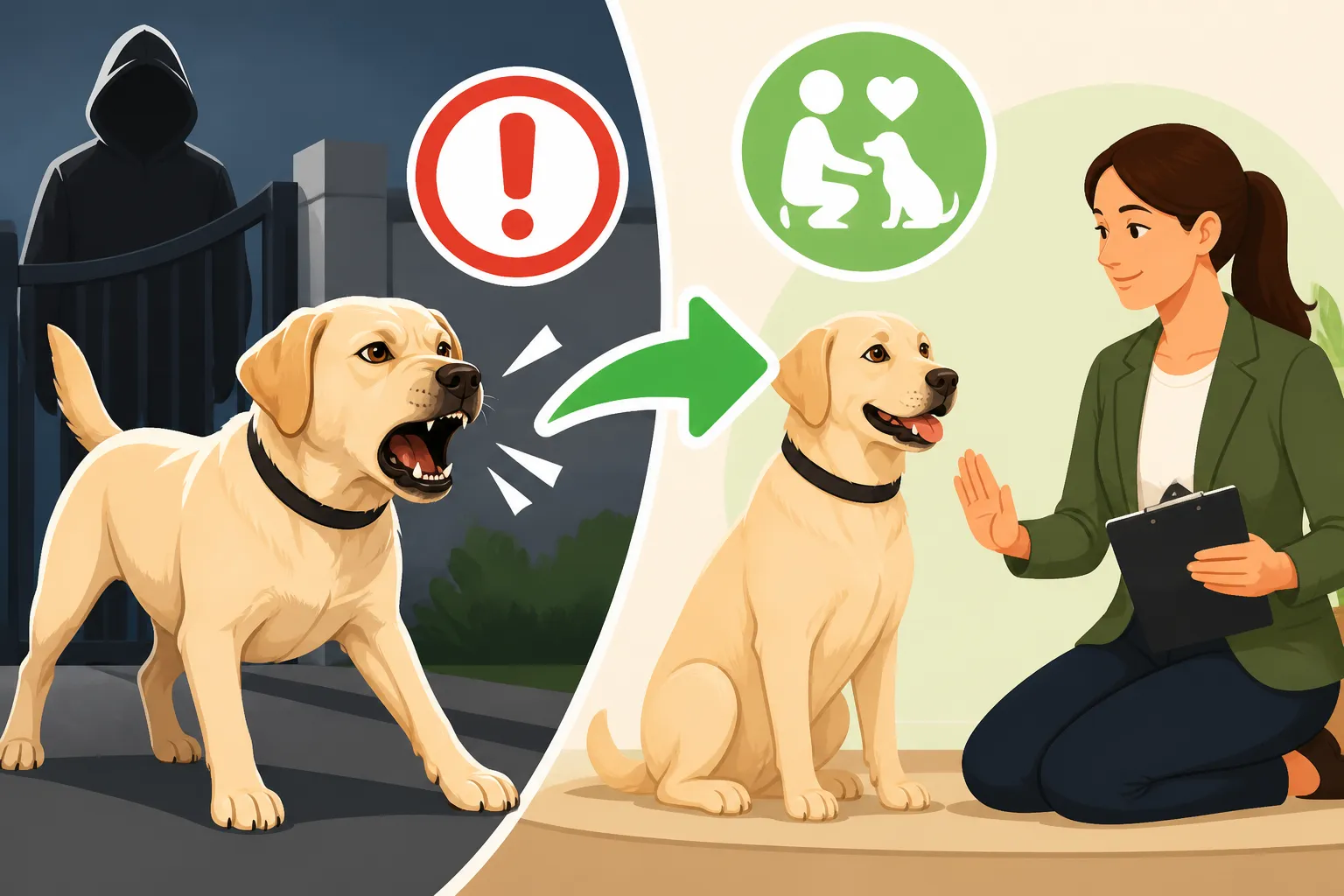
A veterinary behaviorist, on the other hand, is a licensed veterinarian who has gone on to complete extensive specialized training and certification in animal behavior. They approach behavioral problems from a medical and scientific perspective, much like a psychiatrist for humans. This means they can diagnose behavioral conditions (like anxiety disorders, compulsive behaviors, or aggression stemming from neurological issues), prescribe medication if necessary to help manage anxiety or fear, and develop comprehensive treatment plans that address both the emotional and behavioral components of the problem. They understand the complex interplay of genetics, environment, learning history, and physiology. Essentially, when you're dealing with serious resource guarding, you're looking at a medical problem of behavior, not just a training problem.
The Initial Consultation and Assessment
When you contact a behaviorist, the process typically begins with a thorough intake and an initial consultation. This is usually a much longer and more in-depth process than a standard vet visit or trainer session. The behaviorist will want a complete history of your Labrador, including their health, daily routine, any past incidents, and a detailed description of the guarding behavior. They'll ask about triggers, warning signs, your responses, and the dog's reactions. They might ask about your dog’s Labrador Temperament and Personality more generally.
They'll observe your Labrador, often without direct interaction at first, to see their natural demeanor and reactions to various stimuli. They're looking for subtle cues that might indicate fear, anxiety, or arousal levels. This assessment is critical for pinpointing the root cause of the guarding, which could be anything from a medical pain issue making them irritable to a severe anxiety disorder. They’ll want to rule out any underlying physical issues that could be contributing to the behavior. For example, if your Labrador is experiencing discomfort from conditions like Labrador Arthritis in Middle Age, they might be more prone to guarding their space or comfortable spots.
Developing a Customized Treatment Plan
Based on their comprehensive assessment, the veterinary behaviorist will develop a highly individualized treatment plan. This plan often integrates multiple approaches:
- Management Strategies: These are immediate steps to ensure safety and prevent further incidents. This might involve strict rules about approaching your Labrador while they're eating, using specific chew toys only when the dog is alone, or even temporary solutions like a basket muzzle (which you can often find recommended models for on Amazon) if the biting risk is high. The goal is to reduce opportunities for the guarding behavior to occur, thereby preventing the dog from rehearsing the unwanted behavior and allowing their stress levels to decrease.
- Behavior Modification: This involves systematic training exercises, often building on positive reinforcement principles, but tailored specifically to your Labrador's guarding issues. It might involve counter-conditioning (changing your dog's emotional response to a trigger) and desensitization (gradually exposing them to the trigger at a low intensity). Unlike a general trainer, a behaviorist will guide you through these complex, often incremental, steps with an expert understanding of canine psychology. They might even recommend supplemental online programs, like those from BAXTER & Bella, for reinforcing basic obedience and general confidence building, which can indirectly support the behavior modification plan.
- Environmental Adjustments: The plan will likely include recommendations for modifying your home environment to reduce stress and triggers for your Labrador. This could involve creating safe, private spaces for them, managing feeding routines, or adjusting household interactions to reduce perceived threats.
- Medication: For many severe cases, behavioral medication is a crucial component of treatment. Just as a human with an anxiety disorder might benefit from medication alongside therapy, a Labrador struggling with intense fear or anxiety that drives their guarding may need pharmacological support. Medication doesn't "cure" the behavior, but it can lower your dog's overall anxiety levels, making them more receptive to behavior modification and allowing them to learn new, healthier coping mechanisms. A behaviorist is qualified to prescribe and monitor these medications, ensuring they are used safely and effectively.
Working with a behaviorist is a commitment. It requires patience, consistency, and a willingness to follow their expert guidance, but the potential for a safer, happier home for everyone involved is immeasurable. If you're struggling with severe Labrador guarding, recognizing when to seek this specialized help is one of the most responsible and loving things you can do for your furry family member.
Disclaimer
This article is for general informational purposes only and does not constitute professional advice. Laws, prices and regulations vary by location and change over time. Consult a qualified professional for guidance on your specific situation.