Door Manners for an Excited Labrador
Few things are quite as chaotic as an excited Labrador when the doorbell rings or someone knocks. That surge of energy, the frantic barking, the jumping, the sheer attempt to become a furry battering ram against the door – it's a common, yet frustrating, scenario many Labrador owners face. This comprehensive guide will walk you through understanding why your beloved Lab turns into a whirling dervish at the door and provide actionable strategies to cultivate calm, polite greetings instead.
Understanding Why Your Labrador Gets So Hyped Up at the Door
It's easy to feel like your Labrador is just being naughty or intentionally disobedient when they lose all semblance of manners at the door. But truly, their behavior comes from a place of pure, unadulterated Labrador joy and often, a little bit of anxiety mixed in. Understanding these root causes is the first step toward addressing the behavior effectively.
The Labrador's Innate Excitement for People and Activity
Labradors, by their very nature, are people-oriented dogs. They were bred to work closely with humans, retrieving game, and their friendly, outgoing personalities are one of their most beloved traits. So, when the doorbell rings, or a family member arrives home, it's like a grand celebration in their minds. They anticipate the excitement, the attention, the potential for play, and maybe even a dropped treat. This intense anticipation can quickly spiral into over-arousal. Think about how you feel when you're about to see a long-lost friend or open a highly anticipated package – multiply that by a thousand, and you're getting close to a Labrador's emotional state at the sound of the door!
Beyond just people, the door often signifies activity. It means walks, car rides, trips to the park, or even just a new smell wafting in from outside. Labradors thrive on mental and physical stimulation, so any hint of novelty or a change in routine can trigger a cascade of eager behaviors. It’s not just about meeting someone new; it’s about the event of the door opening, and everything that might come with it. This innate drive for engagement, combined with their boundless energy, can make controlling their excitement at thresholds a real challenge.
Reinforcing the Door-Crashing Behavior Without Meaning To!
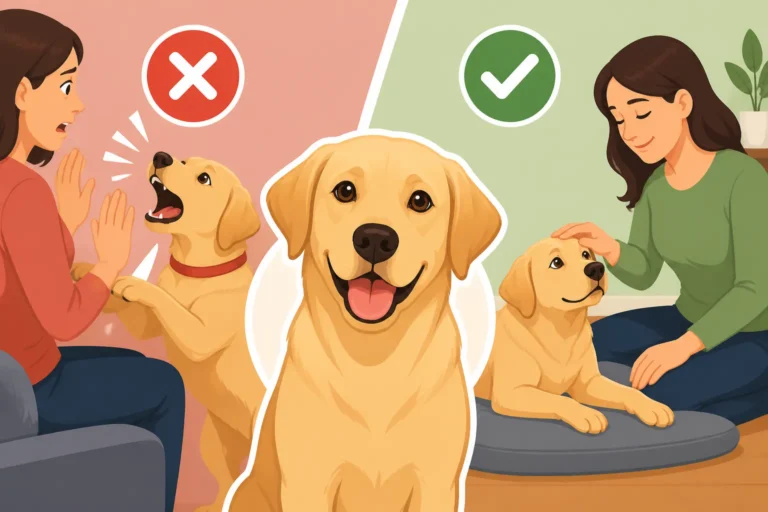
Here’s a tough pill to swallow: we, as owners, often inadvertently teach our Labradors that door chaos is a great strategy. When your dog jumps and barks, and you eventually open the door, what have they learned? "If I make enough noise and commotion, the door opens, and I get what I want (attention, a walk, a visitor)." Every single time this sequence happens, the behavior is reinforced. Even pushing them away, yelling "no," or stepping on their paws (accidentally, of course!) can be interpreted as attention by a dog desperate for interaction. For a Labrador, negative attention is still attention, and it can fuel the very behaviors you're trying to stop.
Consider the classic scenario: a visitor comes over, your Labrador is jumping and barking, and the visitor (bless their heart, they mean well!) gives a quick pat to try and calm them. In that moment, your dog just got a reward for being out of control. It's a vicious cycle that's hard to break once established, which is why early intervention and consistent training are so crucial. We need to flip the script and teach them that calm behavior is what actually makes the good things happen at the door. Without a clear signal from us that calm equals access, they’ll keep trying the "excited chaos" method because, frankly, it’s worked before.
Essential Training Techniques for Calm Door Manners
The good news is that with patience and consistency, you absolutely can teach your Labrador polite door manners. It's all about setting clear expectations and rewarding the right behaviors, not the frantic ones. This isn't a quick fix; it's a journey, but a rewarding one that will make your home a much calmer place.
The "Sit and Wait" Protocol
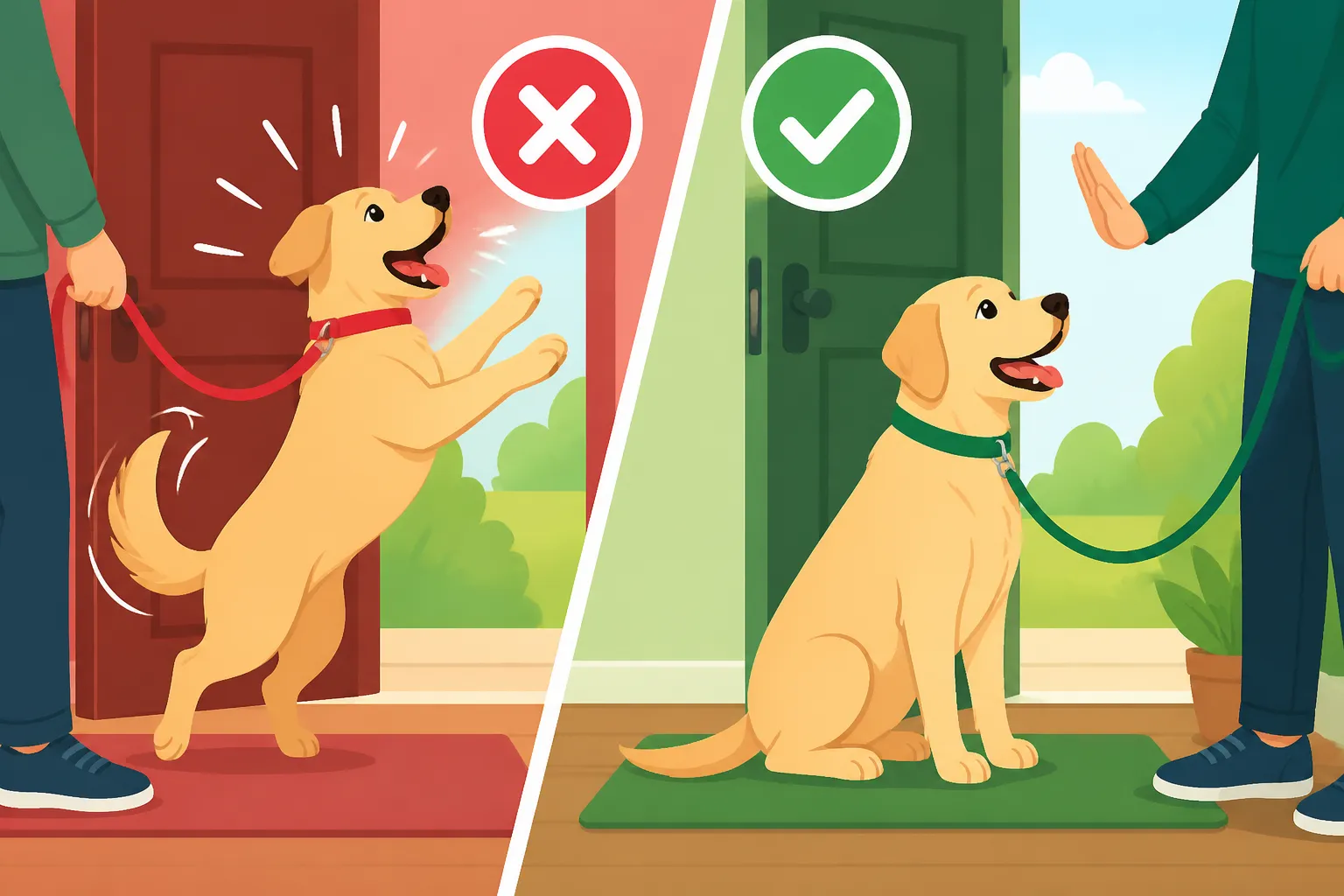
This is perhaps the most fundamental and effective strategy for managing door excitement. The idea is simple: absolutely nothing good happens at the door until your Labrador is sitting calmly. This applies to visitors, going out for a walk, or even just you stepping out and coming back in.
Start by practicing without any real-life distractions. Stand near the door with your Labrador on a leash. Ask them to sit. If they sit, immediately reward with a high-value treat and praise. Repeat this many times. Once they reliably sit on command, add the element of the door. Gently reach for the doorknob. If your dog remains sitting, great! Reward. If they pop up, your hand comes away from the knob, and you wait until they sit again. The moment they sit, you can try for the knob again. Gradually, you'll work your way up to touching the knob, turning it, opening the door an inch, then a few inches, then wider, all while demanding a consistent sit. If they break position, the door closes immediately, and you start over. This teaches them that the door opening is contingent on their calm behavior. You might find our article on Short Training Sessions That Suit a Labrador helpful for breaking this down into manageable chunks.
When you're ready to add actual visitors, enlist a friend or family member. Have them knock or ring the bell. If your Labrador rushes to the door, keep them on a leash a short distance away. Only when they sit calmly (even for just a second at first) do you open the door. If they jump or get overexcited, the door closes, and the "visitor" leaves for a moment, then tries again. This can feel like a marathon, but consistency is key. Think of it as a dance: your Labrador initiates chaos, you don't respond with what they want, they try calm, and then you reward. It really works.
Management Strategies for Immediate Relief
While you're working on the "sit and wait" protocol, you need some management strategies to prevent rehearsing the unwanted behaviors. These are temporary solutions to keep everyone safe and sane while training is in progress.
One excellent strategy is to use a gate or a crate. Before the doorbell rings (if you know someone is coming) or before you leave for a walk, have your Labrador in their crate or behind a baby gate in another room. This physically prevents them from rushing the door. When the visitor arrives, or you're ready to go out, you can then bring your Labrador to the door, already on a leash, and start practicing your calm greetings. This allows you to control the environment and set your dog up for success. You can find sturdy, tall gates on platforms like Amazon that can contain even the most enthusiastic Lab. For those long waits for the bell to stop, having a comfortable Crate and Bed Sizing Costs for a Labrador is essential.
Another simple management technique is to always have your Labrador on a leash when expecting guests or when you're preparing to leave the house. A leash gives you immediate control and allows you to guide them into a sit or redirect them if they start to get too bouncy. Instead of struggling to grab a collar, you have a direct line of communication. You can even attach the leash to your belt or a piece of furniture initially, giving you hands-free control. This also works wonders if you're trying to practice Loose Leash Walking With a Labrador and need them calm before you even step outside.
| Situation | Problem Behavior | Management Strategy | Training Goal |
|---|---|---|---|
| Doorbell Rings | Barking, jumping, rushing door | Gate off, crate, or tether in another room | Sit calmly until released to greet |
| Visitors Arrive | Jumping on guests, nudging, nipping | Keep on leash, allow slow approach, reward calm | Four paws on floor, polite sniff, sit for attention |
| Preparing for Walk | Bouncing, grabbing leash, whining | Leash on only when calm, wait by door until settled | Sit patiently while leash is attached, wait to exit |
| Returning Home | Overly excited greeting, jumping, barking | Ignore until calm, turn back if jumping | Calm "meet and greet," no jumping |
Advanced Tips and Troubleshooting Common Door Dilemmas
Even with solid foundational training, Labradors can be masters of finding loopholes or developing new "creative" ways to express their excitement. Here’s how to tackle some specific challenges and ensure your training sticks for the long haul.
Dealing with Doorbell Barking and Jumping
The sound of the doorbell or a knock can be a huge trigger for many Labradors, often leading to a cacophony of barking and an explosive burst of energy. To tackle this, you'll want to desensitize your Labrador to the sound itself.
Start by recording your doorbell or a knocking sound. Play it at a very low volume, so low that your Labrador barely notices it, or simply looks up without reacting strongly. When they don't bark or jump, reward them with a treat. Gradually increase the volume over many, many sessions, always rewarding calmness. If they react, the sound stops, and you restart at a lower volume. The goal is to change their emotional response to the sound from "alert, excited chaos!" to "oh, that's just a noise, and when it happens, good things come to me for being quiet." This technique can be applied to many other triggers, like Labrador Barking Triggers.
For jumping, implement the "no paws on the floor, no attention" rule consistently. This means if your Labrador jumps on you or a guest, you immediately turn your back, fold your arms, and completely disengage. No eye contact, no speaking, no touching. The moment all four paws are on the floor, you turn back and offer calm praise or a gentle pet. This can be challenging for visitors who naturally want to greet an excited dog, so make sure to communicate this rule clearly to anyone entering your home. Explain that you're training, and their cooperation is vital. Many dog owners find structured programs like those offered by BAXTER & Bella helpful for communicating these rules to all family members and visitors, ensuring everyone is on the same page for consistency.
Consistency and Family Involvement
This is where the rubber meets the road. All the training in the world will fall flat if it's not applied consistently by everyone in the household. Every single person who interacts with your Labrador at the door needs to follow the same rules, every single time. One person letting the dog jump "just this once" can undo days or weeks of progress.
Hold a family meeting and establish a clear set of rules for door greetings. For example: "No one enters or exits until [Labrador's Name] is sitting quietly." "If [Labrador's Name] jumps, everyone turns their back." Make sure children understand these rules too, as their small size can make them particular targets for jumping Labradors. Consider making a chart or sign for your door as a reminder for family members and frequent guests. Remember, a Labrador thrives on routine and predictability, and inconsistency is the fastest way to confuse them and undermine their learning. This kind of consistency is important for all aspects of training, from House Training a Labrador Retriever to Labrador Recall and Working Off Leash. The more uniform your approach, the faster your Labrador will understand what's expected.
Tools and Resources to Help Your Labrador Succeed
While training is primarily about your consistency and your Labrador's learning, there are some invaluable tools and resources that can make the journey smoother and more effective. Don't feel like you have to go it alone!
Recommended Training Aids
When working on door manners, having the right gear can make a big difference.
- High-Value Treats: For a food-motivated breed like the Labrador, these are your secret weapon. Small, soft, smelly treats like bits of cooked chicken, cheese, or hot dogs will get their attention much faster than plain kibble, especially when distractions are high. Keep them handy near the door! You can find a wide variety of excellent training treats on Amazon.
- Leash and Collar/Harness: A comfortable, well-fitting leash and collar or a front-clip harness can provide much-needed control during training sessions. A front-clip harness, in particular, can help reduce pulling and give you more leverage if your Labrador tries to lunge.
- Baby Gates or Exercise Pens: As mentioned earlier, these are fantastic for managing the environment and preventing unwanted behaviors. They allow your dog to still be part of the household but contained in a way that sets them up for success. Look for sturdy options that your clever Lab can't easily jump over or push through.
- Remote Doorbell/Knocker: For desensitization training, having a way to control the sound of the doorbell or knock from a distance (like a recording on your phone or a remote-controlled doorbell button) is incredibly useful.
- Interactive Toys/Chews: Sometimes, redirecting that intense energy before a visitor arrives can help. Giving your Labrador a puzzle toy filled with treats or a durable chew can keep them occupied and help burn off some mental energy, making them more receptive to calm behavior when the real action starts. This can be a great way to provide Mental Work for a Bored Labrador.
When Professional Help is a Good Idea
Sometimes, despite your best efforts, the door chaos feels insurmountable. If you're struggling to make progress, or if your Labrador's excitement is accompanied by truly problematic behaviors like aggression, excessive mouthiness, or destructive chewing around the door, it's absolutely okay – and often highly recommended – to seek professional help.
A certified professional dog trainer or a veterinary behaviorist can observe your Labrador's specific behaviors, identify underlying causes (like anxiety or lack of impulse control), and develop a tailored training plan. They can provide hands-on guidance, help you refine your techniques, and offer insights you might miss. Many trainers offer virtual consultations, which can be convenient. Organizations like BAXTER & Bella, for example, offer online training programs and resources that can connect you with expert advice, even if a local trainer isn't immediately available. Investing in professional guidance is an investment in a calmer, happier household and a stronger bond with your Labrador. Don't hesitate to reach out if you feel stuck – it's a sign of a responsible owner! If you're looking for guidance, remember to research Choosing a Trainer for a Labrador to find the right fit for your family and your dog.
Disclaimer
This article is for general informational purposes only and does not constitute professional advice. Laws, prices and regulations vary by location and change over time. Consult a qualified professional for guidance on your specific situation.