Progressive Retinal Atrophy in Labradors
Many Labrador owners face the heartbreaking reality of their beloved companion's eyesight fading, often without a clear understanding of why or what to do. Progressive Retinal Atrophy (PRA) is a cruel genetic disease that gradually steals a Labrador's vision, leaving them blind. This comprehensive guide will delve deep into understanding PRA, recognizing its subtle signs, navigating diagnosis and management options, and most importantly, how to support your Labrador through this challenging journey, ensuring they maintain a high quality of life.
Understanding Progressive Retinal Atrophy in Labradors
Receiving any diagnosis that affects your Labrador's health can be incredibly daunting, and eye conditions can feel especially overwhelming. Progressive Retinal Atrophy (PRA) is a term that often sounds scary, and for good reason – it's a genetic degenerative disease that targets the photoreceptor cells in a dog's eyes, leading to irreversible blindness. For a breed as active and engaged with the world as a Labrador, losing their sight changes everything. But understanding exactly what PRA is and how it impacts their vision is the first step in facing it head-on.
What is the Retina and How PRA Affects It?
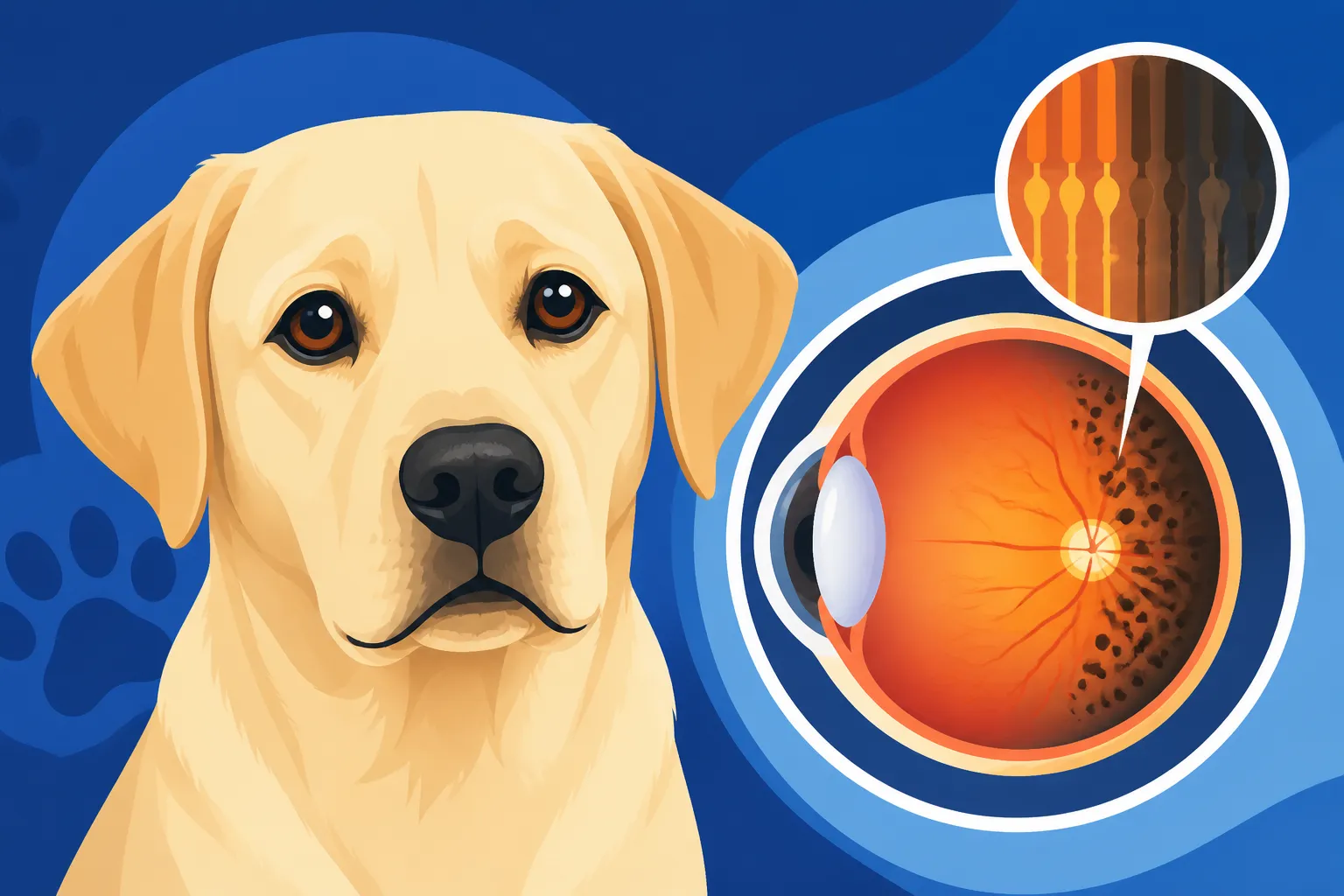
Imagine the back of your Labrador's eye, a delicate, light-sensitive layer of tissue called the retina. This is essentially the "film" in a camera, responsible for capturing light and converting it into electrical signals that the brain interprets as images. Within the retina are millions of specialized cells known as photoreceptors: rods and cones. Rods are crucial for vision in dim light and detecting movement, while cones are responsible for sharp, detailed vision and color perception in brighter light.
In Labradors affected by PRA, these photoreceptor cells slowly begin to degenerate and die. Initially, it often starts with the rods, meaning your dog might first struggle with night vision, bumping into furniture in dimly lit rooms, or being hesitant to go outside after dusk. As the disease progresses, the cones also begin to degrade, leading to complete blindness even in daylight. This isn't a sudden event; it's a gradual, relentless process that can take months or even years, giving owners a window to adapt and prepare, but making the journey emotionally taxing nonetheless. The sad truth is that for a Labrador, whose world is often defined by fetching a ball or spotting a squirrel, this slow loss of one of their primary senses is a profound change.
The Different Forms of PRA Found in Labradors
While the umbrella term is Progressive Retinal Atrophy, it's not a single disease but rather a group of genetic conditions that all result in retinal degeneration. In Labradors, the most commonly recognized form is progressive rod-cone degeneration (prcd-PRA). This form of PRA is typically characterized by a later onset, meaning symptoms usually don't become noticeable until a Labrador is in its mid-to-late puppyhood or early adulthood, often between 3 to 5 years of age. However, the exact age of onset and rate of progression can vary, even within the same form of PRA.
There are other, less common forms of PRA as well, some with earlier onset in puppyhood, but prcd-PRA is the one most discussed within the Labrador community. Understanding that it's a progressive disease is key. It means that what starts as a slight hesitation in the dark will eventually become full blindness. This also highlights why awareness and early detection are so important, not just for your own dog but for responsible breeding practices, which we’ll discuss later. It’s important to note that PRA is one of several Labrador Eye Conditions and Vision Loss.
The Genetic Predisposition in Labrador Retrievers
The heartbreaking reality of PRA in Labradors is that it is an inherited genetic condition. This means it’s passed down through generations, making genetic screening for breeding dogs absolutely critical. The most common form in Labradors, prcd-PRA, is typically inherited in an autosomal recessive manner. What does that mean for you as an owner or potential owner?
It means that a dog must inherit two copies of the defective gene – one from each parent – to actually develop PRA. If a dog inherits only one copy, they are considered a "carrier." Carriers will not develop the disease themselves, but they can pass the defective gene on to their offspring. If two carriers are bred together, there's a 25% chance that each puppy in the litter will inherit two copies of the defective gene and thus be affected by PRA. There’s also a 50% chance they’ll be carriers and a 25% chance they’ll be clear. This genetic lottery underscores the paramount importance of DNA testing for breeding dogs to prevent unknowingly propagating the disease. For instance, reputable breeders will run a comprehensive Genetic Panels Worth Running on a Labrador to identify such risks. Without such testing, the chances of unexpected and devastating diagnoses increase significantly, causing immense heartache and potential financial strain, which even pet insurance providers like Healthy Paws aim to alleviate by covering unforeseen illnesses.
Recognizing the Early Warning Signs of Vision Loss
It can be incredibly challenging to spot the initial signs of vision loss in a Labrador. They are incredibly resilient, adaptable, and eager to please, often compensating for their diminishing sight in ways that make it hard for their humans to notice. Many owners don't realize something is wrong until the disease has progressed significantly. However, being attuned to subtle changes in their behavior and physical appearance can make a world of difference in early detection and preparing for their needs.
Subtle Behavioral Changes in Low Light
One of the earliest and most common indicators of PRA is difficulty seeing in dim light, often referred to as "night blindness." Because the rod cells, responsible for low-light vision, are often the first to degenerate, this is where you might first observe changes. Your Labrador, who once bounded confidently around the backyard at dusk, might suddenly become hesitant. They might move more slowly, trip over familiar objects, or bump into walls or furniture in dimly lit hallways. Perhaps they struggle to find their toys in a darkened room or refuse to retrieve items thrown into shadows.
You might notice them sticking closer to you in low-light conditions, relying more on your presence as a guide. They may also be reluctant to go outside when it's dark, or show increased anxiety when navigating unfamiliar, unlit areas. These subtle shifts can easily be dismissed as clumsiness or just "getting old," but when combined, they can paint a clearer picture of emerging night blindness. For more detail on these early indicators, you might find information on First Signs of Retinal Atrophy in a Labrador particularly helpful.
Navigating Familiar Environments with Difficulty
As PRA progresses and more photoreceptor cells are affected, your Labrador's daytime vision will also begin to deteriorate. What starts as night blindness will eventually impact their ability to see in brighter conditions. You might observe your Labrador becoming more cautious or hesitant even in familiar surroundings, bumping into furniture that hasn't moved, misjudging distances when jumping on or off the couch, or struggling with stairs. They might walk with their head held lower, almost sniffing the ground more intently, using their powerful sense of smell to compensate for failing eyesight.
You may also notice them bumping into people or other pets more frequently. While Labradors are known for their exuberance, if this starts happening in a way that suggests they genuinely didn't see someone approaching, it's a red flag. Their confidence in new environments will likely plummet, and they might become more clingy or anxious when taken to unfamiliar places. The rate at which this progresses can vary significantly, so understanding How Fast Labrador PRA Progresses is crucial for setting expectations and preparing for future needs.
Physical Manifestations and Pupil Changes
Beyond behavioral shifts, there can be some subtle physical signs in your Labrador’s eyes themselves, though these are often only apparent in more advanced stages or to a trained eye. As the retina degenerates, the tapetum lucidum – the reflective layer behind the retina that gives dogs their excellent night vision and causes "eyeshine" in photos – can become more prominent. This might result in a more intense, almost glowing reflection when light hits their eyes.
Another noticeable change is the dilation of their pupils. In an attempt to gather as much light as possible to compensate for the failing photoreceptors, your Labrador’s pupils might appear larger than usual, especially in normal lighting conditions. This dilation can give their eyes a "wide-eyed" or glassy appearance. While these physical changes are usually later signs, they serve as undeniable indicators that professional veterinary attention is needed. If you're concerned about your Labrador's vision, it's always best to consult with your vet or a veterinary ophthalmologist to rule out or confirm conditions like PRA or Retinal Dysplasia and Labrador Eye Panels.
| Stage of PRA | Primary Symptoms Observed | Physical Eye Changes | Impact on Quality of Life |
|---|---|---|---|
| Early Stage | Hesitancy in low light, bumping into objects at dusk, reduced confidence at night. | Subtle increase in eyeshine, slightly dilated pupils. | Minor adjustments needed, dog compensates well. |
| Mid Stage | Difficulty navigating familiar environments in dim light, increased cautiousness, misjudging steps. | More noticeable pupil dilation, eyes appear brighter in photographs. | Moderate adjustments required, increased reliance on other senses. |
| Advanced Stage | Significant daytime vision loss, frequent bumping into objects, extreme hesitation in new places, disorientation. | Pupils remain widely dilated even in bright light, glassy or reflective appearance. | Major lifestyle adaptations needed, dog requires significant guidance. |
| End Stage | Complete blindness, reliance solely on hearing and smell for navigation and interaction. | Retinal atrophy visible to specialist, extreme pupil dilation. | Dog can still live a fulfilling life with proper care and environmental consistency. |
The Diagnostic Journey at the Veterinary Ophthalmologist
When you start noticing those concerning signs, the natural next step is a visit to your veterinarian. While your regular vet can perform an initial assessment, diagnosing Progressive Retinal Atrophy typically requires the expertise of a board-certified veterinary ophthalmologist. This specialist has advanced training and equipment to examine your Labrador's eyes in detail, confirm a diagnosis, and rule out other potential causes of vision loss. It's a journey that can feel nerve-wracking, but it’s essential for understanding and managing your dog's condition.
Comprehensive Eye Examination Procedures
Your initial visit to the veterinary ophthalmologist will begin with a thorough general eye examination. This is much more in-depth than a routine check-up. The specialist will use specialized equipment, such as an indirect ophthalmoscope, to visualize the structures at the back of your Labrador's eye, including the retina. They will assess the optic nerve, blood vessels, and the overall health of the retina. They'll also check for cataracts, glaucoma, or other conditions that can mimic or accompany vision loss.
They will evaluate your Labrador's menace response (blinking when an object rapidly approaches their eye), pupillary light reflexes, and ability to track objects. They might also dim the lights and observe your dog's navigation skills in a controlled environment to gauge their night vision. During this process, they're looking for the characteristic changes associated with retinal degeneration, such as thinning of the retinal layers or increased reflectivity of the tapetum lucidum. This comprehensive assessment forms the cornerstone of their diagnostic process, giving them a detailed picture of what’s happening inside your dog’s eyes. This kind of specialized care is exactly why having a good pet insurance plan like Healthy Paws can be a lifesaver, covering unexpected specialist visits.
Specialized Tests: Electroretinography (ERG) and Genetic Screening
While a comprehensive eye exam can raise strong suspicions of PRA, definitive diagnosis often relies on more specialized tests. Electroretinography (ERG) is the gold standard for assessing retinal function. This non-invasive test measures the electrical responses of the retina to flashes of light, even before any visible changes appear. It essentially measures how well the photoreceptor cells are working. Your Labrador will typically be sedated for this procedure to ensure they remain still, and small electrodes will be placed near their eyes. The results produce a waveform that indicates the health and activity of the rods and cones. A flat or significantly reduced ERG wave is indicative of PRA.
Alongside ERG, genetic screening plays a crucial role, especially for Labradors. Since prcd-PRA is a known inherited condition, DNA tests are available to identify whether a dog is clear, a carrier, or affected with the specific gene mutation linked to the disease. This test usually involves a simple cheek swab or blood sample that is sent to a specialized laboratory. The results provide a definitive answer regarding the genetic status of your Labrador, which is invaluable for both diagnosis and breeding decisions. These advanced diagnostics allow for precise identification of the condition and guide future management. Knowing How Often a Labrador Needs an Eye Exam regularly can help catch these issues earlier.
Distinguishing PRA from Other Eye Conditions
One of the ophthalmologist's key roles is to differentiate PRA from other eye conditions that can cause similar symptoms of vision loss. For example, cataracts can cause progressive blindness by clouding the lens of the eye, but unlike PRA, they are often treatable with surgery. Glaucoma, characterized by increased pressure within the eye, can also lead to blindness and is extremely painful, requiring immediate intervention. Sudden Acquired Retinal Degeneration Syndrome (SARDS) also causes blindness, but it’s typically very rapid and not progressive like PRA.
The specialized tests, particularly ERG, are critical in making this distinction. An ERG will show normal retinal function in a dog with cataracts (unless PRA is also present), but severely abnormal function in a dog with PRA or SARDS. The genetic test, of course, specifically identifies the PRA gene. By meticulously evaluating all symptoms, performing a thorough examination, and utilizing advanced diagnostic tools, the veterinary ophthalmologist can accurately determine the cause of your Labrador's vision loss, ensuring the correct management plan is put in place. This thoroughness is paramount in conditions that could otherwise be misdiagnosed or overlooked.
Adapting to Life with a PRA-Affected Labrador
Hearing that your Labrador has Progressive Retinal Atrophy and will eventually go blind is a tough pill to swallow. It’s natural to feel a wave of sadness, worry, and perhaps even a bit of helplessness. But I’m here to tell you that blindness doesn't mean the end of a happy, fulfilling life for your furry friend. Labradors are incredibly resilient and adaptable, and with your patience, understanding, and some practical adjustments, they can continue to thrive. The key is to create an environment where they feel safe, confident, and loved, relying on their other powerful senses. For general care strategies, consider insights from Living With a Blind Labrador.
Creating a Safe and Predictable Home Environment
The most important thing you can do for a blind Labrador is to maintain consistency in their environment. Once they start to lose their vision, your home becomes their mental map. Try your absolute best to keep furniture, food and water bowls, and their bed in the same place. If you must move something, guide them around the new obstacle repeatedly until they've re-mapped it. Use physical barriers, like baby gates, to block off stairs or dangerous areas, especially in the early stages when their vision is still fading and they might be more prone to accidents.
Consider soft, washable rugs or runners on hard floors to provide tactile cues and prevent slips. Cover sharp corners of furniture with padding to prevent painful bumps. When you're out, always keep them on a leash, even in familiar areas, to protect them from unexpected obstacles or hazards. Some owners even use scent markers – dabs of essential oils (safe for dogs) or unique air fresheners – near key locations like their bed, food bowl, or the backdoor, to help them orient themselves. This predictability builds confidence and significantly reduces anxiety for your dog.
Maintaining Routine and Consistent Communication
Labradors thrive on routine, and for a dog with diminishing eyesight, a predictable schedule is even more critical. Consistent feeding times, potty breaks, walks, and playtime help them anticipate what's next in their day, reducing stress. When interacting with your blind Labrador, verbal cues become paramount. Always speak to them before approaching to avoid startling them. Use consistent verbal commands for everything: "step up" for a curb, "wait" for a doorway, "left" or "right" when navigating.
Consider attaching a small bell to your shoes so they can hear where you are in the house. When playing, use toys that make noise – squeakers, crinklers, or balls with bells inside. Their sense of smell is also incredibly strong, so treat puzzles that rely on scent can be wonderfully engaging. Always offer gentle praise and reassurance. Your calm, confident demeanor will be their anchor in a world that might sometimes feel confusing. This consistent communication helps them build trust and navigate their daily life with greater ease.
Enrichment, Training, and Continued Quality of Life
Blindness does not mean your Labrador can no longer learn or enjoy life. In fact, it's often an opportunity to engage their other senses even more profoundly. Scent work, for example, is a fantastic activity for Labradors. Hide treats or their favorite toys around the house or yard and let them use their powerful nose to find them. This provides mental stimulation and reinforces their natural instincts. You can also engage in sound-based games, like "find the squeaky toy."
Continue with positive reinforcement training, using verbal cues and tactile signals. Your Labrador can still learn new commands and tricks. Regular, gentle exercise tailored to their abilities is also essential for their physical and mental well-being. This might mean more structured leash walks, or safely fenced-in yard time with supervision. Remember, Caring for a Senior Labrador often involves similar adaptations for declining senses, so many of those strategies apply. The goal is to keep them engaged, stimulated, and feeling like a cherished member of the family, because that's exactly what they are. Even with vision loss, a Labrador’s boundless enthusiasm and love remain, and it's our job to nurture that. Pet insurance plans like Healthy Paws can also support ongoing therapies and vet visits that contribute to their continued quality of life.
The Crucial Role of Genetic Testing in Breeding
While living with a PRA-affected Labrador can be managed with love and care, the ultimate goal for responsible breeders is to prevent this devastating disease from occurring in the first place. This is where genetic testing becomes not just helpful, but absolutely paramount. Understanding the genetic basis of PRA places a powerful tool in the hands of breeders to make informed decisions that can significantly reduce the incidence of the disease in future generations of Labradors.
Why Genetic Health Clearances are Paramount
For any reputable Labrador breeder, comprehensive health clearances are a non-negotiable part of their breeding program. These clearances go far beyond just checking for visible signs of illness; they delve into the genetic predispositions for various conditions common in the breed, including PRA. By testing prospective breeding dogs for the specific gene mutations associated with PRA, breeders can avoid unknowingly pairing a carrier with another carrier, which, as we discussed, carries a 25% risk of producing affected puppies.
Without genetic testing, breeders are essentially flying blind, relying solely on pedigree analysis and phenotypic observation, neither of which can accurately predict the genetic health of offspring for recessive traits. The heartache and financial burden placed on owners of an affected puppy are immense, even with robust pet insurance like Healthy Paws. Moreover, the long-term integrity and health of the Labrador Retriever breed itself depend on such responsible practices. Therefore, breeders showing Health Clearances a Labrador Breeder Must Show demonstrate their commitment to the welfare of the breed.
Interpreting Genetic Test Results: Clear, Carrier, Affected
When a Labrador is genetically tested for PRA, the results typically fall into one of three categories:
- Clear (or Normal): This means the dog does not carry any copies of the specific gene mutation for PRA. A clear dog cannot develop PRA due to that specific mutation and cannot pass it on to its offspring.
- Carrier: This means the dog has inherited one copy of the gene mutation. A carrier will not develop PRA themselves because they also have a normal copy of the gene. However, they can pass the defective gene on to 50% of their offspring.
- Affected: This means the dog has inherited two copies of the gene mutation (one from each parent) and will, at some point, develop PRA. The severity and age of onset can still vary, but the genetic predisposition is definitive.
Understanding these results is crucial for breeders. A "carrier" dog is not a "bad" dog; it simply carries a gene that needs to be managed in a breeding program. A responsible breeder might still choose to breed a carrier, but only to a "clear" dog, ensuring that no puppies will be affected by PRA, although 50% of the litter would likely be carriers.
Making Informed Breeding Decisions to Combat PRA
The availability of genetic testing for PRA has revolutionized responsible breeding practices for Labradors. Armed with precise genetic information, breeders can make truly informed decisions to safeguard the health of their puppies. The ideal scenario is, of course, to breed two "clear" dogs, guaranteeing all offspring will also be clear. However, if a breeder has an exceptional dog that is a "carrier" – perhaps excelling in temperament, working ability, or conformation – they can still ethically incorporate that dog into their breeding program by always pairing them with a "clear" mate.
This strategy ensures that no affected puppies are produced while still preserving valuable genetics. Any puppies from such a pairing should themselves be genetically tested before being bred in the future. Reputable breeders will also provide a What a Labrador Health Guarantee Should Cover that often includes assurances regarding genetic health. This diligent approach, combining genetic testing with careful selection, is how the Labrador community collectively works to reduce the incidence of PRA and ensure the continued health and longevity of this beloved breed. It’s a testament to the dedication of those who prioritize the welfare of their dogs above all else.
Emotional Support for Owners and Their Labradors
Beyond the practical adjustments and medical considerations, navigating a diagnosis of Progressive Retinal Atrophy in your Labrador is an emotional journey for everyone involved. It’s okay to feel overwhelmed, sad, and even angry. Your Labrador is a family member, and the thought of them losing a fundamental sense can be truly heartbreaking. Providing emotional support for your dog, and finding it for yourself, is just as important as all the physical adaptations you'll make.
Processing the Diagnosis and Finding Resources
When you first receive the diagnosis, it's natural to feel a myriad of emotions. Give yourself permission to grieve the loss of what you imagined for your Labrador's future vision. Talk to your veterinarian, the veterinary ophthalmologist, and even trusted friends and family about your feelings. Educating yourself about PRA is one of the most powerful steps you can take to regain a sense of control. Understanding the progression, what to expect, and how to help your dog can alleviate some of the anxiety.
Seek out resources from reputable organizations focused on canine health or specific breed clubs. Many provide guides, tips, and even support networks for owners of blind dogs. Knowing that you’re not alone and that many others have successfully navigated this journey with their beloved companions can provide immense comfort and practical advice. Remember, a diagnosis is not a death sentence; it's a new chapter that requires adjustment, not despair.
Connecting with Other Owners and Support Networks
One of the most valuable resources for owners of blind Labradors is often other owners who have walked a similar path. Online forums, social media groups, and local pet communities can be incredible sources of support, practical tips, and shared understanding. They can offer specific advice on things like the best type of harness for a blind dog, how to introduce a blind dog to new sounds, or even just a place to vent frustrations and share successes without judgment.
Sharing experiences can validate your feelings and provide a sense of community. You might discover innovative ways other owners have adapted their homes, found new games to play, or even simply learn about the quiet signs your dog is coping well that you might have missed. These connections can transform a solitary challenge into a shared journey, reminding you that there is a wealth of experience and compassion available.
Prioritizing Your Labrador's Well-being and Your Own
Ultimately, the focus must remain on your Labrador's well-being. They will pick up on your stress, so cultivating a calm, positive attitude around them is vital. Your love, reassurance, and consistent presence are their most important guides. Celebrate their small victories – when they navigate a new path confidently, find a hidden treat, or simply snuggle into you with trust. Their joy in life is still immense, and they will continue to teach you about resilience and unconditional love.
But don't forget your own well-being. Caring for a dog with special needs can be demanding, both physically and emotionally. Make sure you’re also taking time for yourself, whether it’s through exercise, hobbies, or connecting with friends. If you feel overwhelmed, don't hesitate to seek support from a therapist or counselor. A happy, well-supported owner is better equipped to provide the best possible care for their Labrador. With patience, adaptability, and unwavering love, your Labrador can continue to live a full, happy, and enriching life, demonstrating that true sight comes from the heart.
Disclaimer
This article is intended for informational purposes only and does not constitute veterinary advice. Always consult with a qualified veterinarian or veterinary ophthalmologist for any health concerns or before making any decisions about your Labrador's care. Individual situations may vary, and professional guidance is essential for accurate diagnosis and treatment.