Hunt Tests and Field Trials for Labradors
Many Labrador owners feel a pull to explore competitive dog sports, especially those that tap into their retriever's innate desire to hunt and carry things. However, the world of hunt tests and field trials can seem like a confusing, exclusive club from the outside. This guide is here to demystify these exciting events, explaining what they are, how they differ, and how you can get started with your own amazing Labrador.
Understanding the Basics: What Are Hunt Tests and Field Trials?
At their heart, both hunt tests and field trials are designed to evaluate a Labrador Retriever's natural abilities and trained skills in a simulated hunting environment. These aren't beauty contests; they're about demonstrating the practical utility and intelligence of these incredible dogs. For anyone who has ever watched their Labrador intently track a thrown toy or plunge fearlessly into water, these events showcase those instincts honed to perfection. It's truly a sight to behold, and many owners find themselves drawn into this world after realizing their dog needs more than just a walk around the block.
The Core Difference: AKC Hunt Tests vs. Field Trials
While both types of events test retrieving skills, their fundamental objectives and scoring systems are quite different, and this is where many people get tripped up.
Hunt Tests, particularly those sanctioned by the American Kennel Club (AKC), are designed to measure a dog's hunting abilities against a standard of performance, not against other dogs. Think of it like a pass/fail exam. Your Labrador performs a series of tasks, and if they meet or exceed the standard for their division, they pass. The atmosphere tends to be more collaborative and encouraging, often seen as a way to prepare a dog for real-world hunting scenarios or simply to celebrate their natural retrieving drive in a structured way. The goal is consistency and adherence to training, proving that your dog can be a reliable hunting companion. The judges are looking for a dog that works willingly, marks fallen birds, retrieves them promptly, and delivers them gently to hand.
Field Trials, on the other hand, are highly competitive events where dogs are judged against each other. Here, the emphasis is on speed, style, marking ability, and handler control under pressure. It's less about meeting a standard and more about being the absolute best in that specific moment, often in challenging and complex scenarios. The stakes are higher, the training more intense, and the dogs often come from long lines of proven field trial champions. If a hunt test is a well-structured exam, a field trial is an Olympic-level competition. Dogs earn points towards championships, and placements are highly coveted. It’s truly the pinnacle of canine athletic performance for a retriever, showcasing incredible drive, precision, and endurance.
Why Owners Participate: More Than Just Competition
For many Labrador owners, participating in hunt tests or field trials isn't solely about winning ribbons or titles. It's a profound journey that deepens the bond with their dog and provides an unparalleled outlet for their Labrador's boundless energy and intelligence.
First and foremost, these events provide a structured way to channel a Labrador's inherent retrieving drive. If you've ever had a Labrador Channeling a Labrador's Retrieving Drive by constantly bringing you shoes, toys, or even random items they find, you know that this breed needs a job. Hunt tests and field trials offer a purpose, transforming that natural energy into focused, skilled work. This mental and physical engagement is incredibly satisfying for the dog, often leading to a calmer, happier companion at home. It's a wonderful way to prevent boredom, which can often lead to destructive behaviors, especially during those challenging adolescent months.
Beyond that, the training journey itself builds an incredible partnership between dog and handler. The precision required for Labrador Recall and Working Off Leash in a distracting environment, or the unwavering focus needed for a complex retrieve, fosters trust and understanding. You learn to read your dog's subtle cues, and they learn to anticipate your commands. It's a dance of communication that transcends everyday obedience. And let's be honest, there's an immense sense of pride and accomplishment that comes from seeing your Labrador, through countless hours of training, perform flawlessly in a demanding scenario. It’s watching their true nature shine, amplified by skill and teamwork.
| Feature | Hunt Tests | Field Trials |
|---|---|---|
| Objective | Qualify against a standard of performance | Compete against other dogs for placement |
| Atmosphere | Collaborative, encouraging, "pass/fail" | Highly competitive, intense, "best of the best" |
| Pace | Deliberate, focuses on accuracy and consistency | Fast-paced, emphasizes speed, style, and extreme drive |
| Skills Tested | Marking, steadiness, retrieving, basic handling | Advanced marking, complex blinds, precise handling, speed |
| Training Focus | Reliability, obedience, natural hunting instincts | Precision, extreme control, athletic performance |
| Titles Earned | Junior Hunter (JH), Senior Hunter (SH), Master Hunter (MH) | Field Champion (FC), Amateur Field Champion (AFC) |
Diving Deeper into Hunt Tests: A Step-by-Step Approach
Hunt tests are often the entry point for many Labrador owners because they offer a progressive ladder of difficulty. You start with foundational skills and gradually build up to more complex scenarios, making the journey less intimidating. It’s a fantastic way to develop your Labrador's natural abilities and see them earn titles.
Entry-Level: Junior Hunter (JH) Requirements
The Junior Hunter (JH) title is designed to be achievable for most well-bred, enthusiastic Labradors with consistent training. It focuses on the basics that any good hunting dog should possess. To earn a JH title, your dog needs to pass four individual tests under different judges.
In a Junior Hunter test, your Labrador will typically be asked to perform:
- Single Marks on Land: A "mark" is a retrieve where your dog sees a bird (or a dummy simulating a bird) fall. They need to sit steadily at the line, be sent on command, quickly retrieve the fallen object, and deliver it gently to your hand. This usually involves a retrieve of about 40-70 yards. The dog is expected to be "steady," meaning they shouldn't break and run for the retrieve before being told.
- Single Marks on Water: Similar to land, but your Labrador will enter and exit the water, retrieving a single mark. This plays right into their natural love of water and their webbed feet, though it still requires discipline. Judges are looking for an eager entry, a focused retrieve, and a calm delivery.
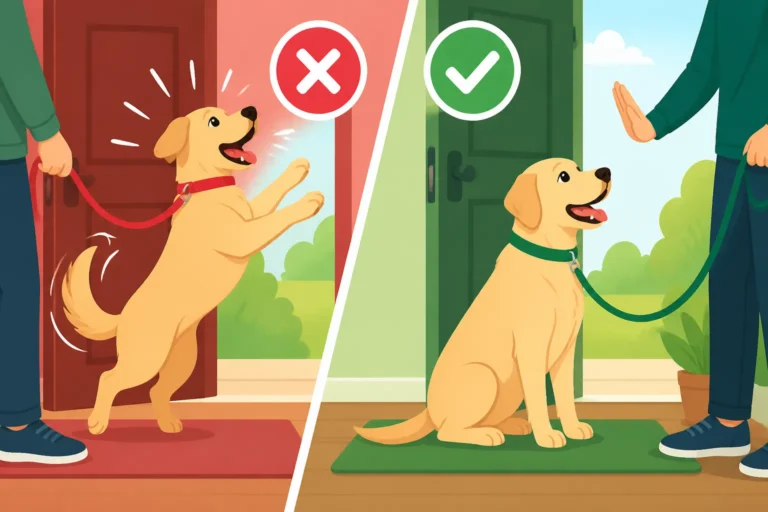
- Honoring: This is a crucial aspect where your dog sits calmly beside another dog that is retrieving. It teaches patience, steadiness, and prevents interference, which is vital in a real hunting situation where multiple dogs might be present. Your dog isn't doing the retrieve themselves, just "honoring" the work of another dog.
The emphasis here is on basic obedience, a strong retrieve, and natural marking ability. You can start working on these skills with your Labrador puppy as part of their Training a Labrador From Puppy to Adult regimen. Many owners begin with simple fetch games using bumpers, slowly introducing distance and distractions. Resources like the online courses offered by BAXTER & Bella can be incredibly helpful for foundational obedience and getting those first retrieves solid before you even think about competitive events. Having the right gear, from good quality bumpers to a reliable whistle, is also key, and you can find a wide variety of these items on Amazon.
Intermediate and Advanced: Senior Hunter (SH) and Master Hunter (MH)
Once your Labrador has earned their JH title, you might find yourself hooked, eager to tackle the next levels of complexity. The Senior Hunter (SH) and Master Hunter (MH) titles introduce more challenging scenarios, demanding greater skill, steadiness, and handler control.
Senior Hunter (SH): For an SH title, your Labrador needs to pass five tests (or four if they already have a JH title). The scenarios become more intricate:
- Multiple Marks (Double Marks): Instead of one bird falling, two birds will fall in different locations, and your dog must remember both falls ("marking") and retrieve them in a specific order (often the furthest first). This tests their memory and ability to focus on multiple tasks.
- Blind Retrieves: This is a significant step up. A "blind" retrieve is where your dog has not seen the bird fall. They must rely entirely on your hand signals and whistle commands to be directed to a hidden bird, often through dense cover or over water. This truly tests their understanding of directional commands and their willingness to trust you.
- Diversion Birds: Sometimes, a third bird might be thrown after the first mark, acting as a "diversion" to test your dog's steadiness. They must ignore the diversion and retrieve the original mark you sent them for.
- Upland scenarios: Often, SH tests will incorporate upland-style retrieves, where the dog must flush a bird and then retrieve it after it's shot, simulating pheasant or grouse hunting.
Master Hunter (MH): This is the highest level in hunt tests, requiring six passes (or five if they have an SH title). MH tests combine all the elements of JH and SH but increase the difficulty significantly:
- Triple Marks: Three birds fall, often across land and water, requiring exceptional marking and memory.
- Complex Blind Retrieves: Blinds are longer, in heavier cover, and require more intricate handling through difficult terrain or past tempting obstacles. They often involve multiple changes of direction and precise stopping on command.
- Walk-ups: The handler and dog walk forward as if hunting, and then birds are flushed and shot, requiring the dog to be steady and perform retrieves from a "walk-up" position.
- Honoring two dogs: The dog must honor not just one, but two other dogs completing retrieves, showcasing ultimate patience and discipline.
The training for these advanced levels is extensive and often involves specialized equipment and larger training grounds to simulate realistic scenarios. It's a true commitment, but the payoff is a Labrador with incredible discipline, focus, and a profound understanding of their role. If you are serious about working towards these higher titles, finding a good mentor or Choosing a Trainer for a Labrador with experience in these areas is absolutely essential.
The Thrill of Field Trials: High Stakes and Intense Competition
If hunt tests are about demonstrating a competent hunting companion, field trials are about showcasing the absolute elite athlete of the retriever world. These events are demanding, thrilling, and attract some of the most dedicated trainers and the most genetically gifted Labradors.
Open and Amateur Stakes: The Path to Glory
Field trials are structured into different "stakes" or divisions, each with its own level of competition and rules. The two primary stakes that lead to championship titles are Open All-Age and Amateur All-Age.
Open All-Age Stakes: This is the highest level of competition, open to all dogs and handlers, including professional trainers. Dogs and handlers are pushed to their absolute limits, and the competition is fierce. The retrieves are long, the blinds are complex, and the dogs must perform with incredible speed, style, and accuracy. Imagine a dog that marks a bird falling hundreds of yards away, navigates dense cover or rough water with unwavering focus, retrieves the bird with a soft mouth, and returns to the handler at a full sprint – all while remaining completely under control. This is what you see in an Open All-Age stake. Handlers are often seasoned veterans, and their dogs are bred specifically for this demanding work, often coming from pedigrees of Whether a Field Labrador Costs More to Keep due to their intense drive and focus.
Amateur All-Age Stakes: These stakes are similar in difficulty to the Open stakes but are restricted to amateur handlers (owners who do not train dogs professionally for a fee). This allows dedicated owner-handlers to compete at the highest level without going head-to-head with professional handlers every time. It still requires an incredible level of dedication and training, often involving significant travel to various events. Earning a win in an Amateur stake is a testament to the partnership between an owner and their Labrador.
In both stakes, dogs compete for "points" based on their placements (first, second, third, fourth) in each series of retrieves. Accumulating enough points in these stakes eventually leads to the coveted Field Champion (FC) and Amateur Field Champion (AFC) titles. These titles are not just bragging rights; they signify a Labrador of exceptional natural ability, superior training, and incredible intelligence. The pressure is immense, and dogs must perform perfectly through multiple "series" of complex retrieves, often over several days.
Key Skills and Expectations in Field Trials
The skills demanded in field trials go beyond excellent obedience; they require a dog with extreme athleticism, intelligence, and an almost intuitive understanding of their handler.
- Exceptional Marking Ability: Dogs must be able to visually "mark" multiple birds falling from different locations, often at extreme distances. This isn't just seeing where they land, but remembering their precise location, even if they're partially obscured by cover. It’s an innate gift for some Labradors, sharpened by countless hours of training for Retrieving Games That Tire a Labrador.
- Precise Blind Retrieves: This is where a dog’s handler skills truly shine. Field trial blinds are long, convoluted, and often take the dog through incredibly difficult terrain – deep water, thick woods, over hills. The handler must guide the dog with subtle whistle and hand commands, and the dog must respond instantly and flawlessly, even when they can't see the handler or the target. This level of communication and trust is breathtaking.
- Absolute Steadiness: A field trial Labrador must be absolutely "steady to shot and fall." This means they remain perfectly still and quiet at the handler's side, regardless of gunshots, falling birds, or the excitement of other dogs. They only move when given the command. A "break," even a slight step forward before being sent, can lead to disqualification. This level of control is built on months, if not years, of consistent, positive reinforcement.
- Speed and Style: While accuracy is paramount, field trials also reward speed and an enthusiastic, powerful working style. Judges look for a dog that attacks the retrieve with gusto, runs with purpose, and returns quickly. The overall impression of a dog working eagerly and efficiently under complete control is highly valued.
- Endurance: Field trials are often multi-day events, with dogs performing many strenuous retrieves over varied terrain and in different weather conditions. A dog must be physically fit and mentally resilient to perform at a high level throughout the entire event. This highlights the importance of proper conditioning and care, including preventing injuries and supporting their joints, a topic often explored in discussions around Labrador Hip and Elbow Dysplasia.
Getting Started with Your Labrador: Practical Steps
Thinking about dipping your toes into this exciting world? It's a rewarding journey, but it starts with understanding your dog and finding the right support system.
Assessing Your Labrador's Aptitude and Drive
Before investing significant time and money, it's wise to evaluate your Labrador's natural abilities and drive. Not every Labrador is destined for competitive retrieving, and that's perfectly okay! Your dog can still be a wonderful companion. However, if they have these traits, they might be a good candidate:
- Strong Retrieve Drive: Does your Labrador naturally love to fetch? Do they bring objects back to you repeatedly? Do they get excited when you pick up a toy or bumper? This is the fundamental building block.
- Soft Mouth: Do they retrieve objects gently without damaging them? Labradors were bred for a "soft mouth" to retrieve game birds undamaged.
- Water Love: Does your Labrador enthusiastically enter water and swim confidently? While trainable, a natural affinity for water is a huge advantage.
- Intelligence and Trainability: Labradors are known for their intelligence and eagerness to please, making them highly trainable. A dog that picks up commands quickly and enjoys working with you will thrive.
- Focus and Steadiness: Can your dog maintain focus on a task even with distractions? Are they calm and patient, or do they get overly excited and break easily? While steadiness is taught, a dog with a calmer natural disposition might have an easier start.
- Desire to Please: A Labrador's strong desire to please their owner is a huge asset in any training program. They want to do what you ask, and that makes all the difference.
You can often gauge this by engaging in simple Retrieving Games That Tire a Labrador in your backyard or at a local park. Watch how they respond to thrown items, how they bring them back, and their overall enthusiasm. Even a young Labrador Puppy Health in the First Year can show these nascent traits.
Finding Resources and Mentors
You absolutely do not have to do this alone. The retriever community is often very supportive, and finding the right resources and mentors can make all the difference.
- Local Retriever Clubs: The best place to start is often a local retriever club. These clubs host training days, seminars, and often the actual hunt tests and field trials themselves. They are a fantastic source of experienced handlers, trainers, and like-minded individuals who can guide you. They can help you understand the rules, demonstrate techniques, and offer feedback on your dog's progress.
- Training Groups: Many areas have informal training groups that meet regularly. These groups provide a realistic training environment with distractions, multiple dogs, and different people throwing birds, which is crucial for preparing for real events. It's also a great way to learn from others and get practical experience.
- Professional Trainers: For advanced levels or if you're struggling with a specific issue, consider hiring a professional gundog trainer. They have the expertise, facilities, and often the birds and equipment to take your training to the next level. Training a Labrador for Gundog Work can be a complex endeavor, and sometimes expert guidance is invaluable.
- Online Resources: Websites, forums, and even video tutorials can offer a wealth of information. Companies like BAXTER & Bella offer comprehensive online puppy and dog training programs that can lay a strong foundation for future retrieving work. And, of course, for all your basic gear needs, from specialized leashes to training dummies, Amazon is a convenient place to shop.
Don't be afraid to reach out and ask questions. Most people in the retriever world are passionate about their dogs and happy to share their knowledge.
Training Considerations and Common Challenges
The path to competitive retrieving is rarely a straight line. You'll encounter challenges, but with patience and persistence, you can overcome them.
- Steadiness: One of the biggest hurdles, especially for a high-drive Labrador, is developing rock-solid steadiness. Their natural instinct is to chase the moment they see something fall. Teaching them to wait patiently until commanded takes immense self-control on their part and consistent reinforcement on yours. This is where a good long line can be a lifesaver in early training.
- Building a Reliable Recall: In environments with exciting distractions, a reliable recall is non-negotiable. Your Labrador must come back to you promptly, every single time, regardless of what else is happening. This is foundational not just for trials, but for their safety in general. Focus on making Labrador Recall and Working Off Leash the most rewarding experience possible.
- Maintaining Focus Amidst Distraction: Field environments are full of sights, sounds, and smells that can easily distract a dog. Training in varied locations, gradually increasing distractions, and making sure your Labrador is mentally engaged will help them maintain focus.
- Adolescence: Just like human teenagers, adolescent Labradors (roughly 6-18 months) can experience a "compliance drop." They might seem to forget everything they've learned, become easily distracted, or push boundaries. This is a normal phase, but it requires extra patience and consistency. Understanding When a Labrador Actually Calms Down can help manage expectations during this period.
- Physical Conditioning: Retrieving at a competitive level is physically demanding. Ensure your Labrador is in excellent physical condition, with appropriate exercise, a healthy diet, and regular vet check-ups. Pushing an unfit dog can lead to injuries, so gradually build their stamina and strength.
- Frustration Tolerance: Both you and your dog will experience frustration at times. Training isn't always smooth sailing. Celebrate small victories, be patient with mistakes, and remember that building a strong partnership is a marathon, not a sprint. Treats That Motivate a Food-Driven Labrador can be invaluable in keeping spirits high during training.
The world of hunt tests and field trials is a testament to the Labrador Retriever's incredible versatility, intelligence, and unwavering spirit. It's a journey that challenges, rewards, and ultimately deepens the bond you share with your amazing companion.
Disclaimer
This article is for general informational purposes only and does not constitute professional advice. Laws, prices and regulations vary by location and change over time. Consult a qualified professional for guidance on your specific situation.