Signs a Labrador Is Scared Rather Than Stubborn
It's a familiar scenario for so many Labrador owners: you're out and about, maybe at the park or a new trail, and your usually biddable, happy-go-lucky Lab suddenly digs in their heels. They refuse to move, won't listen to a single command, and you find yourself getting frustrated, thinking, "Are they just being stubborn? Are they just trying to test me?" We've all been there, and it's easy to jump to that conclusion with a breed known for its boundless energy and occasional independent streak. But what if that seemingly "stubborn" behavior is actually a cry for help, a subtle (or not-so-subtle) signal of fear or anxiety? This guide is all about helping you read those crucial cues, so you can understand what's really going on in your Labrador's head and respond with the empathy and guidance they need, rather than just getting exasperated.
Why We Misinterpret Labrador Behavior
Our wonderful Labradors are often seen as the quintessential "good dog"—friendly, eager to please, and highly trainable. This reputation, while largely true, can sometimes be a double-edged sword, leading us to overlook underlying emotional states like fear or discomfort. When a Labrador deviates from this expected behavior, our first thought might be defiance, simply because it doesn't fit the mold of what we expect from our easygoing companions.
The Labrador's Eager-to-Please Reputation
Labradors genuinely do want to make us happy, and they are famously food-motivated, which makes training a joy for many. This inherent desire to please means that when they stop complying, it's a significant shift. We tend to think, "My Lab loves treats, they always obey. If they're not doing it now, they must be choosing not to." This expectation sets us up to misinterpret their hesitation or refusal.
Imagine taking your Labrador, who's a star at "sit-stay" in your quiet backyard, to a bustling farmers market. Suddenly, amidst the clamor of people, strange smells, other dogs, and loud vendor calls, your Lab freezes. You ask for a "sit," offer a treat, but they just stare blankly, perhaps even try to back away. Your first thought might be, "They know 'sit,' they just don't want to do it right now because they're distracted." While distraction is certainly a factor, if you delve deeper, you might find that the sheer sensory overload is causing genuine anxiety, making them unable to process your command, not unwilling. Their usual biddability is overridden by an internal panic button.
Sometimes, their incredible food drive can even mask their discomfort. A fearful Labrador might still take a treat if it's offered right under their nose, even if their body language screams distress. This can fool us into thinking, "See, they're fine! They just took the treat," when in reality, they're merely capable of a reflexive action while still feeling overwhelmed. It's like someone offering you a comfort food during a stressful job interview – you might eat it, but you're certainly not "fine."
How Stubbornness and Fear Can Look Similar
On the surface, a Labrador displaying stubbornness and one acting out of fear can present with remarkably similar behaviors. Both might refuse to move, plant their feet, or simply "shut down" and appear unresponsive. This is where the confusion often begins, leading to frustration for both dog and owner. Understanding the nuances is key.
A truly stubborn Labrador might refuse to walk because they've spotted a squirrel they want to chase, or they're just not in the mood to go the direction you're heading. They might pull towards something else with great determination, perhaps even ignoring treats because their drive for the desired object (squirrel!) is stronger. Their body language, while focused on their "stubborn" objective, typically won't show signs of distress like trembling or tucked tails. They might seem disobedient, but not necessarily afraid. They're choosing to do something else.
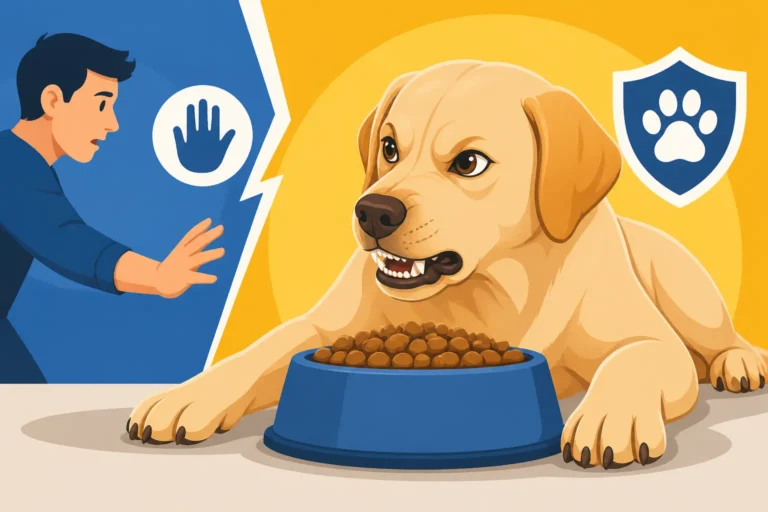
In contrast, a fearful Labrador might also refuse to move, but their internal state is entirely different. They might become rigid, glue themselves to the spot, or try to back away from a perceived threat – be it a noisy truck, an unfamiliar person, or even a strange object on the sidewalk. This isn't a choice to be difficult; it's a deep-seated instinct to avoid danger. You might see subtle signs like their body tensing, ears flattening, or even a low growl if they feel cornered. This is their brain screaming "danger!" and overriding any command you might give. It's not about them being uncooperative; it's about them feeling unsafe.
Key Indicators of Fear and Anxiety in Labradors
Learning to read your Labrador's subtle body language is like learning a new language. They are constantly communicating, but if we're not tuned in, we can miss the most important messages. Recognizing these cues is fundamental to understanding if your Lab is genuinely scared rather than simply choosing to ignore you.
Subtle Body Language Cues
Labradors, like many dogs, are masters of subtle communication. They often try to signal their discomfort long before they resort to overt displays of fear. These early warning signs are critical to notice. Look for rapid lip licks, especially when no food is present, or a series of quick yawns that seem out of place – not when they're tired, but perhaps after a loud noise or during an uncomfortable interaction. These are often stress signals, ways for a dog to try and calm themselves or diffuse a tense situation.
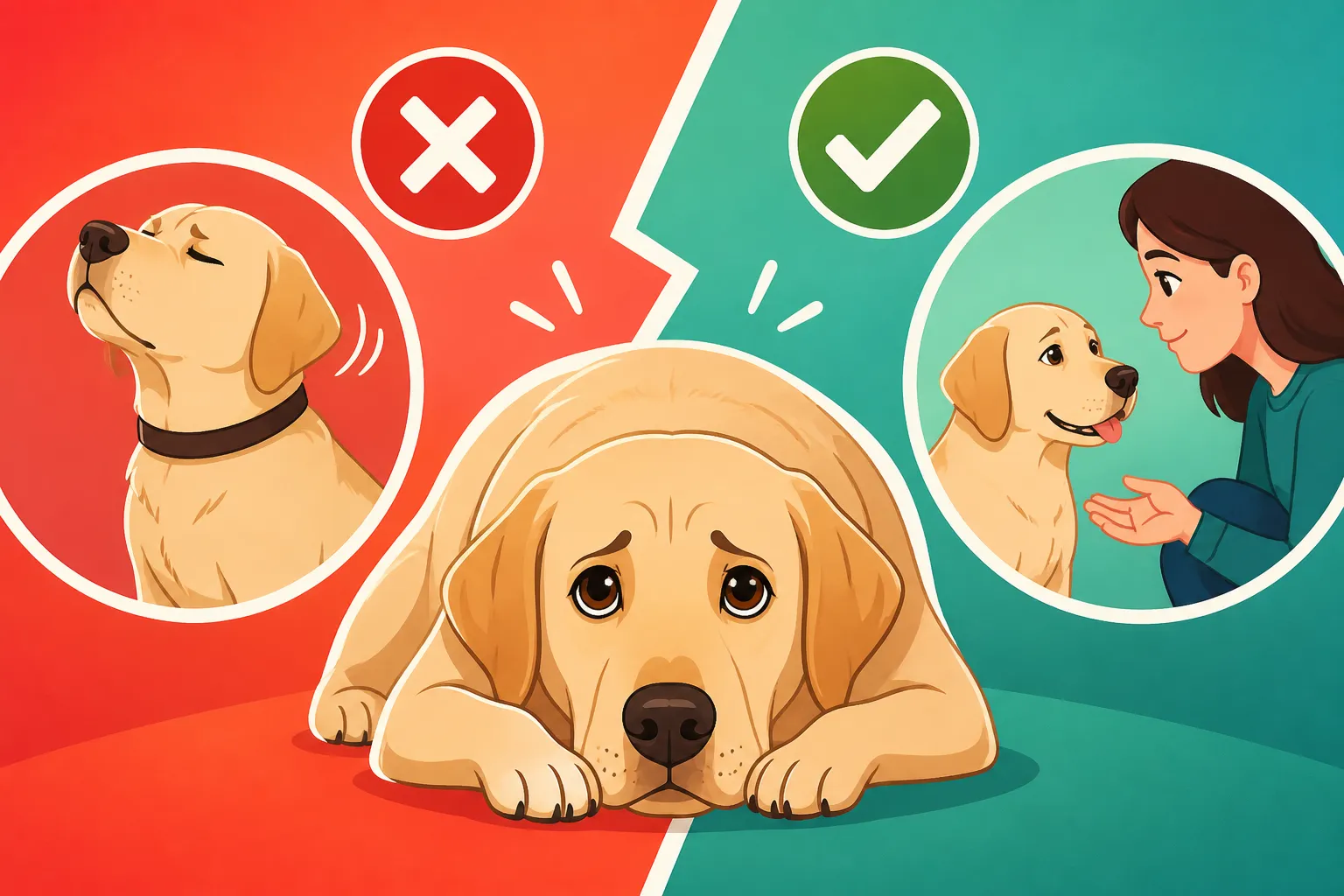
Another common sign is "whale eye," where you can see the whites of your Labrador's eyes, especially around the edges, as they avert their gaze but still try to keep an eye on whatever is bothering them. Their head might be lowered, their ears flattened against their head or pulled back. A tucked tail, even if just slightly, is a classic sign of unease or fear. If you see their tail, usually a lively barometer of their mood, drop or clamp between their legs, it's a clear indicator something is wrong. Even a slight stiffness in their body, a hesitation in their movement, or avoiding eye contact can all point to an inner turmoil. These cues are easily missed if you're not actively looking for them, especially if you're focused on getting them to perform a command. For more insights, you might find Reading Pain in a Stoic Labrador helpful, as pain can also manifest in subtle behavioral changes that are sometimes mistaken for stubbornness.
Consider a situation where a new person approaches your Labrador. They might take a treat, but if their body is slightly turned away, their tail is low, and you catch a quick lip lick or a flicker of whale eye, they are telling you they are uncomfortable, even if they aren't growling or running away. It's a quiet plea for space and understanding, often misinterpreted as shyness or mild disinterest rather than genuine fear.
Overt Behavioral Signs
While subtle cues are the early warnings, Labradors also have more overt ways of communicating fear when their discomfort escalates or they feel their warnings have been ignored. These are the behaviors that are harder to miss and should always be taken seriously as clear indicators of distress. Growling or snapping, particularly when unprovoked by pain or aggression, is often a last-resort communication from a fearful dog. It's their way of saying, "I'm scared and I need you to back off!"
Trembling or shaking, especially when not cold, is a very strong indicator of anxiety. A fearful Labrador might also pace restlessly, unable to settle, or try to hide behind your legs, under a table, or in a corner of the room. Barking can also be a fear response, distinct from attention-seeking or territorial barking; it might be higher pitched, more frantic, and directed at the perceived threat rather than just "at nothing." In some cases, a very scared Labrador might even urinate or defecate out of fear, particularly if they feel trapped or utterly overwhelmed.
Think of your Lab during a sudden, loud thunderstorm. If they're trembling, panting, trying to squeeze into a tight space, or pacing endlessly, it's not them being "dramatic" or "stubborn" about being moved; it's a clear manifestation of deep-seated fear. Ignoring these signs or trying to force them through it can actually worsen their anxiety over time. Understanding Thunderstorm Fear in Labrador Retrievers can provide more specific guidance on this common anxiety trigger. These overt signs are not just "bad manners"; they are critical appeals for help and comfort from your dog.
Changes in Routine and Appetite
One of the most telling signs that your Labrador is struggling with fear or anxiety, rather than just being momentarily disobedient, is a noticeable change in their usual habits. Labradors are typically creatures of routine and notoriously food-motivated, so deviations in these areas should raise a red flag. If your usually ravenous Labrador suddenly turns their nose up at their favorite meal, or refuses a high-value treat that they'd normally trip over themselves for, it's a strong indicator that something is emotionally unsettling them. Their digestive system is directly tied to their emotional state, and anxiety can easily suppress appetite.
Beyond food, look for alterations in their daily patterns. A fearful dog might start avoiding certain areas of the house or yard that they previously enjoyed. For instance, if your Lab suddenly refuses to go into the kitchen after a pot fell loudly there, it's not stubbornness; it's a learned fear response to that location. You might also notice changes in their sleep patterns – restlessness at night, excessive napping during the day, or an inability to settle in their usual sleeping spots. Some fearful dogs become clingier, wanting to be constantly near their owner, while others might become more withdrawn, seeking solitude.
These changes are not minor; they signify that your Labrador's internal state is significantly impacted. It's their silent way of saying, "I'm not okay right now." A Labrador who usually loves car rides but suddenly resists getting in, or one who adored the dog park but now freezes at the gate, isn't being contrary. They are exhibiting a strong emotional aversion, rooted in fear or a negative association. These shifts in appetite and routine are often far more reliable indicators of underlying anxiety than a simple refusal to "sit" in a distracting environment.
Differentiating Between Fear and Stubbornness in Training Scenarios
It's in training, or when we're trying to get our Labs to do something, that the line between fear and stubbornness often blurs. This is where context becomes your most powerful tool. Observing when and where a behavior occurs, and considering what your Labrador might be experiencing, is crucial for an accurate assessment.
When a Labrador Refuses a Command
When your Labrador refuses a command they know perfectly well, the initial reaction might be frustration. You think, "They know 'stay,' why are they ignoring me?" But before you double down with stricter commands, take a moment to analyze the situation. Is this a new environment, far more stimulating or scary than where you usually practice? Are there new people, unfamiliar dogs, loud noises, or strange objects present? All of these factors can push a Labrador past their comfort zone, making it difficult, if not impossible, for them to focus on or comply with your request.
Consider your Labrador who performs a perfect "come" in your quiet backyard. Now, imagine you're at a busy park, and you call them. They might hesitate, look around frantically, perhaps even tuck their tail slightly before ignoring you and trying to sniff something else or just stand still. In this moment, are they stubbornly choosing not to come, or is the overstimulation of the park environment, combined with the presence of other dogs or children, overwhelming their ability to process your command? It's often the latter. Their brain, flooded with anxiety, literally can't access the learned behavior. If you force the issue, you might inadvertently create a negative association with that command in that environment. This is why When a Labrador Can Be Trusted Off Leash emphasizes the importance of building recall in gradually increasing distractions, not just assuming compliance.
Also, think about past experiences. Has your dog been corrected harshly in similar situations? Have they been startled by a sudden sound during a particular exercise? A negative association can quickly turn a previously easy command into a source of fear. For example, if your Lab has had a painful experience at the vet, they might refuse to get in the car for a vet visit, even if they normally love car rides. This isn't stubbornness; it's a valid, albeit inconvenient, fear response.
The Importance of Environment
The environment plays a colossal role in shaping your Labrador's behavior, and it's often the key differentiator between true stubbornness and fear-induced refusal. A Labrador who is perfectly relaxed and responsive at home might become a completely different dog in a high-stress, unfamiliar, or overly stimulating setting. This isn't an act of defiance; it's often a direct reflection of their emotional threshold being exceeded.
Think of it this way: you might be an excellent public speaker in a small, familiar meeting room, but put you on a huge stage in front of thousands, and you might freeze up, forget your words, or even run off stage. This isn't stubbornness; it's anxiety overwhelming your ability to perform. Dogs experience something similar. Your Labrador might walk beautifully on a loose leash in your quiet neighborhood, but the moment you step onto a busy city street with roaring buses, honking cars, and a multitude of strangers, they might become rigid, pull frantically, or plant their feet and refuse to move. This is known as "exceeding their threshold."
When a Labrador is over threshold, their cognitive functions—their ability to learn, listen, and obey commands—are largely shut down. Their primal instincts for fight, flight, or freeze take over. If you push them further into this state, you're not teaching them to be less stubborn; you're teaching them that scary situations are unavoidable and that you aren't listening to their distress signals. Instead of viewing it as a challenge to your authority, recognize it as a plea for help. Changing the environment, even just by moving a block away or finding a quieter spot, can often instantly de-escalate the situation and allow your Labrador to become more receptive again. This highlights why understanding Fearful Behavior in a Labrador is so vital for their well-being.
Responding to a Scared Labrador Effectively
Once you've identified that your Labrador is acting out of fear, rather than just being stubborn, your approach needs to shift dramatically. Your goal is no longer to enforce a command but to offer comfort, create safety, and help them process their emotions in a positive way. This builds trust and strengthens your bond, turning a potentially negative experience into an opportunity for growth.
Prioritizing Safety and Creating Distance
The absolute first step when you realize your Labrador is genuinely scared is to prioritize their safety and, if possible, remove them from the source of their fear. This means creating distance between your dog and whatever is causing them distress. If a loud truck just passed and your Lab is trembling, don't force them to keep walking forward into potential further noise; calmly guide them to a quieter side street or pause until the sound dissipates. If another dog is approaching and your Lab is showing signs of anxiety, politely (but firmly) increase the distance or change direction.
It's critical not to dismiss their feelings or try to force them to "get over it." Validating their fear, even silently through your actions, helps them feel understood and protected. Trying to push a scared dog further into a fearful situation often backfires, making them more anxious and potentially leading to more reactive behaviors in the future. Imagine if you were terrified of spiders and someone kept pushing you closer to one, telling you to "be brave." It wouldn't help; it would just make you more scared and less trusting of that person. Your Labrador needs you to be their advocate and their safe harbor.
A practical example might be walking your Labrador and noticing them stiffen and give whale eye as a child on a scooter approaches quickly. Instead of waiting for a full meltdown or growl, immediately step between your dog and the scooter, and calmly lead your dog off the sidewalk or behind a bush until the scooter passes. You're not "rewarding" fear by doing this; you're teaching your dog that you are a reliable source of safety in a scary world.
Building Confidence and Positive Associations
Once you've addressed immediate safety, the next step is to help your Labrador build confidence and create positive associations with situations they find challenging. This is a gradual process known as counter-conditioning and desensitization. It involves exposing your dog to the scary trigger at a very low intensity – so low that they don't react with fear – and then pairing that experience with something wonderful, like high-value treats or praise.
For instance, if your Labrador is afraid of strangers, don't throw them into a crowded room. Instead, start by having a friendly stranger stand far away, just barely within sight, while you feed your Labrador their absolute favorite treats. As the stranger moves a tiny bit closer over many sessions, your dog learns that "stranger approaching" now means "tasty treats are coming!" Gradually, their emotional response shifts from fear to anticipation. You're not forcing interaction; you're changing their internal narrative about the trigger. Building Confidence in a Timid Labrador offers more detailed strategies for this.
Consider incorporating brain games and puzzle feeders into your routine, even for routine anxiety. Mental work can be incredibly tiring and satisfying for a Labrador, diverting their focus from anxieties and building problem-solving skills which can translate to increased confidence. Products available on Amazon like snuffle mats or interactive treat dispensers can be excellent tools for this. Online training platforms, such as those offered by BAXTER & Bella, often have modules specifically designed to build confidence in shy or anxious dogs using positive reinforcement methods. These resources can be invaluable for guiding you through these steps at your own pace and ensuring you're using humane, effective techniques.
Seeking Professional Guidance
There are times when a Labrador's fear or anxiety is deeply ingrained, severe, or simply beyond what an owner can manage effectively on their own. In these situations, seeking professional guidance is not a sign of failure but an act of responsible and loving pet ownership. A certified professional dog trainer or a veterinary behaviorist can provide invaluable expertise.
A professional dog trainer who specializes in positive reinforcement and fear-free methods can help you assess the root cause of your Labrador's fear, develop a tailored training plan, and teach you the specific techniques for counter-conditioning and desensitization. They can observe your dog's subtle cues that you might be missing and offer practical, hands-on advice. They can help you with specific issues like Labrador Anxiety Around Fireworks or Fearful Behavior in a Labrador.
For more severe cases, especially those involving aggression born from fear, or if your Labrador's anxiety is causing significant distress or impacting their quality of life, a veterinary behaviorist is the appropriate specialist. These are veterinarians who have gone on to specialize in animal behavior, meaning they can prescribe medication if necessary, in conjunction with behavior modification techniques. They can address underlying medical conditions that might be exacerbating anxiety and provide a holistic treatment plan. Never hesitate to reach out for help. Your Labrador deserves to live a confident, happy life, and sometimes, that requires a team approach. You can also find numerous highly-rated books on canine behavior and anxiety management on Amazon that can supplement professional advice and deepen your understanding.
Understanding whether your Labrador is scared or just being stubborn is more than just about obedience; it's about deeply understanding and bonding with your cherished companion. By learning to read their subtle cues, prioritizing their safety, and patiently building their confidence, you'll not only help them navigate a sometimes overwhelming world but also strengthen the incredible relationship you share. Your Labrador isn't trying to be difficult; they're trying to communicate, and by listening, you become the best advocate they could ever ask for.
Disclaimer
This article is for general informational purposes only and does not constitute professional advice. Laws, prices and regulations vary by location and change over time. Consult a qualified professional for guidance on your specific situation.