Spotting a Labrador Puppy Mill
There's a special kind of dread that creeps into the hearts of prospective Labrador owners when they start looking for a puppy: the fear of inadvertently supporting a puppy mill. You dream of a healthy, happy, wagging bundle of joy, but the horror stories of sick, unsocialized pups from terrible conditions are enough to make anyone anxious. This guide is here to cut through the confusion and equip you with the crucial knowledge to confidently spot and steer clear of these unethical operations, ensuring you bring home a well-adjusted Labrador.
The Heartbreaking Reality of Puppy Mills
Finding a new family member should be a joyous journey, but sadly, not every "breeder" has the dogs' best interests at heart. Puppy mills are a dark stain on the dog world, preying on unsuspecting families and causing immense suffering to their animals. Understanding what they are and why they're so harmful is the first step in avoiding them.
What Exactly Is a Puppy Mill?
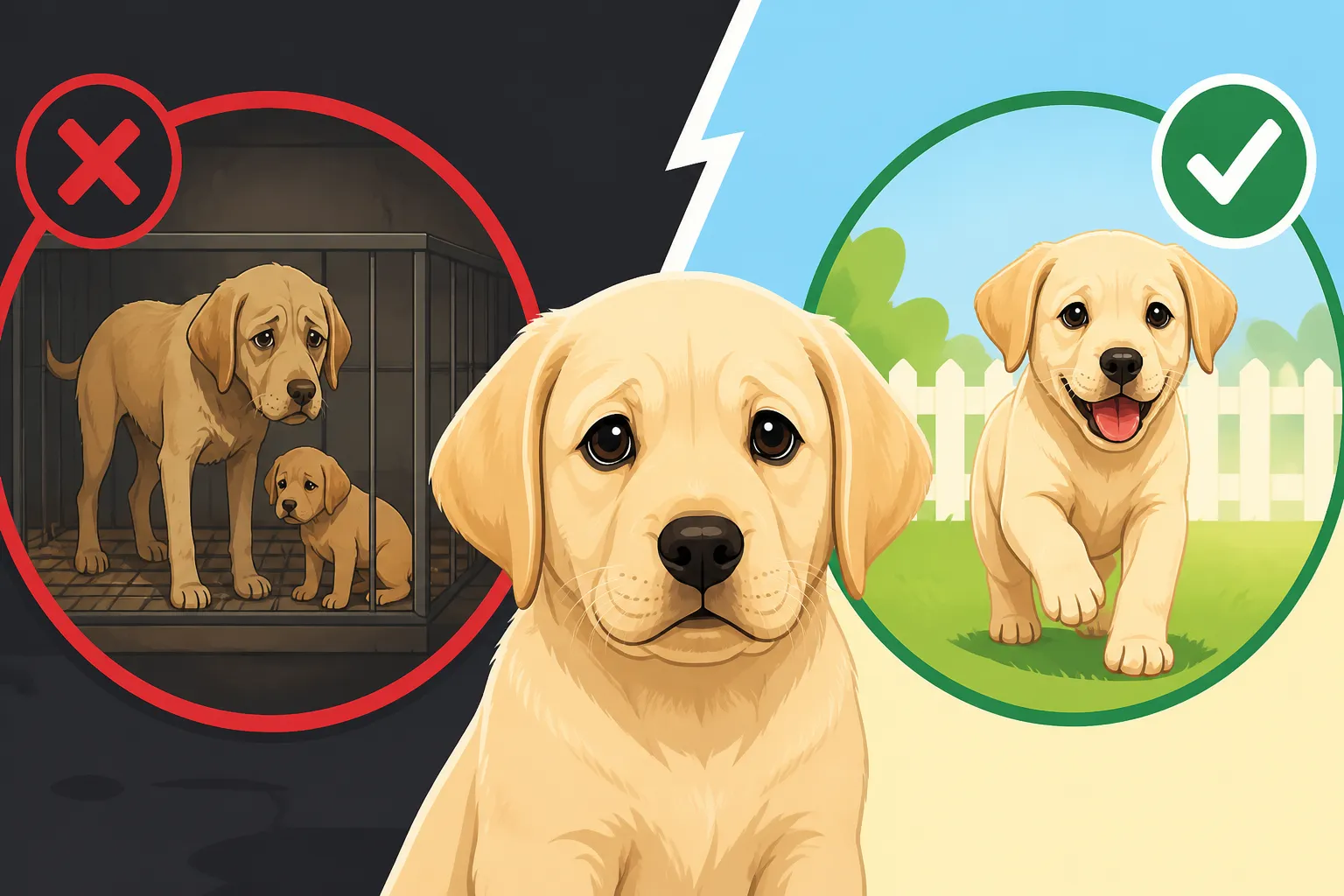
At its core, a puppy mill is a commercial dog breeding facility that prioritizes profit over the health and welfare of the animals. Imagine dozens, sometimes hundreds, of dogs kept in cramped, often filthy cages, with little to no exercise, veterinary care, or human interaction. These facilities typically breed dogs relentlessly, often back-to-back litters, until the mothers are physically exhausted and no longer deemed useful. It's a cruel, factory-like approach to living creatures, focusing purely on churning out puppies as quickly and cheaply as possible. They aren't interested in improving the breed, genetic health, or the individual well-being of their dogs; it's a business model built on exploitation.
These operations can range from a few neglected dogs in a backyard to massive, industrial-scale facilities housing hundreds. What unites them is the systemic disregard for basic animal welfare standards. The dogs often stand and sleep on wire floors, leading to painful foot injuries, and are lucky to receive even minimal food and water, let alone proper nutrition. They exist in a constant state of neglect, fear, and discomfort, hidden away from public view, making it difficult for concerned individuals to intervene.
Why Puppy Mills Thrive and How They Harm Labradors
Puppy mills persist because there's a demand for puppies, and they exploit this demand by offering animals at seemingly lower prices or with immediate availability. They often market heavily online or supply pet stores, making it easy for them to reach a wide audience without ever interacting directly with discerning buyers. These operations thrive on anonymity and impulse buys, counting on people falling in love with a cute puppy picture before asking too many questions. They capitalize on the public's emotional response, bypassing the critical thought process that should accompany such a significant decision.
For Labradors, a breed known for its friendly, outgoing nature, the conditions in a puppy mill are particularly devastating. These highly social and intelligent dogs are deprived of everything they need to develop into well-adjusted companions. They miss critical socialization periods, leading to lifelong fear, anxiety, and aggression. Their physical health is often compromised, leading to a host of issues that can cost new owners significantly in vet bills, sometimes even requiring emergency care that can be financially draining, even with pet insurance from providers like Healthy Paws. Understanding the true financial commitment is key, as outlined in articles like First Year Costs New Labrador Owners Forget.
The Long-Term Impact on a Puppy and Its New Family
Bringing a puppy mill Labrador into your home can be an incredibly challenging experience, both emotionally and financially. These puppies often arrive with a myriad of health problems, ranging from easily treatable parasites and respiratory infections to more serious genetic conditions like Labrador Hip and Elbow Dysplasia that could have been screened for by a responsible breeder. Their compromised immune systems and poor nutrition in early life can lead to chronic health issues, shortening their lifespan and requiring constant veterinary intervention.
Beyond physical ailments, the behavioral scars are profound. A puppy raised in isolation and fear often struggles with house-training, leash walking, and interacting with other dogs or people. They may exhibit extreme shyness, separation anxiety, aggression, or even compulsive behaviors like excessive licking or spinning. The joyful experience of welcoming a new puppy can quickly turn into a heartbreaking struggle to manage severe issues, often requiring expensive professional training and behavioral therapy. Families often find themselves pouring immense time, love, and resources into helping these traumatized dogs, and while many persevere, it's a burden no one should have to bear unknowingly.
Red Flags in the Breeder's Environment and Practices
When you're trying to determine if a breeder is legitimate, pay close attention to how they operate and what they're willing to show you. Many red flags manifest in their environment and overall practices, revealing their true intentions and the conditions their dogs endure.
The "No Visits" Policy and Unsanitary Conditions
One of the most glaring red flags is a breeder who refuses to let you visit their facility. Any reputable breeder will welcome potential buyers to see where their puppies are raised, meet the mother, and observe the living conditions. A "no visits" policy is almost always a thinly veiled attempt to hide unsanitary, overcrowded, or inhumane conditions. They might offer to meet you in a parking lot, deliver the puppy to your home, or show you only the puppy via video call, never allowing you a glimpse into the actual breeding operation.
If you are allowed to visit, pay very close attention to your surroundings. Do you notice a strong, unpleasant odor of urine or feces? Are the kennels clean and spacious, or are dogs confined to small, dirty crates? Are there adequate ventilation, lighting, and protection from extreme weather? A good breeder maintains a clean, safe, and stimulating environment for their dogs. You should also be able to see the mother dog interacting with her puppies. She should appear healthy, well-nourished, and have a good temperament. If the mother dog is timid, fearful, aggressive, or appears neglected, these are serious warning signs that the entire operation is compromised.
Multiple Breeds, Constant Litters, and Lack of Specialization
Another significant red flag is a breeder who offers multiple breeds of puppies, often advertised as "designer dogs" or simply a wide variety of popular breeds, rather than specializing in one or two. Reputable breeders dedicate years to understanding the genetics, health concerns, and temperament of a specific breed like the Labrador. They are passionate about improving the breed line, not simply producing as many puppies as possible. A breeder juggling several different breeds is less likely to have the expertise or resources to properly care for each one and certainly won't be focused on breed-specific health screenings or genetic improvements.
Closely related to this is the presence of constant litters and puppies always being "available." Responsible breeding is a planned, thoughtful process. Female dogs are given ample time to recover between litters, often only breeding once every year or two. If a breeder always has puppies ready to go, or multiple litters on the ground from different mothers at any given time, it's a strong indicator that they are overbreeding their dogs for profit. This high-volume operation sacrifices the health and well-being of the breeding dogs for continuous output. A legitimate Labrador breeder will often have a waiting list and breed only a few litters a year, planning each breeding carefully.
High-Pressure Sales Tactics and Immediate Availability
Be wary of any breeder who employs high-pressure sales tactics. This includes trying to rush your decision, insisting you put down a deposit immediately, or telling you that another buyer is waiting if you don't commit. Reputable breeders are focused on finding the absolute best homes for their puppies, not on making a quick sale. They will take their time to get to know you, ask questions about your lifestyle, and ensure a Labrador is truly the right fit for your family. They understand that bringing a puppy home is a significant commitment, and they want you to be confident in your choice.
Furthermore, immediate availability of puppies should raise an eyebrow. As mentioned, most quality Labrador breeders have waiting lists. If you can call today and pick up a puppy tomorrow, without any screening questions or background checks on your part, it's a major cause for concern. Puppy mills want to move their inventory quickly, so they don't care about the prospective owner; they simply want the transaction. They might try to sweeten the deal with promises of cheap prices or "rare" colors, but these are often distractions from the lack of ethical breeding practices. Be especially wary if the advertised price is significantly lower than the average Labrador Puppy Prices and What Moves Them in your region.
Warning Signs in the Labrador Puppies Themselves
The puppies themselves often carry the most heartbreaking signs of a puppy mill operation. While a cute face can be distracting, it's crucial to observe their physical health and behavior for clues about their upbringing.
Unhealthy Appearance and Behavioral Issues
Puppies from mills often have obvious signs of neglect or poor health. Look for dull coats, thin or underweight bodies, visible parasites (like fleas or worms), discharge from their eyes or nose, or skin issues. They might have potbellies, which can be a sign of a heavy worm burden, or limping, which could indicate underlying structural problems common in poorly bred dogs. Their ears might be dirty or inflamed, suggesting a lack of basic hygiene. While minor issues can happen in any litter, a general appearance of unthriftiness or multiple puppies showing health problems is a huge red flag.
Beyond the physical, pay attention to their behavior. A healthy, well-socialized Labrador puppy should be curious, playful, and responsive to human interaction. Puppy mill pups, however, often exhibit extreme shyness, fear, or even aggression due to lack of positive human contact. They might cower in a corner, avoid eye contact, or tremble when approached. Some may be overly hyperactive and nip excessively, not out of playfulness, but due to anxiety and lack of appropriate socialization. These are not just "personality quirks" but deeply ingrained behavioral issues stemming from their traumatic early environment. For tips on managing common puppy behaviors like mouthing, check out Labrador Puppy Mouthing and How to Redirect It.
Lack of Socialization and Fearfulness
The critical socialization period for puppies happens during their first few weeks and months. Puppy mill puppies are almost always deprived of this. They don't encounter various sounds, sights, people, or other animals in a positive way, leading to a profound lack of confidence and an inability to cope with normal life situations. Imagine a Labrador, a breed celebrated for its calm and friendly demeanor, growing up never having experienced a gentle human touch or a walk on grass. This neglect profoundly impacts their ability to adapt to a family home.
When you meet a puppy, try to engage it gently. Does it recoil or try to flee? Does it seem unaware of its surroundings or overly startled by normal noises? These are signs of poor socialization. A well-bred Labrador puppy, even if a little shy at first, should eventually show some curiosity and willingness to interact. If a puppy seems utterly terrified or withdrawn, it's highly likely it came from an environment where positive human interaction was minimal to nonexistent. The article Socializing a Labrador Puppy offers guidance on what proper early socialization looks like.
Missing or Dubious Health Clearances
Responsible breeders perform extensive health clearances on both parent dogs to minimize the risk of passing on genetic diseases. For Labradors, this typically includes screenings for hip and elbow dysplasia, eye conditions like Progressive Retinal Atrophy (PRA), and often genetic tests for conditions like Exercise-Induced Collapse (EIC) or Centronuclear Myopathy (CNM). If a breeder cannot provide proof of these clearances for both parent dogs, or if the documentation seems vague or incomplete, walk away. They might claim their dogs are "vet checked," but this is not the same as proper genetic health screening.
A common tactic of puppy mills is to claim "health checks" or offer generic "health guarantees" that are often worthless. Ask for specific certifications, such as OFA (Orthopedic Foundation for Animals) or PennHIP results for hips and elbows, and current CERF (Canine Eye Registry Foundation) eye exams. A reputable breeder will have these documents readily available and be happy to discuss them. Be sure to understand Health Clearances a Labrador Breeder Must Show and how to verify them. Don't simply take their word for it; a good breeder will expect you to verify.
Scrutinizing the Breeder's Communication and Documentation
The way a breeder communicates and the documentation they provide are equally important indicators of their legitimacy. Red flags often appear in evasive answers, missing paperwork, or guarantees that seem too good to be true.
Evasiveness and Lack of Transparency
A reputable breeder will be an open book. They will gladly answer all your questions, no matter how many or how detailed. They should be able to tell you about the lineage of their dogs, their breeding philosophy, the specific health tests performed on the parents, and their puppies' daily routine. If a breeder is vague, deflects questions, gets defensive, or seems annoyed by your inquiries, it's a serious warning sign. They might give you generic answers or dismiss your concerns outright.
For example, if you ask about the temperament of the sire (father) of the litter, they should be able to describe his personality, perhaps even show you a picture or video, or tell you about his accomplishments in sports or show rings. If they can only say "he's a good dog," without further detail, it's a red flag. Similarly, if you ask about their puppies' feeding regimen, they should be able to provide details on the specific brand of food (e.g., a quality brand available on Chewy or Ollie), frequency, and portion sizes. A lack of transparency in any area usually means they have something to hide. It's important to ask Questions to Ask a Labrador Breeder to ensure you cover all your bases.
Incomplete or Missing Paperwork
Upon picking up your puppy, you should receive a comprehensive packet of information. This typically includes the puppy's health records (vaccination history, deworming schedule, vet check details), proof of parentage (pedigree, if applicable), a copy of the parents' health clearances, feeding instructions, and a written contract. If any of this essential paperwork is missing or seems hastily put together, it's a cause for concern. Puppy mills often neglect proper record-keeping or forge documents to cover their tracks.
Beware of breeders who promise to send papers later or only provide registration papers from obscure or unrecognized registries. For a purebred Labrador, you should expect AKC (American Kennel Club) registration papers. Be especially vigilant about health records. The puppy should have received its first vaccinations and deworming treatments appropriate for its age. If a breeder claims the puppy hasn't had any vet care, or provides a vaccination record that seems too good to be true, it’s a major red flag indicating potential fraud or neglect.
Unrealistic Guarantees or None at All
A responsible breeder will offer a health guarantee, usually for a specific period (e.g., one year) against severe genetic health conditions. This guarantee typically outlines what happens if a puppy develops a life-altering genetic illness within that timeframe, often offering a replacement puppy or a partial refund. While no guarantee can cover every single possibility, it demonstrates a breeder's confidence in their breeding program and their commitment to the health of their puppies.
However, be wary of guarantees that are overly elaborate, vague, or seem too good to be true, such as a lifetime guarantee with no clear stipulations. Conversely, a breeder offering no health guarantee whatsoever is a massive red flag. This indicates they have no confidence in the health of their breeding stock or the puppies they produce. They are essentially saying, "Once you take the puppy, it's your problem," which is the hallmark of a puppy mill operation. Also, understand the difference between a health guarantee and what pet insurance, like Healthy Paws, covers, as they serve different purposes.
Taking Proactive Steps to Find a Reputable Labrador Breeder
The best defense against puppy mills is thorough research and due diligence. By being proactive and knowing what to look for, you can significantly increase your chances of finding a truly responsible and ethical Labrador breeder.
The Importance of Research and Asking the Right Questions
Before you even start looking at puppies, dedicate significant time to researching the Labrador Retriever breed. Understand their temperament, exercise needs, common health issues, and what a well-bred Labrador looks like. This knowledge empowers you to ask informed questions and spot inconsistencies. Look up the breed standard, learn about Labrador Puppy Health in the First Year, and familiarize yourself with health clearances.
When you contact potential breeders, have a list of detailed questions ready. Ask about their breeding goals, why they chose these specific parent dogs, what health tests they perform (and ask to see the results), how they socialize their puppies, and what kind of support they offer after you take the puppy home. A good breeder will also ask you many questions to ensure their puppy is going to a suitable home. This two-way interview process is a positive sign. Don't be afraid to ask for references from previous puppy buyers or their veterinarian.
Visiting the Breeder or Using a Trusted Proxy
Whenever possible, insist on visiting the breeder's facility in person. This is non-negotiable. It allows you to observe the living conditions, meet the parent dogs, and interact with the puppies in their home environment. Pay attention to the overall cleanliness, the demeanor of the adult dogs (especially the mother), and how the puppies behave. Are they active and engaging? Do they seem comfortable in their surroundings? A quick trip can tell you more than a hundred phone calls.
If a physical visit isn't feasible due to distance, consider asking for an extensive video call where they walk you through the entire facility, showing you the parents and the puppies interacting. While not ideal, it's better than nothing. However, this option still carries risks as it can be staged. Even better, see if you can find a trusted local contact (perhaps through a local breed club) who can visit on your behalf. Always remember, if a breeder is truly reputable, they will be transparent and proud to show off their operation.
Understanding Health Clearances and Genetic Testing
This is where many puppy mills fall short. Reputable Labrador breeders prioritize the long-term health of their dogs and puppies. They invest in comprehensive health clearances for both parents, including screenings for hips (OFA or PennHIP), elbows (OFA), eyes (CERF/OFA eye exam by a veterinary ophthalmologist), and often specific genetic tests for conditions prevalent in Labradors, such as PRA, EIC, and CNM. You should be able to view these official results, not just hear vague assurances. Learn how to independently verify these results, for example, by checking the OFA website with the parent dogs' registered names or numbers, as discussed in Verifying OFA Results a Labrador Breeder Shows.
A good breeder will also be transparent about any potential health issues in their lines, even if they've screened for them. They'll explain what specific Genetic Panels Worth Running on a Labrador are and why they chose to run them. The goal is to minimize the risk, not eliminate it entirely, as no breeder can guarantee a puppy will never have a health issue. But a responsible breeder takes every possible step to stack the odds in your favor, protecting their puppies and giving new families peace of mind.
Here's a quick comparison to help you distinguish between a reputable breeder and a puppy mill:
| Feature | Reputable Breeder | Puppy Mill |
|---|---|---|
| Visitation Policy | Welcomes visits to see facility, parents, and pups. | No visits, meets in public, delivers, or only video calls. |
| Environment | Clean, spacious, stimulating, safe environment. | Dirty, cramped cages, foul odors, neglect. |
| Breeds Offered | Specializes in 1-2 breeds, deeply knowledgeable. | Offers multiple breeds, focuses on "designer" dogs. |
| Puppy Availability | Often has waiting lists, plans litters carefully. | Always has puppies available, constant litters. |
| Parent Dogs | Healthy, well-socialized, good temperament, on-site. | Hidden from view, appear neglected, fearful, or unhealthy. |
| Puppy Health | Appears healthy, alert, curious, playful, veterinarian-checked. | Often sick, fearful, lethargic, signs of parasites/illness. |
| Health Clearances | Provides verifiable OFA/PennHIP/CERF/genetic test results for both parents. | Claims "vet checked," vague health guarantees, no verifiable documents. |
| Paperwork | Comprehensive health records, registration papers (e.g., AKC), written contract. | Incomplete, dubious registration, "papers sent later." |
| Communication | Transparent, answers all questions, asks about your home. | Evasive, high-pressure, defensive, dismissive. |
| Price | Reflects investment in health, care, and breeding quality. | Often significantly lower than average, or excessively high for "rare" colors. |
Disclaimer
The information provided in this article is for general informational purposes only and does not constitute veterinary or professional advice. Always consult with a qualified veterinarian or professional dog trainer for any health or behavioral concerns specific to your Labrador Retriever.