Checking a Labrador’s Body Condition Score
One of the biggest heartaches for Labrador owners is watching their beloved companion slowly gain weight, often despite their best efforts. It’s a frustrating cycle, especially when you know deep down that those extra pounds aren't good for them, but it feels impossible to keep them lean. This guide is here to help you truly understand your Labrador's body condition, giving you the practical tools to assess their physique accurately and make informed decisions for their long-term health.
Why a Labrador's Weight is So Tricky to Manage
Let's be honest, Labradors are often described as "food-motivated," which is a polite way of saying they live to eat. This isn't just a charming quirk; it's a significant factor in why so many struggle with their weight. It can feel like an uphill battle, especially when every other dog at the park seems to effortlessly maintain a svelte figure while your Lab looks at a crumb on the floor like it's a gourmet meal.
The Genetic Predisposition to Overeating
It turns out, there's a real, scientific reason behind your Labrador's insatiable appetite. Many Labradors carry a genetic mutation, specifically involving The POMC Gene and Labrador Appetite, which means their brains don't get the same "I'm full" signals that other dogs do. Imagine always feeling a little hungry, no matter how much you eat – that's what it can be like for them. This isn't about lack of discipline on your part; it's a biological reality. This genetic predisposition makes them incredibly efficient at storing fat, which means even a slight overfeeding can quickly tip the scales. It's truly a struggle that many Labrador owners face, and it's not a reflection of your care, but rather a characteristic of the breed itself.
The "Forever Puppy" Look Can Be Deceiving
There's a common misconception that a "stocky" or "chunky" Labrador is a healthy, well-fed Labrador. Often, people associate a broader build with the "English" or "show" type Labradors, believing this is simply their natural physique. However, this full-bodied appearance can often mask excessive fat. What looks like a sturdy build might actually be a layer of fat obscuring their true shape. A young, energetic Labrador can often burn off a few extra calories, but as they mature, that "puppy fat" can quickly become an entrenched weight problem. You might see a beautiful, well-loved Labrador who looks happy and bouncy, but beneath that sleek coat, there could be inches of fat where lean muscle should be.
The Impact of Extra Weight on a Labrador's Health
The reality is that extra weight isn't just an aesthetic issue; it significantly impacts your Labrador's quality of life and longevity. Every extra pound puts undue stress on their joints, especially prone areas like hips and elbows, exacerbating conditions like Labrador Hip and Elbow Dysplasia. It can also contribute to diabetes, heart disease, and a general reduction in their overall lifespan. Studies have even shown a clear link between Labrador Obesity and the Years It Costs, demonstrating that a lean Labrador truly lives a longer, happier life. Imagine your once-athletic companion struggling to jump into the car or keep up on a walk – that's the heartbreaking reality many owners face when weight isn't managed. It's about more than just numbers on a scale; it's about their comfort, mobility, and enjoying their golden years with you.
Understanding the Body Condition Scoring System
So, if the scale doesn't tell the whole story, what does? This is where the Body Condition Scoring (BCS) system comes in. It's a fantastic, non-invasive way to assess your Labrador's overall health based on their fat reserves, giving you a much clearer picture than just their weight in pounds or kilograms.
What is Body Condition Score BCS?
Body Condition Score, or BCS, is a standardized, visual, and hands-on assessment tool used by veterinarians and informed pet owners worldwide. Instead of relying solely on a number on the scale, which can vary wildly depending on your Labrador's bone structure, muscle mass, and even their specific lineage (field vs. show lines), BCS focuses on the amount of fat covering their bones. It's typically a 9-point scale, where 1 is emaciated, 9 is morbidly obese, and the ideal range is usually considered 4-5. Think of it like feeling for the padding on a piece of furniture; you want just enough to be comfortable, but not so much that you can't feel the structure underneath. This system helps you determine if your Labrador is too thin, just right, or carrying too much extra weight.
The Visual Cues: Ribs, Waist, and Tummy Tuck
Learning to "read" your Labrador's body visually is the first step in BCS. When you look at your dog, you're not just admiring their beautiful coat; you're assessing their shape.
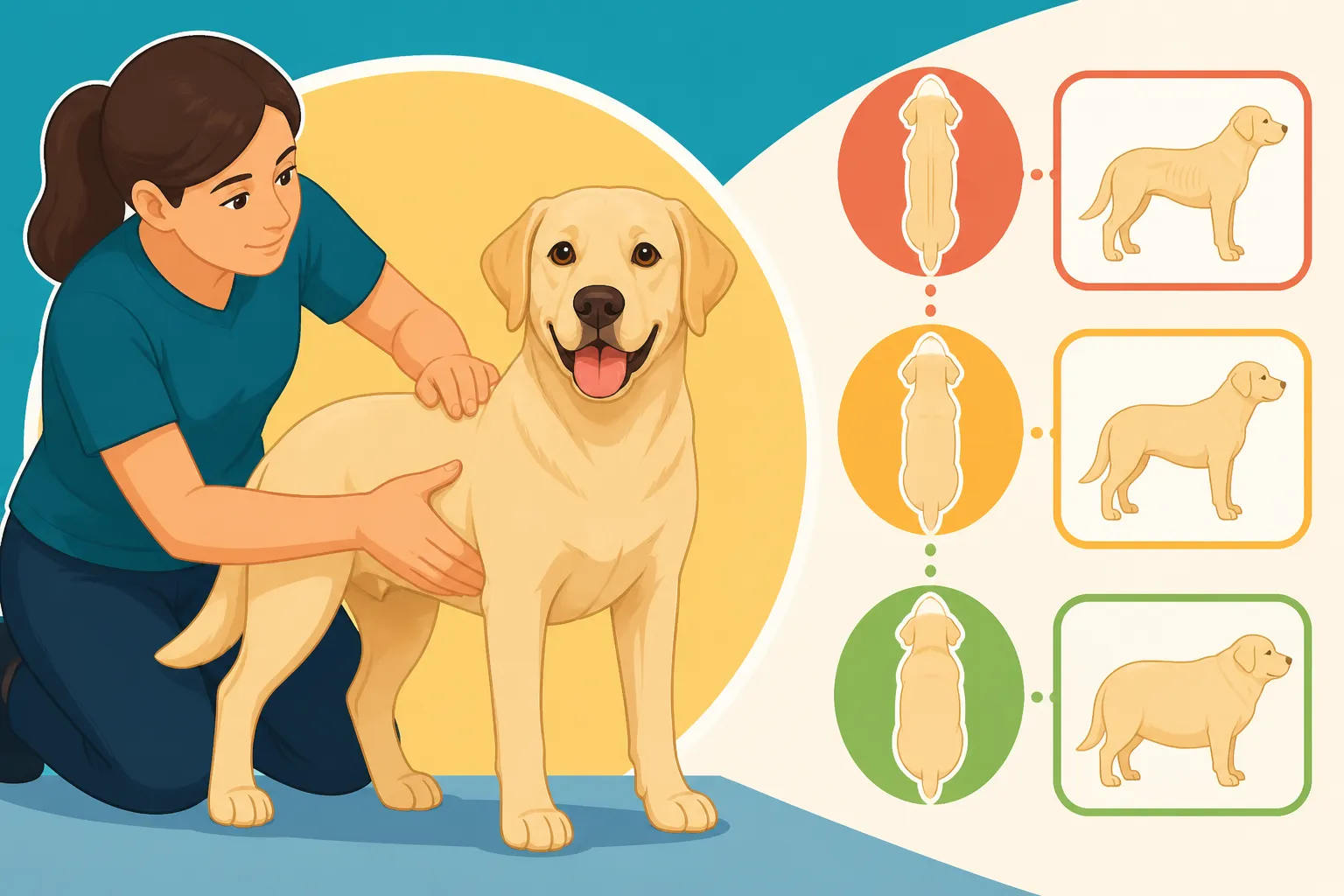
- From Above: Stand directly over your Labrador and look down at their back. You should see a distinct "waist" tucking in after their rib cage, before flaring out slightly at their hips. If they look like a straight, smooth cylinder or bulge out at the sides, they're likely carrying too much weight. A very defined hourglass shape might mean they're too thin.
- From the Side: Observe your Labrador from their side. You should see an "abdominal tuck" – meaning their belly should gently slope upwards from their chest to their hind legs, rather than hanging low or being parallel to the ground. If their tummy is rounded and hangs down, or there's no visible tuck, that's a sign of extra fat. Conversely, if the tuck is extremely dramatic and pronounced, they might be underweight.
These visual cues, combined with feeling their body, paint a complete picture of their condition. It’s about learning to see beyond the fur and understand the contours of their body underneath.
The Tactile Cues: Feeling for Ribs and Spine
While visual cues are important, a Labrador's dense double coat can sometimes hide a lot. That's why the tactile, or "hands-on," part of BCS is absolutely crucial. You need to get your hands on your dog and really feel what's going on beneath the surface.
- Ribs: Gently run your flat palms along your Labrador's sides, just behind their front legs. You should be able to easily feel their individual ribs, almost like the rungs of a ladder, with a thin layer of muscle and fat over them. You shouldn't see their ribs, but you should feel them without having to press hard. If you have to dig your fingers in to locate them, they're likely overweight. If the ribs are sharp and prominent with no padding, they might be too thin.
- Spine: Run your hand down your Labrador's spine, from their neck to their tail. You should feel the bumps of their vertebrae, but they shouldn't protrude sharply. There should be a slight cushion over them.
- Hip Bones: Similarly, feel over their hip bones (the bony points on either side of their lower back). You should be able to feel them, but they shouldn't be sticking out or feel overly sharp.
These tactile checks provide invaluable information. It's like feeling for the studs in a wall – you know they're there, but you don't want them to be overly prominent. This hands-on approach helps you get a true sense of their body composition, even under the thickest coat.
Step-by-Step Guide to Checking Your Labrador's BCS
Ready to give it a try? Don't worry, your Labrador will probably just think you're giving them extra pets! This process should be gentle and consistent, and it gets easier with practice.
The "Hands-On" Method
This method combines visual inspection with tactile examination to give you a comprehensive understanding of your Labrador's body condition.
-
The Rib Test:
- Start by placing both hands flat on either side of your Labrador's chest, just behind their elbows.
- Gently run your fingers backwards over their rib cage, applying light pressure.
- Ideal: You should be able to easily feel each individual rib, distinct under a thin layer of skin and muscle, like running your hand over the knuckles of your hand. You shouldn't see the ribs, but feeling them clearly is key.
- Too Thin: If the ribs feel very prominent, sharp, and you can see them clearly without much effort, your Labrador might be underweight.
- Overweight: If you have to press firmly to feel the ribs, or they feel completely padded and indistinguishable, your Labrador is likely carrying too much fat.
-
The Waistline Check:
- Stand directly above your Labrador, looking down at their back.
- Observe the area between their rib cage and their hips.
- Ideal: You should see a distinct narrowing, like an hourglass shape. The waist should tuck in noticeably.
- Too Thin: A very dramatic, almost hollow-looking tuck in the waist suggests they are underweight.
- Overweight: If their sides are straight and parallel, or even bulge outwards, they are overweight.
-
The Abdominal Tuck:
- Stand to the side of your Labrador.
- Look at their profile, specifically their belly.
- Ideal: Their abdomen should rise slightly from the bottom of their rib cage towards their hind legs, creating an upward slope. This is the "tummy tuck."
- Too Thin: An excessively sharp, hollow abdominal tuck might indicate they are underweight.
- Overweight: If their belly is flat, saggy, or even hangs downwards, lacking any discernible tuck, they are overweight.
-
Checking the Tail Base:
- Feel the area where your Labrador's tail meets their body.
- Ideal: You should feel only a slight amount of fat covering the bones.
- Overweight: This is often one of the first places Labradors store excess fat. If it feels thick, spongy, or you can't easily feel the bony base of the tail, it's a strong indicator of excess weight.
By regularly performing these checks, you'll become incredibly familiar with your Labrador's ideal body shape and be able to spot subtle changes quickly.
Interpreting Your Findings: What the Numbers Mean
The Body Condition Score is typically on a 9-point scale, with 5 being the ideal. Here’s a general breakdown of what each category means visually and by touch:
| BCS Score | Visual Description | Tactile Description | Action Needed |
|---|---|---|---|
| 1-2 | Severely underweight, bones very prominent, no fat. | Ribs, spine, hip bones easily visible and sharply felt. | Vet intervention, nutritional plan for weight gain. |
| 3 | Underweight, ribs visible, prominent waist and tuck. | Ribs easily felt with minimal fat cover. | Review diet, gradual weight gain, vet check. |
| 4-5 | IDEAL: Well-proportioned, visible waist/tuck, ribs not visible. | Ribs easily felt without pressure, thin fat layer. Spine felt. | Maintain current diet and exercise. Monitor. |
| 6 | Slightly overweight, less distinct waist/tuck, ribs felt with effort. | Ribs felt with moderate pressure, small fat layer. | Adjust portions, increase exercise. |
| 7 | Overweight, no waist, rounded belly, ribs hard to feel. | Ribs difficult to feel under thick fat layer. | Implement weight loss plan, regular exercise, vet guidance. |
| 8-9 | Obese, distended belly, no waist or tuck, very thick. | Ribs, spine, hip bones very difficult or impossible to feel. | Urgent vet consultation for significant weight loss program. |
The goal is to aim for that sweet spot of 4 or 5. This is where your Labrador will feel their best, move most freely, and have the best chance at a long, healthy life. Remember, this isn't just about weight, but about the proportion of fat and muscle.
When to Seek Veterinary Advice
While you can become quite proficient at assessing your Labrador's BCS at home, it's always a good idea to involve your veterinarian, especially if you find your dog is consistently outside the ideal 4-5 range. Your vet can provide an objective assessment and rule out any underlying medical conditions that might be contributing to weight gain or loss. During their Annual Routine Vet Spend for a Labrador, you should always discuss their weight and body condition.
If you notice a sudden, unexplained change in your Labrador's weight or body condition, whether it's a rapid gain or loss, that's definitely a sign to schedule a vet visit promptly. They can help you craft a tailored diet and exercise plan, or even recommend specific Weight Control Formulas for Labradors if needed. Sometimes, even with the best intentions, it takes a professional eye and guidance to get your furry friend back on track.
Maintaining an Ideal BCS for Your Labrador
Once you've identified your Labrador's current BCS, the next step is to make a plan to either maintain their ideal weight or help them achieve it. This is where consistency and commitment truly pay off.
Tailoring Diet and Exercise to Their Needs
Maintaining an ideal BCS really boils down to two core components: diet and exercise. For Labradors, given their genetic predisposition to overeating, Portion Control for a Food-Obsessed Labrador is paramount. Free-feeding is almost never a good idea for this breed.
- Measured Portions: Don't just eyeball their food. Invest in a kitchen scale and measure their kibble precisely according to the recommendations on their food bag, adjusted for their ideal weight and activity level. Remember, those guidelines are often for active dogs, and if your Lab is more of a couch potato, they'll need less. It truly makes a difference to be exact with Using a Kitchen Scale for Labrador Portions.
- Appropriate Exercise: Labradors are naturally energetic dogs, even the more laid-back "English" types. They thrive on activity. Aim for consistent, daily exercise that goes beyond just a quick potty break. This could be a vigorous walk, a run, swimming, or active play sessions. Think about the Exercise a Labrador Needs Each Day to keep their metabolism humming and their muscles toned. For example, a 30-minute brisk walk or a solid 15-20 minute fetch session twice a day could be a great starting point for many adult Labs. Don't forget that mental exercise, like puzzle toys or training, can also burn calories and keep them engaged.
The Role of Treats and Scraps
This is often the silent culprit behind creeping weight gain. Those little "extras" add up quickly, especially with a breed that will enthusiastically eat almost anything!
- Treat Budget: If you use treats for training or just because you love spoiling your Lab (who doesn't?), factor those calories into their daily food allowance. Break larger treats into smaller pieces.
- Healthy Alternatives: Instead of high-calorie commercial treats, consider offering safe, low-calorie human foods like small pieces of carrot, green beans, or apple slices. You can even use a portion of their daily kibble ration for training rewards. Companies like Chewy and Ollie offer a range of healthy, lower-calorie treat options that can be a good choice. I've personally had luck finding good bulk options on Amazon for things like freeze-dried chicken, which is a big hit.
- No Table Scraps: This is a tough one, especially with those pleading Labrador eyes, but table scraps are often calorie-dense and can upset their digestive system. It's best to avoid them altogether. If you really want to share, stick to tiny portions of plain, cooked lean meat or veggies that are safe for dogs.
Remember, every calorie counts, and consistency with treats is just as important as with their main meals.
Consistency is Key
The most important ingredient in maintaining your Labrador's ideal BCS is consistency. It's not about making drastic changes for a week, but about establishing sustainable habits that you can stick with long-term.
Regularly check their body condition, ideally once a month, to catch any creeping weight changes early. Weigh them regularly, too, but always remember that the scale is just one piece of the puzzle – BCS provides the context. Small adjustments to their food or exercise routine can prevent larger problems down the line. A lean, active Labrador is a happy Labrador, and the effort you put in now will pay dividends in their overall health and vitality for years to come. Think about how much happier and more mobile your senior Labrador will be if they've maintained a healthy weight throughout their life; How Much Longer a Lean Labrador Lives is a powerful motivator. This commitment will help you avoid the mobility issues that often arise, making Caring for a Senior Labrador much more comfortable for everyone.
Disclaimer
This article is for general informational purposes only and does not constitute professional advice. Laws, prices and regulations vary by location and change over time. Consult a qualified professional for guidance on your specific situation.