Why a Labrador Puppy Sits With Legs Splayed
It's incredibly common to see your adorable Labrador puppy flop down in what looks like the most awkward position imaginable, often with their back legs splayed out behind them like a frog. This "frog leg" or "lazy sit" can make any loving Lab owner's heart jump, immediately conjuring worries about serious joint problems like hip dysplasia. This guide will thoroughly explore why Labrador puppies adopt this peculiar sitting style, differentiate between normal developmental quirks and actual red flags, and arm you with the knowledge to understand your puppy's posture and when it's time to have a chat with your vet.
Understanding the "Frog Leg" Sit in Labrador Puppies
When you first bring home a bouncy Labrador puppy, every little quirk and unusual behavior can send you down an internet rabbit hole, convinced you've found a dire symptom. One of the most common anxieties for new Lab owners revolves around how their puppy sits. Instead of the neat, tucked-in sit of an adult dog, you might frequently observe your little one sprawling with their hind legs stretched out directly behind them, often referred to as a "frog sit" or "puppy sit." It looks a bit like they just gave up on sitting properly and let gravity do the rest, leaving their hips open and their legs trailing.
What Does a Splayed Sit Look Like
Imagine your Labrador puppy dropping their rear end to the ground, but instead of bending their knees and tucking their feet underneath them in a tidy "down-stay" position, their back legs extend outwards, either straight behind them or splayed to one side. Sometimes both legs are extended perfectly symmetrically behind their body, almost like a seal sunbathing. Other times, one leg might be tucked partially, and the other fully extended. It can look very comfortable for them, even if it appears completely unnatural and potentially uncomfortable to us humans. They might even slide into this position quickly after running, as if it's the most efficient way to come to a stop and rest. It’s distinctly different from a dog sitting with one leg out to the side, which can sometimes be an indicator of discomfort, but even that can be normal. The true "frog sit" is often quite symmetrical and relaxed.
Why This Pose Raises Owner Concerns
The moment you see your precious puppy in this position, especially if you're already aware that Labradors are predisposed to conditions like hip and elbow dysplasia, your mind can race to the worst-case scenario. It’s a completely natural reaction for a caring owner. You worry that this splayed posture indicates loose hips, weakness, pain, or even early signs of a debilitating joint condition. We all want our Labradors to live long, healthy lives, and knowing that issues like Labrador Hip and Elbow Dysplasia are common can make us hyper-vigilant. The fear is that their joints aren't forming correctly, and this "lazy" sit is actually them compensating for discomfort or an inability to sit in a more traditional manner. The truth, however, is often far less dramatic, especially in very young puppies.
Normal Reasons for a Labrador Puppy's Splayed Sit
While the frog sit can look alarming, more often than not, it's a completely normal part of Labrador puppyhood. There are several benign reasons why your little furball might choose this particular lounging style.
Puppy Flexibility and Loose Joints
One of the biggest reasons you see this frog-leg sit is simply because Labrador puppies are incredibly flexible! Their joints are still developing, and their ligaments and tendons are looser than an adult dog's. Think about human babies and toddlers – they can contort themselves into positions that would send an adult to the chiropractor. Puppies are much the same. Their bodies are still growing and changing rapidly, and they haven't quite "set" into the more rigid structure of adulthood. Their growth plates are open, their muscles are still strengthening, and their bodies are exploring the range of motion they have. This natural elasticity allows them to sit in ways that would be impossible or uncomfortable for an older dog. It's often a sign of their youthful agility and lack of muscle definition that would otherwise keep their legs tucked. As they mature and their muscles develop, they often grow out of this habit and adopt a more conventional sit.
Comfort and Resting Posture
Believe it or not, for many puppies, the splayed sit is simply a comfortable way to rest! After a burst of puppy zoomies, a strenuous play session, or even just exploring the backyard, sprawling out on their belly with their legs behind them can feel wonderfully relaxing. It allows their hips to fully extend and can take pressure off their hocks and ankles. It’s their equivalent of us kicking off our shoes and sprawling on the couch after a long day. You'll often notice them transition into this position when they're truly relaxed, maybe dozing off, or simply observing the world around them without any tension. If your puppy moves easily into and out of this position, shows no signs of pain, and is otherwise energetic and playful, comfort is likely the primary driver. It's especially common on cool surfaces during warmer weather, as it maximizes belly-to-floor contact for cooling.
Developmental Stage of Growth
Labrador puppies grow at an astonishing rate, especially during their first year. This rapid growth means their bones, muscles, and ligaments are all developing simultaneously. Sometimes, their coordination hasn't quite caught up to their fast-growing bodies. Imagine a teenager who suddenly shoots up in height and is a bit clumsy while their brain and body adjust. Puppies go through similar phases. The splayed sit can simply be a reflection of their current stage of physical development. Their muscles around the hip may not be strong enough yet to consistently hold a tight, traditional sit, or they might simply find it easier to sprawl. This is particularly true in younger puppies, generally under 4-6 months of age. As their core strength and hindquarter muscles develop, their sitting posture often naturally corrects itself. It's part of the process of becoming a sturdy, well-built adult Labrador. It's also why it's so important to be mindful of How Fast Growth Damages a Labrador's Joints and ensure they aren't over-exercised during this critical period.
When a Splayed Sit Might Be a Red Flag for Hip Issues
While often harmless, there are instances where a consistently splayed sit, especially when combined with other symptoms, could be an early indicator of hip issues. It’s crucial to know the difference and understand what other signs to look for.
Early Signs of Hip Dysplasia
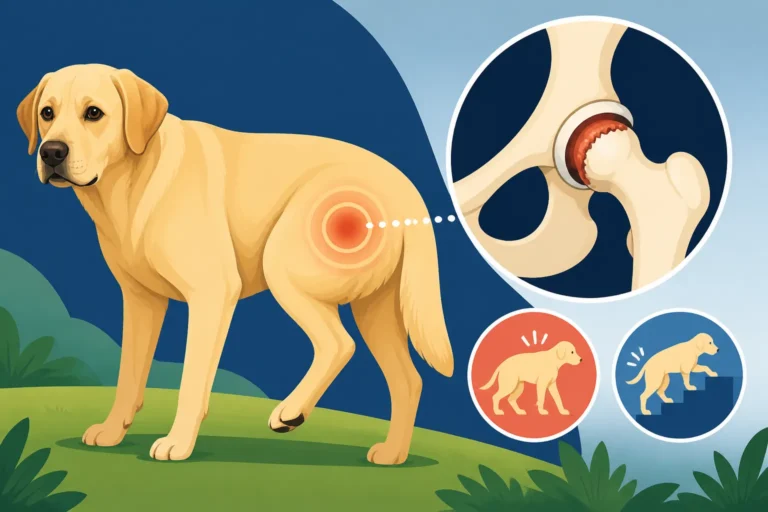
Hip dysplasia is a condition where the hip joint, a ball-and-socket joint, doesn't form correctly, leading to looseness and eventual degeneration. Labradors are sadly prone to it, and while a frog sit alone usually isn't a definitive sign, it can be one piece of a larger puzzle. If your puppy consistently uses the frog sit and exhibits other symptoms, it's worth a closer look.
Keep an eye out for:
- Reluctance to play or exercise: A puppy with hip pain might not want to run, jump, or play as much as a healthy one. They might seem more subdued or tire easily.
- Difficulty rising or lying down: They might struggle to get up from a lying position, taking a few attempts, or appear stiff when moving.
- Lameness or limping: You might notice a subtle limp, especially after activity, or favoring one leg.
- "Bunny hopping": Instead of moving their back legs independently, they might move both hind legs together, almost like a bunny, when running or going up stairs.
- Pain response: If you gently touch or manipulate their hips, they might wince, cry, or show discomfort.
- Decreased range of motion: They might not be able to extend or flex their hips as fully as a healthy puppy.
- Muscle atrophy: Over time, if they're not using their hind leg muscles properly due to pain, you might notice the muscles in their hindquarters starting to waste away.
These are the more concerning signs that, when coupled with a persistent frog sit, suggest a veterinary examination is in order. Remember, When Labrador Hip Dysplasia First Shows Up can vary, but early detection can be key to management.
Other Conditions to Consider
While hip dysplasia is the most common fear, other conditions can sometimes manifest with unusual sitting or gait, though a pure "frog sit" is less typical for these:
- Luxating Patella (Slipping Kneecap): This is more of a knee issue than a hip issue, but a puppy might sit or move awkwardly to compensate for discomfort. You might see a momentary skip or hop in their gait.
- Panosteitis (Growing Pains): This is an inflammatory condition of the long bones, common in fast-growing large breed puppies like Labradors, typically between 5 and 18 months. It causes shifting lameness (it might affect one leg one day, another the next) and pain. While not directly related to sitting posture, general discomfort can make a puppy seek unusual resting positions. Panosteitis in a Growing Labrador is usually self-limiting but can be quite painful.
- Injuries: Sometimes a muscle strain, sprain, or minor injury to the leg or back can cause a puppy to adopt an odd sitting posture to alleviate pressure or pain.
It's important to observe your puppy's overall behavior. Are they happy? Energetic? Eating well? If the frog sit is their only "symptom," it's probably just puppy exuberance. But if you notice any changes in their energy levels, appetite, or willingness to play, it's always best to get it checked out.
What to Do If You're Concerned About Your Labrador Puppy's Sitting
So, you've been observing your puppy, and you're still not entirely sure. What's the next step? Don't panic, but do be proactive.
When to Consult Your Veterinarian
The best course of action is always to consult your veterinarian if you have any lingering concerns. They are the experts who can properly assess your puppy's musculoskeletal health. Don't feel silly for asking; a good vet understands owner anxiety, especially with breeds prone to joint issues.
You should definitely schedule a vet visit if your puppy:
- Consistently sits splayed and shows any other signs of pain or lameness (as listed above: reluctance to move, limping, bunny hopping, yelping when touched).
- Struggles to get into or out of the splayed sit, or any sit.
- Has a noticeable change in their activity level or demeanor.
- Is past the typical "puppy" age (e.g., over 6-8 months) and still exclusively uses a frog sit, especially if they are a working or highly active dog where joint integrity is paramount.
During the visit, your vet will perform a thorough physical examination, checking your puppy's joints, range of motion, and pain response. They might observe your puppy walk and run. In some cases, they may recommend X-rays to get a clearer picture of the hip joints, especially if other signs of dysplasia are present. Remember, catching potential issues early is always better.
Supporting Healthy Joint Development
Regardless of whether your puppy’s splayed sit is normal or a red flag, supporting healthy joint development is paramount for any Labrador. They are a large breed, and their joints take a lot of impact over a lifetime.
Here's how you can help:
- Proper Nutrition: Feed a high-quality large breed puppy food that is specifically formulated for slow growth. This helps prevent rapid growth spurts that can stress developing joints. Pay attention to calcium and phosphorus levels. Your vet can provide guidance on ideal Calcium Levels in Labrador Puppy Food.
- Weight Management: Keeping your puppy at a lean, healthy weight is one of the most important things you can do for their joints. Excess weight puts incredible strain on hips, elbows, and knees. It's astounding how Labrador Obesity and the Years It Costs can shorten their lifespan. You should be able to easily feel their ribs without seeing them.
- Controlled Exercise: While exercise is vital for a Labrador, it needs to be controlled, especially in puppies. Avoid high-impact activities like excessive jumping, long-distance running on hard surfaces, or repetitive fetch for extended periods while they are still growing. Short, frequent play sessions on soft ground are ideal. Avoid forced exercise until their growth plates are closed. You can learn more about Exercise Limits for a Labrador Puppy.
- Comfortable Resting Places: Provide soft, orthopedic beds that support their joints. Even young puppies benefit from a good quality bed that reduces pressure points.
- Supplements (Discuss with Vet): Some vets may recommend joint supplements containing glucosamine and chondroitin for large breed puppies, especially those with a family history of joint issues or early signs of concern. Always consult your vet before adding any supplements.
- Genetic Health Clearances: If you haven't already, research the importance of Health Clearances a Labrador Breeder Must Show for the parents of your puppy. A responsible breeder will have screened their breeding dogs for hip and elbow dysplasia, as well as other genetic conditions. This doesn't guarantee your puppy won't develop problems, but it significantly reduces the risk. If you adopted your puppy, you might consider Genetic Panels Worth Running on a Labrador to understand potential predispositions.
Taking these steps ensures you're doing everything you can to set your Labrador up for a lifetime of healthy mobility. While vet bills for joint issues can be high, proactive care and, if needed, pet insurance from providers like Healthy Paws can provide peace of mind. Healthy Paws offers comprehensive coverage that can help cover eligible vet bills for accidents and illnesses, including those related to hip and elbow dysplasia, though it's important to understand how their policies handle pre-existing conditions.
Navigating Puppyhood with Peace of Mind
The journey with a Labrador puppy is a whirlwind of joy, mischief, and often, a little bit of worry. Seeing your puppy sit in an unusual frog-leg posture is a classic source of anxiety for many new owners, and it's completely understandable to jump to conclusions about serious health problems. However, in the vast majority of cases, this peculiar sitting style is just a normal, temporary quirk of puppyhood, a testament to their incredible flexibility and comfort-seeking nature.
Remember, a young Labrador puppy's body is a work in progress. Their bones are growing, their muscles are developing, and their coordination is constantly improving. That casual splay might just be the easiest, most comfortable way for them to plop down after a vigorous play session, or a sign of their still-developing musculoskeletal system. It's a bit like a human toddler who can nap in positions that would give an adult a crick in the neck – their bodies are simply more pliable.
The key is to observe your puppy holistically. Are they otherwise happy, energetic, and free of pain? Do they move easily, run, jump, and play with gusto? If the frog sit is their only "symptom," it's highly likely they're just being a normal, goofy Labrador puppy. Keep an eye on their weight, ensure they're on appropriate large breed puppy food, and offer them plenty of safe, controlled exercise.
However, if that unusual sit is accompanied by any signs of discomfort, reluctance to move, limping, or a general change in their enthusiastic puppy demeanor, don't hesitate to reach out to your veterinarian. Early intervention is always best, whether it's for true hip dysplasia or another transient puppy ailment like Panosteitis in a Growing Labrador. Your vet can provide a professional assessment, offer guidance, and give you the peace of mind you need to fully enjoy those precious, fleeting puppy months. With proper care and vigilance, your Labrador puppy will grow into a strong, healthy adult, sitting in whatever way they find most comfortable.
Disclaimer
The information provided in this guide is for general informational purposes only and does not constitute veterinary advice. Always consult with a qualified veterinarian for any health concerns or before making any decisions related to your Labrador's health and well-being.