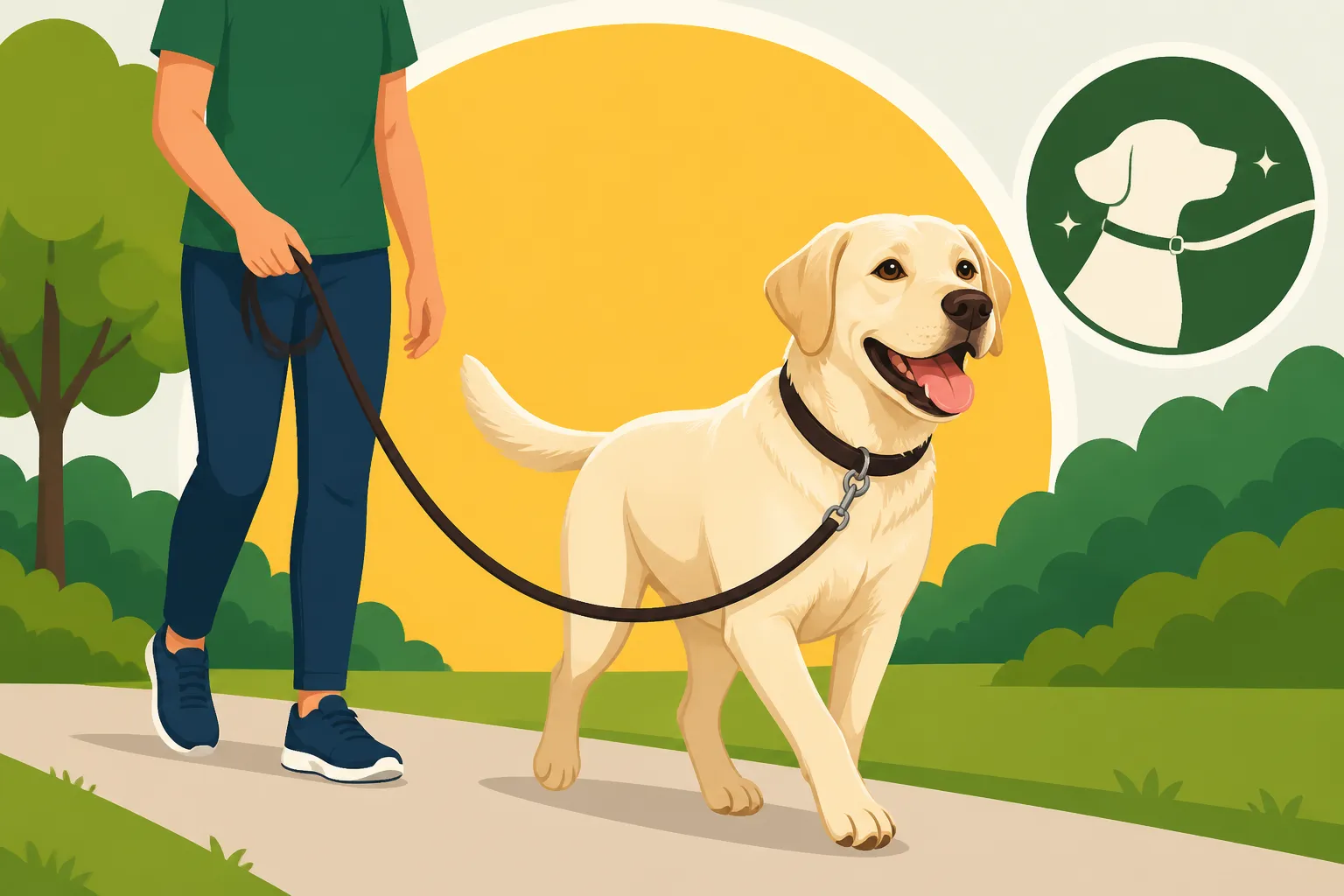
Loose Leash Walking With a Labrador
There’s almost nothing more frustrating than wanting to enjoy a peaceful walk with your beloved Labrador, only to feel like you’re being dragged down the street by a runaway freight train. It’s not just uncomfortable for you; it can be downright dangerous, leading to pulled muscles, dropped leashes, and even injuries if your strong, enthusiastic Lab lunges after a squirrel or another dog. Many Lab owners feel a deep sense of guilt and exhaustion, wondering if they'll ever achieve that serene, side-by-side stroll they dream of. This comprehensive guide is here to tackle that exact problem, offering practical, empathetic strategies to transform your chaotic walks into enjoyable loose-leash experiences for both you and your furry friend.
Understanding Why Labradors Pull on the Leash
Let's be real: Labradors are naturally powerful dogs, brimming with enthusiasm and an eagerness to explore the world with their noses and bodies. When you clip on that leash, it's often like flipping a switch that ignites their inner pulling machine. It's not out of malice or disobedience; it's simply how they're wired and what they've learned.
Natural Instincts and Drives
First, consider what a Labrador was bred to do. These dogs are retrievers, historically working alongside hunters in demanding environments. They're built for endurance, strength, and moving quickly through varied terrain. Their powerful shoulders and chests are designed for propelling them forward, and their keen noses are constantly processing a symphony of scents. Every blade of grass, every mailbox, every discarded wrapper tells a story, and your Labrador wants to investigate now. This inherent drive to move, explore, and retrieve makes them incredibly responsive to pressure on their collars. They lean into it naturally, just like a sled dog, because moving forward against resistance is often their default. They don't understand that the pressure means "stop" or "slow down"; it often means "push harder!"
The Excitement Factor
Labradors are famously effervescent. Everything is exciting! The mail carrier, a leaf skittering across the pavement, the faint scent of a rabbit from three blocks away – it all registers as high-value entertainment. This boundless energy and enthusiasm, which we love so much about them, can translate into an intense desire to get to whatever is stimulating them right now. For a young, exuberant Labrador, the sheer joy of being outside is enough to make them forget all their manners. They're living in the moment, and that moment usually involves pulling with all their might to reach the next fascinating thing. This isn't them being "bad"; it's them being perfectly Lab, just untrained in the nuances of polite leash walking.
Lack of Early Training and Reinforcement
Often, the biggest reason a Labrador pulls is simply that they've never been taught not to, or the training hasn't been consistent enough. Many owners, with the best intentions, inadvertently reinforce pulling. For example, if your Labrador pulls towards a tree and you eventually let them reach it, even after a struggle, they learn that pulling works. Every time they get to sniff that interesting patch of grass, meet that dog, or see that person because they pulled, the behavior is strengthened. It’s a powerful cycle. Early puppy training often focuses on basic commands, but specific Loose Leash Walking With a Labrador skills need dedicated attention and consistent practice to really stick. Without clear communication from you about what is acceptable leash behavior, your Lab will continue to do what comes naturally.
Essential Gear for Loose Leash Walking
Before you even step out the door, having the right equipment can make a world of difference. The market is flooded with options, and what works best can depend on your individual Labrador's size, strength, and pulling habits.
Harnesses vs. Collars
For strong pullers, a traditional neck collar often isn't the best choice for training. Not only can it be uncomfortable or even dangerous for your dog (putting pressure on their trachea, especially for those prone to a collapsing airway), but it also gives you less control and can make pulling worse. When your dog pulls on a neck collar, their opposition reflex kicks in, making them pull even harder.
- Front-Clip Harnesses: These are often a game-changer for many Labrador owners. Instead of clipping the leash to your dog's back, it attaches at the front, on their chest. When your Labrador pulls, the harness gently redirects them to the side, turning their body back towards you. This makes it physically harder for them to pull forward with full force. Many owners find immediate, noticeable improvement with these. Brands like Easy Walk or Freedom No-Pull Harness are widely available on platforms like Amazon and come highly recommended. While they don't stop pulling entirely without training, they make it significantly easier for you to manage and for your dog to learn. For more detail, check out Front-Clip Harnesses on a Strong Labrador.
- Head Halters: Also known as head collars or Halti-style collars, these work much like a halter on a horse. They fit over your dog's nose and around their neck, giving you control over their head. Where the head goes, the body follows. When your Labrador tries to pull or lunge, a gentle tug on the leash redirects their head, making it difficult for them to pull forward effectively. Many owners find these incredibly effective for very strong or reactive pullers, as they offer excellent control with minimal physical effort. However, some dogs can initially resist them, pawing at their faces. Positive introduction with treats is key. You can find more information on Head Halters for a Labrador Who Lunges.
- Flat Collars and Martingale Collars: A standard flat buckle collar is fine for ID tags and light walking for dogs who already walk well. For a Labrador, a martingale collar can be a good option if they have a tendency to slip out of a regular collar. It tightens slightly when pulled, preventing escape, but doesn't choke like a choke chain. Neither of these is ideal for actively training a strong puller, as they still rely on neck pressure.
Leash Types and Lengths
The leash itself matters more than you might think. A flimsy, short leash can make pulling feel worse, while a too-long one can offer too much slack for effective communication.
- Standard 6-Foot Leash: This is the gold standard for loose-leash walking training. It provides enough length for your dog to have a little freedom to sniff and explore politely, while still allowing you to keep them close and give effective cues. Look for leashes made of durable, comfortable material like nylon or leather.
- Retractable Leashes: Avoid retractable leashes for loose-leash training. They teach your dog that pulling is necessary to gain distance, as the line is always taut. They also offer minimal control and can be dangerous, leading to rope burns or dropped handles. Stick to a fixed-length leash for teaching good manners.
- Long Lines: While not for everyday loose-leash walking, a long line (15-30 feet) can be invaluable for practicing recall and giving your Labrador a sense of freedom in a safe, open area, helping them burn off energy without reinforcing pulling on a shorter leash. We explore this further in Long Line Work to Build Labrador Recall.
Training Aids and Accessories
Beyond the basics, a few extra items can significantly aid your training efforts.
- Treat Pouch: This is non-negotiable! You need treats readily accessible and quickly dispensed to reward good behavior the instant it happens. A hands-free pouch that clips to your waist or belt is ideal.
- High-Value Treats: Labradors are famously food-motivated. This is a huge asset in training! Cut-up hot dogs, cheese, cooked chicken, or store-bought soft training treats work wonders. The more delicious and exciting the treat, the more your Lab will be motivated to work for it. Read more on Treats That Motivate a Food-Driven Labrador.
- Clicker: A clicker can be an excellent tool for precise timing of rewards. It marks the exact moment your dog performs the desired behavior (e.g., the leash goes slack) and tells them, "Yes! That's it! A treat is coming!"
- Comfortable Shoes and Clothing: This might sound basic, but you'll be doing a lot of stopping, starting, and possibly quick direction changes. Being comfortable and ready for anything will make the experience much more pleasant for you.
Core Principles of Loose Leash Training
Loose leash walking isn't about forcing your Labrador into submission; it's about teaching them an alternative, more rewarding behavior. This means understanding the principles of positive reinforcement and consistency.
Positive Reinforcement and Lure Training
This is the cornerstone of effective Labrador training. Instead of punishing your dog for pulling, you're going to reward them lavishly for not pulling. The goal is to make walking politely next to you the most rewarding activity on the walk.
- Reward the "Slack": The moment the leash goes slack, even for a split second, mark it (with a verbal "Yes!" or a clicker) and immediately give a high-value treat. Your Labrador needs to connect the feeling of a loose leash with something wonderful happening.
- Lure and Position: Initially, you might use a treat to "lure" your Labrador into the desired position beside you. Hold a treat near their nose and guide them into place. As they walk politely for a step or two, reward them. Gradually, fade the lure so they are walking nicely without needing to see the treat in your hand.
- Keep it Fun: Training shouldn't be a chore. Keep your voice light and encouraging. Celebrate small successes. Labradors thrive on positive interaction and praise. If you're stressed or frustrated, your dog will pick up on that energy.
Consistency and Timing
These two elements are crucial for any successful training endeavor, especially with a breed as smart and observant as a Labrador.
- Every Walk is a Training Opportunity: This is where many owners stumble. You can't train for 15 minutes and then let your dog pull for the rest of the walk. Every time your Labrador pulls and you continue moving forward, you are unintentionally reinforcing the pulling behavior. For genuine progress, commit to making every walk a training session, even if it means shorter walks at first.
- Be a "Predictable Tree": When your Labrador pulls, you must immediately stop. Become a "tree." Do not move again until the leash goes slack. This means your Labrador turns their head, looks at you, or takes a step back, releasing the tension. The moment the leash is loose, say "Yes!" and take one step forward. If they pull again, stop again. This teaches them that pulling gets them nowhere, but a loose leash gets them moving.
- Impeccable Timing: The reward for a loose leash needs to happen the instant the leash goes slack. Even a delay of a few seconds can mean your dog doesn't connect the treat with the specific action you want to reinforce. This is where a treat pouch and a clicker can be incredibly helpful. Online resources and programs, such as those offered by BAXTER & Bella, often emphasize this critical timing.
Managing Distractions
The world is a distracting place for a Labrador. Learning to walk politely in a quiet backyard is one thing; doing it past a barking dog, a group of kids, or a tempting pile of leaves is another entirely.
- Start Simple, Build Up: Begin training in a low-distraction environment, like your home or backyard. Once your Labrador is consistently walking nicely there, gradually introduce more distractions. Move to a quiet street, then a slightly busier park, and so on.
- The "Look at Me" or "Watch Me" Command: This is an invaluable tool. Teach your Labrador to make eye contact with you on command. Start in a quiet place, hold a treat near your eye, say "Watch Me," and reward when they look. Practice this until it's reliable. Then, when a distraction approaches on a walk, use your "Watch Me" cue. If they focus on you, reward them before they can react to the distraction. This creates a positive association with ignoring distractions in favor of focusing on you. For more on managing other dogs, consider Walking a Labrador Past Other Dogs Calmly.
- Be Prepared to Retreat: If a distraction is too overwhelming for your Labrador, don't be afraid to increase the distance or turn around. It's better to avoid a full-blown pulling or lunging episode than to let your dog practice the unwanted behavior.
Step-by-Step Training Techniques
Now that we've covered the principles, let's dive into some practical, step-by-step techniques you can implement on your walks. Remember, patience and consistency are your best friends here!
The Stop-Start Method
This is a foundational technique that directly addresses pulling by teaching your Labrador that forward movement is contingent on a loose leash.
- Start in a Quiet Area: Begin in your home or a very quiet part of your yard with minimal distractions.
- Leash Up: Attach your chosen harness or head halter and your 6-foot leash. Hold the leash comfortably, but don't hold it so tightly that there's already tension.
- Take a Step: Take one step forward.
- The Instant They Pull, Stop: The moment your Labrador puts tension on the leash, even slightly, immediately stop moving. Freeze like a statue. Do not say anything, do not yank the leash, just stop.
- Wait for Slack: Wait for your Labrador to create slack in the leash. This might mean they stop, turn to look at you, or even sit down. The moment the leash loosens, mark it with "Yes!" or a click, and give a high-value treat right at your side.
- Reward and Resume: Once the leash is slack and they've received their reward, take another step. Repeat the process.
- Gradual Increase: As your Labrador understands, gradually increase the number of steps you take between stops. If they walk nicely for three steps, reward. If they start to pull on the fourth, stop again. The key is to interrupt the pulling before it becomes a sustained drag. This method is effective because it directly contrasts the desired behavior (loose leash) with the consequence (stopping).
Changing Direction
This technique adds another layer of consequence to pulling and helps your Labrador learn to pay attention to your movements.
- Begin Walking: Start walking with your Labrador, using the stop-start method as needed.
- The Instant They Pull, Change Direction: The moment your Labrador pulls ahead or to the side, without a word, simply turn 90 or 180 degrees and start walking in a different direction.
- Follow Through: Your Labrador will likely be momentarily surprised and pulled off balance by the change in direction. They'll have to scramble to catch up.
- Reward for Slack: As soon as they are walking beside you with a loose leash in the new direction, mark and reward.
- Be Unpredictable: Vary your turns – sometimes left, sometimes right, sometimes a full about-face. This keeps your Labrador guessing and teaches them that they need to pay attention to where you are going, rather than dictating the pace and direction themselves. This strategy is excellent for reinforcing Teaching a Labrador to Heel Properly.
The "Watch Me" Command
This command is invaluable for getting your Labrador's attention and redirecting their focus away from distractions and back to you.
- Teach in a Quiet Place: Start indoors or in a very low-distraction environment.
- Hold a Treat: Hold a high-value treat near your nose or eye level.
- Say "Watch Me": Clearly say "Watch Me" (or "Look," or whatever cue you choose).
- Reward Eye Contact: The instant your Labrador looks at your eyes, mark (click/verbal "Yes!") and give the treat.
- Build Duration: Gradually increase the duration of eye contact before rewarding. Start with a second, then two, then three.
- Introduce Distractions: Once reliable indoors, begin practicing in slightly more distracting environments. Use your "Watch Me" cue when you anticipate a distraction, like another dog approaching. If they focus on you instead of the distraction, give them a jackpot (multiple treats!). This helps them build self-control and learn that focusing on you is more rewarding than lunging at the tempting distraction.
Troubleshooting Common Loose Leash Walking Issues
Even with the best intentions and techniques, Labradors can present unique challenges. Don't get discouraged if you hit a snag; it's a normal part of the process.
Dealing with Lunging and Barking
A lunging, barking Labrador can be intimidating, embarrassing, and even dangerous. This often stems from over-excitement, fear, or frustration, especially towards other dogs, people, or wildlife.
- Increase Distance: The number one strategy is to manage your Labrador's environment. If you see a trigger (another dog, person, etc.) approaching, increase the distance between your Labrador and the trigger. Cross the street, turn down another path, or simply create more space. Lunging often happens when a dog is "over threshold," meaning they are too close to the trigger to calmly respond to your cues.
- "Watch Me" and Treat Scatter: Once you've created enough distance, use your "Watch Me" command. If your Labrador focuses on you, reward them. If they're still too agitated, try a "treat scatter." Toss a handful of treats on the ground for them to sniff out. This engages their nose and gives them a productive outlet for their energy, often breaking their focus on the trigger.
- Practice "U-Turns": If increasing distance isn't enough, immediately perform a sharp U-turn and walk rapidly in the opposite direction. This creates a greater distance from the trigger and gives your Labrador a new focus. Reward them when they catch up with a loose leash. For more strategies, check out Walking a Labrador Past Other Dogs Calmly.
- Seek Professional Help: If lunging and barking are severe or becoming worse, it's crucial to consult with a certified professional dog trainer or a veterinary behaviorist. These behaviors can have complex roots and may require individualized management plans. Some online platforms like BAXTER & Bella offer consultations or more advanced training modules for these specific issues.
When Your Labrador Ignores You
It's frustrating when you're diligently working on loose leash walking, and your Labrador seems to tune you out completely, especially when they're fixed on a scent or another dog.
- Re-evaluate Your Rewards: Are your treats truly high-value enough? If your Labrador is ignoring you, it means whatever is distracting them is more rewarding than what you're offering. Experiment with different types of treats – cooked meat, cheese, or specific high-odor commercial treats can often cut through distractions better than plain kibble.
- Are You Asking Too Much? Perhaps you've increased the difficulty or distraction level too quickly. Go back to a less distracting environment where your Labrador is consistently successful. Build up slowly.
- Reinforce Focus Often: Don't just reward when they finally pay attention after being distracted. Proactively reward your Labrador for checking in with you throughout the walk, even when there are no immediate distractions. Every glance your way, every time they choose to walk beside you with a loose leash, is an opportunity for a reward.
- The "Predictable Tree" Still Applies: If they ignore your cues and pull, revert to the stop-start method. Become immovable. The lesson remains: pulling gets them nowhere. Eventually, they will look at you, and that's your window to reward. Remember Why Five Minute Sessions Work on a Labrador – short, focused sessions yield better results than long, frustrating ones.
Advanced Challenges
Sometimes, your Labrador might be good for a while, then suddenly regress, or certain situations remain incredibly difficult.
- Regression is Normal: Expect ups and downs. Training isn't linear. A "teenager" Labrador might have perfect recall one day and act deaf the next. Handling a Labrador Between Six and Eighteen Months is a common challenge. Just return to basics and be consistent. Don't punish regression; simply re-train.
- Specific Triggers: Does your Labrador only pull like crazy at the dog park entrance? Or when they see a specific person with a specific type of dog? These are "hot spots" that need targeted desensitization and counter-conditioning. Work away from these spots, rewarding calm behavior, and gradually decrease the distance as your Labrador shows progress.
- Your Own Consistency: Be honest with yourself. Are you being consistent on every walk? It's easy to get tired or distracted and let the leash go taut. If you sometimes allow pulling, you're inadvertently confusing your Labrador. Everyone in the household who walks the dog needs to be on the same page with the training methods.
Maintaining Loose Leash Manners Long-Term
Getting your Labrador to walk nicely is a huge accomplishment, but it's not a "one and done" deal. Like any skill, loose leash walking requires ongoing practice and reinforcement to keep it sharp.
Regular Practice and Reinforcement
Think of loose leash walking as a muscle: if you don't use it, it atrophies. Your Labrador needs consistent opportunities to practice and be rewarded for their good behavior.
- Don't Get Complacent: Even after your Labrador is a pro, continue to carry treats and reward them frequently for walking nicely. You don't need to treat every single step, but random, generous rewards will keep them motivated and prevent the behavior from fading. They need to know that good behavior still pays off!
- Short, Focused Sessions: You don't need to dedicate an entire hour to "training walks." Even short, five-minute sessions throughout the day can be incredibly effective for reinforcement. A quick trip to the mailbox or a walk around the block can be a mini-training opportunity. Short Training Sessions That Suit a Labrador are often more impactful than long, drawn-out ones.
- Vary Your Rewards: While food is powerful, don't forget other rewards your Labrador loves: verbal praise ("Good boy/girl!"), a quick game of fetch after a good walk, or permission to sniff a particularly interesting bush. Keep them engaged and guessing.
Varying Environments
Once your Labrador is walking beautifully in your neighborhood, it's time to generalize that skill to different environments. This helps them understand that "loose leash walking" isn't just a trick they do on your street, but a general expectation wherever you go.
- Explore New Places: Take your Labrador to different parks, nature trails, city sidewalks, or even pet-friendly stores. Each new environment presents unique sights, sounds, and smells that will challenge their focus.
- Start Easy, Build Up: When introducing a new environment, go back to basics. Expect some initial pulling and be ready to implement your stop-start and change-of-direction methods. You might need to use more frequent and higher-value treats until they adjust.
- The Power of Calmness: Your own calm and confident demeanor is infectious. If you approach a new, potentially stimulating environment with a relaxed attitude, your Labrador is more likely to mirror that.
Seeking Professional Help When Needed
There's absolutely no shame in reaching out for professional guidance. Dog training can be complex, and some issues require an experienced eye and specialized knowledge.
- When to Call a Pro: If you're consistently struggling, feel overwhelmed, or if your Labrador exhibits aggressive lunging, fear-based reactivity, or doesn't seem to be making progress despite your best efforts, a professional trainer is a valuable resource. They can observe your specific dynamics, identify underlying causes for problem behaviors, and tailor a training plan just for you and your Lab.
- Finding the Right Trainer: Look for certified professional dog trainers (CPDT-KA credentials are a good start) who use positive reinforcement and force-free methods. Avoid trainers who advocate for harsh corrections, choke chains, or prong collars, as these can damage your relationship with your Labrador and suppress underlying issues without solving them. Ask about their philosophy, experience with Labradors, and read reviews. Our article on Private Training Rates for a Labrador might offer insights into what to expect.
- Don't Give Up: Loose leash walking is one of the most practical and important skills you can teach your Labrador. It allows you to safely explore the world together and strengthens your bond. With patience, persistence, and the right strategies, you can achieve those enjoyable, stress-free walks you've always wanted.
| Leash Walking Tool | Pros | Cons | Ideal For |
|---|---|---|---|
| Flat Collar | Simple, lightweight, good for ID tags | Encourages pulling, can cause neck strain/choking, easy for strong Labs to pull out of | Dogs who already walk well on a leash, carrying ID tags |
| Martingale Collar | Prevents escape without choking, good for dogs with narrow heads | Still encourages pulling, not ideal for training a strong puller | Escape artists, dogs with thicker necks that slip out of flat collars |
| Front-Clip Harness | Redirects pulling force, reduces strain on neck, provides good control | Some dogs may rub, can tangle legs if not fitted correctly, doesn't stop pulling without training | Strong pullers, dogs with neck/tracheal issues, general training |
| Head Halter | Excellent control with minimal effort, effective for strong pullers/reactivity, gentle redirection | Some dogs resist initially (pawing), requires positive introduction, not suitable for all dogs | Very strong pullers, reactive dogs, owners needing maximum control |
Disclaimer
This article is for general informational purposes only and does not constitute professional advice. Laws, prices and regulations vary by location and change over time. Consult a qualified professional for guidance on your specific situation.