What a Bored Labrador Chews First
There's nothing quite like walking through your front door after a long day, only to be greeted not by a wagging tail, but by a confetti of shredded mail or a suspiciously mangled shoe. It's a common, often infuriating, reality for many Labrador owners: boredom leads to chewing, and that chewing often targets your most prized (or simply most accessible) possessions. This guide dives deep into why Labradors chew when they're bored, what specific items they tend to target first, and most importantly, how we can prevent this frustrating (and sometimes dangerous!) behavior.
Understanding the "Why" Behind Labrador Chewing
Labradors are renowned for their energetic, intelligent, and often very mouthy personalities. Chewing isn't just a naughty habit; it's a fundamental part of being a dog, deeply rooted in their biology and development. When we see destructive chewing, especially when we suspect boredom, it's crucial to understand the underlying motivations.
The Instinctual Drive to Chew
From the moment they are tiny puppies, Labradors use their mouths to explore the world around them. It's how they learn about textures, tastes, and the properties of objects. Think of a Labrador puppy as a toddler who puts everything in their mouth – it's their primary way of interacting with new stimuli. This isn't just curiosity; it's a hardwired instinct. As they grow, this instinct matures, but it never truly disappears.
Beyond exploration, chewing is incredibly satisfying for dogs. It's a natural stress reliever, much like how some people might fidget or bite their nails. The act of gnawing helps to release endorphins, which are natural feel-good chemicals in their brain. This means that a good, satisfying chew can literally make your Labrador feel better, which explains why they seek it out, especially when feeling under-stimulated.
This innate drive is also strongly linked to their hunting and retrieving heritage. Labradors were bred to carry items gently in their mouths, a trait known as a "soft mouth." However, that intense desire to hold and carry things can quickly translate into destructive chewing if not properly channeled. They need to occupy their mouths, and if you don't provide appropriate outlets, they'll find their own. For more on managing this behavior in younger Labs, check out Labrador Puppy Mouthing and How to Redirect It.
Boredom as a Major Chewing Catalyst
While all Labradors have an instinct to chew, boredom elevates this natural behavior to destructive levels. A Labrador who isn't receiving enough physical exercise or mental stimulation will have a surplus of energy and an active mind seeking an outlet. Chewing becomes an easy, accessible way to burn off that energy and occupy their brains, even if it's not the most productive or desirable activity from your perspective.
Imagine being stuck in a room with nothing to do, no TV, no books, no phone. You'd likely start pacing, fiddling with things, maybe even picking at loose threads on the carpet. For a Labrador, who needs significantly more engagement than many human adults, this feeling of under-stimulation is amplified. They aren't chewing out of spite; they're chewing because their instincts are screaming for something to do, and your sofa leg or favorite book suddenly looks like a fascinating project.
This isn't just about physical activity, though that's a huge component. Mental boredom is just as powerful. Labs are smart dogs, and their minds need challenges. If they're not engaged with training, puzzle toys, or interactive play, they'll invent their own "games," and those games often involve deconstructing household items. Understanding this distinction is key; simply tiring them out physically isn't always enough if their brain isn't getting a workout too. Mental Work for a Bored Labrador offers great ideas to keep their minds sharp.
The Prime Targets: What Bored Labradors Go For First
When a Labrador is bored, they don't just chew anything. They often have a "hit list" of items that, from their perspective, offer the most satisfaction or are simply the easiest targets. Recognizing these patterns can help you get ahead of the problem.
Scents and Textures That Entice
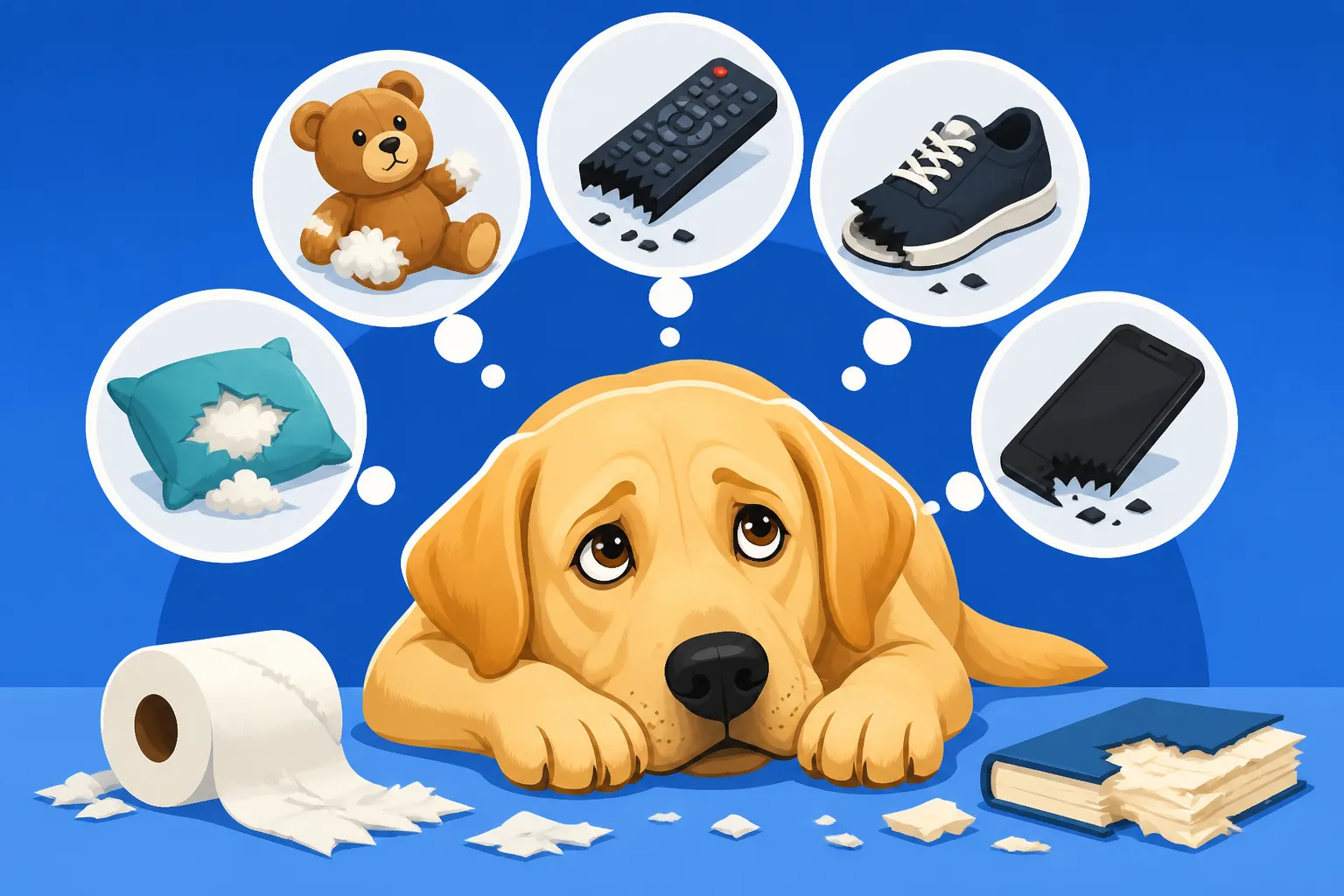
Labradors are highly scent-driven animals, and anything that carries your smell becomes instantly more interesting. This is why shoes, remote controls, eyeglasses, and even your dirty laundry often become prime targets. These items smell like you, making them comforting and engaging for a dog who might be missing your presence or simply craving interaction. A shoe, especially a well-worn one, combines irresistible human scent with an interesting, often pliable, texture that's perfect for gnawing.
Beyond scent, texture plays a huge role. Soft, easily shreddable items like pillows, blankets, or paper (mail, toilet paper rolls) offer immediate gratification. They tear easily, providing that satisfying ripping sensation. Wooden furniture legs or chair rungs offer a different kind of challenge – a hard surface to grind against, which can be particularly appealing for a dog trying to relieve teething discomfort or simply needing a robust chewing experience. Remember, for a young dog, What a Teething Labrador Destroys can cover a lot of ground.
Think about the items you’ve had chewed: were they soft and squishy, or hard and challenging? Often, Labs will alternate, seeking different sensations. A bored Labrador might start with shredding a soft cushion for instant gratification, then move on to a harder chair leg once that initial burst of energy is expended, seeking a longer-lasting, more intense chew. This varied approach keeps them engaged for longer, unfortunately at the expense of your belongings.
Items of Opportunity and Accessibility
Let's be honest, sometimes we make it too easy for them. A bored Labrador, like a mischievous child, will gravitate towards what's readily available. Items left on low coffee tables, dropped on the floor, or placed within jumping distance on a counter become fair game. Children's toys, especially those with interesting shapes, sounds, or a mix of materials, are particularly tempting. If they’re left scattered on the floor after playtime, they’re practically an invitation for a Labrador to investigate with their mouth.
The classic example is the overflowing trash can. A Labrador with a keen nose will quickly realize that the kitchen trash holds a treasure trove of exciting smells and textures, from discarded food scraps to crumpled paper and plastic packaging. Once they learn that rummaging through the trash provides stimulation and potential tasty rewards, it becomes a hard habit to break. This is why Labrador-proofing your kitchen and other accessible areas is so vital.
Consider your routine: when are items most likely to be left out? Mornings when you're rushing out the door? Evenings when the kids have finished playing? These are prime times for a bored Labrador to find a new "toy." Simple environmental management – putting things away, using baby gates, securing trash cans – can significantly reduce the opportunities for destructive chewing. It's not about punishing your dog for natural behavior, but about setting them up for success by removing temptation.
Preventing Boredom Chewing: Proactive Strategies
The best defense against a bored Labrador's destructive chewing is a strong offense. This means addressing the root cause – boredom – and managing their environment effectively.
Boosting Physical and Mental Stimulation
Labradors are working dogs, bred for energy and intelligence. They need a significant amount of physical exercise every single day. For many adult Labs, this means at least an hour or two of vigorous activity, beyond just a leisurely walk around the block. Think fetch in a large yard or at a park, swimming, or long, brisk hikes. A physically tired Labrador is far less likely to have the excess energy to channel into chewing your furniture. Consistent, high-quality exercise is non-negotiable for this breed.
Mental stimulation is just as crucial. Puzzle toys, often available on platforms like Amazon, are fantastic for engaging a Labrador's brain. These toys require them to figure out how to get treats, mimicking the problem-solving aspects of their natural retrieving instincts. Scent work, even simple hide-and-seek games with treats in the house, can be incredibly tiring for their brains. Regular, short training sessions, even just 10-15 minutes a day, also provide vital mental exercise and reinforce good behavior. Check out Puzzle Feeders That Slow a Greedy Labrador for ideas.
Another great way to combat boredom is through structured training, which combines mental and sometimes physical activity. Consider an online puppy training program like BAXTER & Bella, which offers structured guidance for all stages of your Labrador's development, helping you build strong communication and prevent problem behaviors before they escalate. Consistent training gives your Labrador a "job" and reinforces appropriate behavior, making them feel productive and engaged. Even advanced obedience or trick training can be a wonderful boredom buster.
Managing the Environment and Redirecting Behavior
Environmental management is your first line of defense. Puppy-proofing isn't just for puppies; it's a lifelong strategy for a curious Labrador. This means securing trash cans, putting away shoes and personal items, covering exposed electrical cords, and using baby gates to block access to rooms where you can't supervise. If an item isn't available to chew, your Labrador can't chew it. It sounds simple, but it's incredibly effective. A crate can also be an invaluable tool for supervision when you can't actively watch your dog, ensuring they stay safe and don't practice undesirable chewing habits. How Long a Labrador Can Stay Crated discusses appropriate crate usage.
Crucially, you must provide appropriate chew toys. These need to be durable, safe, and appealing to your Labrador. There's a huge variety out there, from Kongs that can be stuffed with treats, to Nylabones designed for power chewers, to natural antler chews. The key is to offer variety and rotate them regularly so they don't get boring. If your Labrador is always going for your shoes, try a chew toy with a similar texture or scent, perhaps even rubbing it on your hands to transfer your smell. You can find a fantastic array of these on platforms like Amazon, from durable rubber chews to complex puzzle balls.
When you catch your Labrador chewing something inappropriate, redirect them immediately. Don't punish them harshly, which can create fear and anxiety. Instead, calmly remove the inappropriate item and immediately offer an approved chew toy. Praise them enthusiastically as soon as they start chewing their toy. This teaches them what they should chew, rather than just what they shouldn't. Persistence is key here; consistency will pay off in the long run. For more insights on choosing the right tools, check out Chew Toys That Survive a Labrador.
| Chewing Category | Common Targets (Bad) | Appropriate Alternatives (Good) | Benefits of Alternatives |
|---|---|---|---|
| Scent-Driven | Shoes, socks, remote controls, dirty laundry | Scent-infused chew toys, human-scented safe chews, durable rubber toys | Satisfies scent drive, provides safe outlet for chewing |
| Texture-Driven | Furniture legs, pillows, blankets, books | Nylabones, tough rubber toys (e.g., Kongs), antler chews, rope toys | Meets need for different textures, durable for strong jaws |
| Accessibility | Children's toys, trash, plants, dropped items | Puzzle feeders, interactive treat dispensers, stuffed Kongs | Engages mind, provides reward, keeps them busy safely |
| Boredom Relief | Anything within reach, household items | Long-lasting chews, bully sticks, frozen stuffed toys | Sustained mental and physical engagement, prevents destruction |
When Chewing Becomes a Bigger Problem
While chewing is a natural behavior, there's a point where it can signal more than just boredom, or become a risk to your Labrador's health. Knowing when to escalate your intervention is important.
Identifying Destructive Chewing vs. Normal Exploration
It's one thing for a puppy to mouth a slipper, quite another for an adult Labrador to systematically destroy a door frame. Destructive chewing often involves significant damage to household items, beyond mere investigation. If you're consistently finding large pieces of furniture gnawed, holes in walls, or significant damage to structural elements of your home, this goes beyond typical boredom chewing and might indicate deeper issues.
A major concern is when your Labrador starts ingesting non-food items. Chewing a shoe is frustrating; swallowing pieces of that shoe can be life-threatening. Fabrics, plastics, wood splinters, and other foreign objects can cause intestinal blockages, choking hazards, or internal injuries. If you suspect your Labrador has swallowed something inappropriate, or if you find shredded remnants of an item but no corresponding pieces, it's time to be concerned. Why Labradors Steal and Swallow Things delves into this dangerous habit.
Sometimes, excessive chewing is a symptom of underlying anxiety, rather than just boredom. A Labrador suffering from separation anxiety, for example, might engage in frantic, destructive chewing, often focused on exit points like doors or windows, or items that smell strongly of their owner. This isn't about passing the time; it's about coping with distress. Look for other signs of anxiety, such as excessive barking, pacing, drooling, or house soiling, alongside the chewing.
Seeking Professional Help
If you've implemented all the boredom-busting strategies – increased exercise, mental games, appropriate chew toys, and environmental management – but the destructive chewing persists or escalates, it's time to bring in the professionals. Your first stop should always be your veterinarian. They can rule out any underlying medical conditions that might contribute to excessive chewing, such as dental pain, gastrointestinal issues, or nutritional deficiencies. They can also provide guidance on managing anxiety if it's suspected.
For persistent behavioral issues, a certified professional dog trainer or a veterinary behaviorist can be invaluable. These experts have the knowledge and experience to assess your Labrador's specific situation, identify the root causes of the chewing, and develop a tailored behavior modification plan. They can teach you more advanced techniques for redirection, desensitization, and counter-conditioning, especially if anxiety is a factor. Don't feel like you've failed if you need to ask for help; professional guidance can be the key to turning things around for both you and your beloved Labrador. They often have insights and tools that aren't obvious to even the most dedicated owners.
Disclaimer
This article is for general informational purposes only and does not constitute professional advice. Laws, prices and regulations vary by location and change over time. Consult a qualified professional for guidance on your specific situation.