Labradors in Search and Rescue Work
Bringing a Labrador Retriever into your life often means embracing a bundle of energy, boundless affection, and an instinct to carry everything in their mouth. But for some dedicated handlers, this innate retrieving drive and keen nose become the foundation for a life of purpose: search and rescue work. If you've ever wondered how these incredible dogs go from playful pups to life-saving heroes, you've come to the right place. This guide dives deep into the world of Labradors in search and rescue, exploring what makes them so good at it, the types of missions they undertake, the intense training involved, and the immense dedication required from both dog and handler.
Why Labradors Excel in Search and Rescue
It’s no accident that when you think of a search and rescue dog, a Labrador Retriever often comes to mind. They aren't just beloved family pets; their very breed characteristics make them uniquely suited for the demanding and critical work of finding lost people. Their combination of physical prowess, mental fortitude, and sheer love for a "job" puts them at the top of the list for many SAR teams.
Unrivaled Scenting Ability
The Labrador's nose is legendary, and it's one of their most valuable assets in search and rescue. While all dogs have a superior sense of smell compared to humans, Labradors possess an exceptional ability to detect, differentiate, and follow human scent, even in challenging environments. They are often referred to as "air-scent" dogs, meaning they can pick up microscopic particles of human scent floating in the air, not just from direct contact on the ground.
Imagine searching for a lost hiker in a vast forest, where countless animal trails, strong winds, and varied terrain make visual tracking impossible. This is where a Labrador's nose becomes the ultimate tool. They can work a large area, systematically sweeping back and forth, detecting human odor wafting from a significant distance, even if the person is out of sight, injured, or hidden by dense foliage. Their persistence in following a scent trail, sometimes for miles, without getting distracted by other enticing smells, is truly remarkable and speaks to their genetic programming as retrievers. This intense focus, paired with their incredible olfactory capabilities, makes them indispensable in locating individuals.
Ideal Temperament and Drive
Beyond their noses, a Labrador's temperament is perfectly aligned with the demands of SAR work. They are generally intelligent, eager to please, and possess an incredible work ethic. This isn't just about being a "good dog"; it's about having the innate drive to perform tasks, especially those involving retrieving or finding, coupled with the stability to handle stressful situations.
A good SAR Labrador needs to be confident, resilient, and unwavering in their focus, even when faced with chaos, loud noises, or unfamiliar people. Labrador Temperament and Personality describes their inherent friendliness and stability, which are crucial when interacting with victims, emergency personnel, and the public. They need to be able to switch from intense search mode to a calm, approachable demeanor in an instant. This balance ensures they are not only effective at their job but also a comfort to those they find and safe to work around other rescue workers. Their high food and toy drive also makes them incredibly trainable, as they are perpetually motivated by the prospect of a reward for a job well done.
Physical Attributes for Tough Terrain
Search and rescue isn't a walk in the park; it's physically demanding, often requiring dogs to navigate difficult and dangerous terrain. Labradors are built for it. They are sturdy, athletic, and possess the endurance to work for extended periods, covering vast areas in various weather conditions.
Their muscular build and strong legs allow them to traverse rocky paths, push through thick brush, clamber over rubble piles, and even swim across rivers if necessary. Their dense, water-resistant double coat, as discussed in The Labrador Retriever Breed Explained, provides a degree of protection against the elements, whether it's cold, wet, or thorny undergrowth. While they are powerful, they are also agile enough to move through tight spaces or over uneven ground without issue. This combination of strength, stamina, and resilience means they can keep going when human searchers might falter, making them incredibly effective in prolonged operations.
Types of Search and Rescue Operations for Labradors
The beauty of the Labrador's natural abilities is their versatility. They aren't just trained for one type of search; their skills can be honed for a variety of critical search and rescue disciplines, each with its own unique challenges and demands. From vast wilderness areas to the devastating aftermath of natural disasters, Labradors play a crucial role.
Wilderness and Trailing Searches
This is perhaps the most common image people have of a search and rescue dog: a Labrador diligently weaving through a forest, nose to the ground or held high, searching for a lost person. In wilderness search, Labradors primarily operate as "air-scent" dogs. They don't need a scent article from the lost person; they are trained to detect any human scent that isn't their handler's, often working off-leash to cover large areas more efficiently. When they find a scent pool or the source of the scent, they'll indicate to their handler, usually by barking or returning to lead them to the person.
Trailing dogs, on the other hand, are given a specific scent article (like a piece of clothing) from the missing person and are trained to follow that individual's unique scent trail. This is a more focused, often slower process, requiring immense concentration from the dog to distinguish one person's scent from many others, animal tracks, or environmental odors. Both roles are vital, and a Labrador's endurance, combined with their strong Labrador Recall and Working Off Leash, makes them ideal for the vast, often unpredictable landscapes of wilderness searches, whether it's a child who wandered off or an elderly person with dementia.
Disaster Response and Rubble Searches
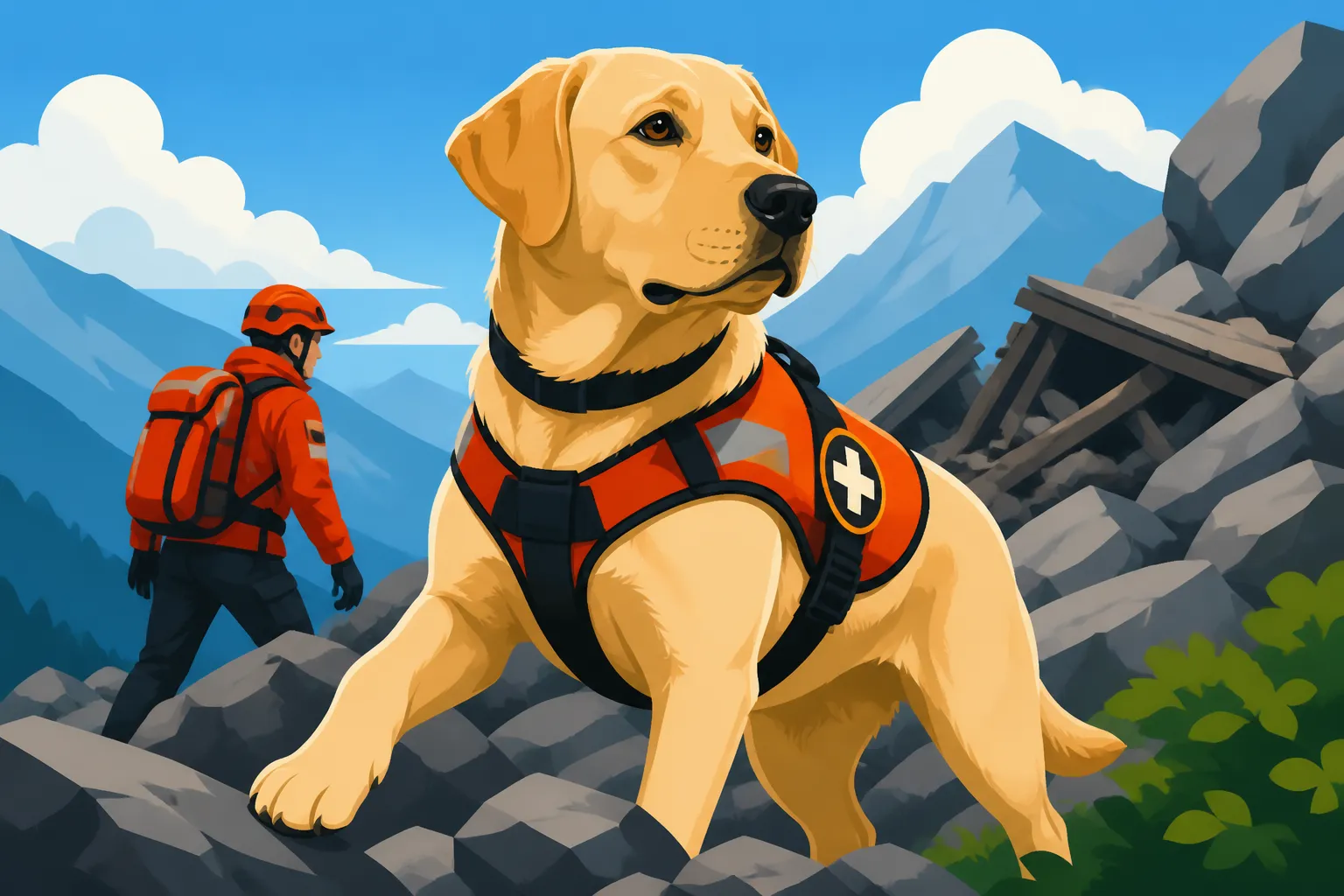
The image of a dog meticulously picking its way through the wreckage of a collapsed building or earthquake site is powerful, and often, that dog is a Labrador. For disaster response, these dogs are specifically trained to locate live human scent beneath tons of debris. This environment is incredibly dangerous and complex, requiring a dog that is not only agile but also incredibly brave and stable.
Labradors in this role learn to climb unstable piles of concrete, twisted metal, and broken wood without hesitation. They must ignore the myriad of distractions – loud noises, strange smells, other rescue personnel – and focus solely on the faint scent of a survivor trapped below. When they detect a human, they'll "indicate" by barking, digging, or pawing at the spot, signaling to their handler and the human rescue team where to begin digging. Their drive to "find" translates perfectly here, turning the search for a living person into the ultimate retrieving game, and their resilience is paramount when faced with such harrowing conditions.
Water Recovery and Cadaver Detection
Not all searches are for living individuals, and Labradors also serve a somber but critical role in water recovery and cadaver detection. Their love for water, as hinted at in What Labradors Were Bred to Do, and exceptional scenting abilities make them invaluable in locating drowning victims or human remains on land or from boats.
For water recovery, Labradors are often worked from boats, scanning the surface of the water for human scent. Scent particles rise through the water column, and a trained Labrador can pinpoint an area where a body might be submerged, even at considerable depths. This allows divers to focus their efforts much more efficiently. On land, cadaver dogs (often Labradors) are trained to detect the specific scent profile of decomposition, which differs from live human scent. This can involve locating buried remains, evidence at a crime scene, or victims of tragic accidents where the body may be obscured or scattered. It’s a specialized, emotionally challenging line of work, but the Labrador's dedication and keen nose provide closure to families and aid law enforcement in unimaginable circumstances.
The Rigorous Training Journey for an SAR Labrador
Transforming a playful Labrador puppy into a disciplined, life-saving search and rescue dog is a long, arduous, and incredibly rewarding journey. It demands unwavering commitment from both the dog and its handler, typically spanning several years of intensive, consistent training. This isn't just about teaching basic commands; it's about shaping a dog's natural instincts into a highly specialized skill set.
Early Foundation and Socialization
The journey begins long before a puppy can hit the rubble pile. A strong foundation built on early socialization and basic obedience is absolutely crucial. A prospective SAR Labrador needs to be exposed to a huge variety of sights, sounds, textures, and people from a very young age. This helps them develop into a confident, stable adult who won't be easily startled or distracted in high-pressure environments. Socializing a Labrador Puppy outlines the critical windows for these experiences.
Puppies selected for SAR often come from lines known for their strong working drives, good health, and stable temperaments. Once home, training focuses on building a powerful bond between dog and handler, teaching crucial obedience commands like "sit," "stay," and "come," and introducing them to novel environments in a positive way. Everything is framed as a fun game. For instance, hide-and-seek with a favorite toy, often sourced from places like Chewy, might be one of the first steps in harnessing their natural drive to find. This early play establishes the concept that finding people (or toys, initially) leads to immense rewards and handler praise, laying the groundwork for more complex scent work.
Advanced Scent Training
This is where the real magic happens, as the Labrador's powerful nose is honed into a precision instrument. Advanced scent training is complex and multi-layered, tailored to the specific SAR discipline the dog will pursue. For air-scent wilderness dogs, training involves increasingly difficult "hides" of human volunteers, gradually expanding the search area, varying the terrain, and introducing environmental factors like wind, rain, and cold. The dog learns to discriminate human scent from animal scent and to ignore distractions while systematically working an area.
Cadaver dogs learn to differentiate the specific odor of human decomposition, which can be subtle and deeply buried. Rubble dogs are introduced to mock disaster sites, learning to navigate unstable surfaces and pinpoint scents coming from confined spaces. Throughout this, the emphasis is always on positive reinforcement. Every time the dog indicates a "find," they receive a highly valued reward – perhaps a game of tug with a special toy only used for SAR work, or a handful of high-value treats. This consistent positive feedback solidifies their motivation and ensures they view their work as the most exciting game imaginable. Scent Work for a Labrador Indoors can be a great starting point for understanding how scent training begins.
Obedience and Handler Communication
While a good nose is essential, an SAR Labrador is useless without flawless obedience and clear communication with their handler. These dogs often work off-leash in expansive or dangerous environments, meaning they must respond instantly and reliably to voice commands, hand signals, or even whistles, regardless of distractions. A strong "recall" is non-negotiable, as is the ability to "stay" for extended periods or "down" in precarious situations.
The handler-dog team operates as a single unit, and the handler must learn to "read" their dog's body language – subtle changes in tail wag, head position, or pace that indicate they are on scent. Training also involves teaching the dog specific "indications" for a find, such as a sustained bark, a focused dig, or returning to the handler and leading them back to the source. This sophisticated dance of communication takes thousands of hours of practice. Handlers also train extensively in land navigation, first aid, and search strategies, as they are ultimately responsible for guiding their canine partner safely and effectively through a mission. Regular training sessions, often multiple times a week, are paramount to keep these skills sharp and maintain the dog's proficiency.
Certification and Ongoing Practice
The culmination of this rigorous training is certification. SAR dogs and their handlers must pass demanding evaluations administered by recognized organizations, proving their proficiency in their specialized discipline under realistic conditions. These tests are incredibly challenging, often requiring dogs to locate "victims" in complex scenarios, within strict time limits, and without handler interference.
However, certification is not the end; it's just the beginning. The world changes, environments shift, and dogs, like people, can lose skills if not regularly practiced. SAR teams commit to ongoing training throughout the dog's working life. This includes weekly drills, mock searches, specialized workshops, and continuous physical conditioning to ensure the Labrador maintains the stamina and agility needed for deployment. Much like professional athletes, these dogs are on a strict regimen to maintain peak performance. This continuous dedication, often with gear and supplies replenished from retailers like Chewy, is what keeps SAR Labradors ready to answer the call, day or night, ensuring they remain effective and reliable partners in the critical work of saving lives.
Challenges and Rewards of Working with an SAR Labrador
Life with an SAR Labrador is far from glamorous. It's a journey filled with profound challenges, demanding an incredible amount of time, emotional resilience, and financial commitment. Yet, for those who dedicate themselves to it, the rewards are immeasurable, forging an unbreakable bond and offering the deep satisfaction of truly making a difference.
Physical and Mental Demands on Both Dog and Handler
Search and rescue work is physically grueling for both ends of the leash. Handlers are often trekking for hours, sometimes days, through dense forests, up steep inclines, or across unstable ground, all while carrying heavy gear. They need to be in peak physical condition to keep up with their energetic Labrador. The dogs themselves endure extreme conditions – braving harsh weather, navigating treacherous terrain, and putting their bodies through strenuous activity. As discussed in Exercise a Labrador Needs Each Day, a SAR Labrador's daily exercise needs are far beyond that of a typical pet.
Mentally, the demands are equally high. SAR dogs must maintain focus for extended periods, ignore environmental distractions, and problem-solve complex scent puzzles. Handlers face the immense pressure of a missing person case, making critical decisions under stress, all while interpreting their dog's subtle cues. Burnout is a real concern, and handlers must be adept at self-care, recognizing when they or their dog need a break to prevent physical injury or mental fatigue. It’s a marathon, not a sprint, and both partners need to be robust in body and mind.
Emotional Toll and Public Perception
While the public often sees the heroic side of SAR dogs, the emotional toll on handlers can be significant. Searches don't always end with a joyous reunion. Handlers and their dogs often encounter traumatic scenes, and the emotional weight of unsuccessful searches or discovering a deceased victim can be heavy. Processing these experiences, while remaining ready for the next call, requires immense resilience and a strong support system within the SAR community.
Moreover, the role of SAR dogs isn't always fully understood by the general public. Sometimes, there's a romanticized view, or conversely, a misunderstanding of the dog's role, leading to unnecessary distractions or interference during a critical search. Handlers often find themselves balancing the urgency of their mission with educating curious onlookers, which can be an added stressor. Despite these challenges, the unwavering optimism and simple joy a Labrador takes in their "job" often help handlers process the more difficult aspects of the work, reminding them of the fundamental purpose behind their efforts.
The Unbreakable Bond and Profound Impact
Despite the hardships, the bond forged between an SAR Labrador and their handler is truly extraordinary. They are partners in the truest sense, relying implicitly on each other for safety, guidance, and encouragement in life-or-death situations. This isn't just a pet; it's a confidant, a colleague, and a lifeline. The countless hours of training, the shared successes, and the mutual support create a connection deeper than most people experience with their animals.
The profound impact of this work is, for many, the ultimate reward. Knowing that your Labrador, a dog you've raised and trained, has played a role in bringing a lost person home, providing closure to a grieving family, or aiding in a critical investigation is an unparalleled feeling. It's a testament to the Labrador's incredible capabilities and the dedication of the human teams who work alongside them. The wagging tail and enthusiastic 'find' of a Labrador, even after a long, arduous search, serves as a powerful reminder of the enduring spirit of these magnificent dogs and the invaluable service they provide to our communities.
| SAR Discipline | Primary Objective | Key Labrador Traits Utilized | Example Scenario |
|---|---|---|---|
| Wilderness/Trailing | Locate lost persons in natural environments. | Exceptional air-scent ability, endurance, strong recall, independent search drive. | Missing hiker in a dense forest. |
| Disaster Response | Locate live human scent in collapsed structures. | Agility, confidence over unstable terrain, focused scent discrimination, high toy/food drive. | Earthquake rubble, collapsed building. |
| Water Recovery/Cadaver | Locate human remains on land or submerged in water. | Acute scent detection (decomposition), strong water drive, persistence, stable temperament. | Drowning victim in a lake, buried remains. |
Disclaimer
This article is for general informational purposes only and does not constitute professional advice. Laws, prices and regulations vary by location and change over time. Consult a qualified professional for guidance on your specific situation.