Why a Labrador Ignores You Around Water
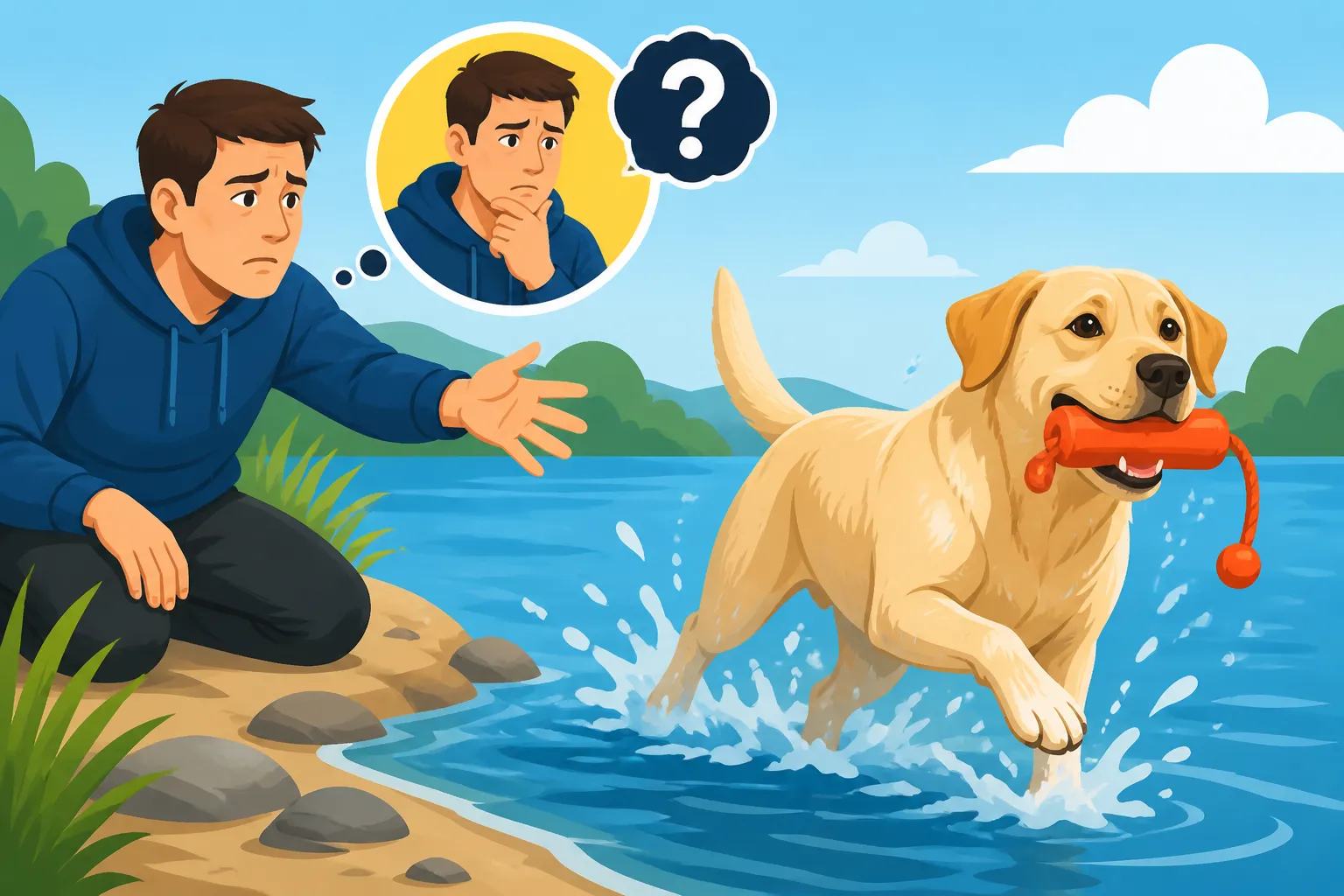
It’s a scenario many Labrador owners know all too well: your usually responsive, well-behaved Lab spots a body of water – a pond, a lake, even a particularly enticing puddle – and suddenly, it's like you've become invisible. Your calls fall on deaf ears, your pleas are ignored, and your beloved companion is off, plunging headfirst into the aquatic adventure. This frustrating experience can make you question everything you thought you knew about your dog's training. This guide will explore the deep-seated reasons why water holds such an irresistible allure for Labradors and, crucially, what you can do to reclaim their attention and ensure their safety around watery environments.
The Irresistible Call of the Water for Labradors
Let's face it, Labradors and water go together like peanut butter and jelly – it's practically in their DNA. For many of us, this love of water is part of what drew us to the breed in the first place, but it can quickly turn into a headache when recall goes out the window. Understanding this profound connection is the first step in addressing why they seem to lose their minds the moment they see a ripple. It's not usually defiance; it's instinct.
A Breed Designed for Water Work
The Labrador Retriever's origins are deeply intertwined with water. They weren't just "fond" of water; they were literally bred to work in it. Hailing from Newfoundland, these dogs, originally known as St. John's Water Dogs, assisted fishermen by retrieving nets, lines, and fish from the icy Atlantic. Imagine a dog perfectly equipped for this: a thick, water-resistant double coat, otter-like tail for propulsion, and famously webbed feet. These physical traits are not just for show; they're functional tools that make swimming effortless and enjoyable.
When your Labrador spots a lake and races towards it, they are, in a very real sense, honoring centuries of genetic programming. This isn't just a casual dip; it's a profound fulfillment of their historical purpose. They're responding to an ancient call that tells them "this is where you belong, this is what you were made to do." Trying to stop a Labrador from entering the water can feel like trying to stop a fish from swimming – it's fundamentally against their nature. You might read more about What Labradors Were Bred to Do to truly appreciate this heritage.
Sensory Overload and Instant Gratification
Beyond their inherent design, water presents a multi-sensory experience that is incredibly stimulating and self-reinforcing for a Labrador. Think about it from their perspective: the cool feel of the water, the unique smells carried on the breeze from the water's surface, the reflections and movement captivating their eyes, and the sheer joy of splashing and swimming. All these elements combine into an almost overwhelming sensory feast.
Once they're in the water, the act of swimming, chasing ripples, or retrieving a stick thrown into the current is inherently rewarding. Every paddle, every splash, every successful "catch" is its own reward, a massive dopamine hit that far outcompetes your voice calling their name from the shore. This immediate, intense self-reinforcement makes it incredibly difficult for your recall command, no matter how well-practiced, to compete. They are, quite simply, in their happy place, and your voice just becomes background noise to their aquatic bliss.
Why Your Labrador's Recall Disappears Near Water
You might have a Labrador who boasts a rock-solid recall in the park, turning on a dime no matter the squirrel or distant dog. Yet, the moment a body of water enters the picture, all that training seems to vanish. This isn't necessarily a fault in your dog's intelligence or your training; it's a specific, high-level challenge that most recall training doesn't adequately prepare for. The environment itself changes the game entirely.
High Arousal and Distraction Levels
The level of arousal your Labrador experiences around water is usually far higher than in other environments. "Arousal" in this context refers to their excitement and physiological readiness to engage with something. A Labrador seeing water often goes from calm to full-on turbo mode in seconds. This surge of excitement can actually make it harder for them to process and respond to commands, even familiar ones. Their brains are flooded with the desire to swim, and their cognitive ability to listen and respond to you diminishes.
Imagine yourself in an extremely exciting situation – perhaps you're at a concert for your favorite band, or watching your team win the championship. How well would you hear someone calmly asking you to do a chore? Probably not very well! It's similar for your Labrador. The sheer magnitude of the distraction, coupled with the high arousal, means that while they can hear you, their brain prioritizes the overwhelming joy of the water over your command. This is often the case even for well-trained dogs, which highlights the need for specific, tailored training in these situations.
Incomplete Generalization of Recall Training
One of the biggest pitfalls in dog training is assuming that a command learned in one environment will automatically transfer perfectly to another. This is called generalization. You might have practiced "come" countless times in your backyard, at the local park, or on a hiking trail, but did you practice it extensively around water? For most owners, the answer is probably no, or not nearly enough.
Your Labrador might associate "come" with the park, or with the sound of your voice in a familiar setting. But when you introduce the novel, highly stimulating environment of a lake, with its unique smells, sounds, and visual cues, it’s almost like you’re asking them to learn the command all over again in this new context. They haven't generalized "come" to mean "come, even when there's an entire ocean beckoning." This is why a solid recall needs to be trained and reinforced in a vast array of environments, increasing the difficulty of distractions gradually. Building a strong Labrador Recall and Working Off Leash requires patience and varied settings.
Lack of Consistent, High-Value Reinforcement
When your Labrador does eventually come back from the water, perhaps after a long, wet, and muddy excursion, what happens? Often, they might get a scolding, a towel-down, or just a routine pat. This isn't reinforcing the "coming back" part strongly enough to compete with the sheer bliss of the water itself. To truly "water-proof" your recall, the reward for coming away from the water needs to be incredibly compelling – even more enticing than the swim itself, at least in that moment.
Many owners use the same treats or praise for recall everywhere, but water demands a higher currency. If your dog loves cheese, maybe that's your water recall treat. If they go crazy for a specific toy, save it only for water recall. Without this consistent, high-value reinforcement, your Labrador quickly learns that the reward for staying in the water (fun!) is much greater than the reward for leaving it (your mild approval). It's a simple cost-benefit analysis from their perspective, and the water usually wins.
Strategies for Water-Proofing Your Labrador's Recall
So, you're not doomed to a lifetime of soggy chases and shouting matches. You can improve your Labrador's recall around water, but it requires a very intentional, systematic approach that builds on their natural drives rather than fighting them. It’s about making you the most exciting thing around, even when there’s a massive swimming pool tempting them.
Build a Bulletproof Recall Away From Water First
Before you even think about tackling water, ensure your Labrador's recall is absolutely infallible in less distracting environments. This means practicing "come" (or whatever your chosen recall cue is) in your home, backyard, local park, and quiet trails, without fail. Use a variety of high-value treats and enthusiastic praise every single time they respond. The goal here is to build such a strong positive association with your recall cue that it becomes almost an automatic response.
Start with short distances and gradually increase the distance and the level of distraction. Never assume they've "got it." Keep practicing in different places, with different people, and around different kinds of distractions like other dogs, bikes, or kids playing. This foundational work is crucial because if their recall isn't solid on dry land, it has no hope of standing up to the ultimate distraction of water. You can find excellent resources for this, like various online training platforms, and supplies on Amazon for long lines or treat pouches. Learning how to effectively do Long Line Work to Build Labrador Recall can be a game changer.
Introduce Water Distraction Gradually and Systematically
Once your recall is stellar on dry land, it’s time to slowly introduce water. Start with extremely low-stakes scenarios. Perhaps a small, shallow stream or even a sprinkler in the yard. The key is to keep your Labrador on a long line (a 30-foot or 50-foot lead you can easily get on Amazon is perfect for this) so you always have control. Let them approach the water, maybe dip their paws, then before they get fully absorbed, give your recall cue and immediately reward them with their absolute favorite treat or a super exciting toy when they come.
The goal is to call them away before they fully commit to the water. This builds the association that coming back to you is incredibly rewarding, even when water is present. Gradually increase the challenge: move to slightly deeper water, allow a bit more play time, and then call them. The trick is to set them up for success, never letting them blow off your recall. If you suspect they won't come, don't give the command – instead, reel them in with the long line and practice some proximity work. A great online program, like those offered by BAXTER & Bella, often provides structured steps for introducing distractions like water.
Utilize Specialized Training Techniques and Tools
Beyond gradual exposure, there are specific techniques and tools that can significantly boost your water recall efforts. A whistle recall, for example, can be incredibly effective. A whistle’s sound cuts through environmental noise better than your voice and doesn't carry the emotional baggage that can sometimes creep into our frustrated shouts. Train the whistle recall diligently away from water first, associating it with immediate, fantastic rewards, just like your verbal recall. Then, introduce it in your controlled water sessions. You can find detailed guides on Whistle Recall for a Labrador Retriever.
Another tool is a remote e-collar, but this is an advanced tool that must be used under the guidance of a professional trainer. It's not about punishment, but about providing a consistent, low-level tactile cue that gets their attention in high-distraction environments. Without proper training, e-collars can damage your relationship with your dog. For most owners, a solid long line, consistent positive reinforcement, and patience will yield excellent results.
| Recall Challenge | Typical Land Scenario | Water Scenario Difficulty | Key Training Approach |
|---|---|---|---|
| Distraction Level | Squirrel, other dog, ball | Entire lake, splashing, scent of fish | Extremely high-value rewards, gradual exposure |
| Arousal Level | Mild to moderate excitement | Intense, near-overwhelming excitement | Call before full commitment, maintain calm |
| Self-Reinforcement | Brief chase, sniff | Endless swimming, retrieving, cooling | Make your reward better than the water's reward |
| Generalization | Familiar park, various smells | Unique water environment, new stimuli | Practice in diverse water settings from easy to hard |
| Handler's Voice Impact | Clear, usually heard | Often ignored, drowned out by excitement | Use whistle, consistent tone, close proximity initially |
Prioritize Safety and Enjoyment
Ultimately, while training is important, safety should always be your top priority. If you're near open, moving, or deep water, and your Labrador's recall isn't yet 100% reliable, keep them on that long line. It allows them to enjoy the water safely while you work on training without the risk of them swimming out too far, getting caught in currents, or encountering unseen hazards. A good quality, durable long line that won't chafe them is a worthy investment.
Remember that Labradors truly live for the water, and denying them this joy entirely might lead to other behavioral issues. Instead, aim to teach them that they can enjoy the water and respond to your calls. This balanced approach ensures both their well-being and your peace of mind. Consider getting a Life Jackets for a Labrador in Open Water if you're venturing into unfamiliar or fast-moving water. With consistent training, loads of patience, and truly irresistible rewards, you can teach your water-loving Labrador to be just as attentive around a shimmering lake as they are in your living room.
Disclaimer
This article is for general informational purposes only and does not constitute professional advice. Laws, prices and regulations vary by location and change over time. Consult a qualified professional for guidance on your specific situation.