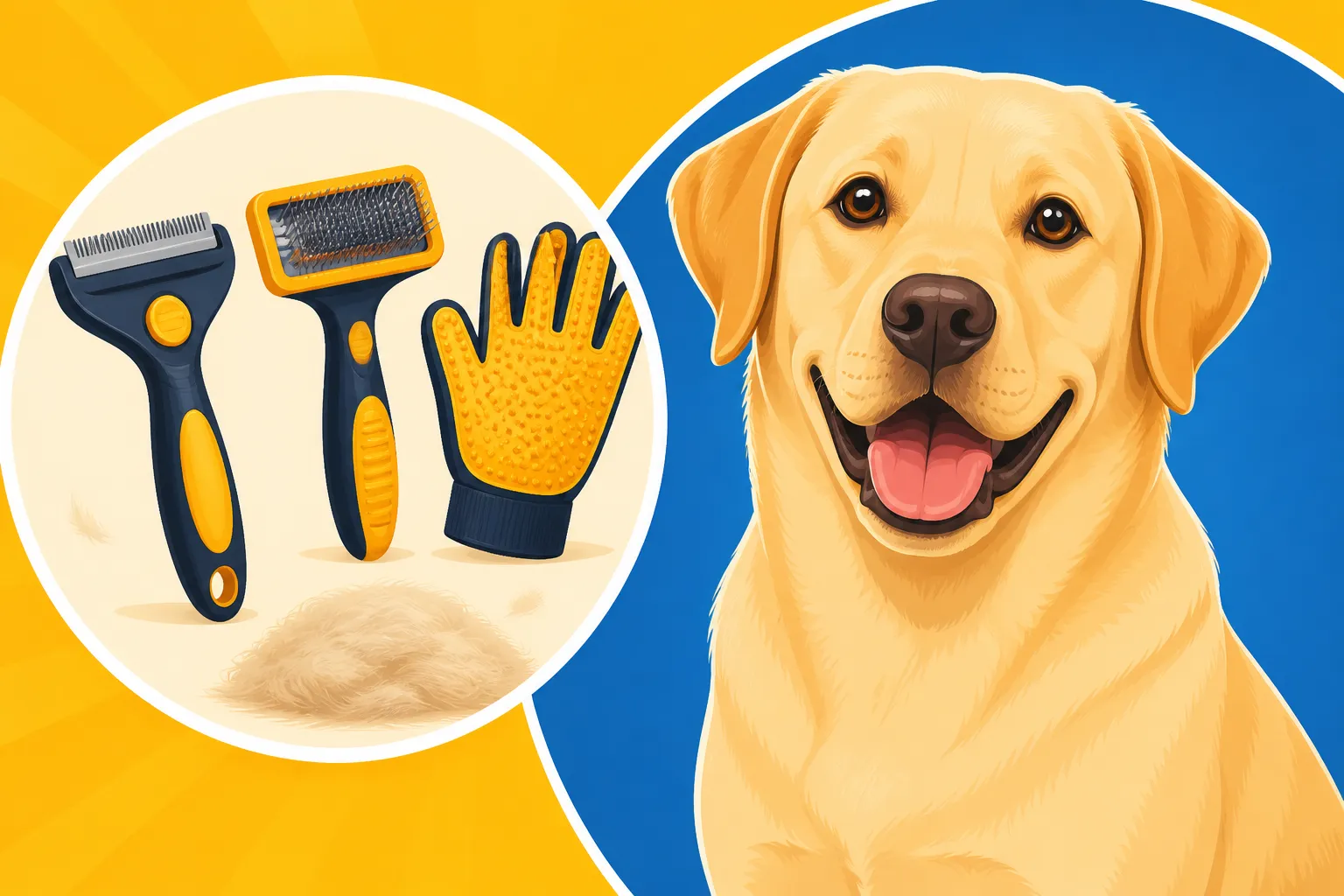
Deshedding Tools for a Labrador
If you're a Labrador owner, you know the struggle is real: dog hair. It's on your clothes, clinging to your furniture, and somehow even finds its way into your morning coffee. Dealing with the constant shedding from a thick-coated Labrador can feel like an unending battle, especially when they're "blowing their coat." This guide is here to walk you through the most effective deshedding tools and techniques to help you manage your Labrador's shedding, making life a little cleaner for both of you.
Understanding the Labrador Double Coat and Why They Shed So Much
Before we dive into the tools, it's crucial to understand why Labradors shed so much. It's not just random hair loss; it's a finely tuned biological process designed to keep them comfortable and protected in various climates. Their coat is a marvel of natural engineering, but it does come with a significant amount of shedding.
The Two Layers: Guard Hairs and Undercoat
Your Labrador's coat isn't just one type of hair; it's a sophisticated two-layer system. The outer layer consists of coarse, water-resistant guard hairs. These are the hairs you see on the surface, and they act as a protective barrier against the elements – rain, snow, dirt, and even UV rays. They give your Labrador that sleek, strong look. Beneath these guard hairs lies the real culprit for most of the shedding: the dense, soft undercoat. This fluffy layer provides insulation, keeping them warm in winter and helping to regulate their body temperature in summer. It's this undercoat that "blows out" in massive quantities during seasonal changes. You might notice your Labrador's coat feeling extra plush and thick in the colder months, only for it to start coming out in handfuls when the weather warms up.
The Natural Shedding Cycle
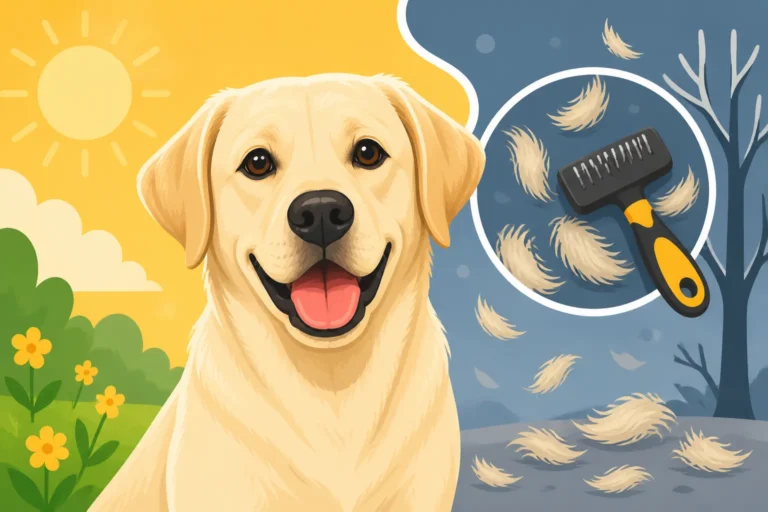
Labradors, like many double-coated breeds, have a distinct shedding cycle. While they shed a little bit year-round, there are two major "coat blows" that really test an owner's patience. These typically occur in spring, as they shed their thick winter undercoat to make way for a lighter summer one, and in the fall, as they prepare to grow a new, dense undercoat for the colder months ahead. During these periods, it can feel like your house is perpetually snowing dog hair, even if the sun is shining outside. Beyond these seasonal events, various factors can influence a Labrador's shedding, from diet to stress, and even their overall health. Understanding this cycle helps you anticipate the heaviest shedding times and prepare your grooming arsenal accordingly. It’s also important to remember that puppies shed their soft puppy fur to make way for their adult coat, which can also be a noticeable shedding period. For more on this, check out Labrador Shedding and How to Manage It.
Health Factors Affecting Shedding
Sometimes, excessive shedding can be more than just a normal part of your Labrador's life; it can be a sign that something else is going on. A poor diet, lacking essential fatty acids, can lead to a dull, brittle coat and increased shedding. Stress or anxiety can also manifest as hair loss, just like in humans. If your Labrador is experiencing significant life changes, new environments, or prolonged periods of anxiety, you might notice an uptick in shedding. Beyond that, underlying health conditions such as allergies, thyroid issues, or even parasites like fleas and mites can cause skin irritation and lead to abnormal shedding, bald spots, or a patchy coat. If you ever notice changes in your Labrador's coat that seem unusual – excessive itching, red skin, bald patches, or a sudden, dramatic increase in shedding outside of the normal seasonal blow – it's always a good idea to consult your veterinarian to rule out any health concerns. A healthy coat is often a reflection of a healthy dog, and sometimes addressing a medical issue can significantly improve coat health and reduce shedding.
Essential Deshedding Tools for Your Labrador
Now that you understand why your Labrador sheds, let's talk about the how of managing it. The right tools make all the difference, turning a frustrating chore into a manageable part of your routine. Not all brushes are created equal, and choosing the right deshedding tool depends on the job at hand.
Undercoat Rakes: Getting to the Root of the Problem
Undercoat rakes are indispensable for Labradors, especially during their heavy shedding seasons. These tools are designed with long, sturdy teeth that penetrate the top guard coat and reach deep into the dense undercoat, gently pulling out loose, dead hair without damaging the healthy outer layer. Think of them as miniature rakes for your dog's fur, effectively clearing out the insulation that's ready to come out anyway. There are various styles, some with rotating teeth that help prevent tangles and make the grooming experience more comfortable for your dog, while others have more rigid, curved teeth.
When selecting an undercoat rake, look for one with rounded teeth to prevent scratching your Labrador's skin. The spacing of the teeth can also vary; wider-spaced teeth are good for initial passes on a very dense coat, while more closely spaced teeth can catch finer hairs. Using an undercoat rake regularly, especially when your Labrador is blowing its coat, can dramatically reduce the amount of hair floating around your home. It's incredibly satisfying to see the piles of undercoat you can remove, knowing it's not going to end up on your couch or embedded in your carpet. You can find a good selection of these on sites like Chewy or Amazon.
Deshedding Blades and Brushes: The Heavy-Duty Options
Deshedding blades, often confused with stripping knives (which are different tools for hand-stripping specific breeds), are designed to remove a significant amount of loose undercoat. Tools like the popular FURminator are examples of deshedding brushes that utilize a fine-toothed metal edge to effectively grab and pull out dead undercoat hair. These tools are incredibly efficient, and many Labrador owners swear by them for the sheer volume of hair they can remove in a single session. However, they must be used with care. The sharp edge can cut or damage the guard hairs if used too aggressively or too frequently, and it can also irritate the skin if pressed too hard.
The key to using a deshedding blade or specialized deshedding brush is to use light, short strokes, always in the direction of hair growth. Never press down, and limit sessions to once or twice a week, or even less frequently, depending on your Labrador's shedding level. Overuse can strip too much healthy hair and potentially lead to skin issues. While effective, they are power tools of the grooming world and require a gentle hand and careful attention to your dog's comfort. They are best deployed during the peak shedding seasons, rather than for daily maintenance. Deshedding Tools for a Labrador mentions how effective these can be.
Everyday Brushes for Maintenance
Even outside of shedding season, regular brushing is vital for your Labrador's coat health and overall hygiene. This is where everyday brushes come in, like slicker brushes, pin brushes, and rubber curry brushes.
- Slicker brushes have fine, short wires packed closely together on a flat surface. They're excellent for removing loose surface hair, minor mats, and dirt, and they help distribute natural oils through the coat, making it shiny. For a Labrador, a slicker brush is great for daily upkeep and for untangling any smaller mats that might form, though their short, dense coat usually doesn't mat significantly.
- Pin brushes have wire pins with protective tips, spaced further apart than a slicker brush. These are generally used for longer-haired breeds but can be good for a quick once-over on a Labrador to remove surface debris and give the coat a bit of shine.
- Rubber curry brushes (like a Kong ZoomGroom) are fantastic for Labradors. The rubber nubs massage the skin, stimulating circulation and bringing loose hair to the surface. They're especially effective during bath time to help shampoo penetrate the coat and to work out dead hair when wet. Many Labs love the feeling of a curry brush, making grooming a more pleasant experience. This type of brush is gentle enough for daily use and can be found easily on Chewy or Amazon. For more on general brushing techniques, consider Brushing a Labrador's Coat.
These brushes aren't designed for heavy-duty undercoat removal, but they are crucial for keeping the coat healthy, clean, and reducing the overall amount of shed hair by catching it before it falls out naturally.
| Tool Type | Primary Purpose | When to Use | Pros | Cons |
|---|---|---|---|---|
| Undercoat Rake | Removing loose undercoat | Heaviest shedding seasons, 2-3 times/week | Deeply penetrates, highly effective at removing bulk hair | Can be harsh if used improperly, requires careful technique |
| Deshedding Blade | Aggressive undercoat removal | Peak shedding, 1-2 times/week maximum | Extremely efficient for removing large quantities of fur | Can cut guard hairs or irritate skin if overused |
| Slicker Brush | Surface hair, small tangles, shine | Daily or every other day | Good for general tidiness, distributes oils | Not effective for deep undercoat, can scratch skin if too firm |
| Pin Brush | Surface debris, light untangling | Daily quick brush-through | Gentle, good for sensitive skin | Limited effectiveness on dense undercoat |
| Rubber Curry Brush | Massaging skin, loosening hair, bathing | Daily, especially during baths | Gentle, stimulating, many dogs enjoy it | Doesn't remove large volumes of undercoat on dry hair |
How to Use Deshedding Tools Effectively and Safely
Having the right tools is only half the battle; knowing how to use them properly is key. Incorrect technique can not only be ineffective but can also cause discomfort or even damage to your Labrador's skin and coat.
Establishing a Deshedding Routine
Consistency is paramount when it comes to managing Labrador shedding. Instead of waiting for a hair-pocalypse, aim to establish a regular grooming routine. During non-shedding periods, a quick brush-down with a slicker or curry brush a few times a week might be enough to keep things tidy and distribute natural oils. However, when those seasonal "coat blows" hit, you'll need to step up your game. This might mean using an undercoat rake or deshedding tool every other day for a week or two, then scaling back as the shedding subsides.
Think of it like this: a little bit of effort consistently prevents a massive, overwhelming mess later. Trying to deshed a severely neglected coat can be a long, tedious, and uncomfortable experience for both you and your Labrador. A routine also helps your dog get accustomed to being handled and groomed, making future sessions much smoother. Find a quiet time when your Labrador is relaxed, perhaps after a walk or a meal, and make it a positive experience with plenty of praise and treats.
Proper Technique for Each Tool
Each deshedding tool has its own optimal technique:
- Undercoat Rake: Use long, firm, but gentle strokes in the direction of hair growth. Start from the neck and work your way down the back, sides, and then the chest and belly. Hold the skin taut with your free hand to prevent pulling. Don't press down hard; the rake's design allows it to do the work. Focus on areas where the undercoat is thickest, like around the neck, rump, and tail.
- Deshedding Blade/Brush: Again, always use light, short strokes, going with the grain of the fur. Avoid repetitive strokes over the same area to prevent irritation or damage to the guard coat. These tools are often best used on a clean, dry coat for maximum effectiveness. Be especially careful around sensitive areas like the inner thighs or armpits. Remember, less is more with these powerful tools.
- Slicker and Pin Brushes: Use gentle, even strokes to smooth the coat, remove surface debris, and untangle any minor snags. These are great for daily maintenance and finishing off a deshedding session to leave the coat looking neat and shiny.
- Rubber Curry Brush: This tool is wonderful for a stimulating massage. Use circular motions or short strokes over the entire body. It's particularly effective during baths to help shampoo penetrate and loosen wet hair.
Always inspect your Labrador's skin for any cuts, rashes, or hot spots before you start brushing. If you encounter a mat, try to gently work it out with your fingers or a wide-toothed comb first, rather than pulling through it with a deshedding tool. If your dog shows signs of discomfort, take a break and re-evaluate your technique.
Managing Your Labrador's Comfort During Grooming
Grooming, especially deshedding, can be a prolonged activity, and it's essential to keep your Labrador comfortable and cooperative. Start grooming sessions when your dog is relaxed. Short, positive sessions are better than long, frustrating ones, especially when you're first introducing a new tool. Offer high-value treats and praise generously. If your Labrador is particularly anxious, break the grooming into even smaller chunks, focusing on one area at a time. For instance, you might just do their back one day, and their sides the next.
Consider using a non-slip mat if grooming on a table or hard floor, to help them feel secure. If they get antsy, take a short break, offer a drink of water, or play a quick game. The goal is to make grooming a positive bonding experience, not a punishment. Some dogs might be more tolerant of a particular type of brush over another. Pay attention to their body language – licking lips, yawning, turning their head away, or trying to walk off are all signs they might be uncomfortable or stressed. Never force a grooming session; build up their tolerance gradually. You can find many calming aids and treats for anxious dogs on Chewy.
Beyond the Brush: Other Strategies for Shedding Management
While deshedding tools are your primary defense, a holistic approach to managing your Labrador's shedding involves other key strategies that contribute to overall coat health and can significantly reduce the amount of loose hair.
The Power of Bathing and Blow Drying
A thorough bath and blow-dry can be incredibly effective in removing loose undercoat, sometimes even more so than brushing dry. When your Labrador's coat is wet, the shampoo helps to loosen dead hairs, and a good scrub with a rubber curry brush during the bath can work wonders. After rinsing, the drying process is where you can really make a difference. Using a high-velocity dog dryer (not a human hairdryer, which can be too hot) to blow out the coat is fantastic. The force of the air literally blasts out loose undercoat that would otherwise end up on your floor.
It's amazing how much hair can come off during a proper blow-dry session. You'll want to do this outside or in an easy-to-clean area, because the hair will fly! Make sure your Labrador is comfortable with the dryer's noise and sensation, introducing it gradually. A well-executed bath and blow-dry can essentially "deshed" your Labrador more completely than brushing alone, leaving less hair to fall out in the following days. For more on this, check out Bathing a Labrador Retriever.
Nutritional Support for a Healthy Coat
What goes into your Labrador's body has a direct impact on the quality and health of their coat. A diet rich in essential fatty acids, particularly Omega-3 and Omega-6, can promote a strong, healthy coat and reduce excessive shedding. Look for high-quality dog foods that list ingredients like fish oil, flaxseed, or other healthy fats. Brands like Ollie often emphasize quality ingredients that support overall health, including coat condition.
Sometimes, supplementing their diet with a dedicated fish oil supplement (like salmon oil) can further boost coat health, making the hair stronger and less prone to breakage. Always discuss any supplements with your veterinarian to ensure they are appropriate for your individual Labrador. A well-nourished coat is less likely to shed excessively and will appear shinier and healthier overall. Avoiding cheap, filler-heavy foods can make a noticeable difference in the amount of hair you find around your home. For guidance on selecting food, refer to Choosing Dog Food for a Labrador Retriever.
Professional Grooming vs. DIY Deshedding
While many Labrador owners successfully manage shedding at home, there are times when professional grooming can be a fantastic option. Professional groomers have access to specialized equipment, like high-velocity dryers and professional deshedding tools, that can extract an incredible amount of loose undercoat efficiently and effectively. They also have the experience to handle even the most reluctant groomees and can often complete a thorough deshedding much faster than you might at home.
A professional deshedding service, often including a bath, blow-dry, and dedicated deshedding treatment, can reset your Labrador's coat, significantly reducing shedding for several weeks. This can be especially beneficial during peak shedding seasons or if you're feeling overwhelmed by the amount of hair. However, it does come with a cost. The decision between DIY and professional grooming often comes down to your budget, time, and your comfort level with handling your Labrador's grooming needs. Many owners opt for a mix: regular home grooming with professional sessions a few times a year for a deep clean and deshed.
Common Deshedding Mistakes to Avoid
Even with the best intentions, it's easy to fall into some common traps when deshedding your Labrador. Avoiding these pitfalls will not only make the process more effective but also keep your dog happy and healthy.
Over-Brushing and Skin Irritation
One of the most common mistakes is over-brushing, especially with powerful deshedding tools like blades. While these tools are designed to remove a lot of hair, using them too frequently or with too much pressure can quickly irritate your Labrador's skin. Their skin is sensitive, and constant friction can lead to redness, inflammation, and even brush burn. This irritation can then cause more itching and potentially secondary skin infections, which ironically can lead to more shedding or coat problems.
It's crucial to remember that deshedding tools are not for daily use, particularly the more aggressive ones. Stick to the recommended frequency, usually once or twice a week during heavy shedding, and be mindful of your dog's reactions. If you see any redness, stop immediately. Opt for gentler brushes like rubber curry brushes or slicker brushes for everyday maintenance, and save the heavy-duty tools for when they're truly needed. A good rule of thumb is: if you can easily pull more hair out without applying much pressure, keep going. If you're having to really dig in, or if your dog is showing discomfort, it's time to stop.
Using the Wrong Tools
Another common mistake is simply using the wrong tool for the job. A standard bristle brush might be fine for a short-haired dog with no undercoat, but it will do next to nothing for a shedding Labrador. Similarly, using a comb designed for fine hair on a dense Labrador undercoat will be frustrating and ineffective. Each tool is designed for a specific purpose, as we discussed earlier.
For instance, trying to tackle a major coat blow with just a slicker brush will likely leave you frustrated and your house still covered in hair. Conversely, using a deshedding blade every single day for light maintenance is overkill and harmful. Understanding your Labrador's coat type and its shedding cycle is crucial for selecting the right tool at the right time. Invest in a few key tools – an undercoat rake, a deshedding blade (used judiciously), and a rubber curry brush – and learn how to use each one effectively. Don't be tempted to buy the cheapest brush if it's not actually suitable for a double-coated breed; you'll end up spending more in the long run.
Neglecting Regular Grooming
Perhaps the biggest mistake of all is neglecting regular grooming until shedding becomes an overwhelming problem. When you let the loose hair accumulate, it can become matted, especially if your Labrador enjoys swimming or rolling in the dirt. Mats can pull on the skin, causing pain and discomfort, and can create a breeding ground for skin infections. They also make deshedding much harder, as you'll have to tackle the mats before you can even get to the loose undercoat.
Think of grooming as preventative maintenance. A little bit of consistent effort goes a long way. Regular brushing not only removes loose hair but also stimulates the skin, promotes healthy circulation, and helps distribute natural oils, keeping the coat shiny and healthy. It also allows you to regularly check your Labrador's skin for any lumps, bumps, or irritations that might otherwise go unnoticed. Incorporating grooming into your routine, even for just 10-15 minutes a few times a week, can drastically reduce the amount of hair in your home and improve your Labrador's overall comfort and coat health. This consistent care, as highlighted in Labrador Coat Blowing in Spring and Fall, is key to managing the notorious Labrador shed.
Disclaimer
This article is for general informational purposes only and does not constitute professional advice. Laws, prices and regulations vary by location and change over time. Consult a qualified professional for guidance on your specific situation.