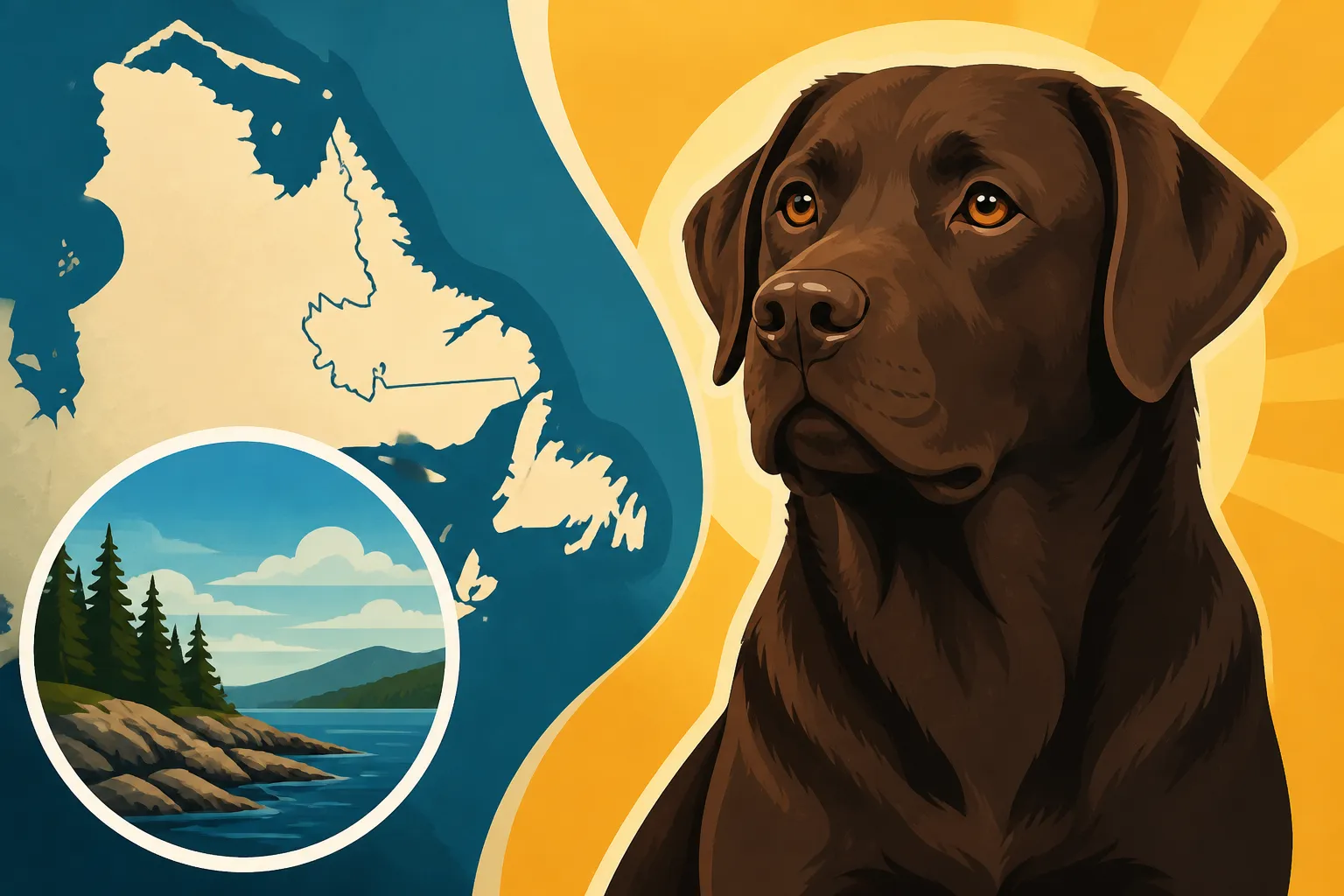
Where the Labrador Retriever Came From
It's quite easy to fall in love with a Labrador Retriever, isn't it? Their goofy smiles, their boundless energy, and those soft, soulful eyes just capture your heart. But have you ever stopped to wonder where all that wonderful Lab-ness came from? It’s not just about their current personality; understanding their history helps us appreciate why they are the way they are today, from their love of water to their insatiable desire to carry things. This guide will take you on a journey back in time to explore the fascinating origins of one of the world's most beloved dog breeds.
The True Ancestor: The St. John's Water Dog
Before the Labrador Retriever we know and adore ever existed, there was its remarkable progenitor: the St. John's Water Dog. These hardy, intelligent canines were the indispensable companions of fishermen working the treacherous, icy coasts of Newfoundland, Canada. They weren't bred for fancy pedigrees or show rings; they were bred for survival and functionality, often working tirelessly in some of the harshest conditions imaginable.
Life in Newfoundland
Imagine the scene: small fishing boats battling the waves off the coast of Newfoundland, the air biting cold, and nets heavy with fish. The St. John's Water Dog was right there in the thick of it, day in and day out. Their primary job was to retrieve fish that had escaped the nets, bring back lines, and even help pull in ropes. This wasn't a casual retrieve in a pond; it was serious, life-saving work in freezing waters, often requiring immense stamina and courage. They lived alongside the fishermen, sharing their meager existence and proving their worth every single day. Their very existence was intertwined with the fishing communities, a partnership forged out of necessity and mutual benefit. Where the First Labrador Ancestors Worked gives you a deeper dive into this incredible working relationship.
Appearance and Temperament of the St. John's Dog
While no longer with us, historical accounts paint a vivid picture of the St. John's Water Dog. They were medium-sized dogs, often described as having a black, dense, water-resistant coat, much like our modern Labs. Their tails were thick at the base and tapered, often referred to as an "otter tail" – a characteristic proudly carried by today's Labrador. More than their looks, their temperament was legendary. They were known for their incredible work ethic, their calm disposition even amidst chaos, and their unwavering loyalty. They possessed an innate retrieving drive and a keen intelligence, always eager to please their human companions. This combination of ruggedness and gentle nature was precisely what made them so valuable to the fishermen.
The Decline of the St. John's Water Dog
Sadly, the St. John's Water Dog eventually faded into history, primarily due to a combination of factors. Taxation laws in Newfoundland, which imposed heavy levies on dog ownership, especially on females, made it economically challenging for fishermen to keep them. This, combined with strict quarantine laws in England that effectively halted the import of dogs from Newfoundland, meant the breeding stock dwindled. The breed, in its original form, simply couldn't sustain itself. However, by this point, many of these dogs had already made their way to Britain, carrying their invaluable genes and traits that would form the foundation of a new breed. When the St. John's Water Dog Died Out details this unfortunate but important part of their history.
Crossing the Ocean: Labradors Arrive in Britain
The journey of the St. John's Water Dog across the Atlantic marks the true beginning of the Labrador Retriever breed. These dogs weren't just passengers; they were precious cargo, recognized by a few insightful individuals for their exceptional retrieving abilities, which perfectly suited the burgeoning sporting dog culture in England.
The Journey to Poole, Dorset
By the early 19th century, St. John's Water Dogs were making their way from Newfoundland to the port of Poole in Dorset, England, aboard fishing vessels. They weren't imported en masse as part of a grand breeding plan, but rather individually or in small numbers, often as working companions for the sailors and fishermen themselves. Once in England, their incredible skills, particularly their aptitude for water retrieves and their calm demeanor, quickly caught the attention of British aristocrats who were passionate about waterfowl hunting. It was this initial trickle of dogs that planted the seeds for the breed's future. How Labradors Reached Poole in Dorset explains more about these crucial early voyages.
Early Admirers and Their Observations
Among the earliest and most influential admirers were the second Earl of Malmesbury and the fifth Duke of Buccleuch. These keen sportsmen immediately recognized the superior qualities of the St. John's dogs for retrieving game from land and water. They were particularly impressed by the dogs' strong noses, their endurance, their natural "soft mouth" (meaning they could carry game without damaging it), and their biddable nature. These were precisely the traits that a gentleman hunter needed in a canine partner. The Earl of Malmesbury, in particular, is often credited with referring to these dogs as "Labrador Dogs" as early as 1835, recognizing their origin from the wider Labrador region (which included Newfoundland).
Distinguishing from Other Retrievers
At the time of their arrival, England already had various retrieving dogs, such as the Flat-Coated and Curly-Coated Retrievers. However, the St. John's dogs stood out. Their distinctive short, dense, water-resistant coat was a huge advantage in cold, wet conditions, making them less prone to icing up or getting waterlogged compared to their longer-coated counterparts. Their inherent desire to retrieve, coupled with their robust build and calm temperament, set them apart. They weren't just good at fetching; they excelled, displaying an unmatched dedication to their task that endeared them to the British sporting elite. This crucial distinction paved the way for them to be recognized as something special, worthy of dedicated breeding.
Shaping the Breed: The British Aristocracy's Role
Once in Britain, the fate of the St. John's Water Dog, soon to be known as the Labrador Retriever, was largely guided by a few dedicated aristocratic families. These individuals weren't just dog owners; they were visionaries who saw the potential for a superior sporting dog and meticulously set about developing the breed we cherish today.
The Earls of Malmesbury and Buccleuch
The Malmesbury and Buccleuch families are foundational to the Labrador breed. The second Earl of Malmesbury began importing St. John's dogs directly from Newfoundland and establishing a breeding kennel at his estate in Hurn Court, Dorset. He famously wrote of his "Labrador Dogs" being "the best of all retrievers." Later, his efforts were continued by his son, the third Earl. Simultaneously, the fifth Duke of Buccleuch and his brother, Lord John Scott, also started importing these dogs, bringing several back to Scotland. They too were captivated by the dogs' working abilities and initiated their own breeding programs. It was the careful, often collaborative, breeding efforts between these families that truly cemented the distinct characteristics of the nascent Labrador Retriever. The Earl of Malmesbury and Early Labradors and The Duke of Buccleuch's Labrador Kennel provide more detail on their invaluable contributions.
Early Breeding Programs and Records
These early breeders were surprisingly systematic for their time. They kept detailed records of their breeding pairs, lineage, and the characteristics of the offspring. Their goal wasn't just to produce more dogs, but to refine and standardize the traits that made the St. John's dogs so exceptional. They focused on maintaining the dense, water-repellent coat, the otter tail, the "soft mouth," and the biddable temperament. This selective breeding was crucial in ensuring that the desired qualities were passed down consistently through generations. This was a far cry from the more haphazard breeding practices common for many working dogs of the era, showcasing the serious intent behind their efforts.
Key Characteristics Cultivated
Through these deliberate breeding programs, several key characteristics were honed and fixed within the developing Labrador breed. The extreme drive to retrieve, coupled with remarkable endurance, was paramount. Their unique double coat, perfect for insulation in frigid water, and their webbed feet, ideal for swimming, were actively selected for. The gentle, eager-to-please nature, combined with high intelligence and trainability, also became hallmarks. These traits were not accidental; they were the result of careful observation, selection, and a deep understanding of what made an exceptional working dog. Without this focused cultivation by these early patrons, the Labrador as we know it might never have fully emerged.
Formal Recognition and the Breed Standard
As the breed gained popularity among British sportsmen, the need for formal recognition and a defined standard became apparent. This step was critical in moving the Labrador from a collection of "typey" working dogs to a recognized, distinct breed.
The Kennel Club's Official Recognition
The Kennel Club in Great Britain officially recognized the Labrador Retriever as a distinct breed in 1903. This was a monumental moment. Before this, while individual "Labrador Dogs" were highly prized, they weren't formally categorized as a breed with a specific set of characteristics. This recognition provided legitimacy and structure, allowing for official registration, organized breeding, and participation in dog shows. It essentially stamped the Labrador Retriever as a legitimate purebred dog, opening doors for its wider acceptance and propagation. When the Labrador Breed Was Formalized marks this significant milestone in their history.
Defining the Physical and Temperamental Traits
With official recognition came the establishment of the breed standard. This written document meticulously outlined the ideal physical characteristics – everything from the shape of the head and length of the muzzle to the set of the tail and the texture of the coat. It also detailed the desired temperament, emphasizing their intelligence, biddability, and friendly nature. This standard wasn't just for aesthetics; it served as a blueprint for breeders to ensure consistency and to preserve the working qualities that had made the breed so successful. For instance, the "otter tail" wasn't just a quirky feature; its thick, powerful base and tapering allowed it to act as a rudder in the water, a crucial aid for a retrieving dog.
| Trait Category | Key Characteristics Defined by Standard | Original Purpose/Benefit |
|---|---|---|
| Coat | Short, dense, double coat, rather hard to the touch, waterproof | Insulation in icy water, quick drying |
| Tail | "Otter tail" – thick at base, tapering, no feathering, carried gaily but not curled | Rudder for swimming, balance |
| Head/Mouth | Broad skull, powerful jaws, "soft mouth" (carry without damage) | Carry game gently, strong bite for retrieval |
| Feet | Compact, well-arched toes, webbed | Excellent swimming ability |
| Temperament | Good-natured, keen, intelligent, biddable, eager to please | Trainability, reliability, companionability |
The Importance of the Early Standard
The early breed standard played a pivotal role in preventing the dilution of the Labrador's working heritage. It ensured that breeders, even as they aimed for consistent appearance, did not lose sight of the functional traits that were the very essence of the breed. It provided a common goal, guiding breeders to select for robust health, correct structure, and the keen intelligence necessary for a top-tier retriever. Without such a framework, the breed could have fragmented, losing the uniformity and predictable characteristics that make a Labrador a Labrador. This early dedication to a clear standard set the stage for the breed's enduring success and versatility.
The Labrador's Journey to North America (and Beyond)
While the Labrador's ancestors hailed from North America, its formal development and recognition happened primarily in Great Britain. However, the breed eventually found its way back across the ocean, not just returning to its ancestral lands but spreading throughout the continent and then globally, achieving immense popularity.
Reintroduction to Canada and the USA
After being refined in England, Labradors were eventually reintroduced to North America, particularly to Canada and the United States, in the early 20th century. This wasn't a mere return; it was a reintroduction of a vastly improved, standardized, and highly capable sporting dog. American and Canadian hunters, recognizing the superior retrieving abilities and amiable dispositions of these dogs, quickly embraced them. The breed's popularity grew steadily, especially among waterfowl hunters who needed a dog capable of working in tough conditions and retrieving game consistently. This return to the continent of their ancestors saw them thrive once more in an environment that echoed their origins. How Labradors Reached the United States elaborates on this second crossing.
Establishing the American Kennel Club Standard
As Labradors gained traction in the United States, the American Kennel Club (AKC) officially recognized the breed in 1917. Following this, the Labrador Retriever Club, Inc. was formed in 1931, playing a crucial role in establishing the American breed standard. While similar to the British standard, the American version often reflected subtle differences in emphasis, sometimes favoring a slightly more athletic build suitable for vast American hunting grounds. This formalization ensured that American breeders had clear guidelines for maintaining the breed's integrity and promoting responsible breeding practices, helping to solidify the Labrador's place in American dog culture.
Global Popularity and Working Roles
From North America, the Labrador's fame spread rapidly across the globe. Their adaptability, intelligence, and friendly nature made them suitable for a myriad of roles far beyond just hunting. They became invaluable as guide dogs for the blind, assistance dogs for people with disabilities, search and rescue dogs, and even detection dogs for law enforcement and military agencies. This versatility, combined with their unwavering loyalty and gentle disposition, propelled them to become one of the most popular dog breeds worldwide. Today, whether you see a Lab on a bustling city street, assisting a person with a visual impairment, or retrieving a duck from a frigid marsh, you're seeing the result of generations of careful breeding and an inherently remarkable set of traits. Even for modern owners, it’s worth thinking about the gear these dogs use daily – from specialized harnesses for service dogs to durable retrieve training dummies, items you can find on sites like Chewy that cater to their diverse needs.
Built for Work: What Shaped the Labrador's Abilities
The Labrador Retriever's entire history is steeped in purposeful work. Every trait, from their coat to their temperament, was meticulously selected to create the ultimate retrieving machine. Understanding this foundation helps us appreciate why they are so driven and what makes them tick.
Retrieving from Icy Waters
The St. John's Water Dog's existence was tied to the frigid North Atlantic. This meant that only dogs capable of withstanding extreme cold and performing flawlessly in water could survive and pass on their genes. Their dense, double coat, often described as "waterproof," was essential for insulation, shedding water rather than absorbing it, which prevented hypothermia. Their powerful, tapering "otter tail" acted as a rudder, aiding propulsion and steering in strong currents. Even their webbed feet, though subtle, provided extra surface area for powerful swimming strokes. These were not luxury features; they were critical survival tools that made them unparalleled at their job. The Labrador's Fishing and Retrieving Heritage explores these origins in more detail.
The "Soft Mouth" Advantage
One of the most celebrated traits of the Labrador is its "soft mouth." This refers to their natural ability to carry objects, particularly game birds, gently without damaging them. Imagine a hunter spending hours tracking and shooting a bird, only for the dog to bring it back mangled. That would be unacceptable. The St. John's Water Dogs were bred to deliver fish or game intact, and this instinct was carefully preserved and enhanced in the developing Labrador breed. This soft mouth is a testament to their intelligence and control, demonstrating a remarkable sensitivity that allows them to apply just the right amount of pressure. This trait also contributes to their gentle nature as companions, as they are less prone to accidental nips or rough handling. Why Labradors Carry Things in Their Mouths delves into this fascinating characteristic.
Endurance and Trainability
Working day in and day out on fishing boats or in the fields requires immense endurance. Labradors were selected for their stamina, their ability to work for long hours without flagging, and their sheer physical toughness. But physical prowess alone isn't enough; they also needed to be highly trainable and biddable. A dog that couldn't understand and execute commands reliably in chaotic environments would be useless. Their eager-to-please attitude, combined with their sharp intelligence, made them incredibly receptive to training. This combination of physical endurance and mental aptitude is why Labradors excel in so many demanding working roles today, from detection work to competitive field trials. Modern Labrador owners benefit from this heritage too, finding their Labs generally eager to learn and participate in training, whether it's basic obedience or advanced agility, often fueled by their favorite treats from places like Chewy. Labrador Intelligence and Trainability covers this aspect of their character.
The Name Game: Why "Labrador" for a Newfoundland Dog?
It’s one of those quirks of history that can confuse new owners: if the breed originated in Newfoundland, why are they called Labradors? It's a question that often sparks curiosity, and the answer lies in the geographical and historical context of the time.
The Labrador Peninsula Connection
The most widely accepted theory is that the name "Labrador" refers to the broader geographical region of Labrador, which encompasses both the Labrador Peninsula and the island of Newfoundland. In the early 19th century, when these dogs were first being imported to England, the distinction between "Newfoundland dog" (which was often used to refer to the larger, long-haired Newfoundland breed) and the "St. John's Water Dog" was less precise. The British aristocrats who first championed the breed simply referred to them as "Labrador Dogs" or "Labrador Retrievers" because they originated from the general region. It was a broad strokes geographical label that simply stuck. Why the Labrador Is Named After the Wrong Place offers a detailed look into this naming conundrum.
Common Misconceptions and Theories
Over the years, various theories and misconceptions have cropped up regarding the name. Some mistakenly believe the dogs originated directly from the Labrador Peninsula itself, rather than Newfoundland. Others have speculated that the name came from the dogs' love of "labor" or their industrious nature. While these are charming ideas, the evidence points overwhelmingly to the geographical naming convention. It's a reminder that names in dog breeds, like in many aspects of history, can sometimes be more about convenience and common parlance than precise geographical accuracy. What's clear is that the name wasn't chosen to diminish the Newfoundland connection, but rather to identify their origin in a region familiar to the English importers.
A Name That Stuck
Despite the slight geographical imprecision, the name "Labrador Retriever" took root and became universally recognized. It distinguished these exceptional retrieving dogs from other breeds being imported or developed at the time. The name itself, now synonymous with a friendly, intelligent, and hardworking companion, carries the weight of a rich history. It tells a story of perseverance, partnership, and purpose, reminding us of the breed's humble yet heroic beginnings on the rugged coasts of North America and its subsequent refinement in the hands of dedicated British breeders. It's a name that has come to represent everything we love about this incredible breed.
The Enduring Legacy: How History Shaped Today's Labrador
When you look at a Labrador today, whether it's a pampered pet curled up on the sofa or a focused working dog, you're seeing centuries of history embodied in their form and function. Their past isn't just a historical footnote; it actively dictates their present characteristics and needs.
Traits Carried Through Generations
The core traits of the St. John's Water Dog — the love of water, the dense double coat, the strong retrieving drive, the biddable nature, and the gentle temperament — have been meticulously preserved and celebrated throughout the Labrador's development. This is why your Labrador still instinctively carries things in their mouth (sometimes your shoes!), dives into any body of water, and seems to live to please you. These aren't learned behaviors; they are deeply ingrained genetic predispositions that are a direct legacy of their working ancestors. It's truly remarkable how consistent these traits have remained, a testament to the dedication of early breeders.
The Split: Field vs. Show Lines
Over time, particularly after the breed's formal recognition, a subtle divergence began to occur, leading to what are often referred to as "field lines" and "show lines" (sometimes called "English" and "American" types, though this can be misleading). Field Labs are typically bred with a primary focus on working ability, agility, and endurance, often having a leaner build. Show Labs are bred more to conform strictly to the breed standard's appearance, often with a heavier bone structure and a slightly more laid-back temperament. While both are unequivocally Labradors and share the fundamental traits, the emphasis in breeding has created variations. It’s important to understand this when choosing a puppy, as their historical purpose still influences these modern breeding philosophies. How English and American Labradors Differ expands on these distinctions.
A Beloved Companion for Generations
Ultimately, the Labrador Retriever’s journey from a humble fisherman's companion to one of the most popular breeds globally is a story of successful adaptation and unwavering appeal. Their rich history of working alongside humans, coupled with their inherent kindness and intelligence, has forged a bond that transcends mere pet ownership. Whether retrieving pheasants, guiding the blind, or simply cuddling on the couch, the modern Labrador carries the spirit of its ancestors – a tireless worker, a loyal friend, and a joy to have around. For new Labrador owners, remembering this history can help you understand their quirks and needs, ensuring you provide a home that honors their incredible heritage. Making sure they have appropriate mental stimulation, ample exercise, and high-quality food, perhaps from a trusted supplier like Chewy, all contribute to their well-being.
Disclaimer
This article is for general informational purposes only and does not constitute professional advice. Laws, prices and regulations vary by location and change over time. Consult a qualified professional for guidance on your specific situation.