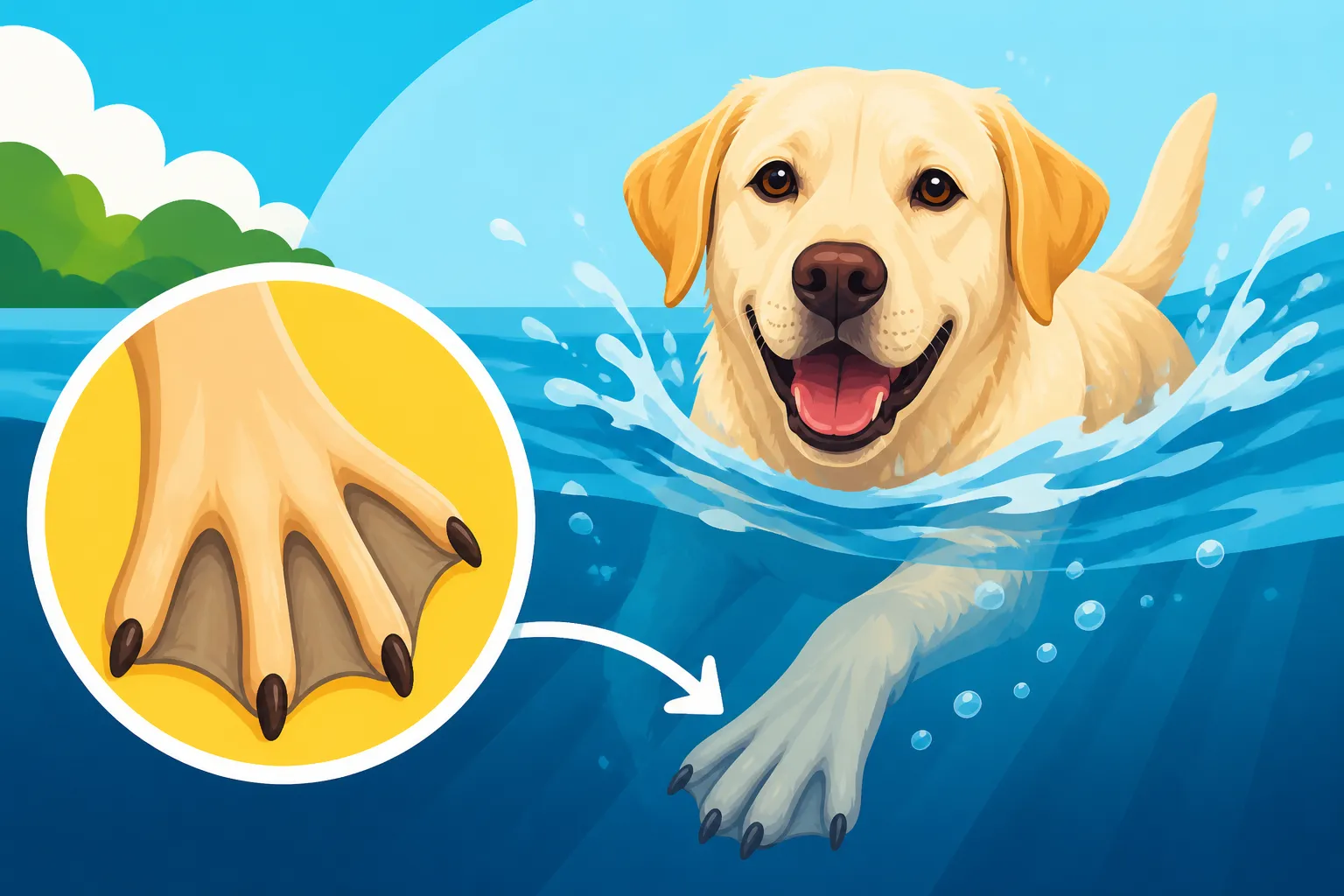
Labrador Webbed Feet and Swimming
For any Labrador owner, the sight of their dog gleefully plunging into water is as natural as breathing. We often joke about Labs being part fish, and it’s not hard to see why they adore a good swim. But what many people don't realize is that this isn't just a preference; it's hardwired into their very anatomy, especially when it comes to those surprisingly special paws. This guide will dive deep into how your Labrador's webbed feet and other unique physical traits make them such exceptional swimmers, and how you can best support their aquatic adventures.
The Evolutionary Advantage of Labrador Webbed Feet
It might sound a little strange to talk about a dog's "webbed" feet, as it conjures images of ducks or frogs, but when you really look at a Labrador's paws, you'll see a distinct difference compared to many other breeds. This isn't just a quirky feature; it's a profound evolutionary adaptation that has shaped the breed for centuries and remains a cornerstone of their physical prowess.
More Than Just a Cute Feature
Those slightly wider, thicker paws your Labrador sports are actually incredibly efficient paddles. The skin and connective tissue between their toes extend further up the length of the digits than in many other breeds, creating a more substantial surface area when spread out in water. Think about how a competitive swimmer might splay their fingers to push more water; a Labrador's feet do this naturally. On land, these same robust paws provide excellent traction and support, helping them navigate varied terrains, from rocky shorelines to muddy fields. But it's in the water that their true genius is revealed. When your Lab pushes off underwater, those slightly webbed toes create a much more powerful stroke, propelling them forward with impressive force and efficiency. It means less effort for more speed, allowing them to swim for longer periods without tiring.
A Legacy from the St. John's Water Dog
To understand the purpose behind these specialized feet, we have to look back at the Labrador's origins. They weren't just bred to be lovable family companions; they were working dogs, specifically developed in Newfoundland, Canada, as companions to fishermen. Their ancestors, the now-extinct The St. John's Water Dog Behind the Labrador, were indispensable on fishing boats. These dogs would retrieve fish that escaped the nets, pull in lines, and even assist in retrieving lost equipment from the icy Atlantic waters.
Imagine the harsh conditions: freezing water, heavy fishing nets, and the need for a dog to work tirelessly and effectively. A dog with flimsy paws wouldn't have stood a chance. The dogs with the best water-faring features – including those broad, slightly webbed feet – were the ones that thrived and were selectively bred. This meant that generation after generation, the trait for webbed feet was reinforced, becoming a defining characteristic of the breed we know and love today. It's a testament to how crucial this feature was for their survival and their role as working partners, proving that every aspect of the Labrador's design serves a purpose.
How Webbed Feet Enhance a Labrador's Swimming Prowess
It's one thing to have webbed feet, and another entirely to use them with such grace and power. A Labrador's swimming isn't just about getting from point A to point B; it's an art form, a demonstration of their innate ability to dominate the water. Their unique paw structure is central to this, providing both the raw power and the subtle control needed for effective aquatic work.
Propulsion and Maneuverability in Water
When a Labrador swims, their webbed feet act like perfectly designed paddles. With each stroke, the webbing expands, pushing a larger volume of water than a non-webbed paw would. This increased surface area translates directly into more powerful propulsion. It's similar to the difference between trying to paddle a canoe with just your hands versus using a broad, flat paddle – the paddle is far more efficient. This allows Labradors to cut through the water with incredible speed and power, whether they're chasing a thrown bumper or retrieving a downed bird.
Beyond sheer speed, their webbed feet also contribute significantly to maneuverability. They can change direction with surprising agility, making sharp turns or stopping quickly to grab an object. This is crucial for a retrieving dog that needs to navigate currents, debris, or other obstacles in the water. They don't just swim forward; they can perform complex aquatic movements that would leave many other breeds floundering. This makes them incredibly versatile and effective in various water environments, from still ponds to choppy lakes and even gentle rivers.
Stability and Balance in Wet Environments
It's not just about what happens in the water; it's also about getting to and from the water. Anyone who has walked along a wet, rocky riverbank or a mossy dock knows how treacherous these surfaces can be. This is where the broader surface area of a Labrador's webbed feet comes into play, even on land. The increased contact area provides better grip and stability, reducing the risk of slips and falls. This is particularly important when a Lab is enthusiastically launching into the water or scrambling out with a heavy retrieve in their mouth.
Think of it like all-terrain tires on a vehicle; the wider tread offers more contact and better traction. For a Labrador, this means they can maintain their balance and footing more securely on slippery mud, wet grass, or even icy patches near the water's edge. This stability isn't just for comfort; it's a safety feature, preventing injuries that could occur from a fall. Whether they're patiently waiting on a hunting blind or bounding back to you with their prized fetch toy, those sturdy, webbed paws are working hard to keep them upright and secure.
Beyond the Feet: Other Anatomical Adaptations for Swimming
While their webbed feet are certainly a star feature, they're part of an entire suite of physical characteristics that make the Labrador Retriever a truly amphibious dog. It’s a remarkable example of natural selection shaping a breed for a very specific, demanding purpose. When you look at a Labrador, you're not just seeing a friendly face; you're seeing a finely tuned athletic machine, built for water work from nose to tail.
The Iconic "Otter Tail"
One of the most distinctive features of a Labrador, proudly noted in the breed standard, is their "otter tail." This tail is thick at the base, gradually tapering towards the tip, and is generally medium in length. It's often described as being covered in short, dense hair, giving it a rounded appearance, much like the tail of an otter. But this isn't just for aesthetics; it's a crucial piece of swimming equipment.
In the water, the otter tail acts as a powerful rudder. When a Labrador swims, they use their tail to steer, balance, and make quick directional changes. A strong sweep of the tail can help them pivot in place or adjust their trajectory against a current. Without this robust and flexible tail, they would struggle to maintain course or respond dynamically to their environment, especially when carrying a retrieved object. Caring for a Labrador's Otter Tail is important not just for beauty but for function. It’s an extension of their body designed for aquatic navigation, allowing them to swim with precision and control. This unique tail is a constant reminder of their water-dog heritage, a tool as important as their webbed feet for their effortless glide through the water.
The Dense, Water-Resistant Double Coat
Anyone who has ever hugged a wet Labrador knows they dry remarkably quickly, and that's thanks to their incredible coat. Labradors possess a unique double coat that is perfectly engineered for insulation and water resistance. The outer coat is short, straight, and very dense, feeling somewhat coarse to the touch. This layer acts as a protective barrier, shedding water much like a raincoat. Beneath this, there's a softer, thicker, and extremely dense undercoat. This undercoat is what provides the incredible insulation, trapping a layer of warm air next to their skin even in frigid waters.
When a Labrador gets out of the water, a quick shake is often all it takes to remove most of the surface water from their outer coat. The undercoat, while it can get damp, works hard to prevent water from reaching their skin and chilling them. This specialized coat allows them to remain comfortable and warm even after prolonged exposure to cold water, which was absolutely vital for their ancestors working in the North Atlantic. How a Labrador Coat Repels Water is a fascinating biological design. Managing Labrador Shedding and How to Manage It is a common concern for owners, but it's a small price to pay for such an effective, functional coat that helps keep them healthy and happy in their favorite element.
Muscular Build and Lung Capacity
Beyond their specialized feet and coat, the entire physique of a Labrador Retriever is built for endurance and power, particularly in water. They have a strong, athletic, and well-muscled body, especially across their shoulders, chest, and hindquarters. These powerful muscles provide the sustained strength needed to propel themselves through water, often against currents, for extended periods. Their broad chests aren't just for looks; they house substantial lung capacity. This larger lung volume allows for efficient oxygen intake, crucial for stamina during vigorous swimming sessions.
This combination of muscular strength and ample lung power means a Labrador can swim for much longer than many other breeds without becoming exhausted. They don't just splash around; they can genuinely work in the water. This robust build is also what enables them to retrieve heavy objects, like a large duck or a substantial bumper, and carry them back to shore without faltering. Their physical composition is a testament to their heritage as powerful, persistent retrievers, making them natural athletes designed to excel in aquatic environments.
| Feature | Description | Swimming Advantage |
|---|---|---|
| Webbed Feet | Skin extending between toes, wider than typical paws | Increased propulsion, efficient paddling, better traction |
| Otter Tail | Thick at base, tapering, dense fur, medium length | Acts as a rudder for steering, balance, and quick turns |
| Double Coat | Dense, coarse outer coat; soft, thick undercoat | Water-resistant, insulating, helps regulate body temperature |
| Muscular Build | Strong shoulders, chest, and hindquarters | Power and endurance for sustained swimming and retrieval |
| Deep Chest | Ample room for lungs | Increased lung capacity for stamina and breath-holding |
Encouraging Safe and Enjoyable Water Play for Your Labrador
Just because Labradors are naturally inclined to love water doesn't mean you can just throw them in and expect them to be instant Olympians. Safety and positive experiences are paramount, especially when introducing them to swimming. You want to foster that innate joy without creating fear or putting them at risk.
Introducing Your Labrador to Water
The key to a lifelong love of swimming is a positive first experience. For puppies, start small. A shallow kiddie pool in the backyard with just a few inches of warm water can be a great first step. Let them splash and play on their own terms, maybe tossing a favorite floating toy in. Avoid deep, cold, or fast-moving water initially. For adult Labradors, especially if you've adopted a rescue whose history you don't know, a slow approach is even more critical. Walk them into the water gradually from a gently sloping beach or shoreline. Never push or throw them in, as this can create a traumatic experience and a lasting fear of water.
Use plenty of positive reinforcement, treats, and praise. Make it fun! Throw a floating fetch toy just a short distance from the shore and slowly increase the distance as they gain confidence. If they're hesitant, you can even wade in with them yourself, making it a shared, reassuring experience. Remember, Exercise Limits for a Labrador Puppy mean even water play should be kept short and sweet in the early days. The goal is to build their confidence and natural instincts, not to overwhelm them.
Essential Water Safety Gear
Even the strongest swimmer can benefit from some safety gear, especially in certain situations. A well-fitting dog life jacket is, in my opinion, non-negotiable for open water, boating, or for any Labrador, young or old, who isn't a strong swimmer. It provides buoyancy, making swimming less tiring, and often features a sturdy handle on the back, which is incredibly useful for lifting your dog back into a boat or out of the water in an emergency. You can find excellent options for various sizes and buoyancy levels on sites like Chewy, ensuring your Lab has the right fit for their adventures.
Floating toys are also a must. They make water play much more engaging and help your Lab focus their retrieving drive. Look for brightly colored, durable toys that won't sink, reducing the risk of your dog diving too deep or getting discouraged. Beyond direct swimming gear, consider a long lead for supervised exploration near water bodies where you might want to keep them tethered for safety without restricting their movement too much. Always be prepared, just as you would be for a child.
Post-Swim Care for Health and Hygiene
The fun doesn't stop when your Labrador gets out of the water; proper post-swim care is crucial to prevent health issues. The most common problem, especially for Labs who love to dive, is ear infections. Their floppy ears can trap moisture, creating a perfect breeding ground for bacteria and yeast. Always make sure to thoroughly dry your Labrador's ears after every swim. Use a soft towel to gently wipe the visible parts of the ear and an ear cleaner designed for dogs, applied as directed by your vet. Drying a Labrador's Ears After the Lake is more than just a routine; it's preventative care.
If your Labrador has been swimming in chlorinated pools or saltwater, it's also a good idea to rinse their coat thoroughly with fresh water to remove any chemicals or salt residue that could irritate their skin or coat. Finally, check their paws for any cuts, scrapes, or debris that might have gotten lodged between their webbed toes. A quick inspection and wipe-down can prevent minor issues from becoming painful problems. Labrador Ear, Paw and Nail Care is an ongoing commitment, especially for a water-loving breed.
Common Misconceptions and Challenges
While Labradors are famous for their love of water and impressive swimming abilities, it's important to approach this topic with a healthy dose of realism. Not every Labrador is a champion swimmer from day one, and even the most seasoned aquatic enthusiast faces certain risks. Dispelling myths and understanding potential challenges helps ensure that water activities remain safe and enjoyable for your beloved companion.
Not All Labradors Are Born Swimmers
It's a common assumption that all Labradors are natural-born swimmers who will eagerly leap into any body of water. While many do possess this innate drive, it's a misconception to think every single Labrador will automatically take to the water with gusto. Just like people, dogs have individual personalities and experiences. Some may be hesitant, cautious, or even fearful of water if they had a negative experience as a puppy or were never properly introduced. You might have a Labrador who prefers to stick to the shallow end, or one who just isn't that interested in getting fully submerged.
It's absolutely vital never to force a hesitant Labrador into the water. This can be traumatizing and create a permanent aversion. Instead, if your Lab is wary, introduce them very gradually to shallow water, keep it positive with treats and praise, and respect their boundaries. You can try Swimming as Exercise for a Labrador in a calm, controlled environment like a private pool or a very still pond. The goal is to build confidence, not to fulfill a stereotype. Their natural affinity for water is strong, but gentle encouragement is often far more effective than brute force.
Water Safety Beyond the Webbed Feet
Having webbed feet and an otter tail makes a Labrador a fantastic swimmer, but it doesn't make them invincible in water. There are real dangers that even the most experienced water dog can encounter. Strong currents in rivers or tides in the ocean can quickly overwhelm a dog, pulling them away or beneath the surface. Cold water, especially for extended periods, can lead to hypothermia, regardless of their insulating coat. Cold Water Safety for a Labrador is a serious consideration, and you need to be mindful of water temperatures.
Another significant risk is water intoxication from ingesting too much water during vigorous play, especially with toys that sit low in the water, encouraging gulping. This can lead to hyponatremia, a dangerous drop in sodium levels. Always supervise your Labrador closely, particularly when playing fetch in the water. Furthermore, stagnant ponds or lakes can harbor harmful algae or bacteria, which can cause serious illness. Always ensure your Labrador isn't drinking from questionable water sources. Finally, be aware of Labrador Bloat Risk and Deep Chests and avoid strenuous exercise, including swimming, immediately before or after meals to minimize this life-threatening risk. Being a responsible owner means being vigilant about all potential water hazards, not just relying on their natural abilities.
Conclusion
The Labrador Retriever is, without a doubt, a marvel of canine engineering, especially when it comes to their remarkable affinity for water. From their distinctive webbed feet and powerful otter tail to their dense, water-resistant double coat and muscular physique, every aspect of their anatomy is finely tuned for aquatic excellence. This isn't just a happy coincidence; it's a legacy of their working ancestors, the St. John's Water Dogs, who relied on these traits for survival and success in the harsh conditions of Newfoundland's fishing industry.
Understanding these unique adaptations allows us to appreciate our Labradors even more and, crucially, to provide them with the best possible care and environment for safe and joyful water adventures. By introducing them to water gently, equipping them with appropriate safety gear, and practicing diligent post-swim hygiene, we can help ensure that their natural love for swimming remains a source of health, happiness, and endless fun throughout their lives. So, the next time your Labrador plunges into a lake or river, take a moment to admire the incredible design behind their effortless grace – those webbed feet are truly a wonder to behold!
Disclaimer
This article is for general informational purposes only and does not constitute professional advice. Laws, prices and regulations vary by location and change over time. Consult a qualified professional for guidance on your specific situation.