Portion Control for a Food-Obsessed Labrador
It's a truth universally acknowledged in the Labrador world: these dogs are always hungry. You've just fed them a full meal, watched them gobble it down in under a minute, and five minutes later, they're staring at you with those soulful eyes, acting like they haven't eaten in a week. This constant quest for food isn't just endearing; it's a genuine challenge for owners trying to keep their beloved Labs at a healthy weight. This comprehensive guide will walk you through the nuances of portion control, helping you understand why your Labrador is so food-driven and, more importantly, how to manage their diet effectively to ensure a long, healthy life.
The Labrador's Insatiable Appetite: More Than Just Being "Foodies"
If you own a Labrador, you know the struggle is real. They're often described as "food motivated," but that's an understatement for many. They're often genuinely obsessed, a trait that can be both charming when training and incredibly frustrating when trying to keep their weight in check. Understanding the roots of this intense hunger is the first step towards managing it effectively. It's not just a cute quirk; it's a deep-seated behavioral and genetic predisposition.
Evolutionary Origins of Labrador Hunger
Our Labradors descended from the St. John's Water Dog, companions to fishermen in Newfoundland. These dogs spent their days working in harsh, cold environments, retrieving fish and nets from icy waters. Such a high-energy, physically demanding lifestyle required a metabolism that could quickly convert every available calorie into usable energy. They needed to be opportunists, always ready to eat whatever they could get their paws on to fuel their demanding work. This meant they were naturally selected for a strong drive to seek out and consume food whenever possible, a trait that served them well in their original role.
Imagine a fishing boat off the coast of Newfoundland, with cold winds whipping and waves crashing. A dog working there couldn't afford to be picky or turn down a meal. Their survival depended on maximizing caloric intake. This drive is etched deep into their genetic code, even if your modern-day Labrador's "work" primarily consists of retrieving a tennis ball in the backyard. Their bodies and brains are still wired for that survival mentality, making them feel perpetually hungry, a lingering echo of their ancestors' harsh lives.
The Genetic Link to Labrador Appetite
Beyond their working heritage, modern science has revealed a specific genetic factor that contributes to many Labradors' insatiable hunger. A significant number of Labradors carry a mutation in the POMC gene. This gene plays a crucial role in regulating appetite and energy expenditure. Dogs with this mutation essentially have a faulty "full" switch in their brain. They don't register satiety in the same way other dogs might, meaning they often feel hungry even after consuming an adequate amount of food. This isn't them being naughty or trying to manipulate you; it's a genuine biological imperative.
This genetic predisposition means that for many Labradors, being "food-obsessed" isn't a choice; it's a part of who they are, woven into their very DNA. Knowing this can help you approach portion control with more empathy and less frustration. It puts the responsibility squarely on us as owners to manage their environment and food intake, as their internal cues are often unreliable. You can learn more about this by reading The POMC Gene and Labrador Appetite. It highlights why a quarter of Labradors overeat by genetics, making portion control even more vital.
The Grave Dangers of Overfeeding Your Labrador
It's tempting to give in to those big, pleading eyes, especially when your Labrador acts like they're starving. However, succumbing to the urge to overfeed them, even by just a little bit each day, has serious and far-reaching health consequences. Labradors are already predisposed to weight gain, and extra pounds can shave years off their lifespan and significantly diminish their quality of life.
Obesity and Its Impact on Lifespan and Health
Obesity is more than just a cosmetic issue; it's a disease that brings a host of other health problems. An overweight Labrador is at a much higher risk for a variety of conditions that can drastically shorten their life and lead to chronic discomfort. For instance, extra weight puts immense strain on their joints, exacerbating conditions like Labrador Hip and Elbow Dysplasia and increasing their susceptibility to cruciate ligament tears. A heavier dog's joints wear down faster, leading to earlier onset and more severe arthritis, making simple activities like walking or playing painful.
Beyond joint issues, obesity contributes to a higher risk of heart disease, respiratory problems, and certain types of cancer. The extra fat tissue isn't just inert; it's metabolically active, releasing inflammatory compounds that can affect nearly every organ system. Overweight Labs are also more prone to diabetes, high blood pressure, and urinary tract infections. It's a cruel irony that by giving them "more" food out of love, we can inadvertently take "more" healthy years away from them. For a deeper dive into this, check out Labrador Obesity and the Years It Costs.
Understanding Body Condition Scoring
Because Labradors are so prone to weight gain, it's absolutely essential for owners to be vigilant about their dog's body condition. This goes beyond just looking at them; it involves feeling their ribs and checking for a waistline. Vets often use a Body Condition Score (BCS) system, typically on a scale of 1 to 9, with 1 being emaciated and 9 being morbidly obese. An ideal score for a Labrador is usually around 4 or 5. At this score, you should be able to easily feel your Labrador's ribs without seeing them, and they should have a clear waist when viewed from above and a tuck-up when viewed from the side.
Many owners mistakenly believe their Labrador's ideal weight is heavier than it actually is, often because they are used to seeing overweight Labs. It's a common struggle to accurately assess, but learning to feel for their ribs and observe their silhouette is key. If you have to press hard to feel the ribs, or if there's no visible waist, your Lab is likely carrying too much weight. Regularly performing a body condition score check at home, and discussing it with your vet, is one of the most proactive things you can do to manage their health. You can find more details on how to check your dog's weight by reading Labrador Body Condition Scoring.
Deciphering "Appropriate" Portion Sizes for Your Labrador
So, you understand why portion control is important. But what does "appropriate" even mean for a breed that seems like a bottomless pit? The truth is, there's no one-size-fits-all answer, as calorie needs can vary dramatically based on several factors. Relying solely on the bag's recommendations can often lead you astray, as those are general guidelines that don't account for individual differences.
The Flaws in "Feeding Guide" Recommendations
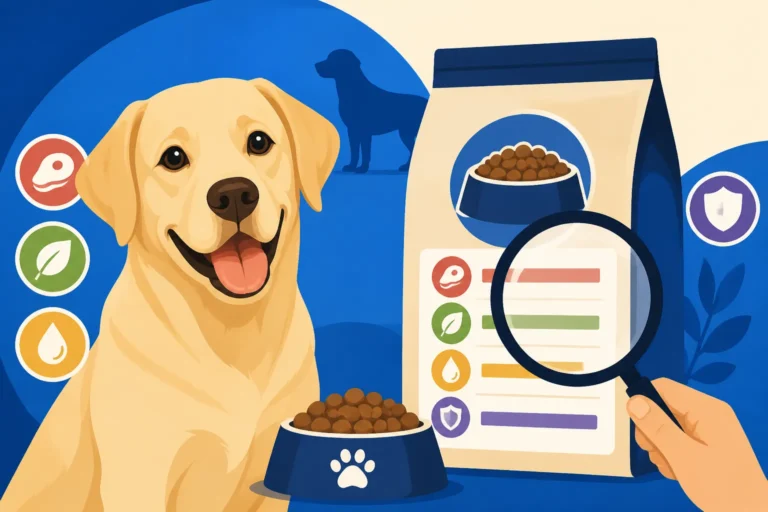
Dog food bags come with a feeding guide, usually a chart recommending a certain number of cups based on your dog's weight. While a starting point, these guides are often quite generous, calculated for an "average" active dog, which might not describe your Labrador. They also don't account for your dog's individual metabolism, activity level, or if they have that specific POMC gene mutation that makes them prone to weight gain. Think of it like a human calorie recommendation – it's a baseline, not a strict rule for everyone.
For example, a bag might suggest 3-4 cups for a 70-pound Labrador. If your 70-pound Lab is a couch potato with the POMC gene, feeding them that much could easily lead to steady weight gain. Conversely, a highly active field-line Labrador who spends hours training or hunting might actually need more than the bag suggests. The "average" dog on the bag's chart is rarely your dog, and blindly following it is a recipe for either an overweight or, less commonly, an underweight dog. This is also why Why Free Feeding Fails With a Labrador is such an important read.
Calculating Your Labrador's True Calorie Needs
Instead of relying solely on the bag, a more precise approach involves calculating your Labrador's Resting Energy Requirement (RER) and then adjusting it based on their activity level and ideal body weight. Your veterinarian is your best resource for this. They can help you determine your Labrador's ideal weight and then, using formulas, calculate their daily calorie needs. This takes into account factors like age, whether they're spayed/neutered, and their typical daily activity.
Once you have a calorie target, you can then figure out how much of your specific dog food (which has a calorie count per cup or gram, usually listed on the bag) translates into those calories. This might mean your dog needs significantly less, or occasionally more, than the bag suggests. It's a precise, scientific approach that removes the guesswork. Remember to factor in all treats and chews into this daily calorie budget – they add up quickly! For specific guidance on daily feeding, Cups Per Day for an Adult Labrador can offer further insights.
Adjusting for Age and Activity Level
A Labrador's nutritional needs aren't static; they change throughout their life. A growing puppy requires more calories and specific nutrient balances to support their rapid development, but it's crucial not to overfeed them, as too-rapid growth can harm their developing joints. An adult Labrador will have a stable need, which can then fluctuate based on their activity level. A Lab who enjoys daily long runs or participates in dog sports will naturally burn more calories than one who has a more sedentary lifestyle.
As your Labrador enters their senior years, their metabolism often slows down, and their activity level may decrease due to age or conditions like arthritis. At this stage, their calorie needs will typically drop, and you'll need to adjust their portions accordingly to prevent weight gain. Keeping them lean in their golden years can significantly ease joint pain and improve overall comfort. Regular reassessment of their body condition and conversations with your vet are essential to ensure their diet is always aligned with their current life stage and activity. Feeding a Senior Labrador Retriever provides specific advice for older Labs.
Practical Strategies for Accurate Portion Control
Knowing how much food your Labrador should eat is one thing; consistently delivering that precise amount is another. With their powerful noses and endless enthusiasm for food, Labs can make it feel like an Olympic sport just to get their meal into their bowl without a scramble. Luckily, there are practical tools and habits you can adopt to make accurate portion control a routine part of your day.
The Importance of Weighing Food vs. Measuring Cups
Many owners rely on standard measuring cups for their dog's kibble. While convenient, these can be surprisingly inaccurate. The density of kibble varies between brands and even within the same bag, meaning a "cup" of one kibble might weigh more or less than a "cup" of another. Plus, how loosely or tightly you pack the cup can lead to significant discrepancies over time. A slight overfill each day can translate to hundreds of extra calories over weeks or months, leading to gradual weight gain.
The most accurate method for portion control is to weigh your Labrador's food using a kitchen scale. Most dog food bags list a feeding guide in both cups and grams or ounces. By using a scale, you eliminate the variability of volume measurement and ensure your dog receives the exact caloric intake intended. It might seem like an extra step, but it's a game-changer for precise management, especially for a breed so prone to obesity. You can pick up an affordable kitchen scale on Amazon or Chewy that makes this process quick and easy. For more on this, check out Using a Kitchen Scale for Labrador Portions.
Establishing a Consistent Feeding Schedule
Free-feeding, where food is left out all day for your Labrador to graze, is generally not recommended, especially for a breed with such a strong food drive. It makes it impossible to monitor intake, leads to overeating, and can contribute to resource guarding or digestive upset. Instead, establish a consistent feeding schedule, typically two meals a day for adult Labradors. This structure helps regulate their metabolism, provides predictability, and allows you to accurately portion out their daily allowance.
Feeding your Labrador at set times also helps with house training and gives you a better idea of their digestive rhythms. If they skip a meal or don't finish their food, it can be an early indicator of a health issue. A consistent schedule also prevents them from constantly begging for food, as they learn when mealtime actually is. Even if they still beg between meals, the structure helps reinforce that food isn't available on demand.
Choosing the Right Feeding Tools
Beyond measuring scales, certain feeding tools can aid in portion control and even make mealtime a more engaging experience for your Labrador. Slow feeder bowls are fantastic for Labs who gobble their food in seconds. These bowls have raised ridges or patterns that force your dog to eat around obstacles, slowing down their consumption. This not only prevents bloat, a serious concern for deep-chested breeds like Labradors, but also helps them feel fuller for longer as their brain has more time to register the food intake.
Puzzle feeders and treat-dispensing toys can also turn a meal into a mental workout. Instead of simply eating from a bowl, your Labrador has to work to get their kibble out. This engages their problem-solving skills and satisfies some of their innate drive to forage, making their meal last longer and providing mental enrichment. You can find a wide variety of these on Chewy or Amazon. Remember, if you use these for meals, ensure the total kibble dispensed aligns with their daily portion. You can find more information on specific products by reading Slow Feeder Bowls for a Gulping Labrador.
Managing Treats and Human Food: Staying Within the Calorie Budget
This is where many well-intentioned owners stumble. You've got the kibble portions dialed in, but then you add in a handful of training treats, a piece of cheese, or a lick of peanut butter, and suddenly your Labrador's daily calorie intake goes way over budget. Treats and human food can be lovely ways to bond, but they must be accounted for to maintain portion control.
The Hidden Calories in Training Treats
Training is an ongoing process with a Labrador, and treats are often a primary motivator. But those little morsels add up quickly. A single training session with a handful of high-value treats could easily contribute several hundred calories, which might be equivalent to a quarter or even a third of your Labrador's daily food allowance. It's easy to forget about these "mini-meals" when you're diligently measuring out their kibble.
To keep your Lab's diet balanced, integrate treats into their overall calorie budget. This might mean reducing their main meal portion slightly on heavy training days. Opt for low-calorie training treats, or even better, use a portion of their daily kibble ration as training rewards. Many Labradors are so food-motivated that even their regular kibble can be a perfectly acceptable reward, especially when paired with praise and enthusiastic play. For more on managing treats, consider Treats That Fit a Labrador's Calorie Budget.
Navigating Human Foods and Table Scraps
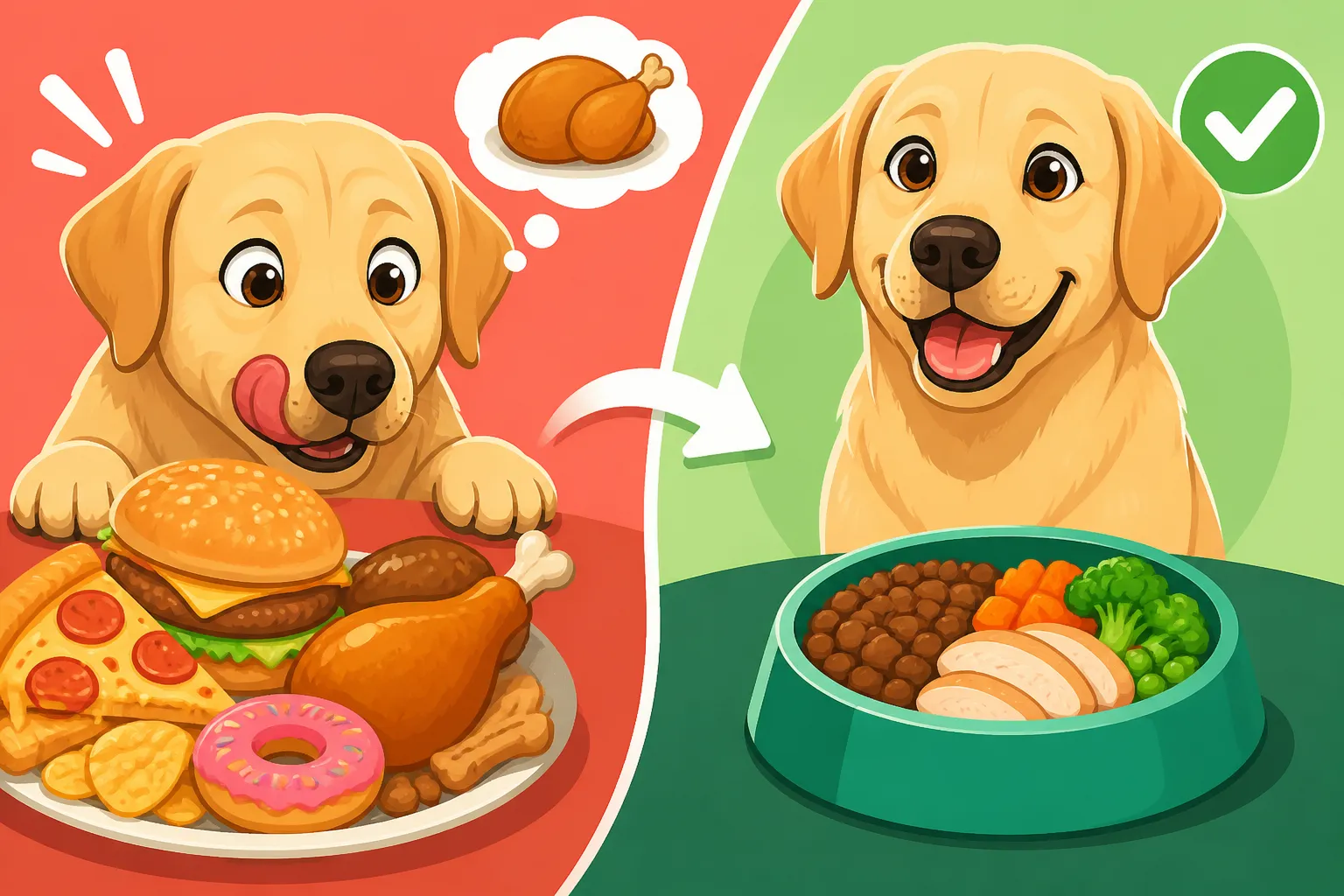
The begging game is strong with Labradors, and it's particularly hard to resist when you're enjoying your own meal. However, sharing human food, especially table scraps, can be detrimental not only to their weight but also to their health. Many human foods are high in fat, sugar, or sodium, which aren't good for dogs. Some common ingredients, like onions, garlic, grapes, and chocolate, are outright toxic and can lead to emergency vet visits.
If you absolutely must share, choose dog-safe, low-calorie options in very small quantities. Think plain cooked vegetables like carrots or green beans, or small pieces of lean, unseasoned meat. Always ensure these "treats" are factored into their daily calorie intake. Better yet, teach your Labrador that mealtimes are for humans only. Having them settle on their mat away from the table can prevent begging and reinforce boundaries. For a full list of what's safe and what's not, read Human Foods Safe for a Labrador.
Healthy Chew Options and Calorie Impact
Chew toys and dental chews can be fantastic for a Labrador's mental stimulation and dental health. However, many chews also contain calories that need to be considered. A large dental chew might have as many calories as a small meal! Rawhides and other edible chews can contribute significantly to their daily intake without providing much nutritional value.
When selecting chews, look for non-edible options that satisfy their chewing urges without adding calories, or choose dental chews specifically formulated to be low in calories. If you do offer edible chews, factor them into your Labrador's daily calorie budget and adjust their kibble portion accordingly. Think of them as a treat, not an extra. This conscious accounting for all forms of food intake is critical for maintaining your Labrador's ideal weight.
Addressing Begging Behavior: It's Not Always About Hunger
Even with perfect portion control, your Labrador might still beg. Remember that genetic predisposition? Their brains are telling them they're hungry even when their stomachs are full. This means addressing begging isn't solely about food; it's about understanding their drives and redirecting their behavior. Giving in to begging only reinforces the behavior, making it harder to break.
Understanding Why Labradors Beg So Persistently
As discussed, a Labrador's profound food drive is partly genetic. The POMC gene mutation means many Labradors don't experience satiety in the same way other dogs might. So, when they beg, they might genuinely feel a sensation akin to hunger, even if their calorie needs have been met. Beyond that, Labradors are incredibly intelligent and observant. They quickly learn that persistent staring, pawing, or whining often yields results. If even once in a while their begging leads to a dropped crumb or an extra treat, they'll keep trying because they know it can work.
Their ancestral programming also plays a role. In a pack environment, the most persistent often get the scraps. Your Labrador is just applying ancient wisdom to your modern kitchen. It's not malicious; it's instinct and learned behavior rolled into one irresistible package. Understanding this helps you stay strong and avoid reinforcing the behavior. For more insight into this, read Why a Labrador Begs After Eating.
Training Strategies to Reduce Begging
The key to reducing begging is consistency and teaching alternative behaviors. First and foremost, never, ever give in when your Labrador is begging. This means no table scraps, no sneaking treats when they stare, and no giving in to whining. Every time you give in, you strengthen the begging behavior. Instead, reward them for not begging. Teach them a "place" command, where they go to their mat or bed during mealtimes or when you're preparing food. Reward them generously with praise and calm attention while they are in their place, not when they approach you.
Another effective strategy is to redirect their attention. If they start begging, immediately ask them for a known command like "sit" or "down." Once they perform it, reward them with a favorite toy or a short play session, not food. The goal is to break the association between begging and getting food, and instead, create an association between good behavior (like going to their mat or responding to a command) and positive attention or non-food rewards.
Providing Mental and Physical Enrichment
Often, begging isn't just about physical hunger; it can also be a sign of boredom or a need for mental stimulation. A Labrador is a working breed with high intelligence and energy. If their minds and bodies aren't adequately exercised, they'll find ways to entertain themselves, and for a food-obsessed breed, that often involves seeking out food. Boredom can lead to destructive behaviors, excessive barking, and, yes, persistent begging.
Ensure your Labrador is getting enough physical exercise each day – at least an hour or two of vigorous activity, ideally including swimming or retrieving games. Beyond physical activity, engage their minds with puzzle toys, Scent Work for a Labrador Indoors, or training sessions. Even a short 10-15 minute training session working on new tricks or refreshing old commands can be incredibly enriching. A Labrador who is mentally and physically tired is less likely to have the energy or inclination to persistently beg.
Customizing Portions: Life Stages and Special Considerations
A static feeding plan won't work for a Labrador throughout their entire life. Their needs evolve as they grow from a rambunctious puppy to a mature adult and then into their dignified senior years. Additionally, certain health conditions or lifestyle changes might necessitate further adjustments to their diet.
Feeding a Growing Labrador Puppy
Labrador puppies grow incredibly fast, but this rapid growth needs to be managed carefully. Overfeeding a puppy can lead to excessively fast growth, which puts undue stress on their developing bones and joints. This increases their risk of orthopedic problems like hip and elbow dysplasia later in life. It's a fine line to walk: ensuring they get enough nutrients for healthy development without encouraging them to become overweight or grow too quickly.
Always choose a high-quality large breed puppy food, which is formulated with the correct calcium and phosphorus ratios for steady, controlled growth. Follow the feeding guidelines, but constantly monitor their body condition. You should be able to feel their ribs easily, and they should have a visible waist. If they look or feel chubby, reduce their portion slightly, and discuss it with your vet. A lean puppy is a healthier puppy in the long run. Labrador Puppy Feeding Amounts and Schedule offers valuable insights for new owners.
Adjusting for Neutering/Spaying
Spaying or neutering your Labrador is a significant event that often impacts their metabolism. Many dogs experience a decrease in metabolic rate after being altered, meaning they require fewer calories to maintain the same weight. If their food intake isn't adjusted, weight gain can occur rapidly, even if you continue to feed the "same amount" as before. This is a common pitfall for owners.
After your Labrador is spayed or neutered, it's a good time to re-evaluate their calorie needs with your veterinarian. You may need to reduce their daily food portion by 10-20% to prevent unwanted weight gain. Monitor their body condition closely in the months following the procedure, and be prepared to make further adjustments as needed. This proactive approach can prevent the insidious creep of extra pounds. More details can be found in Neutering a Male Labrador and Joint Risk.
Dietary Needs for Senior Labradors
As Labradors age, their activity levels typically decrease, and their metabolism slows down. They also may develop conditions like arthritis, which can make exercise more challenging and further reduce their caloric expenditure. Senior Labradors often benefit from foods formulated for older dogs, which might have fewer calories, lower fat, and added joint-supporting nutrients like glucosamine and chondroitin.
Maintaining a lean body condition is paramount for senior Labradors, especially those with arthritis, as every extra pound puts more strain on their aching joints. Work closely with your vet to determine the appropriate calorie intake for your aging companion. They may also recommend supplements or specific dietary changes to support their senior health needs. Regular vet check-ups become even more important to catch any changes early and adjust their diet accordingly. Caring for a Senior Labrador can provide a wealth of information specific to older Labs.
Troubleshooting Common Portion Control Challenges
Even with the best intentions and strategies, managing a Labrador's food intake can still present unique challenges. They are masters of persuasion and can sometimes find ways around your best-laid plans. It's important to anticipate these hurdles and have a plan for overcoming them.
Dealing with Food Theft and Counter Surfing
The Labrador's powerful nose and intelligence make them notorious counter surfers and food thieves. No food left unattended on a counter, no trash can left unsecured, is safe. This isn't just about stealing a tasty treat; it can lead to consuming toxic foods or foreign objects, resulting in costly emergency vet visits or serious health consequences. Their ability to find and consume extra calories makes consistent portion control an uphill battle.
"Labrador-proofing" your home is essential. This means keeping all human food out of reach, securing trash cans with lids or placing them in cabinets, and never leaving food unattended on low counters. Use baby gates or close kitchen doors when you can't actively supervise. Teach a strong "leave it" command and practice it regularly, rewarding heavily for success. If your Labrador successfully counter-surfs, resist the urge to punish harshly; instead, calmly remove them from the situation and reinforce what they should be doing. Read Stopping a Labrador Counter Surfing for Good for more practical tips.
When Your Labrador Seems Constantly Starving
Despite being fed appropriate portions, some Labradors truly act like they are constantly starving. This can be mentally exhausting for owners who feel guilty or worried their dog isn't getting enough. It's important to distinguish between genuine hunger (which, due to the POMC gene, can be a real sensation for them) and learned behavior or boredom. If you've calculated their calories, measured accurately, and they're at a healthy body weight, trust that you are feeding them enough.
In these cases, focus on enrichment and redirection. Utilize slow feeder bowls, puzzle toys, and extended chew sessions (with calorie-appropriate chews). Increase their mental stimulation with training and scent games. Ensure they have plenty of appropriate exercise. Sometimes, simply splitting their daily ration into three smaller meals instead of two can help them feel less "starved" by distributing food more frequently throughout the day. Your vet can also help rule out any underlying medical conditions that might be causing increased hunger.
Overcoming Plateaus in Weight Loss
If your Labrador is overweight and you're working on a weight loss plan, you might hit plateaus where the weight just doesn't seem to budge. This can be incredibly frustrating. One common reason is underestimating calorie intake – a few extra treats here, a bit more kibble there, and suddenly the deficit disappears. Another factor could be an overly optimistic assessment of their exercise level; a gentle stroll might not burn enough calories for significant weight loss.
When you hit a plateau, go back to basics:
- Re-measure everything: Use that kitchen scale and confirm every single gram of food and treat.
- Re-evaluate exercise: Are they truly getting vigorous activity? Can you add another 15-20 minutes of brisk walking or active play?
- Consult your vet: There might be an underlying metabolic issue or a need to adjust your target calorie intake further.
Sometimes, a minor adjustment in either food or exercise is all it takes to get things moving again. It requires patience and persistence, but your Labrador's health is worth it. You can learn more about this by reading Getting Weight Off an Overweight Labrador.
| Aspect | Inaccurate Method | Accurate Method | Impact on Labrador Health |
|---|---|---|---|
| Measuring Food | Using a standard measuring cup | Weighing food with a kitchen scale | Prevents accidental overfeeding, supports ideal weight |
| Feeding Style | Free-feeding (food always available) | Scheduled meals (e.g., twice daily) | Regulates metabolism, aids portion control, reduces bloat risk |
| Treats | Giving treats freely/unaccounted for | Factoring treats into daily calorie budget | Prevents hidden calorie creep, supports weight management |
| Begging Response | Giving in to begging/table scraps | Redirecting to "place," non-food rewards | Reinforces good behavior, reduces obesity risk, prevents toxic ingestion |
| Weight Assessment | Judging by eye, comparing to other Labs | Body Condition Scoring, feeling ribs, vet assessment | Ensures proactive weight management, identifies issues early |
| Diet Adjustment | Sticking to bag recommendation | Customizing calories for age/activity/neutering | Aligns diet with current needs, prevents over/underfeeding |
Disclaimer
This article is for general informational purposes only and does not constitute professional advice. Laws, prices and regulations vary by location and change over time. Consult a qualified professional for guidance on your specific situation.