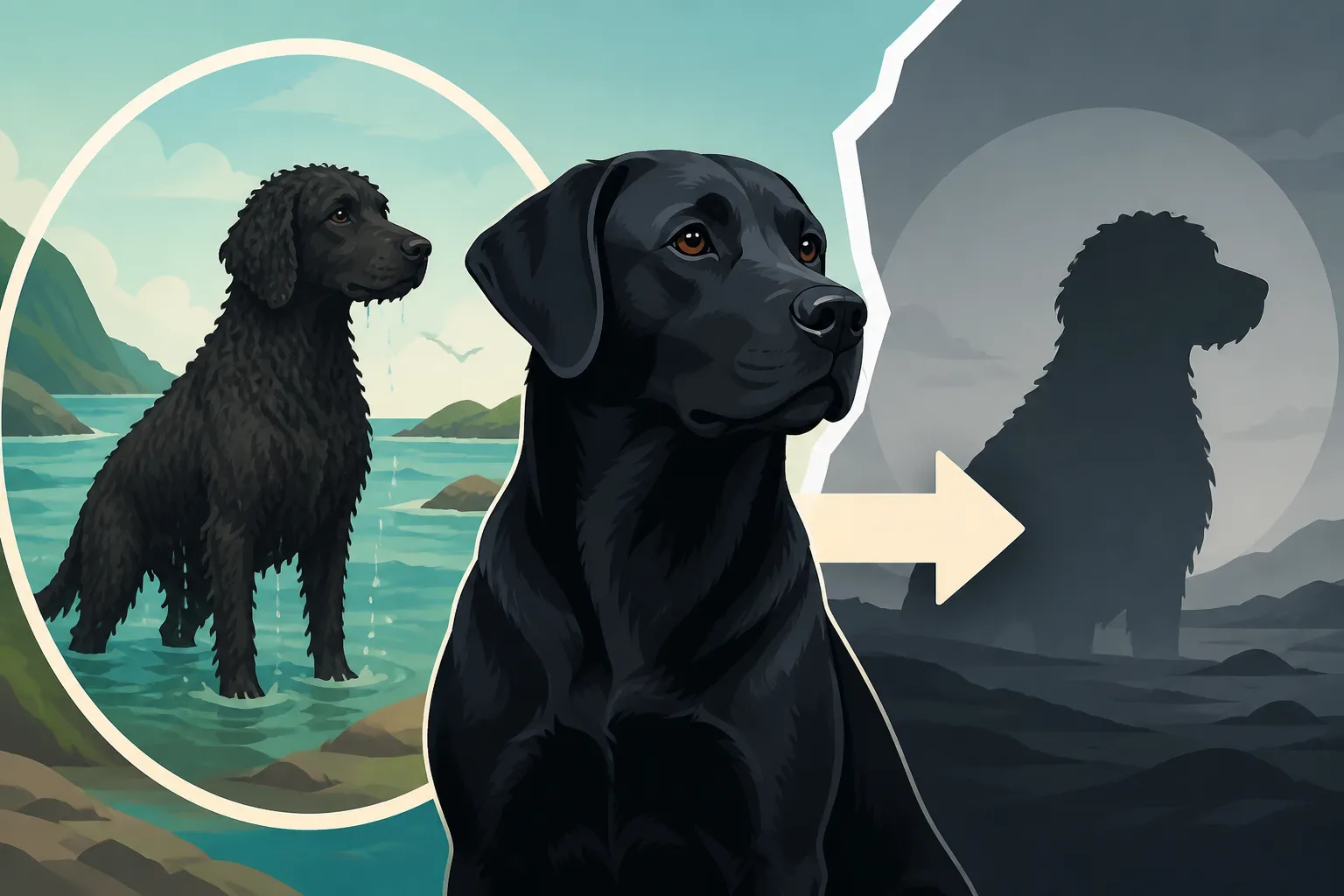
When the St. John’s Water Dog Died Out
It's truly heartbreaking to think about losing an entire dog breed, especially one as historically significant as the St. John's Water Dog. So many of us Labrador owners feel a deep connection to our dogs, and it makes you wonder about the ancestors that shaped them. This guide aims to unravel the mystery surrounding the demise of the St. John's Water Dog, exploring the factors that led to its extinction and shedding light on when this foundational breed truly vanished from the world, leaving an indelible mark on its most famous descendant, the Labrador Retriever.
The St. John's Water Dog: A Beloved Working Companion
Before we delve into its disappearance, it's crucial to understand just how integral the St. John's Water Dog was, particularly to the livelihoods of Newfoundland fishermen. These weren't just pets; they were essential members of the crew, navigating the harsh realities of the North Atlantic with unparalleled enthusiasm and intelligence. Imagine the scene: frigid waters, rough seas, and these hardy dogs, bred over generations, working tirelessly alongside their human companions. They were truly magnificent animals, perfectly adapted to their environment and their demanding jobs.
A Fisherman's Best Friend
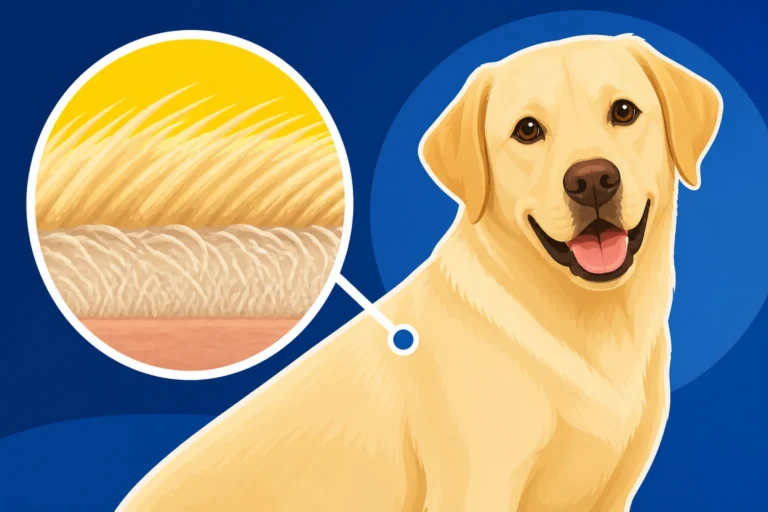
The St. John's Water Dog was the quintessential working dog, a true marvel of natural selection and selective breeding by the local fishermen. They possessed an incredible tolerance for cold water, thanks to their thick, dense double coats, much like the Labrador Coat Type in the Standard we know today. Their webbed feet and powerful, otter-like tails made them phenomenal swimmers, capable of retrieving nets, lines, and even fish that had slipped away in the icy Atlantic. They were renowned for their "soft mouths," an invaluable trait that meant they could carry retrieved items, including fish or game, without damaging them. This gentle grip was a hallmark of their temperament and a crucial skill that saved fishermen countless hours and resources.
These dogs were also known for their unwavering loyalty and boundless energy. They would spend long days on fishing boats, patiently waiting for their moment to leap into the water and retrieve. Their robust build and intelligent, eager-to-please nature made them ideal partners. If you've ever seen a Labrador's intense focus during a retrieve, you're seeing a direct echo of these incredible working dogs. They weren't just good at their jobs; they loved them, embodying the spirit of cooperation between man and dog. We often talk about Where the First Labrador Ancestors Worked, and it was right there, on those fishing boats, in the unforgiving waters off Newfoundland.
From Newfoundland to England
The story of the St. John's Water Dog isn't confined to the shores of Newfoundland. As early as the 19th century, British noblemen and sportsmen, particularly those with an eye for exceptional gundogs, began to take notice of these remarkable canines. Fishing vessels returning from Newfoundland would occasionally bring dogs back to England, where their extraordinary retrieving abilities quickly caught the attention of landowners and hunters. These early imports laid the groundwork for what would eventually become the Labrador Retriever breed. It was a fascinating cross-cultural exchange, driven by the sheer utility and impressive qualities of these dogs.
These dogs became prized possessions in England, primarily used for retrieving game birds during hunts. They were robust, biddable, and possessed an innate desire to retrieve, making them superior to many of the local gundogs of the era. The Earl of Malmesbury and the Duke of Buccleuch were particularly instrumental in acquiring and breeding these "Newfoundland dogs," as they were often called. They were so impressed by the dogs' capabilities that they started dedicated breeding programs, mixing them with other local British gundogs to refine their traits. This was the nascent stage of The St. John's Water Dog Behind the Labrador, truly marking a pivotal moment in canine history.
The Unraveling: Factors Leading to the Breed's Disappearance
It feels counterintuitive that such a useful and admired breed could simply vanish, doesn't it? But the extinction of the St. John's Water Dog wasn't a sudden event; it was a slow, agonizing decline brought about by a confluence of economic, political, and even well-intentioned breeding decisions. Understanding these factors helps us appreciate the delicate balance of breed preservation.
Legislative Pressures
One of the most significant nails in the coffin for the St. John's Water Dog was a series of legislative acts enacted in Newfoundland. In the mid-19th century, concerns about sheep worrying and a desire to encourage sheep farming led to the introduction of heavy taxes on dog ownership, particularly on those not specifically used for herding sheep. Imagine having to pay a substantial annual fee for your working dog – for many fishermen, who already lived modest lives, this was an unbearable burden. This policy disproportionately affected the St. John's Water Dog, which, while a working dog, wasn't a sheepdog. To avoid the tax, many owners simply reduced the number of dogs they kept, or sadly, resorted to culling litters.
Adding to this internal pressure, the British government imposed strict quarantine laws and import restrictions. While these were meant to prevent the spread of rabies and other diseases, they had the unintended consequence of effectively cutting off the supply of St. John's Water Dogs from Newfoundland to England. This meant that the gene pool in England became isolated, and the original source of the breed gradually dwindled under the heavy taxes back home. It was a tragic situation where policies, designed with good intentions or specific economic goals, inadvertently sealed the fate of a beloved canine companion.
Breeding Practices and the Rise of the Labrador
While legislative pressures were pushing the breed to its limits in Newfoundland, in England, the St. John's Water Dog was undergoing a transformation. The British noblemen who admired these dogs began to selectively breed them, refining their characteristics for specific retrieving tasks on landed estates. They crossed them with other local gun breeds, such as setters and spaniels, aiming to develop a more standardized and versatile gundog. This deliberate cross-breeding, while ultimately leading to the creation of the Labrador Retriever, inadvertently diluted the pure St. John's Water Dog lineage.
The emerging Labrador Retriever, with its defined breed standard and dedicated enthusiasts, started to eclipse its progenitor. As the Labrador gained popularity and formal recognition, breeding efforts naturally shifted towards this new, refined breed. Breeders were focused on establishing the distinct traits of the Labrador, and the "old type" of St. John's Water Dog gradually faded from the spotlight. It's a bittersweet irony that the very qualities that made the St. John's Water Dog so desirable led to its absorption into a new, more popular breed. When we look at Which European Breeds Fed Into the Labrador, the St. John's Water Dog is undeniably the most prominent, but it was just one ingredient in a new recipe. This period, arguably The Decade the Modern Labrador Took Shape, saw the St. John's Water Dog's identity slowly morph into something new.
The Lack of Dedicated Preservation Efforts
Perhaps the most poignant reason for the St. John's Water Dog's extinction was the absence of a dedicated effort to preserve it as a distinct breed. In Newfoundland, the dogs were viewed as utilitarian working animals, not as a pedigree breed to be meticulously maintained or shown. There was no kennel club, no breed standard, and no formalized breeding programs aimed at keeping the "pure" St. John's Water Dog alive. Their survival was intrinsically tied to the practical needs of the fishermen, and once those needs shifted or became too costly, their numbers plummeted.
Contrast this with the organized efforts that went into establishing and promoting the Labrador Retriever. Early Labrador breeders kept meticulous records, established breed clubs, and worked towards formal recognition, ensuring the breed's future. The St. John's Water Dog simply didn't have that kind of institutional support. It was a dog of the people, for the people, and when the people could no longer afford or maintain them, there was no safety net. This stark difference highlights the critical role that dedicated breed enthusiasts and formal organizations play in preventing the loss of canine heritage.
The Fading Footprints: When the Last St. John's Water Dogs Vanished
So, the burning question remains: when exactly did the St. John's Water Dog cease to exist? There isn't a single, universally agreed-upon date, largely because its decline was gradual and unrecorded in an official sense. However, through historical accounts, photographs, and anecdotal evidence, we can piece together a timeline of its final days.
The Last Known Dogs
By the early 20th century, purebred St. John's Water Dogs were already rare. The combined pressures of taxes, import restrictions, and the rise of the Labrador Retriever had severely depleted their numbers. The last known purebred specimens were believed to have been seen in the 1970s. One of the most famous and widely cited accounts comes from the photographs taken by zoologist and author Desmond Morris in 1970 and 1981, featuring what he believed were the last two remaining St. John's Water Dogs. These dogs, named "Nellie" and "Buddy," were old, living in remote areas of Newfoundland. Their images serve as a haunting reminder of a breed on the brink.
It's important to understand that "extinction" in this context refers to the point where no more purebred individuals exist to continue the line. While dogs carrying some St. John's Water Dog lineage undoubtedly persisted for longer, perhaps interbred with other local dogs, the distinct, pure form of the breed essentially vanished by the late 20th century. The idea that a distinct breed, with its unique characteristics, could simply disappear within living memory is a sobering thought, and it underscores the fragility of genetic diversity.
Here's a simplified timeline of key events impacting the St. John's Water Dog:
| Period | Event | Impact on St. John's Water Dog |
|---|---|---|
| Mid-19th Century | Heavy Dog Taxes in Newfoundland | Significant decline in numbers due to cost of ownership. |
| Late 19th Century | British Quarantine/Import Restrictions | Halted export to England, isolating the remaining population. |
| Late 19th – Early 20th | Rise of the Labrador Retriever | Breeding focus shifted, diluting pure lineage. |
| Mid-20th Century | Increasing Scarcity of Purebreds | Pure St. John's Water Dogs became exceedingly rare. |
| 1970s | Last Documented Purebred Specimens | Nellie and Buddy photographed, representing the end of the line. |
| Post-1980s | Presumed Extinct as a Pure Breed | No further purebred individuals reliably identified. |
The Legacy Through the Labrador Retriever
While the St. John's Water Dog may be physically extinct, its spirit, its intelligence, its retrieving drive, and its incredible loyalty live on vibrantly in the Labrador Retriever. In essence, the Labrador is the continuation of the St. John's Water Dog's legacy, albeit in a refined and standardized form. Every time you see a Labrador joyfully leap into water, or gently carry a toy, or gaze at you with that intelligent, eager expression, you're witnessing the enduring traits passed down from those Newfoundland fishermen's companions. It’s why The Labrador Retriever Breed Explained always starts with this ancestral connection.
The distinct "otter tail," the dense, water-repellent double coat, the strong swimming ability, and that inherent desire to retrieve – these are all direct gifts from the St. John's Water Dog. The early British breeders recognized the inherent greatness of these dogs and sought to preserve and enhance those qualities, even if it meant creating a new breed in the process. So, while we lament the loss of the St. John's Water Dog as a distinct entity, we can also celebrate its profound influence and its rebirth in the form of one of the world's most beloved and capable dog breeds. It's truly incredible how much of What the St. John's Water Dog Looked Like is still evident in today's Labradors.
Echoes in the Present: The Enduring Legacy and Lessons Learned
The story of the St. John's Water Dog's extinction serves as a powerful reminder for all of us involved with dogs, whether as owners, breeders, or simply admirers. It highlights the importance of breed diversity, responsible ownership, and the active preservation of canine heritage. We stand on the shoulders of giants, and acknowledging the past helps us secure the future.
Understanding Genetic Bottlenecks
The St. John's Water Dog's story is a classic example of a genetic bottleneck leading to extinction. When a population's numbers dwindle significantly, the genetic diversity within that population shrinks dramatically. This makes the remaining individuals more vulnerable to disease, genetic disorders, and less adaptable to environmental changes. Even if a few individuals survive, the lack of genetic variation can make it impossible for the breed to recover healthy, viable numbers. For the St. John's Water Dog, the heavy taxes and isolated breeding meant that the gene pool became too shallow to sustain itself.
This lesson is incredibly relevant today as we consider the health of modern breeds. Many purebred dogs face challenges due to limited gene pools. Understanding these historical instances helps us advocate for responsible breeding practices that prioritize genetic health and diversity, preventing future breeds from facing a similar fate. It also reminds us why Health Clearances a Labrador Breeder Must Show are so crucial; they help ensure we're not inadvertently narrowing the gene pool to the detriment of the breed.
The Importance of Breed Archiving and DNA
In contrast to the informal and largely unrecorded existence of the St. John's Water Dog, modern breed enthusiasts and scientists have far more tools at their disposal to document and potentially preserve rare breeds. Genetic testing, DNA banks, and meticulous record-keeping can offer a lifeline to breeds facing declining numbers or those on the brink. Imagine if we had DNA samples of the last St. John's Water Dogs; the insights they could provide would be invaluable.
For anyone passionate about a particular breed, this story underscores the importance of supporting breed clubs, researching historical lineages, and advocating for genetic health testing. Resources available today, from reputable breeders to online stores like Chewy that offer a vast array of breed-specific books and educational materials, empower owners to be better stewards of their dogs and their breeds. We can learn so much from the past to prevent future losses. It's also why many people opt for Genetic Panels Worth Running on a Labrador, to understand the genetic predispositions and contribute to overall breed health knowledge.
The legacy of the St. John's Water Dog isn't just a historical footnote; it's a living, breathing part of every Labrador Retriever. By understanding its past, we gain a deeper appreciation for the incredible journey our beloved Labradors have taken to become the loyal, intelligent, and energetic companions we cherish today. Let's make sure we continue to honor that legacy with responsible care and thoughtful breeding practices, ensuring the Labrador thrives for generations to come.
Disclaimer
This article is for general informational purposes only and does not constitute professional advice. Laws, prices and regulations vary by location and change over time. Consult a qualified professional for guidance on your specific situation.