Why a Labrador’s Tail Should Never Curl
It's a common sight in dog parks and on walking trails: a beautiful Labrador, wagging its tail with gusto, only sometimes that tail has a distinct curl over its back. For many loving owners, it's just a charming quirk. But if you've ever heard whispers or seen questions about whether a curled tail means your beloved Lab isn't "purebred," you've probably felt that pang of confusion or even defensiveness. This guide is here to unravel why, according to breed standards, a Labrador's tail shouldn't curl and what that truly means for your furry family member.
The Iconic Labrador Tail: A Breed Standard Deep Dive
When you picture a Labrador Retriever, certain images come to mind: that friendly face, the sturdy build, and, of course, that thick, powerful tail. This tail isn't just for wagging; it's a critical component of what makes a Labrador a Labrador, deeply intertwined with its history as a working water dog. Understanding the breed standard's description of the tail helps clarify why a curl is considered a deviation.
Understanding the "Otter Tail" Description: What It Should Look Like
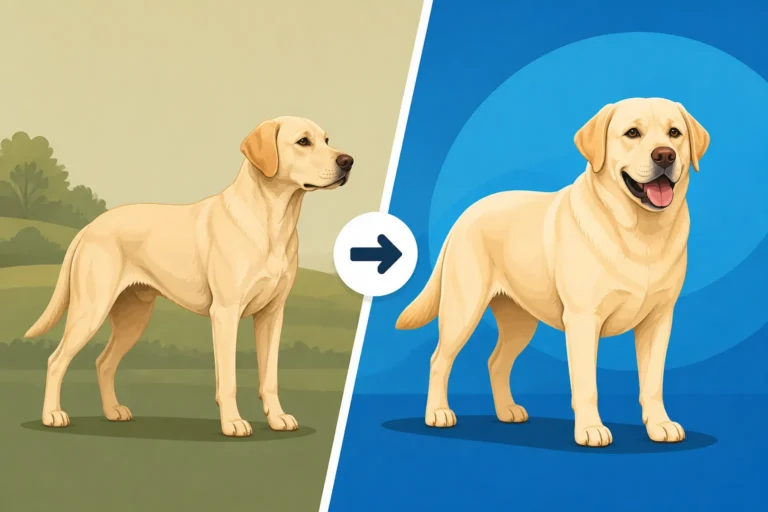
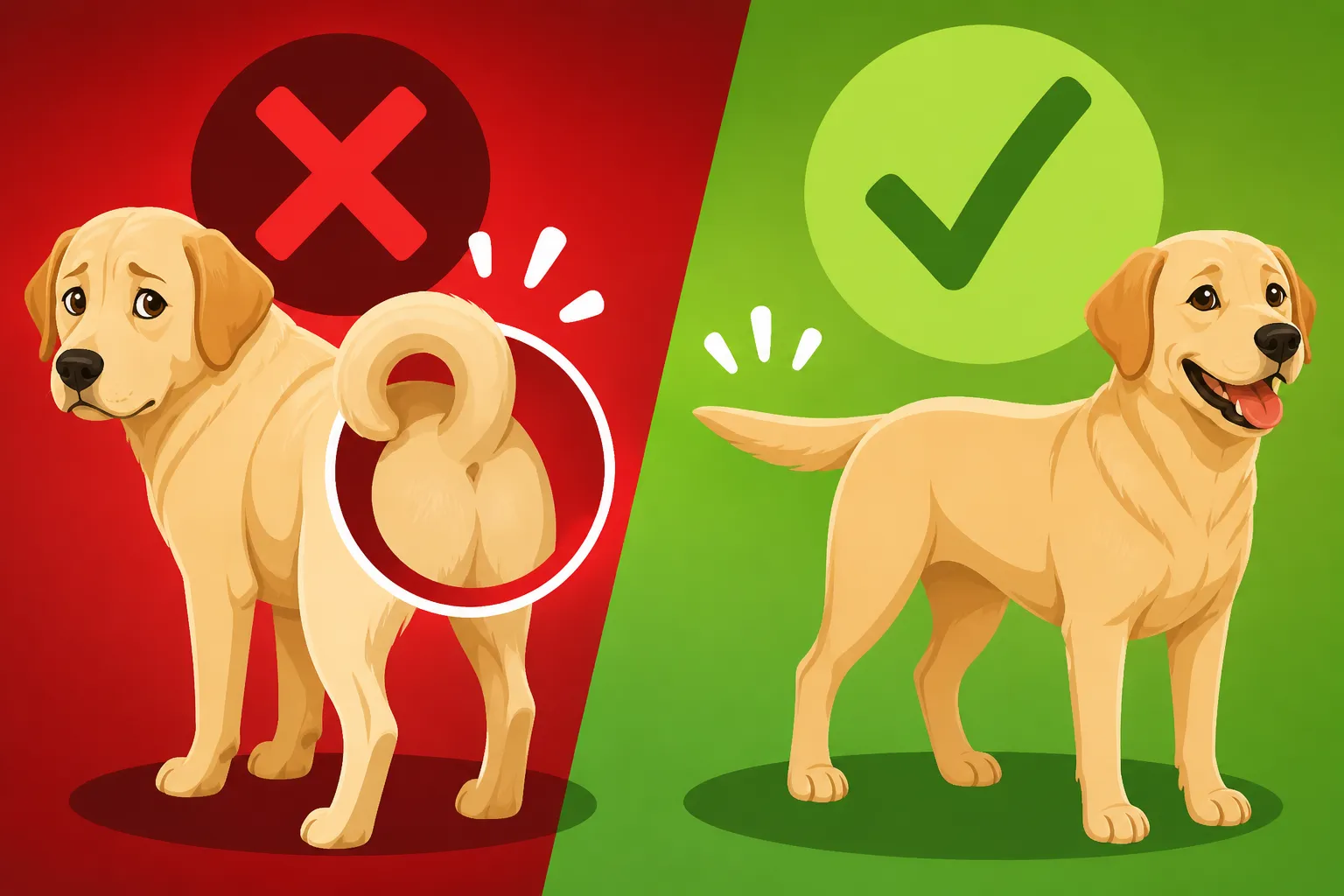
The term "otter tail" is almost synonymous with the Labrador Retriever, and it's perhaps the most distinctive characteristic of their tail. Imagine the tail of an otter: thick at the base, strong, and gradually tapering to a medium length. It's often described as round in section rather than flat or feathered. The hair on the tail is dense and short, much like the rest of the Labrador's double coat, giving it that characteristic "packed" appearance. This robust, sturdy tail is typically carried as an extension of the spine, either level with the back or with a slight upward curve, but never curled over the back or carried between the legs.
This particular tail structure isn't just about looks; it speaks volumes about the breed's origins and its intended purpose. A proper "otter tail" acts as a rudder in the water, providing balance and steering assistance as the dog retrieves game. It’s a powerful tool, not a delicate appendage. When a Labrador is excited, that tail might swing like a happy pendulum, or it might rise slightly, but it retains its shape and natural line. You can often see this perfect tail carriage in dogs competing in conformation shows, where judges meticulously assess every aspect of the dog against the written standard.
Historical Function: Why the Tail is a Rudder, Not an Ornament
To truly appreciate the "no curl" rule, we need to dip into Labrador history. Labradors originated from the St. John's Water Dog in Newfoundland, Canada. These dogs were indispensable companions to fishermen, retrieving nets, ropes, and fish from the icy North Atlantic waters. Picture those freezing temperatures, rough seas, and the sheer strength and agility required for such tasks. Every part of the dog's anatomy was honed by necessity.
The "otter tail" evolved to be thick and powerful for a reason. It served as a natural rudder, allowing the dogs to maneuver efficiently in the water, much like a boat's steering mechanism. A tail that curled over the back would not provide the same hydrodynamic efficiency or leverage. It would be a hindrance, potentially even creating drag. The short, dense coat on the tail also prevented it from freezing or becoming waterlogged, adding to its functionality. This strong, medium-length tail, carried correctly, is a testament to the Labrador's heritage as a robust, capable working dog, and is why The Labrador Otter Tail Explained is such a great read. It highlights how function truly dictated form for these incredible retrievers.
What a Curled Tail Signifies in a Labrador
So, what does it mean if your Labrador does have a curled tail? It's a question that often causes anxiety, especially if you're proud of your dog's lineage or simply curious about their traits. The simple answer is that a curled tail is a clear deviation from the breed standard, which can have implications for show dogs and might suggest mixed ancestry for pets.
A Departure from the Breed Standard: What Judges Look For
In the world of dog shows and competitive breeding, adherence to the breed standard is paramount. The standard, set by organizations like the American Kennel Club (AKC) or The Kennel Club (UK), describes the ideal physical traits and temperament of a breed. For Labradors, the tail carriage is a specific point of evaluation. A tail that curls over the back, or is carried gaily (like a "hound tail"), is considered a fault. In fact, many breed standards list a distinctly curled tail as a disqualification in the show ring.
This isn't about judging the dog's worth as a companion; it's purely about its conformity to a very specific blueprint. Breeders strive to produce dogs that embody this standard, ensuring that the working abilities and appearance of the breed are maintained for future generations. When you see a breeder talk about Health Clearances a Labrador Breeder Must Show, they're also often thinking about how well their dogs conform to the standard, including that iconic tail. While a curled tail doesn't impact a dog's ability to be a loving family member or a fantastic pet, it simply means they wouldn't excel in a conformation competition where physical perfection to the standard is the goal.
Potential Mix-Breed Indicators: When to Consider Other Ancestry
For pet owners, a curled tail on a dog marketed as a "purebred Labrador" often raises questions about its true lineage. While a slightly curved tail could be an anomaly in an otherwise purebred Labrador, a distinctly curled tail is more often a strong indicator of mixed ancestry. Many breeds naturally carry their tails curled over their backs. Think of breeds like the Akita, Shiba Inu, Siberian Husky, or even some Spitz-type dogs. If a Labrador has a noticeable curl, it's possible that somewhere in its family tree, there was a dog from one of these breeds or a similar one that carries the genes for a curled tail.
It's not uncommon for shelter dogs or those from less reputable breeders to be labeled as purebreds when they are, in fact, mixes. This isn't necessarily a bad thing – mixed-breed dogs make wonderful companions! However, if you purchased your dog expecting a purebred Labrador, this trait might explain some of the differences you observe. It's perfectly okay if your dog is a mix; their love and loyalty aren't dictated by their pedigree. However, if knowing the exact genetic makeup is important to you, or if you're considering breeding (though this trait would make a dog unsuitable for breeding to the standard), a Whether a Labrador DNA Test Is Worth It can provide definitive answers about your dog's heritage. Many people find these tests fascinating, even if their dog is clearly a beloved Lab.
| Tail Characteristic | Breed Standard Labrador (Otter Tail) | Curled Tail (Deviation/Mix) |
|---|---|---|
| Base | Thick, strong | Can be thick or thin |
| Length | Medium, reaching hocks | Varies, often shorter |
| Taper | Tapers gradually | Can taper or be bushy |
| Carriage | Extension of spine, slight curve | Curled over back or side |
| Coat | Dense, short, no feathering | Can be feathery or varying |
| Function | Rudder for swimming, balance | Less functional in water |
| Show Status | Ideal | Fault or Disqualification |
Beyond Aesthetics: Practical Implications of Tail Carriage
While the primary concern about a curled tail often revolves around aesthetics and breed purity, there can be subtle practical implications for the dog themselves, particularly concerning movement and the occasional health issue. It's worth considering these aspects, not just for judgment, but for a holistic understanding of your dog's well-being.
Impact on Movement and Balance: The Tail's Role in a Working Dog
For a Labrador, every part of their body is designed for work, and the tail is no exception. Its role as a counterbalance and rudder is crucial, especially during intense physical activity like swimming, running, or quickly changing direction. A properly carried "otter tail" acts as a natural extension of the spine, providing stability and aiding in powerful propulsion through water. Imagine a swimmer needing to make a quick turn; their core strength and leg movements are aided by the precise sweep of their arms. A Labrador's tail works in a similar, albeit more instinctive, fashion.
If a tail is significantly curled over the back, its ability to function as an effective rudder or counterbalance can be diminished. While a pet Labrador might never notice this difference in its daily life of walks and naps, a working Labrador—like one involved in gundog trials or search and rescue—might find it slightly less efficient. This isn't to say a curled tail makes a dog clumsy or incapable; Labs are remarkably adaptable. But it does mean that the natural biomechanics, which allow a purebred Lab to perform its historical duties with such grace and power, might be altered. For more on their natural athleticism, you might enjoy reading about Exercise a Labrador Needs Each Day.
Potential Health Concerns Related to Tail Structure
When we talk about health concerns related to tail structure, it's important to differentiate between a structurally curled tail (meaning it's permanently set that way) and temporary tail issues. Labradors are known to occasionally suffer from "limber tail" or "cold tail" (also called "swimmer's tail" or "dead tail"). This is a painful, temporary condition where the tail goes limp or is held at an odd angle, usually after strenuous exercise or exposure to cold water. This is an acute injury to the tail muscle, not a permanent structural feature, and it usually resolves with rest and pain management. Reading Pain in a Stoic Labrador can help you spot these kinds of issues.
However, a structurally curled tail, especially if it's very tightly coiled or held unnaturally, could potentially lead to minor discomforts over a dog's lifetime, although this is rare and usually not severe. A tail that rubs consistently against the dog's back or hindquarters might lead to skin irritation or sores, though modern breeding practices and veterinary care make such severe issues uncommon. More often, the concern is simply that an unusual tail carriage might signal underlying skeletal differences that could subtly affect mobility, even if those effects are negligible for a family pet. It's a reminder that good breeding considers the whole dog, from nose to the tip of that beautiful, strong tail.
Navigating the Realities of Labrador Ownership and Tail Traits
In the grand scheme of things, if your Labrador has a slightly curled tail, it's probably not something to lose sleep over. While breed standards are important for preserving traits and health within a lineage, the vast majority of Labs are cherished family members, not show champions. Understanding the nuances helps you appreciate your dog for who they are and make informed decisions about their care.
The Importance of Breed Standards (and When They Matter Most)
Breed standards were developed to define the ideal characteristics of a breed, ensuring consistency in appearance, temperament, and working ability. For breeders, these standards are vital. They act as a blueprint, guiding breeding programs to maintain the health, structure, and overall integrity of the Labrador Retriever. A breeder dedicated to the standard will carefully select dogs with proper conformation, including the correct "otter tail," to produce the healthiest and most type-correct puppies. This is why you often see detailed discussions about The AKC Labrador Retriever Breed Standard in responsible breeding circles.
However, for the average pet owner, the strict adherence to every single point of the breed standard often takes a backseat to other considerations. Most people choose a Labrador for their incredible temperament, intelligence, and boundless affection. They want a loyal companion, a playful friend for the kids, or an active partner for outdoor adventures. Whether that dog's tail has a perfect taper or a slight curl usually doesn't impact its ability to fulfill these roles. The standard is a tool for preservation, not a judgment on a dog's capacity for love or companionship.
When a Curled Tail Is Just a Quirk (and When to Investigate Further)
For the vast majority of Lab owners, a curled tail is simply a unique physical trait. Perhaps your dog is a wonderfully loving mix, or maybe they're a purebred with a minor genetic variation. In either case, if your dog is healthy, happy, and well-adjusted, that tail curl is just part of their charm. It doesn't make them any less of a Labrador in your heart, nor does it diminish their value as a beloved family member. Just like how some Labs might have slightly different ear sets or body proportions, a tail with a bit more curve than the standard can simply be a delightful quirk.
However, there are circumstances when you might want to investigate further. If you specifically paid a premium for a "show quality" or "purebred" Labrador and then notice a significant deviation like a tightly curled tail, you might want to discuss it with your breeder or consult a vet. This is especially true if you suspect the tail carriage is causing any discomfort or interfering with their movement, though this is rare. Genetic testing, as mentioned before, can be a way to confirm ancestry if that's a primary concern. Otherwise, continue to enjoy your unique Lab! Provide them with quality food, such as options you can find at Chewy, ensure they get plenty of exercise, and give them all the love they deserve. Regardless of their tail, a happy, well-cared-for Labrador is a treasure. You might also want to look into Training a Labrador From Puppy to Adult to ensure they grow into a well-mannered adult, curl or no curl.
Disclaimer
This article is for general informational purposes only and does not constitute professional advice. Laws, prices and regulations vary by location and change over time. Consult a qualified professional for guidance on your specific situation.