Head Halters for a Labrador Who Lunges
There's nothing quite like the feeling of taking your Labrador out for a walk, enjoying the fresh air and their happy enthusiasm. But for many of us, that serene picture is often shattered the moment our strong, eager Lab spots a squirrel, another dog, or even a leaf blowing across the street, and launches forward with the force of a small pony. That sudden, jarring lunge can pull you off balance, strain your shoulder, and turn a pleasant outing into a frustrating battle of wills. If you're tired of battling your Labrador's sudden lunges on the leash, this guide is for you. We're going to dive deep into head halters: what they are, how they work, and how to introduce and use them effectively to regain control and make walks enjoyable again.
Understanding Why Your Labrador Lunges on Leash
Before we even think about solutions, it's crucial to understand why your beloved Labrador, a breed known for its amiable nature, might be lunging like a freight train on the leash. It’s not about defiance; it's almost always rooted in a combination of instinct, excitement, and sometimes, a little bit of anxiety or frustration.
The Root Causes of Lunging
Labradors are powerful, intelligent dogs with a zest for life, and sometimes that zest overflows into enthusiastic, if unwelcome, lunging.
- Sheer Excitement: Let's be honest, Labradors are often just happy. Happy to be out, happy to see a friend (human or canine), happy to sniff something amazing. This exuberance can manifest as pulling and lunging towards whatever has caught their attention. They might genuinely just want to say hello or explore something new. They don't mean to drag you along; they just have a lot of momentum and a singular focus. Think about your Labrador spotting their best canine buddy across the park—the sudden burst of speed is often pure joy mixed with an inability to contain themselves.
- High Prey Drive: Our Labs are retrievers by nature, and that means they can have a strong prey drive. A squirrel scampering up a tree, a rabbit bolting across a field, or even a bird fluttering by can trigger an innate desire to chase. When this instinct kicks in, your Labrador isn't thinking about leash manners; they're operating on pure, primal impulse. This can be one of the most challenging types of lunging to manage because the drive is so strong.
- Fear or Anxiety: Sometimes, lunging isn't about moving towards something, but about creating distance or reacting defensively. A new sight, a loud noise, a person or dog they're unsure about, or even an unfamiliar object might make your Labrador feel uneasy. Their lunge might be an attempt to get away, or a "bark and lunge" display that says, "Stay away!" This is often misunderstood as aggression, but it's usually a fear-based reaction. Building Confidence in a Timid Labrador can be a long process, but understanding the root cause is the first step.
- Frustration: Imagine you really, really want to go somewhere, but you're constantly held back. That's how some Labs feel on a leash. They might be frustrated that they can't greet every dog, chase every bird, or investigate every interesting smell. This pent-up energy and desire can lead to frustrated lunging, sometimes accompanied by whining or barking.
The Impact of a Lunging Labrador
Beyond the immediate physical discomfort, a lunging Labrador can have several negative impacts on everyone involved.
- On You, the Owner: The most obvious impact is physical strain. A large Labrador can easily pull a person off their feet, especially on slippery surfaces or uneven terrain. There's the risk of shoulder injuries, back pain, or just general exhaustion from constantly bracing yourself. Beyond that, there's the emotional toll. Walks become a chore, something you dread rather than enjoy. You might start avoiding certain areas or even walking your dog altogether, which isn't fair to either of you. It impacts your confidence, making you feel like you're not in control, and that can erode the bond you share.
- On Your Labrador: While they might seem oblivious, constant tension on the leash is not good for your dog either. It can create discomfort or pain in their neck, especially with traditional flat collars. The constant pulling can also lead to learned helplessness or increased frustration. If every attempt to interact or explore results in a choke and jerk, they might start associating walks with unpleasantness, potentially leading to increased anxiety or reactivity. Furthermore, the constant pressure on the trachea from traditional collars can have long-term health implications.
- On Others: A lunging Labrador can be intimidating to other people and dogs, even if your Lab is just trying to be friendly. Imagine a large, boisterous dog lunging and barking at a small child or an elderly person; it can cause genuine fear. This can lead to negative perceptions of your dog and breed, and sometimes even lead to confrontations or restrictions in public spaces. It also makes it difficult to have polite greetings with other dog owners.
Addressing this behavior is essential, not just for your sanity, but for your Labrador's well-being and the safety of your community.
What Exactly is a Head Halter and How Does It Work?
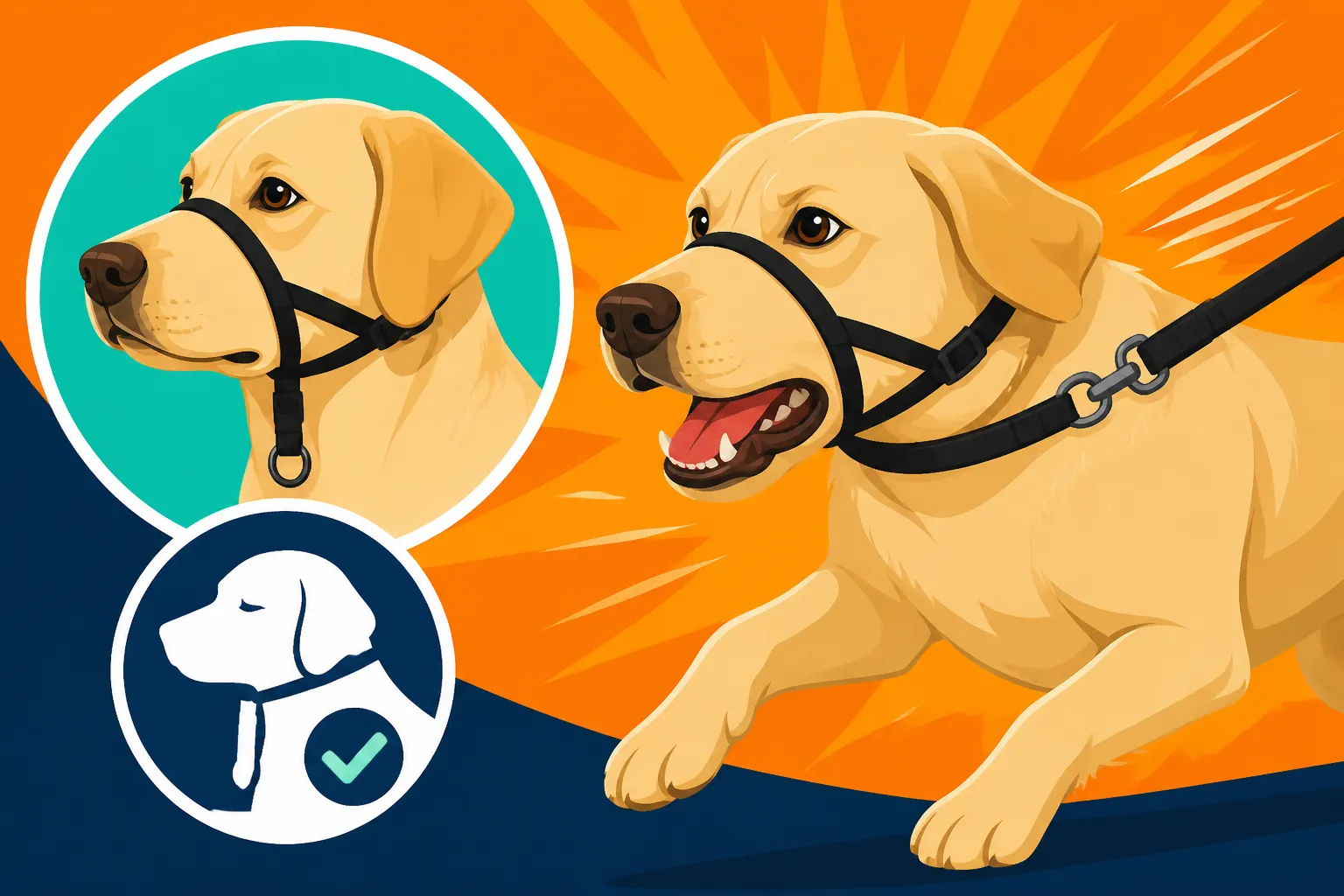
If you've heard the term "head halter" before, you might be imagining a muzzle. Let's clear that up right away: a head halter is not a muzzle, although it might look a little similar. It's a specialized piece of training equipment designed to give you gentle, yet effective, control over your dog's head, and by extension, their body.
Anatomy of a Head Halter
Most head halters share a common design, though there can be slight variations. They typically consist of two main loops:
- The Nose Loop: This part goes over your Labrador's muzzle, resting comfortably around the top of their nose, just behind the nostrils and below the eyes. It's usually adjustable to ensure a snug, but not tight, fit.
- The Neck Strap: This strap goes behind your Labrador's ears and high up on their neck, similar to where a martingale collar would sit. It fastens securely, often with a buckle, and is also adjustable.
- The D-Ring/Leash Attachment: This is the critical component. It's usually located underneath your Labrador's chin, where the nose loop and neck strap connect. This is where you clip your leash.
Unlike a muzzle, which is designed to prevent biting by restricting the mouth, a head halter allows your Labrador to open their mouth, pant, drink, and eat treats freely. Its purpose is entirely about control and redirection.
The Gentle Steering Mechanism
The genius of the head halter lies in its simple, yet effective, biomechanical principle. Think of it like the reins on a horse: where the head goes, the body follows.
- Controlling the Head, Controlling the Body: When your Labrador tries to lunge, the leash, attached under their chin, will gently pull their head downwards and to the side. This slight redirection of their head immediately throws them off balance and makes it very difficult for them to move forward with force. Because their head is turned, their body can't continue straight ahead in a lunge. It's a much more humane and less physically jarring method than pulling back on a collar around their neck.
- Leverage, Not Force: The head halter uses leverage rather than brute force. A slight tug on the leash, which translates into a gentle turn of their head, is often enough to stop a lunge or redirect their attention back to you. This means you don't have to pull as hard, which is a huge relief for anyone walking a powerful Labrador.
- Preventing the Pulling Reflex: Many traditional collars, when pulled, trigger a dog's natural opposition reflex – the instinct to pull against pressure. This is why many Labs pull even harder when you yank on their collar. Head halters bypass this reflex because the pressure is on their nose and the redirection is sideways, not backward against their neck.
- Better Communication: By controlling your Labrador's head, you can more easily guide their gaze and attention. If they're fixated on a distraction, a gentle nudge on the leash can turn their head towards you, allowing you to use treats or verbal cues to re-engage them. This opens up a channel for better communication and training.
It's important to reiterate: a head halter is a training tool, not a permanent solution. It's designed to help you teach your Labrador Leash Manners for a Powerful Labrador and Loose Leash Walking With a Labrador, giving you the control you need to reinforce positive behavior.
Introducing the Head Halter to Your Labrador The Right Way
If you just strap a head halter onto your Labrador and hit the pavement, you're likely to have a very unhappy, pawing, trying-to-rub-it-off dog. The key to success is a gradual, positive introduction. Remember, your Labrador needs to associate this new tool with good things, not discomfort or punishment.
Making It a Positive Experience
Your Labrador's first impression of the head halter is crucial. We want them to think it's a source of delicious treats and happy moments, not a strange, restrictive device.
- Patience is Your Best Friend: This isn't a race. Some Labradors will accept the head halter quickly, while others might need several days or even a week of short, positive sessions. Don't rush it. Pushing too hard too fast will only create a negative association and make your job harder in the long run.
- High-Value Treats Are Essential: Forget the regular kibble for these sessions. Pull out the good stuff – tiny pieces of cooked chicken, cheese, hot dogs, or whatever your Labrador considers the absolute best treat on earth. This is a special tool, and it deserves special rewards. Treats That Motivate a Food-Driven Labrador can make all the difference here.
- Keep Sessions Short and Sweet: A few minutes at a time is perfect. End on a positive note, even if it's just for a moment of acceptance, and then take the halter off. This keeps your Labrador engaged and looking forward to the next session.
Step-by-Step Introduction Guide
Here’s a detailed plan to introduce the head halter to your Labrador:
-
Phase 1: Just Seeing It (Day 1)
- Goal: Your Labrador sees the halter and associates it with treats.
- Action: Hold the head halter in one hand. With the other hand, offer a high-value treat every time your Labrador glances at it, sniffs it, or shows any curiosity. Don't try to put it on yet. Just let them see it and get good things.
- Duration: 2-3 sessions, 1-2 minutes each.
-
Phase 2: Nose Through the Loop (Day 1-2)
- Goal: Your Labrador willingly puts their nose through the loop to get a treat.
- Action: Hold the nose loop open with one hand. Put a high-value treat on the other side of the loop. Lure your Labrador to push their nose through the loop to get the treat. As soon as their nose is through, praise and give the treat. Repeat several times, then remove the halter.
- Duration: 3-5 sessions, 1-2 minutes each.
-
Phase 3: Fastened Briefly (Day 2-3)
- Goal: Your Labrador tolerates the halter being fastened for a few seconds.
- Action: Get your Labrador to put their nose through the loop as in Phase 2. As soon as their nose is through, quickly fasten the neck strap. Immediately give them a stream of treats for 5-10 seconds while it's on. Then unfasten it and remove it. Make sure they can still pant and take treats easily.
- Duration: 3-5 sessions, gradually increasing the time it's fastened by a few seconds.
-
Phase 4: Short Periods of Wear (Day 3-5)
- Goal: Your Labrador wears the halter for longer periods, with distractions.
- Action: Put the halter on, fasten it, and give treats. Keep it on for increasing durations (e.g., 30 seconds, 1 minute, 2 minutes). During this time, continue to feed treats, play a quick game, or give them a favorite chew toy. The goal is to make them forget they're wearing it because good things are happening. If they start trying to paw it off, redirect with a treat. Remove it before they get too frustrated.
- Duration: Several sessions throughout the day, gradually increasing wear time.
-
Phase 5: Leash Attachment Indoors (Day 5-7)
- Goal: Your Labrador accepts the leash being attached to the head halter.
- Action: Once your Labrador is comfortable wearing the halter for a few minutes, attach a lightweight leash to the D-ring under the chin. Let them drag it around the house (under supervision!), praising and treating. Then, pick up the leash and practice very short walks around the house or yard, giving treats for loose leash walking.
- Duration: 2-3 sessions, 5-10 minutes each.
-
Phase 6: First Outdoor Walks (Day 7+)
- Goal: Begin walks outdoors with the head halter.
- Action: Start with very short, low-distraction walks. As soon as you step outside, treat. Continue to treat frequently for loose-leash walking. The moment you see your Labrador about to lunge or get distracted, gently redirect their head towards you with the leash and reward for looking at you. Keep walks brief and positive.
- Duration: Gradually increase walk length and introduce more distractions as your Labrador becomes more comfortable and responsive.
Important Note on Fit: Ensure the head halter fits properly. The nose loop should be snug enough not to slip off, but loose enough for your Lab to pant and open their mouth wide. The neck strap should be high and snug, so it doesn't rotate. A poorly fitting halter can cause discomfort or be ineffective.
By taking the time to introduce the head halter gently and positively, you'll set your Labrador up for success and make the training process much smoother for both of you.
| Phase | Goal | Action | Duration/Frequency |
|---|---|---|---|
| 1: See & Treat | Positive association with the halter | Hold halter, give treat when Lab looks at it. No physical contact with halter. | 2-3 sessions, 1-2 min each (Day 1) |
| 2: Nose Through Loop | Lab willingly puts nose through loop for treat | Lure nose through loop with treat on other side. Reward immediately when nose is through. | 3-5 sessions, 1-2 min each (Day 1-2) |
| 3: Fasten Briefly | Tolerates halter fastened for a few seconds | Nose through loop, quickly fasten, give continuous treats for 5-10 seconds, unfasten. Ensure free panting/treat taking. | 3-5 sessions, building time (Day 2-3) |
| 4: Short Wear Periods | Wears halter for increasing durations, with positive activity | Fasten halter, give treats, play or offer chew for 30s-2min. Gradually increase time. Remove before frustration. | Several sessions, increasing time (Day 3-5) |
| 5: Leash Indoors | Accepts leash attached to halter, light guidance indoors | Attach lightweight leash. Let Lab drag (supervised). Practice brief indoor walks, reward loose leash. | 2-3 sessions, 5-10 min each (Day 5-7) |
| 6: First Outdoor Walks | Begins walks outdoors, manages distractions | Start with short, low-distraction walks. Treat frequently for loose leash. Gently redirect and reward when distraction appears. | Gradually increase length/distraction (Day 7+) |
Using a Head Halter for Effective Leash Training
Once your Labrador is comfortable wearing the head halter, you can start using it to actively train better leash manners and manage lunging. Remember, the halter is a tool to help you train, not a magical device that does all the work. Consistency and positive reinforcement are still paramount.
Techniques for Managing Lunging
The head halter gives you the ability to redirect your Labrador's focus and momentum in a way that’s difficult with a traditional collar.
- Anticipate and Redirect: This is where you become a super-aware detective. Learn to recognize the subtle cues that indicate your Labrador is about to lunge: a sudden stiffening of the body, ears perking up, tail raising, or an intense stare. The moment you see these signs, before the lunge happens, give a gentle, upward and sideways tug on the leash attached to the head halter. This will turn your Lab's head towards you, breaking their focus on the distraction. The moment they look at you, release the tension, praise enthusiastically, and reward with a high-value treat. This teaches them to check in with you rather than launching forward.
- The "Look at Me" Game: Incorporate a "look at me" cue into your training. With your Labrador wearing the head halter, hold a treat by your nose and say "look at me." The moment they make eye contact, say "yes!" and give the treat. Practice this frequently in low-distraction environments, then gradually add more distractions. When you're out walking and see a potential lunge trigger, use your "look at me" cue, and the head halter will help guide their head if needed.
- Short Leash, Consistent Control: When working on lunging, keep your leash relatively short, but not taut. This gives you less slack for your Labrador to build momentum. The idea isn't to constantly hold them back, but to have immediate control when needed. Practice Loose Leash Walking With a Labrador in quiet areas, rewarding every step they take without pulling. If they pull, simply stop moving. Wait for the leash to slacken, then praise and continue. The head halter makes this "stop and go" method more effective because the initial redirection is easier.
- Change Direction Frequently: Don't just walk in a straight line. Randomly change direction. Each time you turn, give a gentle tug on the head halter and say "this way!" or "let's go!" and reward your Labrador for following. This teaches them to pay attention to where you're going and to maintain focus on you, rather than being completely absorbed by their surroundings. It also prevents them from getting too fixated on one thing.
Combining the Halter with Positive Reinforcement
The head halter is a management tool, but real, lasting change comes from training and positive reinforcement.
- Reward Calmness: Don't just reward your Labrador for not lunging. Actively reward them for walking calmly by your side, for checking in with you, and for remaining relaxed in the presence of distractions. Every time they ignore a squirrel or walk past another dog politely, shower them with praise and treats. You're shaping the behavior you want to see.
- Counter-Conditioning: If your Labrador lunges due to fear or frustration, counter-conditioning is vital. This means changing their emotional response to the trigger. When they see the trigger (at a distance where they are still calm), immediately start feeding them high-value treats. The goal is for them to associate the scary or frustrating thing with good things (treats), rather than feeling the need to react. The head halter gives you the control to keep them at a safe distance from the trigger while you do this work. Many reputable online training platforms, like BAXTER & Bella, offer resources and courses on counter-conditioning and desensitization that can be incredibly helpful.
- Phasing Out the Halter (Eventually): The ultimate goal is for your Labrador to walk politely on a regular collar, or at least a front-clip harness, without needing the head halter. As your Labrador's leash manners improve, gradually incorporate walks without the halter, or switch to a front-clip harness for some outings. Start in low-distraction areas and gradually increase difficulty. If lunging creeps back, go back to using the head halter for a while. This transition might take months, or even a year, but it's a testament to your consistent training. Remember that Short Training Sessions That Suit a Labrador are often more effective than long, drawn-out ones.
Using the head halter responsibly and in conjunction with positive reinforcement will empower you to teach your Labrador the leash manners you've always dreamed of, transforming dreaded walks into enjoyable adventures for both of you.
Pros and Cons of Using a Head Halter for Your Labrador
Like any training tool, head halters have their advantages and disadvantages. It's important to understand both sides to determine if it's the right choice for you and your Labrador.
Benefits
When used correctly, a head halter can be a game-changer for walking a strong, enthusiastic Labrador.
- Immediate and Gentle Control: This is the primary benefit. A head halter offers unparalleled control over your Labrador's head, and thus their entire body, with minimal physical effort from you. Instead of yanking on their neck, a gentle tug redirects their attention and prevents them from charging forward. This means less strain on your arm and shoulder, and less force applied to your dog's neck and throat. It makes managing even a powerful lunge much easier, helping you feel more confident and less overwhelmed during walks.
- No Choking or Neck Strain: Unlike traditional collars that can put immense pressure on your Labrador's trachea, especially if they pull hard, a head halter distributes pressure over the muzzle and behind the head. This significantly reduces the risk of injury to your dog's neck, throat, and spine. It's a much safer option for Labradors, particularly those prone to tracheal collapse or neck issues.
- Effective for Training Focus: Because you can easily redirect your Labrador's head, the head halter is excellent for teaching them to focus on you amidst distractions. If they start to fixate on another dog or a squirrel, a gentle pull can turn their head back towards your face, creating an opportunity to reward them for eye contact and engagement with you. This can be particularly useful for Teaching a Labrador to Heel Properly.
- Enhances Communication: The precise control offered by a head halter allows for clearer communication. A slight movement of your hand can convey a message without needing harsh verbal corrections or strong physical interventions. This can lead to a more harmonious walking experience, as your Labrador quickly learns to respond to subtle cues.
- Suitable for Various Behaviors: While excellent for lunging and pulling, head halters can also be beneficial for other behaviors like jumping up on people (as you can easily guide their head down) or even helping to manage reactivity by allowing you to quickly reorient your dog away from triggers.
Potential Drawbacks and Misconceptions
Despite their benefits, head halters aren't a perfect solution for every dog or every owner, and they come with their own set of considerations.
- Initial Resistance and Discomfort: Many dogs, especially Labradors who are used to having nothing on their muzzle, will initially dislike the head halter. They might paw at it, rub their face on the ground, or try to get it off. This is why a slow, positive introduction is absolutely critical. Rushing this stage will lead to your dog hating the halter and possibly associating walks with unpleasantness. It can look distressing to owners to see their dog trying to remove it, but with patience, most dogs adjust.
- Often Mistaken for a Muzzle: Unfortunately, head halters are often confused with muzzles by the general public. This can lead to unwarranted assumptions about your dog being aggressive or dangerous, which can be frustrating for responsible owners. Be prepared for curious glances or even questions.
- Not a Magic Bullet or Substitute for Training: A head halter is a training aid, not a replacement for training. It provides management and an opportunity to teach, but it doesn't teach your dog to stop lunging on its own. You still need to actively work on positive reinforcement, counter-conditioning, and teaching alternative behaviors. Without consistent training, your Labrador will likely revert to old habits the moment the halter comes off.
- Potential for Injury if Used Improperly: While generally safer than choke or prong collars, a head halter can still cause injury if used incorrectly. Never yank or jerk the leash aggressively. Sudden, sharp pulls can cause neck strain or whiplash, particularly if your Labrador hits the end of the leash at full speed. Always use gentle, consistent pressure and redirection.
- Requires Proper Fit: A poorly fitted head halter can cause chafing, rub sores, or slip off, rendering it ineffective and potentially uncomfortable for your Labrador. It needs to be snug enough to stay in place but loose enough for your dog to pant freely. Learning How Often a Labrador Needs an Eye Exam is a good idea generally, and especially if you notice any irritation near their eyes from the halter.
- Some Dogs Never Fully Accept Them: While most Labradors can be successfully conditioned to accept a head halter, some simply never get truly comfortable with it, despite the most patient and positive introduction. In these cases, a well-fitting front-clip harness might be a better alternative for management, coupled with continued training.
By weighing these pros and cons, you can make an informed decision about whether a head halter is the right tool to help you address your Labrador's lunging behavior.
Choosing the Right Head Halter and Complementary Tools
If you've decided a head halter is worth trying for your energetic Labrador, the next step is choosing one that's safe, comfortable, and effective. Not all head halters are created equal, and some features can make a big difference.
Key Features to Look For
When you're browsing for a head halter, either online (like on Amazon) or at your local pet store, keep these features in mind:
- Comfort and Padding: The areas where the halter sits on your Labrador's nose and behind their ears can be sensitive. Look for halters with soft, durable nylon webbing that might include neoprene or fleece padding on the nose loop and neck strap. This can prevent chafing and make the halter much more comfortable for your dog, especially during the initial adjustment period.
- Durability: Labradors are strong, and they can be tough on their gear. Choose a halter made from high-quality, sturdy materials that can withstand daily use and the occasional pull. Reinforced stitching is a good sign.
- Adjustability: A good head halter will offer multiple points of adjustment, allowing you to get a custom fit for your Labrador's unique head shape. Both the nose loop and the neck strap should be easily adjustable. A proper fit is crucial for both comfort and effectiveness.
- Safety Features: Some halters come with a safety clip or strap that can attach to your Labrador's regular collar. This is a brilliant feature! If your Labrador manages to slip out of the head halter (which can happen, especially if they're determined), they'll still be connected to you via their regular collar. This provides an extra layer of security and peace of mind.
- Design and Visibility: While aesthetics aren't the primary concern, you might prefer certain colors or designs. Some halters also incorporate reflective stitching, which is a great safety feature for evening or early morning walks.
Brands often have slightly different designs. Some popular and well-regarded head halter brands include the Gentle Leader and the Halti Headcollar. While I can't advise on specific models or prices, a quick search on a site like Amazon will show you many options. Always check reviews specifically from other Labrador owners to see how different brands perform with strong, active dogs.
Other Tools to Consider
The head halter works best when it's part of a broader strategy. Consider these complementary tools to enhance your training and walks:
- High-Value Treat Pouch: As we've discussed, treats are your best friend when training with a head halter. A treat pouch that clips to your waist or belt keeps treats easily accessible, so you can reward your Labrador instantly for good behavior. Timely rewards are crucial for effective positive reinforcement.
- Long Line for Practice: Once your Labrador is comfortable with the head halter and has the basics of loose-leash walking down, a long line (15-30 feet) can be invaluable for practicing recall and off-leash manners in a safe, controlled environment. While not directly for lunging, it helps build overall responsiveness to your cues, which will carry over to on-leash behavior. Long Line Work to Build Labrador Recall can be an exciting next step.
- Front-Clip Harness: For some Labradors, or for those days when you want a break from the head halter, a good quality front-clip harness can be an excellent alternative for managing pulling. The leash clips at the front of the chest, which, like the head halter, redirects your dog's momentum sideways if they pull. It doesn't offer the same head control, but it's a great "Plan B" for some dogs and for transitioning away from the head halter. Many owners find Front-Clip Harnesses on a Strong Labrador to be a good compromise.
- Clicker: If you're new to marker training, a clicker can be an incredibly precise way to mark the exact moment your Labrador performs the desired behavior (like looking at you, or walking with a loose leash). Paired with treats, it supercharges your positive reinforcement.
Remember, every dog is an individual. What works perfectly for one Labrador might not be the ideal solution for another. Be patient, observe your dog's reactions, and don't be afraid to adjust your approach or seek guidance from a certified professional dog trainer if you're struggling. With the right tools and a commitment to positive training, you and your Labrador can enjoy stress-free, happy walks together.
Disclaimer
This article is for general informational purposes only and does not constitute professional advice. Laws, prices and regulations vary by location and change over time. Consult a qualified professional for guidance on your specific situation.