Why Labrador Obedience Falls Apart at Adolescence
It’s a tale as old as time for Labrador owners: you get through the adorable, challenging puppy stage, and just when you think you’ve got a handle on things, your sweet, biddable pup transforms into a furry, four-legged creature with selective hearing and an agenda of their own. If your once-reliable Labrador suddenly seems to have forgotten every command they ever learned, you're not alone. This guide will delve into the frustrating but completely normal phenomenon of Labrador obedience seeming to fall apart during adolescence, offering practical insights and strategies to help you navigate this tricky developmental phase.
Understanding Labrador Adolescence: More Than Just "Teenage Rebellion"
When your Labrador hits that adolescent period, typically between six months and two years of age, it often feels like they've woken up in a brand new body and decided the world is suddenly far more interesting than anything you have to say. It’s easy to feel personally offended or think your dog is being deliberately "stubborn," but there's a lot more going on under the surface than simple teenage rebellion.
The Biological and Hormonal Rollercoaster
Just like human teenagers, adolescent Labradors are undergoing massive biological and hormonal shifts that profoundly affect their behavior. Their bodies are rapidly maturing, muscles are developing, and they’re experiencing surges in hormones that can make them feel bolder, more adventurous, and sometimes, a little overwhelmed. For male Labradors, testosterone levels are on the rise, increasing their interest in scents, marking, and other dogs. Female Labradors will likely experience their first heat cycle during this time, bringing a whole new set of hormonal influences that can change their focus and demeanor.
Beyond the physical, their brains are still very much under construction. The prefrontal cortex, which is responsible for impulse control, decision-making, and understanding consequences, isn't fully developed in dogs until they are around two years old. This means that while your Labrador might know what "come" means, their brain struggles to override the sudden, irresistible urge to chase a squirrel or greet a new dog. It's not that they're trying to be disobedient; it's that their brain is literally not wired yet for consistent, perfect impulse control in every situation. This biological reality explains a lot of the seemingly frustrating behaviors you might encounter.
Shifting Priorities: World Exploration vs. Owner Focus
During puppyhood, your Labrador's world revolved almost entirely around you, their immediate family, and their safe home environment. They were learning the ropes, and you were the primary source of all good things: food, comfort, and safety. As they enter adolescence, their world expands dramatically. They become acutely aware of their surroundings, driven by natural instincts to explore, investigate, and interact with the wider world. That fascinating smell down the block, the dog barking three houses away, the rustling leaves that might be a rabbit – all of these external stimuli suddenly become incredibly compelling.
This shift means that while you are still incredibly important to your Labrador, you are no longer the only thing that matters in their universe. Their attention span can feel like it's shrunk to almost nothing, and their desire to engage with the environment often outweighs their desire to comply with a familiar command. It’s a natural and healthy part of their development, but it can certainly test your patience. Understanding that this is an instinctual drive, rather than a personal affront, can help you approach their training with more empathy and less frustration. They are exploring their independence and testing boundaries, which are crucial steps in becoming a well-adjusted adult dog.
Common Obedience Setbacks During Labrador Adolescence
It’s one thing to understand why their behavior changes, and another to actually live through it! During adolescence, certain obedience commands tend to take the biggest hit. What was once reliable can become a chaotic mess, leaving you feeling embarrassed or even exasperated during walks or trips to the park. Recognizing these common setbacks can help you prepare and respond effectively, rather than feeling like you've somehow failed in your training.
The Recall That Vanished (or Never Quite Arrived)
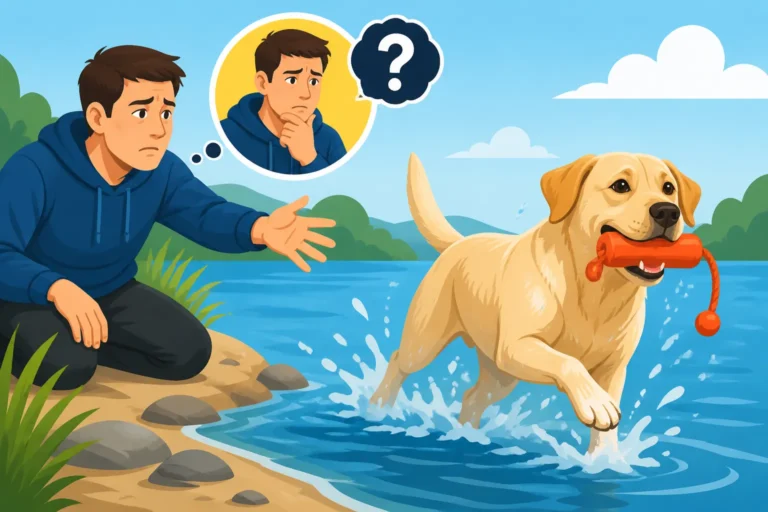
Ah, the phantom recall. Many Labrador owners cherish memories of their puppy trotting happily back to them at a moment's notice, only to find their adolescent dog suddenly deaf to their pleas. This is perhaps one of the most frustrating regressions, and it’s deeply rooted in those shifting priorities we just discussed. A strong prey drive, an intense interest in other dogs, or even just a captivating new scent can easily overpower a young Labrador's desire to return to you. They're not trying to be defiant; they're simply following incredibly strong, instinctual urges that their still-developing brain struggles to override.
The key to rebuilding or establishing a solid recall during this period is to make coming back to you the most rewarding thing possible, every single time. This means cranking up the value of your treats – ditch the kibble for pieces of cooked chicken, cheese, or hot dogs. Practice in increasingly distracting environments, starting with your backyard and slowly moving to quieter parks while keeping them on a long line for safety. The long line, often available on sites like Amazon, is your best friend here, giving your Labrador the illusion of freedom while allowing you to gently enforce the recall if they get too distracted. Remember, consistency is crucial, and never call them back to do something unpleasant like ending playtime. For more tips on building a reliable recall, you might find our guide on Building a Labrador's Recall From Scratch helpful.
Leash Pulling and Lunging: The "Ox on a Leash" Phase
Another common and physically demanding challenge during Labrador adolescence is the sudden onset or dramatic worsening of leash pulling and lunging. Your once-manageable pup can suddenly feel like an ox on a leash, determined to drag you to every interesting tree, person, or squirrel they spot. This isn't just about strength; it's also about a surge in confidence and an overwhelming desire to explore their expanding world. They're physically stronger, more assertive, and their curiosity is at an all-time high.
Traditional flat collars often offer little control against a determined adolescent Labrador. This is where specialized equipment can make a huge difference. Front-clip harnesses, which redirect your dog's pulling power to their chest, or head halters, which offer more nuanced control, can be game-changers. Beyond equipment, consistent training is paramount. Practice loose-leash walking in quiet areas, using positive reinforcement for every step they take without tension on the leash. Implement techniques like the "tree" method (stopping completely when they pull until the leash loosens) or abrupt directional changes to keep them guessing. Remember, you're teaching them what to do, not just punishing what they shouldn't. If you're struggling, check out our insights on Front-Clip Harnesses on a Strong Labrador for more in-depth advice.
Selective Hearing and "Stubbornness"
"He knows 'sit'!" is a phrase frequently uttered by exasperated owners of adolescent Labradors. It certainly feels like selective hearing, as your dog might perfectly execute a "sit" in the living room but ignore the same command at the park when a group of kids runs by. This isn't true stubbornness, but rather a perfect storm of environmental distractions, competing motivations, and their still-developing ability to focus and inhibit impulses. Their world is vibrant and full of exciting things, and your request to "sit" simply isn't as compelling as sniffing that intriguing patch of grass or watching that distant dog.
To combat this, you need to "proof" their commands. This means practicing known commands in increasingly distracting environments, rewarding them generously when they succeed. Start with minimal distractions and gradually increase the challenge. Use higher-value rewards than usual – think bits of chicken or cheese, not just dry kibble. The goal is to make obeying you more rewarding than any potential distraction. Vary your locations, practice around different people and dogs, and don't be afraid to go back to basics in a new, stimulating environment. Consistency, patience, and making yourself the most exciting thing in the room are your best tools here. Sometimes, their "selective hearing" is just them being overwhelmed by their environment, much like a child in a busy candy store. Our article on Why Labradors Ignore You Around Water touches on similar issues of distraction in specific environments.
Strategies for Navigating Adolescent Labrador Obedience
Dealing with an adolescent Labrador can feel like a roller coaster, but it's a critical time for shaping their future behavior. The good news is that with the right strategies, you can guide them through this phase and reinforce the good habits that will last a lifetime. It requires patience, consistency, and often, a renewed commitment to training.
Doubling Down on Reinforcement: Make It Worth Their While
During adolescence, your Labrador is experiencing new sensations and distractions that are incredibly powerful and rewarding to them. To compete with these, your reinforcement for desired behaviors needs to be even more motivating. This isn't the time to fade your treats or rely solely on verbal praise. Think of it as a significant investment in their future good behavior. Use high-value rewards – small pieces of real meat, cheese, or specialized training treats. Many excellent options can be found on Amazon or from brands like BAXTER & Bella, which often recommend specific types of high-value treats for their training programs.
The key is not just what you use, but how you use it. Implement variable reinforcement, meaning you don't reward every single time, but often enough to keep them engaged and guessing. Sometimes they get a jackpot (multiple treats!), sometimes just one, sometimes a quick praise. This keeps them motivated and makes them more likely to try for that big reward. Think about it: if you always knew you'd get $1 for a task, it's fine. But if sometimes you got $50, you'd be much more eager to do the task! This principle applies to your Labrador. Our guide on Treats That Motivate a Food-Driven Labrador can give you some excellent ideas for high-value rewards your Lab will go crazy for.
Structured Training and Consistency (Even When It's Hard)
Even when your Labrador seems to have forgotten everything, this is not the time to stop training. In fact, it's the time to double down on structured, consistent sessions. The good news is that Labradors are smart and generally eager to please, even if their adolescent brain sometimes interferes. Keep training sessions short, fun, and frequent – five to ten minutes, multiple times a day, is far more effective than one long, tedious session. These short bursts prevent boredom and frustration for both of you.
Focus on reinforcing all foundational commands ("sit," "stay," "down," "come," "leave it") in increasingly distracting environments. Gradually introduce new locations, sounds, and sights, always starting easy and building up. Every family member needs to be on the same page, using the same commands and expectations. Inconsistency will only confuse your adolescent Lab and make it harder for them to understand what's expected. Remember that even though their obedience may appear to be "falling apart," this consistency helps solidify those neural pathways. You can find more detail on this in Why Five Minute Sessions Work on a Labrador.
Managing the Environment for Success
One of the most effective ways to navigate adolescent challenges is to proactively manage your Labrador's environment to set them up for success. This isn't about avoiding challenges forever, but about building confidence and good habits without unnecessary setbacks. For example, if your Labrador is a notorious counter-surfer, remove tempting items from counters instead of constantly scolding them. If their recall is still shaky, use a long line in unfenced areas to prevent them from running off and practicing "ignoring" you.
Beyond preventing bad habits, actively provide outlets for their boundless energy and mental stimulation. Labradors are working dogs, and a bored adolescent Lab is a destructive or "misbehaving" Lab. Engage them with puzzle feeders, scent games, and plenty of appropriate exercise. Physical exercise, like long walks or structured play, can burn off some of that adolescent exuberance, while mental exercise (like scent work or obedience drills) tires their brain. Both are crucial. Our article on Mental Work for a Bored Labrador offers fantastic ideas for keeping their busy minds engaged, and many toys and tools for this can be sourced from reputable pet retailers or online marketplaces like Amazon.
When to Seek Professional Help
While adolescent regression is normal, there are times when it can escalate beyond typical teenage antics. It's important to recognize when you might be out of your depth or when your Labrador's behavior is veering into problematic territory, warranting the guidance of a professional. Investing in professional help early can prevent minor issues from becoming major ones.
Recognizing When You're Out of Your Depth
Sometimes, despite your best efforts, you might feel like you're losing the battle. Your Labrador's behaviors might become extreme, consistent, or even dangerous. Signs that it's time to seek professional help include:
- Aggression: Any displays of growling, snapping, or biting towards people or other animals. This is never normal or acceptable.
- Severe Anxiety: Destructive chewing, excessive barking, or self-mutilation when left alone, suggesting separation anxiety.
- Persistent Destructive Behavior: Beyond normal adolescent chewing, if your Labrador is consistently destroying furniture, walls, or ingesting inappropriate items despite redirection and management.
- Unmanageable Fear: Extreme fear responses to everyday stimuli that impact their quality of life.
- Lack of Progress: If you've been consistently applying training techniques for weeks or months and see no improvement, or things are getting worse.
These behaviors indicate a need for a deeper understanding of the underlying causes and a tailored intervention plan, which a qualified professional can provide.
Benefits of Group Classes or Private Consultations
Enrolling in group classes or scheduling private consultations with a certified professional dog trainer (CPDT-KA, KPA-CTP, or similarly accredited) can be incredibly beneficial during adolescence. Group classes offer a structured environment where your Labrador can practice obedience around distractions (other dogs and people) under the guidance of an expert. This type of controlled socialization is crucial for adolescent dogs. Plus, it gives you the opportunity to learn from the trainer and observe how other owners manage similar challenges.
Private consultations, on the other hand, allow a trainer to assess your Labrador's specific behaviors in your home environment, providing a highly personalized training plan. They can identify subtle cues you might be missing, suggest specific techniques, and help you understand the root cause of certain issues. A professional can also help you differentiate between normal adolescent behavior and genuine behavioral problems that require a more intensive approach. Think of it as having a coach for both you and your dog, helping you navigate the complexities of this developmental stage. Finding the right fit for you and your Lab is key, so don't hesitate to research options, ask for references, and inquire about their methods, as detailed in Choosing a Trainer for a Labrador.
| Adolescent Labrador Challenge | Common Cause | Training Strategy | Key Tool/Resource |
|---|---|---|---|
| Ignoring Recall | Distractions, heightened prey/social drive | High-value rewards, long line practice, gradual distraction increase | Building a Labrador's Recall From Scratch, Long line (e.g., Amazon) |
| Leash Pulling/Lunging | Increased strength, curiosity, lack of focus | Front-clip harness/head halter, "tree" method, directional changes | Front-Clip Harnesses on a Strong Labrador, Quality harness |
| Selective Hearing | Competing motivations, brain immaturity | Proofing commands in new environments, consistent high-value rewards | Why Five Minute Sessions Work on a Labrador, Variety of treats |
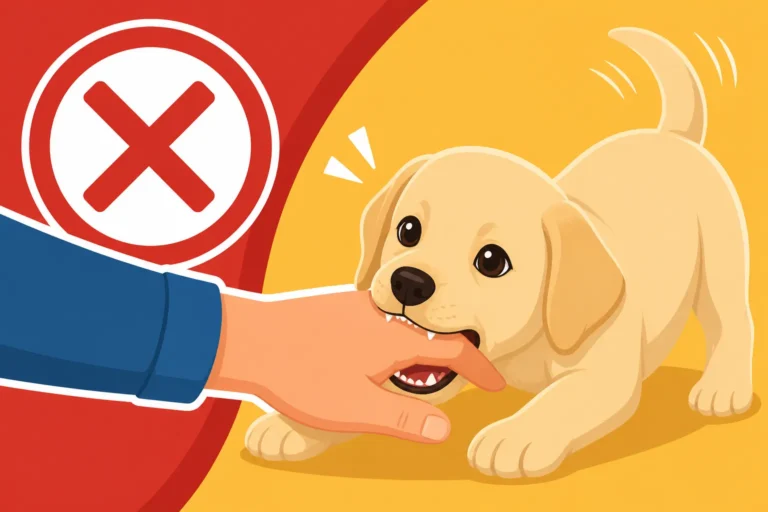
| Mouthing/Nipping | Continued teething, over-excitement | Redirection to appropriate chew toys, "freeze" technique | Toys That Satisfy a Teething Labrador, Chew toys |
| Counter Surfing | Food drive, exploration, opportunistic | Environmental management, "leave it" command, slow feeder bowls | Labrador-Proofing a Kitchen, Puzzle feeders |
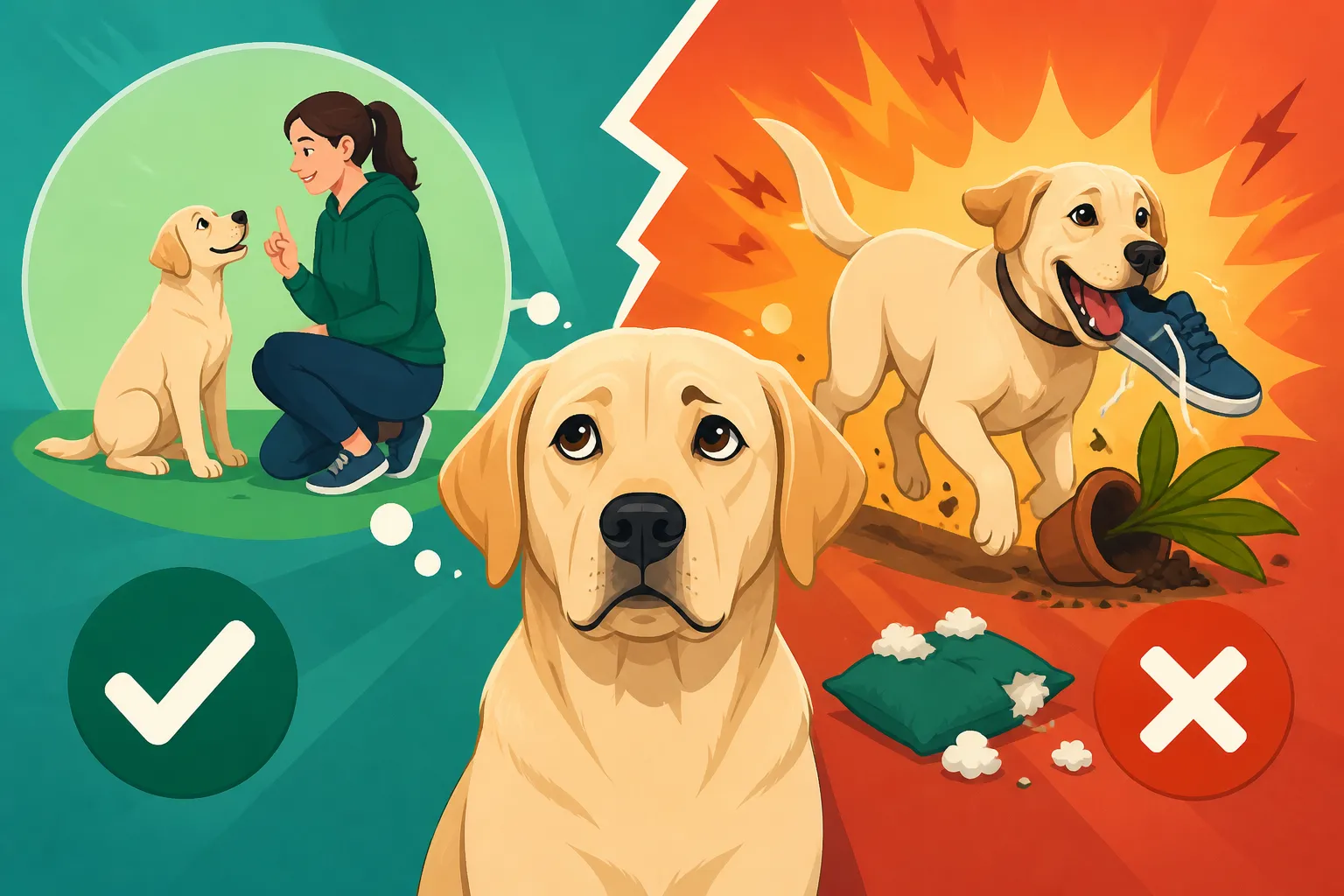
| Destructive Chewing | Boredom, energy excess, anxiety | Appropriate chew toys, mental/physical exercise, crate training | Labrador Chewing Through Adolescence, Durable chews |
| Testing Boundaries | Developing independence, hormonal changes | Consistent rules, positive reinforcement for compliance, short training sessions | Handling a Labrador Between Six and Eighteen Months, Online training program (e.g., BAXTER & Bella) |
Disclaimer
This article is for general informational purposes only and does not constitute professional advice. Laws, prices and regulations vary by location and change over time. Consult a qualified professional for guidance on your specific situation.