Labrador Puppy Mouthing and How to Redirect It
Oh, the joy and exasperation of bringing a Labrador puppy home! One of the universal experiences, and often a source of real frustration for new owners, is the relentless mouthing. You pictured gentle nudges and soft licks, but instead, your adorable little fluffball seems to think your hands, ankles, and even your hair are the world's most exciting chew toys. This comprehensive guide is here to help you understand why your Labrador puppy is mouthing everything in sight and, more importantly, equip you with practical, kind strategies to redirect that natural behavior into appropriate outlets, so you can both enjoy this precious puppy stage without all the nips and gnaws.
Understanding Why Labrador Puppies Mouth
It can feel a bit like you've brought home a furry piranha, can't it? One minute they're snoozing, the next they've launched themselves at your shoelaces with surprising intensity. Before we dive into solutions, it's really important to get a handle on why this happens. It's not because your Labrador puppy is "bad" or aggressive; it's a completely normal, instinctual part of their development. Understanding the root causes can help us approach the behavior with patience and empathy, rather than frustration.
It's a Natural Part of Development
Just like human babies put everything in their mouths to learn about the world, Labrador puppies do the same – but with sharper teeth! They don't have hands to explore textures, shapes, and the properties of objects, so their mouths become their primary tool for gathering information. From the moment they're born, their mouths are central to their existence: nursing, interacting with littermates, and eventually, playing. It’s their way of figuring out what’s edible, what’s hard, what’s soft, and what reacts in interesting ways.
This period of intense oral exploration usually peaks between three and six months of age, though it can certainly extend longer for some energetic Labs. During this time, every new object they encounter, from a fallen leaf to your expensive leather handbag, is fair game for a good chomp. Expect this stage and prepare for it, rather than being surprised by it. It’s part of the package when you bring home a puppy, especially a Labrador, a breed known for its strong oral fixation and retrieving instincts.
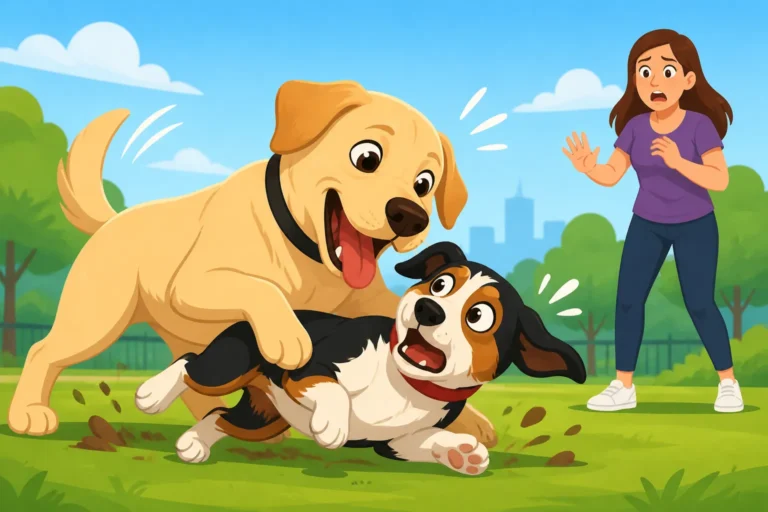
What's fascinating is how their littermates teach them "bite inhibition." When puppies play together, they mouth and nip each other. If one puppy bites too hard, the other will yelp and stop playing, teaching the first puppy that hard bites end the fun. This early learning is crucial, and it’s a lesson we, as their human companions, need to continue once they come home. Your puppy isn't trying to hurt you; they're trying to figure out the boundaries, and sometimes they need a little help translating "puppy yelps" into "human discomfort."
Exploring the World with Their Mouths
Imagine experiencing the world predominantly through touch, but your only "fingers" are your teeth and tongue. That's essentially what your Labrador puppy is doing. Every new texture, every interesting smell, every object that catches their eye is an invitation for a mouth-based investigation. This exploration helps them map out their environment and understand what's safe, what's fun, and what's best left alone (though they might need some convincing on that last one!).
This exploratory mouthing is different from aggressive biting. It's often accompanied by a soft gaze, a wagging tail, and playful body language. They might grab your pant leg and shake their head playfully, or gently mouth your hand as you pet them. They're engaging with you, trying to initiate play, or simply learning about the feel of your skin or clothing. It's important not to misinterpret these behaviors as malice, but rather as a communication style that needs refinement.
Think of it as their way of asking, "What is this thing?" or "Can we play with this?" Since Labs are naturally curious and often quite clever, they'll test boundaries and try to figure out what gets a reaction from you. If mouthing your hand gets you to pull it away quickly, that might be a fun game for them! Our job is to teach them that while exploring with their mouth is fine, exploring us with their mouth isn't the best idea.
Teething and Pain Relief
Perhaps the most common and often painful reason for intense puppy mouthing is teething. Just like human babies, Labrador puppies go through a period where their sharp "milk teeth" fall out and are replaced by stronger, permanent adult teeth. This process typically starts around three to four months of age and can last until six or seven months. During this time, their gums can become sore, swollen, and itchy, leading to a strong urge to chew and apply pressure to relieve the discomfort.
When your puppy is teething, everything suddenly looks like a potential gum massager. This explains why they might suddenly be more fixated on chewing furniture legs, remote controls, or, yes, your fingers and toes. The pressure of chewing helps to soothe their aching gums and encourages the baby teeth to fall out. It’s a very uncomfortable time for them, and their need to chew isn’t just about curiosity; it’s about genuine pain relief.
Providing appropriate outlets for this teething pain is absolutely critical. If you don't give them something suitable to chew on, they will find something themselves, and it’s usually something you don't want them to have. Frozen chew toys, soft rubber toys, or even a frozen washcloth can be incredibly soothing for their sore gums. Understanding that they're in pain can help you be more patient when they're particularly mouthy. The good news is, this phase does pass! The Labrador Teething Timeline is a helpful resource for understanding what to expect during this period.
The Difference Between Mouthing, Nipping, and Biting
It's easy to lump all forms of a puppy's mouth-to-skin contact into one scary category, but there's actually a nuanced spectrum of behavior. Understanding these differences can help you respond appropriately and avoid escalating the situation. Not all mouth contact is created equal, and recognizing the signs can make a huge difference in your training approach.
Mouthing: The Gentle Exploration
Mouthing is typically the mildest form of mouth contact. It's when your puppy puts their mouth on you, often your hand or arm, without applying significant pressure. It might feel a bit like a gentle clamp or a soft exploratory chew. There's no intent to harm, and usually, the puppy's body language is relaxed and playful – a loose wag, soft eyes, or a relaxed posture. They might even hold your hand in their mouth for a moment, like they're carrying it, which is very typical for a retrieving breed.
This behavior is rooted in their natural curiosity and their developing bite inhibition, as discussed earlier. They're testing boundaries and trying to understand how much pressure they can exert without causing pain or ending the interaction. Think of it as a question: "How hard can I chew before you react?" Our goal is to teach them that the answer is "zero pressure on human skin." It's during this phase that we have the best opportunity to teach them what's acceptable and what's not, without having to correct a more severe behavior.
It’s also their way of seeking attention or initiating play. A gentle mouth on your hand might be an invitation to a game of tug or fetch. It’s important not to punish this behavior harshly, as it can confuse or frighten your puppy. Instead, gentle redirection is key. This is where we lay the foundation for a "soft mouth," a highly valued trait in Labradors, especially those involved in retrieving work, where they need to carry delicate objects without damaging them.
Nipping: Overexcitement or Attention Seeking
Nipping is a step up from mouthing. It involves a bit more pressure, often feels sharper, and can sometimes catch you off guard, causing a mild sting. While still not intended to cause serious injury, nipping often occurs when a puppy becomes overstimulated, overly excited during play, or is actively trying to get your attention. You might notice it when they're particularly riled up, perhaps after a long nap, during an intense play session, or when they're demanding interaction.
When a Labrador puppy gets too excited, they might lose track of their bite inhibition. Their natural instincts take over, and they might nip harder than they mean to, just like they would with a littermate in a rough-and-tumble play session. It's not aggression, but rather a lack of control and impulse regulation. This often happens quickly – one minute you're petting them, the next they've nipped your hand because they've reached an excited threshold.
Another common reason for nipping is attention-seeking. If your puppy nips you and you immediately react (even if it's a negative reaction like pushing them away or scolding), they've still achieved their goal: your attention. They learn that nipping is an effective way to get you to engage with them, even if the engagement isn't what you intended. This can quickly become a self-reinforcing cycle that's hard to break, so consistency in your response is vital.
Biting: When Play Turns Too Rough or Fear Takes Over
True biting, especially when it breaks the skin or causes significant pain, is a more serious concern and usually indicates a breakdown in bite inhibition or, in rarer cases, fear or aggression. While very young puppies can accidentally bite hard during intense play, a consistent pattern of hard biting, particularly with stiff body language, growling, or snapping, needs immediate attention. For most Labrador puppies, true biting is an accidental occurrence due to overexcitement rather than malice.
If a puppy consistently bites hard, it often means they haven't learned adequate bite inhibition from their littermates or haven't been taught by their human family. They simply don't understand the force of their jaws. This is where the concept of "yelping" like a puppy comes in, which we'll discuss in the next section. It's about teaching them that human skin is incredibly delicate and even a little pressure is too much.
In rare cases, biting can stem from fear or discomfort. If a puppy is feeling threatened, cornered, or in pain, they might resort to biting as a defense mechanism. This is often accompanied by other body language signals like a tucked tail, flattened ears, lip licking, or a stiff posture. If you suspect your puppy's biting is fear-based, or if it feels genuinely aggressive (which is very uncommon for a Labrador puppy with good socialization), it's crucial to seek professional help immediately. This is particularly important if you have children in the home. Labrador Puppy Nipping at Small Children needs careful and consistent management to ensure safety.
Immediate Strategies for Redirecting Mouthing
Now that we understand why your Labrador puppy is so mouthy, let's talk about what you can do in the moment to manage and redirect this behavior. Consistency is the golden rule here. Every member of the household needs to respond in the same way, every single time, for your puppy to understand what's expected.
The "Ouch!" and Ignore Method
This is one of the most effective and widely recommended techniques for teaching bite inhibition, directly mimicking how puppies learn from their littermates. When your puppy mouths or nips your skin, even if it's gentle, let out a sharp, high-pitched "Ouch!" or "Yipe!"
The key is to make your vocalization sound like another puppy’s yelp. This sudden, slightly startling sound signals to your puppy that they have caused discomfort. Immediately after the "ouch," withdraw your hand, stand up, and turn your back to your puppy for about 10-15 seconds. The goal is to immediately end the fun interaction. If they persist or jump up, quietly leave the room for 30-60 seconds, closing the door behind you. This is known as a "reverse time-out."
The important part is the consistency. Every time teeth touch skin inappropriately, the game stops. No exceptions. This teaches your puppy a very clear message: "Teeth on skin = fun stops." If they respond by licking or showing calmer behavior, you can gently praise them and resume interaction, but be ready to "ouch!" and disengage again if the mouthing restarts. For more specific guidance, check out Freezing for Ten Seconds When a Labrador Mouths.
Redirecting to Appropriate Chew Toys
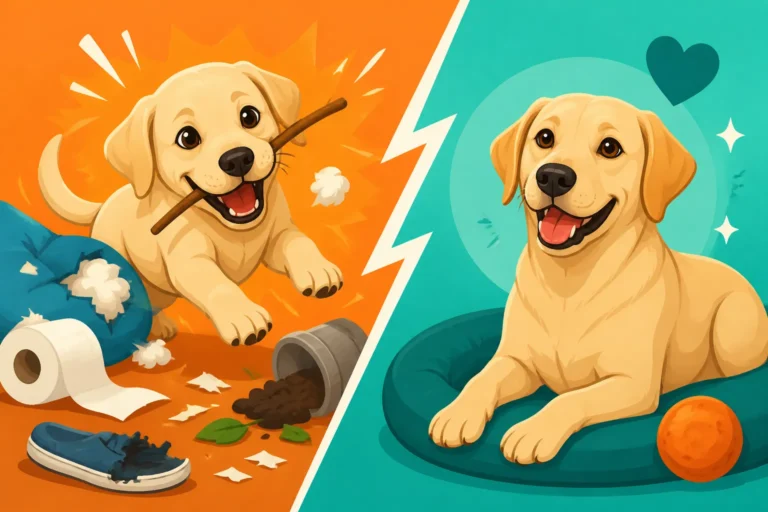
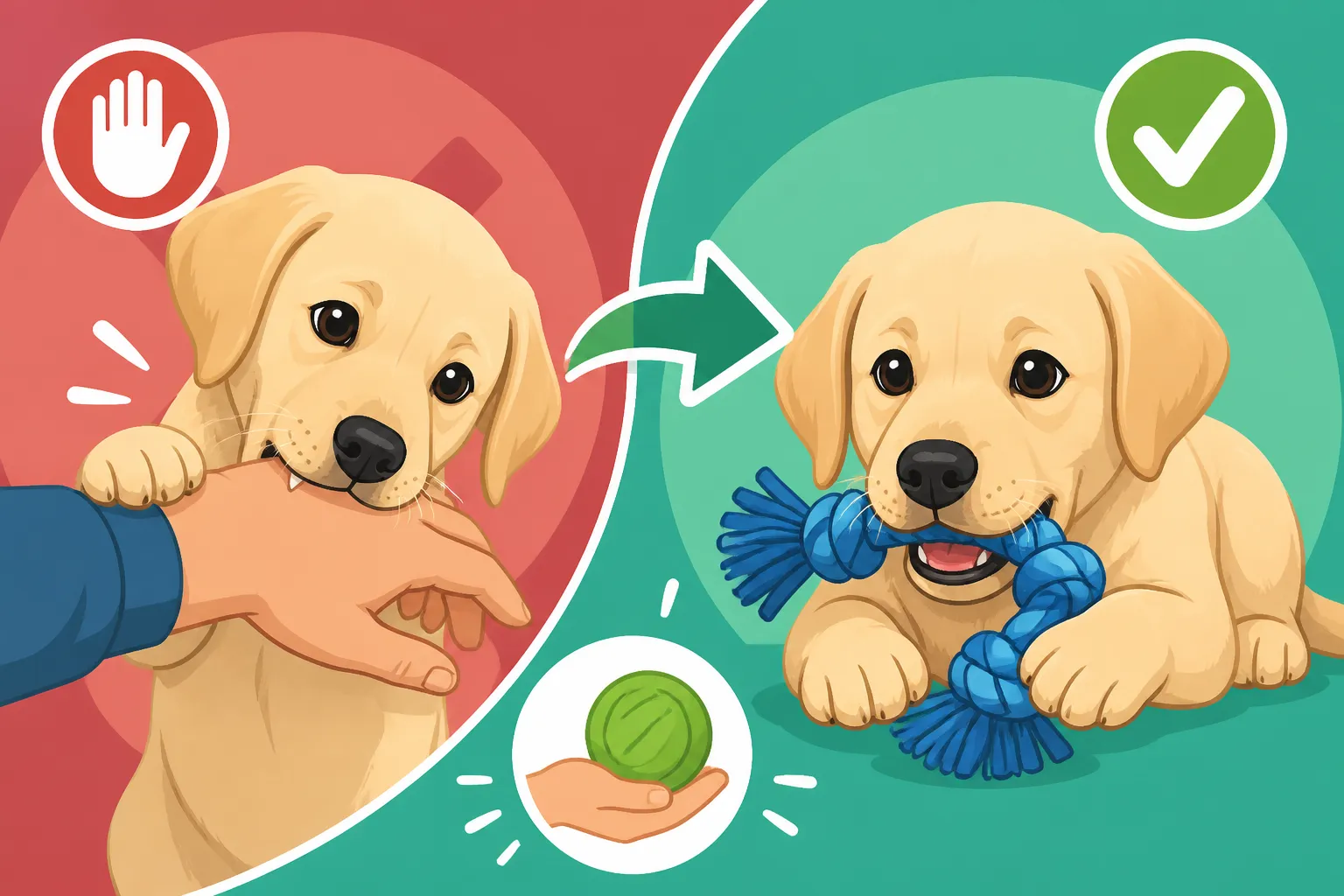
Labradors, with their strong retrieving drive and love of carrying things, need to chew. This is not a behavior you can, or should, try to eliminate entirely. Instead, you need to guide them toward what is acceptable to chew. Always have a variety of enticing chew toys readily available. When your puppy starts to mouth you, immediately offer them an appropriate toy instead.
Keep a mental list of your puppy's favorite textures and shapes. Some might love soft rubber, others firm nylon, and many will go crazy for textured toys that massage their gums. When they go for your hand, gently say "no" or "toy," and immediately present the chew toy to their mouth. If they take the toy and start chewing, offer quiet praise. The goal is to interrupt the undesirable behavior and immediately replace it with a desirable one. Many excellent durable puppy chew toys can be found on Amazon, ranging from soft rubber Kongs to textured Nylabones designed specifically for teething puppies.
Make sure the toys are exciting. Rotate them so they don't get bored. You can even stuff some toys with a little peanut butter (xylitol-free, of course!) or a few bits of their kibble to make them extra appealing. This teaches your puppy, "When I feel like chewing, this is what I chew." This is particularly effective during the teething phase. For more ideas on what to offer, refer to Toys That Satisfy a Teething Labrador.
Freezing and Temporarily Removing Attention
Beyond the "ouch and ignore," simply freezing can be a powerful tool, especially for an overexcited or attention-seeking puppy. If your puppy is nipping or mouthing to get your attention, and you react with a loud voice or frantic movements, you're actually reinforcing the behavior by giving them exactly what they want: a reaction.
Instead, when the mouthing starts, immediately become still. Freeze your hands, stop talking, and turn your head away. Your body language should communicate, "The fun stops when you do that." Wait until your puppy has settled for a few seconds – maybe they release your hand, or sit down, or look away. As soon as they calm, even for a brief moment, you can then resume gentle interaction. If they become mouthy again, repeat the freeze.
This method teaches them that calm, gentle interaction is rewarded with continued attention, while rough or mouthy play immediately ends the valuable connection with you. It’s a very clear cause-and-effect lesson. You are not punishing them, but rather removing the reward (your attention) for the unwanted behavior. This helps them learn self-control and encourages them to offer alternative, more polite behaviors to earn your engagement.
Setting Up Your Home for Success
Managing puppy mouthing isn't just about what you do in the moment; it's also about proactively structuring their environment and your interactions to minimize opportunities for unwanted behavior and maximize success. A well-prepared home and a clear routine can make a world of difference.
Providing a Variety of Safe Chew Options
Because chewing is such a fundamental need for Labradors, especially puppies, you must provide an arsenal of safe, appealing chew toys. Don't just have one or two; aim for a rotating selection that offers different textures, shapes, and challenges. This keeps their interest piqued and reduces the likelihood of them seeking out inappropriate items.
Consider soft rubber toys like Kongs, which can be stuffed with treats and frozen to provide longer-lasting mental stimulation and soothing relief for teething gums. Harder nylon chews can satisfy the urge for a more robust gnaw. Puzzle toys, where they have to work to get a treat out, are fantastic for mental enrichment and directing their oral energy. Always ensure toys are size-appropriate for your growing Labrador to prevent choking hazards and are durable enough to withstand their powerful jaws. Look for toys specifically designed for "power chewers."
Keep these toys scattered around your puppy's main living areas – next to their bed, in their crate, and wherever you usually interact with them. This way, when the urge to chew strikes, an appropriate option is always within paw's reach. Regularly inspect toys for wear and tear, and discard anything that's broken or has sharp edges. A good quality rubber chew toy can be a lifesaver, and you can find many options suitable for even the most determined Labrador chewers on Amazon.
Labrador-Proofing Your Environment
Before your Labrador puppy even sets a paw in your home, it's wise to "puppy-proof" it, just as you would child-proof for a toddler. If something isn't meant for your puppy's mouth, it needs to be out of reach. This isn't about teaching them not to chew; it's about setting them up for success by removing the temptation.
Think about electrical cords, shoes, remote controls, books, plants (many of which are toxic), small rugs, and anything valuable or dangerous. Use baby gates to restrict access to certain rooms where temptation might be too high or where supervision is difficult. Consider covering exposed cords with cord protectors. Move delicate items to higher shelves. If you can't put it away, supervise your puppy constantly when they are in its vicinity.
A well-puppy-proofed environment prevents "mistakes" from happening in the first place, which means you won't have to constantly correct your puppy, reducing frustration for both of you. It also keeps your puppy safe from ingesting something harmful. Remember, Labs are known for their ability to find and swallow just about anything, so being proactive is key to avoiding costly vet visits for foreign object removal.
Managing Play Sessions Effectively
Playtime is crucial for a puppy's development and bonding, but it needs to be managed to prevent excessive mouthing and nipping. Structured play helps teach your puppy appropriate ways to interact and expend energy. Instead of wrestling with your hands, incorporate toys into all your play sessions.
Use flirt poles, tug ropes, or long-handled toys to create a safe distance between your hands and their teeth. Teach your puppy that the game is with the toy, not with your body. If your puppy's teeth accidentally make contact with your skin during play, immediately stop the game, use your "ouch!" vocalization, and walk away for a moment. This teaches them that rough play or teeth on skin ends the fun.
It's also important to recognize when your puppy is becoming overstimulated or overtired, as this is often when nipping escalates. Just like toddlers, puppies can get "cranky" when they're tired, leading to more nipping. Learn to read their body language – zoomies, frantic play, or excessive nipping can be signs they need a break, a quiet chew, or a nap. Short, frequent play sessions are often more effective for puppies than one long, exhausting one, as they can quickly become overaroused.
Long-Term Training Techniques for a Gentle Mouth
While immediate redirection helps in the moment, sustained training is necessary to cultivate a truly gentle mouth in your Labrador. This involves teaching specific commands and reinforcing calm behaviors consistently over time.
Teaching "Leave It" and "Drop It"
These two commands are invaluable for any dog, but especially for a Labrador with their natural propensity to pick things up and put them in their mouths. "Leave It" teaches your puppy to ignore something tempting, while "Drop It" teaches them to release something they already have in their mouth.
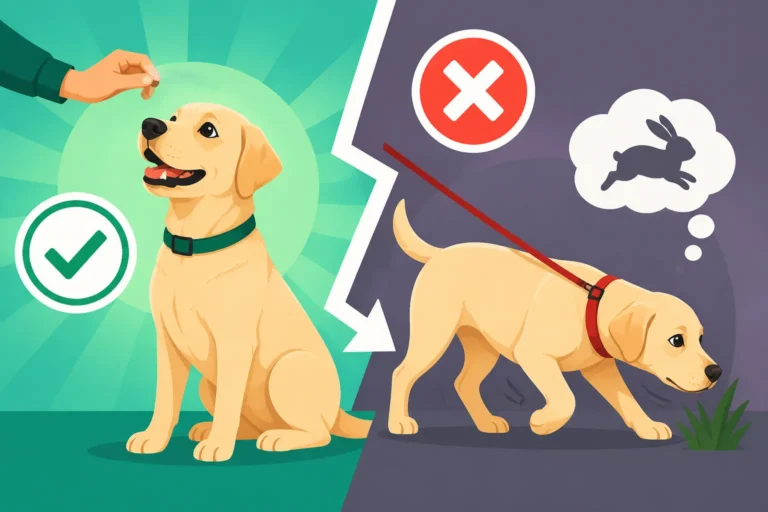
Start with "Leave It" in a low-distraction environment. Hold a treat in your closed fist. Let your puppy sniff, but don't let them have it. When they eventually pull back, even for a second, say "yes!" and immediately offer a different, even higher-value treat from your other hand. Repeat this, gradually increasing the duration they need to ignore your closed fist. Once they understand, put the treat on the floor, cover it with your hand, then slowly move your hand away, ready to cover it again if they go for it. As they learn to ignore it, say "Leave it!" before they go for it, then reward with another treat. This command is crucial for preventing them from picking up dangerous objects.
For "Drop It," get a toy your puppy loves. Let them mouth it or play tug lightly. Then, hold a high-value treat right to their nose. As soon as they open their mouth to investigate the treat and drop the toy, say "Drop it!" (or "release!" or "out!"), praise them enthusiastically, and give them the treat. Then, pick up the toy and initiate play again, keeping it fun. Over time, they'll associate the command with releasing the object, knowing something even better is coming. These commands not only help with mouthing but are essential safety commands for any Labrador. Teaching a Labrador to Drop It Reliably provides more detailed steps.
Reinforcing Calm Behavior
Often, we inadvertently reinforce undesirable behaviors because we only pay attention to our puppies when they're acting up. To build a truly gentle, calm Labrador, we need to actively seek out and reward moments of quiet, settled behavior.
Whenever your puppy is lying calmly, chewing appropriately on a toy, or just relaxing quietly near you, acknowledge it. This doesn't always have to be a treat; a gentle "Good boy/girl," a soft pet, or just throwing a toy for them (if they're calm enough) can be a powerful reward. The idea is to make them realize that being calm and gentle gets positive attention, while frantic or mouthy behavior makes the attention disappear.
You can also incorporate calm-down exercises into your routine. After an exciting play session, encourage your puppy to settle with a long-lasting chew or a stuffed Kong in their crate or on their mat. Teaching a "place" command, where they learn to go to a designated spot and stay there calmly, is also incredibly useful for managing overexcitement and providing an alternative to mouthing during high-energy times. For Labs, who can be quite food-driven, Treats That Motivate a Food-Driven Labrador can be a great tool for reinforcing these calmer behaviors.
Socialization with Other Puppies and Dogs
Socialization is absolutely vital for a Labrador puppy, and it plays a huge role in developing good bite inhibition and appropriate play manners. Interacting with other well-socialized, vaccinated puppies and adult dogs provides invaluable lessons that humans simply can't teach as effectively.
Puppy classes are an excellent environment for this. Under the watchful eye of a trainer, puppies can engage in supervised play, learning canine social cues and refining their bite inhibition. When a puppy bites another too hard, the yelp and cessation of play from the other dog is a powerful, instant consequence. This natural feedback is much more effective than anything we can mimic. Many online platforms, like BAXTER & Bella, offer structured puppy training programs that include guidance on socialization, even if you can't attend in-person classes immediately.
If you don't have access to puppy classes, arrange playdates with trusted friends' dogs who are known to be gentle and patient with puppies. Avoid dog parks until your puppy is older, fully vaccinated, and has good recall, as unsupervised interactions can sometimes be overwhelming or even dangerous for a young pup. A well-socialized Labrador puppy will learn how to play appropriately, use a soft mouth with other dogs, and transfer some of those lessons to human interaction. For a comprehensive guide, review A Socialization Checklist for a Labrador Puppy.
When to Seek Professional Help
While most Labrador puppy mouthing is normal and can be managed with consistent training, there are times when the behavior escalates beyond what you can handle on your own. Knowing when to call in the cavalry can prevent issues from becoming deeply ingrained problems.
Persistent or Aggressive Biting
If your Labrador puppy's mouthing consistently involves hard bites that break the skin, draw blood, or if the behavior is accompanied by genuinely aggressive body language (growling, snapping, stiff posture, snarling, reluctance to disengage), it's time to seek professional help. This is particularly urgent if the biting seems to stem from fear, territoriality, or resource guarding (e.g., biting when you try to take a toy or food).
While very rare for a well-bred and socialized Labrador puppy, genuine aggression needs to be addressed immediately by an expert. It’s not something you should try to "train out" on your own without guidance. An accredited professional can assess the root cause of the behavior and develop a tailored modification plan. Never punish aggressive biting, as it can often escalate the behavior and damage your bond with your puppy.
Even if it’s just persistent, hard nipping that isn't breaking skin but is making you uncomfortable or fearful, a professional can offer strategies to refine bite inhibition more effectively than you might be able to alone. Don't feel ashamed or like a failure for needing help; early intervention is always best.
Puppy Class and Online Resources
For most routine mouthing issues, a well-run puppy class can be incredibly beneficial. These classes offer supervised play sessions for socialization, as well as guidance from experienced trainers on how to handle common puppy behaviors, including mouthing. The trainer can observe your puppy's interactions, provide real-time feedback, and demonstrate techniques. This hands-on guidance is often invaluable for new owners.
If in-person classes aren't feasible due to location, schedule, or cost, many reputable online resources and training programs are available. These can provide structured curricula, video demonstrations, and sometimes even personalized feedback. Platforms like BAXTER & Bella offer comprehensive online puppy training programs that cover everything from house training to polite greetings, which includes dealing with mouthing. These resources often break down complex behaviors into manageable steps, making training accessible from your own home.
Regardless of whether you choose in-person or online, the key is to choose a trainer or program that uses positive reinforcement and force-free methods. Avoid any training that advocates for harsh corrections, intimidation, or punishment, as these methods can damage your puppy's confidence, create fear, and potentially exacerbate behavioral issues. To weigh your options, consider Whether Puppy Class Is Worth It for a Labrador.
Consulting a Certified Professional Dog Trainer
If puppy class or online resources aren't enough, or if the mouthing is particularly challenging, consider consulting a Certified Professional Dog Trainer (CPDT) or a Certified Applied Animal Behaviorist (CAAB). These professionals have extensive knowledge of canine behavior and learning theory and can provide one-on-one guidance tailored to your specific situation and puppy.
A good trainer will typically start with a detailed consultation, observing your puppy, discussing their history, and understanding your concerns. They can help identify specific triggers for mouthing, refine your training techniques, and provide personalized exercises to help your puppy develop better impulse control and bite inhibition. They can also rule out any underlying medical issues that might be contributing to the behavior.
Don't hesitate to interview potential trainers to find one whose philosophy aligns with yours and who has experience with Labradors. Ask about their certifications, methods, and success stories. Investing in professional guidance early can save a lot of heartache and ensure your Labrador grows into a well-mannered, cherished family member.
Here's a quick comparison of mouthing responses:
| Behavior Type | Your Puppy's Body Language | Your Immediate Response | Goal |
|---|---|---|---|
| Mouthing | Relaxed, playful, soft eyes | "Ouch!", withdraw attention, redirect to toy | Teach gentle mouth, end fun for inappropriate contact |
| Nipping | Overexcited, demanding, playful but sharp | "Ouch!", reverse time-out (leave room briefly) | Teach bite inhibition, calm down, attention ends with nipping |
| Biting | Stiff, growling, snapping (rare for pup) | Immediately disengage, secure puppy, contact pro | Safety, address underlying fear/aggression with expert |
Common Mistakes to Avoid
In our eagerness to raise a well-behaved Labrador, it's easy to fall into traps that can inadvertently worsen mouthing behavior. Being aware of these common pitfalls can help you steer clear and maintain a positive, effective training approach.
Punishing or Scolding Your Puppy
It's natural to feel frustrated when your puppy nips, but reacting with anger, yelling, hitting, or other harsh physical corrections is one of the biggest mistakes you can make. While it might seem to stop the behavior in the moment, it can have serious negative consequences in the long run.
Punishment can teach your puppy to fear you, rather than trust you. A fearful puppy might become more anxious, leading to other behavioral problems like submissive urination, hiding, or even increased reactive aggression as they try to defend themselves from perceived threats. They might learn to "mask" their discomfort, meaning they won't give warning signals (like a growl) before biting, making future bites more unpredictable and dangerous.
Instead of teaching them what to do, punishment only teaches them what not to do around you, but doesn't solve the underlying need or teach an alternative. A puppy who is punished for mouthing might simply stop mouthing you but find other, less appropriate outlets for their oral exploration or teething pain, such as your furniture or other household members. Always stick to positive reinforcement methods that reward desired behaviors and redirect undesirable ones. For more insights on what not to do, read What Not to Do When a Labrador Puppy Bites.
Using Hands as Playthings
This is a common, well-intentioned mistake. Many new puppy owners, charmed by their tiny puppy's playful nips, will engage in rough-and-tumble play using their hands, wiggling their fingers, or letting the puppy "attack" their feet. While it seems harmless, this inadvertently teaches your Labrador puppy that human hands and feet are appropriate toys to bite and mouth.
The problem arises when your puppy grows bigger and stronger. What was cute and gentle mouthing from a 10-pound puppy becomes painful nipping or biting from a 50-pound adolescent Labrador. If you've spent weeks or months teaching them that hands are fun to chew on, it becomes incredibly difficult to suddenly reverse that lesson. It sends mixed signals and confuses your puppy.
From day one, establish a clear boundary: human skin is off-limits for teeth. Use toys for all play interactions. If your hand accidentally gets in the way during play, immediately remove it and redirect to a toy. By consistently using toys, you teach your Labrador that toys are for chewing and playing, and hands are for petting and loving.
Expecting Too Much Too Soon
Remember that your Labrador puppy is just that – a puppy! They are learning a brand new language (yours), navigating a brand new world, and growing at an incredible rate. Expecting them to have perfect manners and instant impulse control is unrealistic and will only lead to frustration for both of you.
Puppies have short attention spans and limited self-control. They will have good days and bad days. There will be times when they seem to "forget" everything you've taught them, especially during the adolescent phase. This is normal! Consistency and patience are your best friends. Don't get discouraged if progress isn't linear. Celebrate small victories and try not to dwell on setbacks.
The mouthing phase, especially the intense teething period, is temporary. While it might feel like it will never end, it does eventually subside as they mature and learn self-control. Most Labs will grow out of the worst of the mouthing by six to nine months of age, though some may still exhibit occasional mouthing during periods of high excitement for a bit longer. Being patient and consistently applying the right techniques will ensure your Labrador develops a gentle mouth and a wonderful temperament. Knowing When Labrador Puppy Mouthing Fades can provide some light at the end of the tunnel!
Disclaimer
This article is for general informational purposes only and does not constitute professional advice. Laws, prices and regulations vary by location and change over time. Consult a qualified professional for guidance on your specific situation.